

WNBA Hits $608M in Sponsor Value. Clark Drove $205M.
GOATIFYThe WNBA has another giant number to put on its business scoreboard: an estimated $608 million in sponsor media value during the 2026 regular season, up 53.9% year over year. That is a substantial gain in measurable brand exposure. It is not, however, $608 million wired into the league's bank account. The distinction matters as much as the headline, because it changes what the figure proves about the sport's commercial momentum and what it does not.
According to newly reported 2026 sponsorship analysis, broadcast coverage generated more than $545 million of that estimated value. The Indiana Fever alone, propelled by Caitlin Clark's enormous national audience, were responsible for roughly $205 million in broadcast exposure even though their games accounted for only about 13% of the regular-season schedule. That is not a small star-player premium. It is a signal that the league's television reach is still heavily concentrated around one attraction.
There is a more encouraging part of the story, too. Team-specific jersey deals gained visibility, the new media packages expanded reach, other franchises posted meaningful audiences, and Golden State's championship gave the league a second-year success story almost nobody could manufacture on command. As the WNBA grows, the pivotal question is whether a bigger audience can become a durable market for more teams, more sponsors, and eventually better financial performance across the competition.
$608 Million Sounds Like Revenue. It Is Really Measured Exposure.

The difference between sponsor media value and actual revenue is not an accounting technicality. The $608 million figure measures the estimated advertising-equivalent value that sponsor logos and branding received through media exposure. It answers a practical marketing question: how much visibility did participating brands get on television, streaming and social media, and what might comparable advertising placement be worth? It does not tell us how much each sponsor actually paid, how much profit the league earned, or how much cash a team kept after expenses.
That is why the 53.9% increase deserves both recognition and precision. On an implied like-for-like basis, a $608 million total after a 53.9% jump suggests a prior-period figure near $395 million. It is a dramatic rise in modeled exposure, not proof of an equivalent increase in contractual sponsorship receipts. A small partner could receive exposure worth many times its fee; a large partner might pay a premium for exclusive rights, hospitality, access to athletes or other commercial benefits that this single metric does not capture.
Television did most of the heavy lifting. More than $545 million, approximately nine-tenths of the reported total, came from broadcasts. Nearly $63 million came from social media, where a brand can keep appearing long after the buzzer through player photos, clips, interviews and celebratory posts. Broadcast sponsor value rose 62% year over year. New distribution partners NBC, NBC Sports and USA Network collectively accounted for about $105 million of the exposure recorded in the analysis. That last figure describes exposure attributed to those outlets, not the amount those channels paid for rights.
The shape of that breakdown tells us what sponsors are purchasing in practice: repeated attention at moments fans have chosen to watch. A court logo remains in frame during possessions. A jersey patch moves wherever a star player goes. A broadcaster's close-up can be valuable because the commercial identity is embedded in the actual sport rather than squeezed between plays. Even someone who never clicks a sponsor's advertisement may have seen that brand dozens of times during a high-profile game.
GOATIFY
GOATIFY WNBA
WNBA's $608M exposure report puts the business of the game in focus. Explore GOATIFY women's basketball gear.


BALLERina Girl's Basketball Ballet Air Mug
Add basketball personality to your coffee break.
Shop Now ↗

BALLERina Girl's Basketball Ballet Air Sticker
Add basketball personality to your favourite gear.
Shop Now ↗
Caitlin Clark G.O.A.T. - Greatest of All Sweatshirt
A basketball fan design for everyday wear.
Shop Now ↗
BALLERina Girl's Basketball Ballet Air Sticker
Add basketball personality to your favourite gear.
Shop Now ↗The league's growth has become measurable rather than speculative, and a sponsor can evaluate exposure across a larger range of outlets. But anyone comparing the $608 million valuation directly with player salaries, operating losses or a rumored franchise price is comparing unlike financial quantities. For the WNBA, the next commercial test is converting extraordinary visibility into sustainably priced long-term deals that help teams pay their bills, not merely winning a contest for the biggest estimated media number.
Clark's Fever Took 13% of the Games—and Nearly 37% of TV Sponsor Value
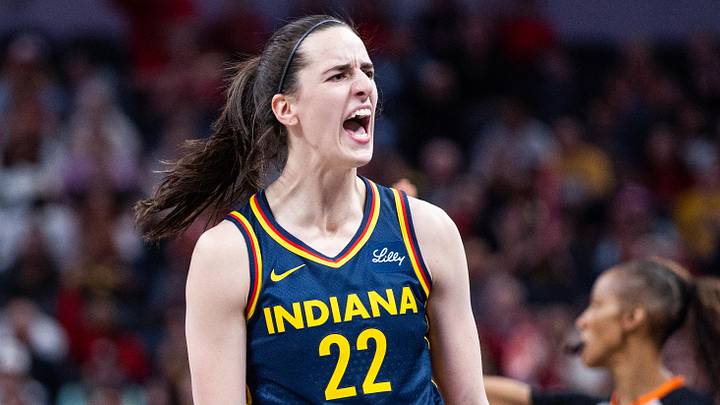
The most striking distribution imbalance sits in Indiana. Caitlin Clark and the Fever generated an estimated $205 million in broadcast sponsor media value, or roughly 37% of the league's $545 million-plus broadcast total, despite representing only 13% of regular-season games. This is a broadcast-exposure share, not 37% of every revenue stream in women's basketball. It is also not a clean way to isolate Clark's individual economic contribution from the impact of television scheduling, teammates, opponents and the Fever's existing sponsor inventory.
Nevertheless, the commercial logic is impossible to miss. The Fever had every game carried nationally, giving their sponsors a guaranteed visibility advantage. National games bring audiences from beyond the home market; they also provide a standardized platform where logos repeatedly appear through the same camera positions, graphics and highlight packages. A brand on a jersey or a sponsor sitting on the baseline benefits both from how many people watch and how often the camera returns to the same frame.
Clark's on-court performance helped make the attention less reliant on novelty alone. Indiana finished 2026 with a franchise-record 28 victories and a league-record 96.0 points per game. Clark averaged 22.3 points, while Kelsey Mitchell scored 24.7 a night. Their combined 47.0 points per game gave casual viewers another reason to stay for basketball rather than tune in for a personality and leave. When an elite offense also provides a nationally recognizable star, broadcasters have a simple product to promote and sponsors have a clearer case for buying that audience.
Still, this is not an argument that the other WNBA games are commercially invisible. ESPN's 2026 regular-season release said its networks averaged 1.37 million viewers across 29 games, up 17% from the previous year. Crucially, games without Indiana averaged 984,000 viewers on those networks, a 24% increase. That non-Fever growth is evidence of a wider audience base even while the most-watched showcase games remain concentrated around Clark and Indiana. The league can have an outsized star and meaningful growth elsewhere at the same time.
The vulnerability is that broadcasters and sponsors might treat the Fever premium as the entire league's value proposition. A season of injury, a change in competitive form or a more crowded sports calendar could shift the schedule's economics. Teams that want durable deals should not rely on being booked opposite Indiana; they need their own players, rivalries and regional followings to matter when Indiana is not on the broadcast. The best indicator of long-term health may be the audience for a completely ordinary, non-Fever game on a crowded Thursday night.
None of this diminishes Clark's impact. Her audience gives the league a giant entry point for fans who might later follow other teams. The challenge is designing promotion, scheduling and sponsor packages that turn that entry point into repeat attention across the WNBA rather than a one-team phenomenon. A media market built around a superstar can thrive; one incapable of creating any second or third attractions remains exposed.
GOATIFY
GOATIFY WNBA
The Fever and Clark are pulling huge TV audiences. Show your love for WNBA basketball with GOATIFY picks.

Caitlin Clark Golden Goose - Women's Sticker
Add basketball personality to your favourite gear.
Shop Now ↗
Caitlin Clark G.O.A.T. - Greatest of All Hoodie
A basketball fan design for everyday wear.
Shop Now ↗

Caitlin Clark G.O.A.T. - Greatest of All Sticker
Add basketball personality to your favourite gear.
Shop Now ↗
Caitlin Clark Golden Goose - WNBA Indiana Sweatshirt
A basketball fan design for everyday wear.
Shop Now ↗
The Real Estate on a Jersey Is a Different Business for Every Team

Five league-level partners—Michelob Ultra, Nike, State Farm, Coinbase and Tampax—accounted for nearly $247 million in estimated sponsor media value. That represents about 41% of the overall $608 million valuation. The combined strength of nationally visible partners is understandable: league agreements can place a logo in front of fans regardless of which teams are playing. Yet one of the more useful findings of the 2026 report is that a brand does not need the most expensive league-wide platform to build a significant WNBA presence.
Consider the personal-finance company Albert. Its partnerships spanned the Atlanta Dream, Dallas Wings and Los Angeles Sparks, giving the brand repeat visibility across different markets and schedules. The sponsor appeared in 87 nationally broadcast games through its team deals and generated an estimated $14.7 million in exposure, placing it tenth among more than 400 brands evaluated without a league-level agreement. That example does not disclose the fees paid or whether the campaign was profitable; it shows how multiple carefully chosen team placements can generate a considerable footprint.
Logo placement matters almost as much as which team signs the agreement. The research grouped court-floor marks, baseline apron signage and player uniforms among the highest-value assets, together contributing 53% of measured sponsor value. Those surfaces are a built-in part of the viewing experience. A commercial during a timeout may be forgotten, but a visible logo on a jersey stays with a player through a fast break, a postgame interview and a highlight clip shared days later.
The Dallas Wings' 2026 uniform deals make that strategy tangible. Team branding and sponsor logos occupy different areas of the jersey, with each placement carrying its own frequency and visual prominence. For a club partner, the question is not simply whether its name appears on an athlete. It is whether the placement is legible when filmed from the ordinary broadcast camera, whether that team gets meaningful television windows and whether fans continue to distribute images of the players beyond the live telecast.
Social media is an especially important second life for a sponsor. The season's social exposure was valued at nearly $63 million, and uniforms alone were credited with more than $40 million of social visibility. Those are modeled media figures, not an audit of consumer purchases. Nevertheless, they suggest why authentic behind-the-scenes videos, player personalities, team celebrations and short clips matter to commercial partners. A locker-room moment can preserve a jersey-patch appearance in feeds long after an arena has emptied.
The report also highlighted financial services and healthcare as particularly competitive categories, with about $123 million of measured sponsor value spread across 23 brands that individually exceeded the $1 million mark. That is evidence of market depth rather than one winner controlling an entire category. The door is open for a regional sponsor to make a national impression if it chooses teams and placements intelligently. But higher exposure does not automatically justify higher spending; partners still need to understand their own reach, sales response, customer acquisition and renewal goals.
The Next Test: Can Expansion Make Sponsorship Less Dependent on Indiana?

The most convincing answer to the concentration problem will not come from another dazzling report headline. It will come from a bigger number of teams that can command meaningful audiences in their own right. The WNBA's 2026 season already introduced the Toronto Tempo and Portland Fire, alongside a schedule of 44 games per team. More markets create fresh local partnerships, more available jersey and arena inventory, and more potential rivalries. They also create more broadcasts competing for viewer attention.
GOATIFY
GOATIFY WNBA
Team jerseys and sponsor patches tell an interesting business story. Browse GOATIFY WNBA fanwear.


BALLERina Girl's Basketball Ballet Air Sweatshirt
A basketball fan design for everyday wear.
Shop Now ↗BALLERina Girl's Basketball Ballet Air Sticker
Add basketball personality to your favourite gear.
Shop Now ↗The Golden State Valkyries are the clearest demonstration that a new club can become a national basketball story on the court. In only their second season, the Valkyries beat the Atlanta Dream 68-63 in the decisive seventh game of the 2026 Finals, with Gabby Williams scoring 30 and winning Finals MVP. That championship did more than create a weekend of celebration. It gave an expansion franchise a distinctive identity, a championship narrative and a fresh reason for sponsors to consider the Bay Area beyond the mere novelty of a new team.
There is an obvious commercial opportunity in the league's proposed path to 18 clubs and 468 regular-season games by 2030. More games can mean more total logo appearances, more local ticket buyers and additional advertising inventory. But inventory alone is not scarcity. If the sport expands faster than the television audience or sponsor budgets, the average value of each appearance could stagnate even as the aggregate number rises. An extra game contributes more to the business when fans actively seek it out than when it is simply another line in an already crowded program guide.
Look at the difference between attention driven by a single star and attention earned by a team identity. Indiana is a compelling national attraction because of Clark's skill and personality. Golden State's success involved a deep defense-first roster, coaching, a fan culture and then a championship. Toronto and Portland offer another model: establish local habits, teach new fans the characters and connect sponsors to neighborhoods before expecting national broadcasting value to follow. None is guaranteed to work, which is why investment should be judged on multi-season retention rather than launch-week excitement.
A sensible sponsor evaluating 2027 should watch four practical signals. First, whether non-Fever national games maintain the audience gains already observed in 2026. Second, whether local clubs sell more repeatable sponsorship packages instead of depending on one-off publicity bursts. Third, whether player highlights and team stories continue creating meaningful engagement outside live games. Fourth, whether a larger schedule produces sufficiently compelling matchups to keep average exposure valuable. Those indicators are more revealing than multiplying a single season's modeled media value by the number of future teams.
The strongest long-term outcome would be a league in which Clark remains a major draw while viewers also tune in to follow Williams and the champions, the latest young stars in Dallas, and the stories developing in new markets. Such a WNBA would have more commercial engines, less concentrated risk and a much stronger case to sponsors that the attention can outlive any one player. The 2026 numbers prove that the cameras are watching. The next challenge is making sure the audience has reasons to keep watching almost every night.
The WNBA's $608 million sponsorship-value estimate is real evidence of a league with far more commercial visibility than it had just a few seasons ago. The headline should not be confused with booked revenue, and the distribution is far from balanced: Clark's Fever still command a disproportionate share of the league's most valuable television exposure. Those are two truths, not contradictory verdicts.
For the sport's business to become more resilient, the next step is not to downplay Clark. It is to repeat her ability to attract attention in different ways, with champions such as Golden State, ambitious expansion clubs, and stars who give audiences reasons to follow games regardless of Indiana's schedule. Sponsors will decide what that audience is worth through actual contracts, renewals and results. The measurement has made the opportunity visible; only the market can establish how much of it becomes lasting money.
GOATIFY
GOATIFY WNBA
Women's basketball is expanding on and off the court. Explore the complete GOATIFY WNBA collection.

Caitlin Clark Golden Goose - Women's Sweatshirt
A basketball fan design for everyday wear.
Shop Now ↗
Caitlin Clark Golden Goose - Women's Sticker
Add basketball personality to your favourite gear.
Shop Now ↗















