

Horner Says Antonelli Has Earned Mercedes No. 1 Status — Russell Faces a New Reality
GOATIFYChristian Horner has handed Mercedes a piece of advice that sounds familiar to anyone who watched Red Bull win championships under his leadership: let the stopwatch establish the pecking order, then be prepared to act on it. The former Red Bull team principal believes Kimi Antonelli's extraordinary second Formula 1 season has earned the Italian a leading position inside Mercedes, even with the experienced George Russell alongside him. It is a provocative intervention because Antonelli's advantage is no longer a hypothetical question about future potential. With six races left, the 20-year-old leads Russell by 102 points and has eight Grand Prix victories to his team-mate's three.
Horner's argument is not that Mercedes should arbitrarily favor a younger driver. It is that a team which has supplied both drivers with a chance to compete must eventually recognize what the results say, particularly if a rival closes in. For Toto Wolff, that creates a fascinating distinction between treating drivers fairly and pretending they occupy identical competitive positions. For Russell, it means the discussion about leadership is shifting from seniority to results, just as Antonelli approaches the chance to become the youngest world champion in F1 history.
Horner says Antonelli has earned status — not a guaranteed privilege
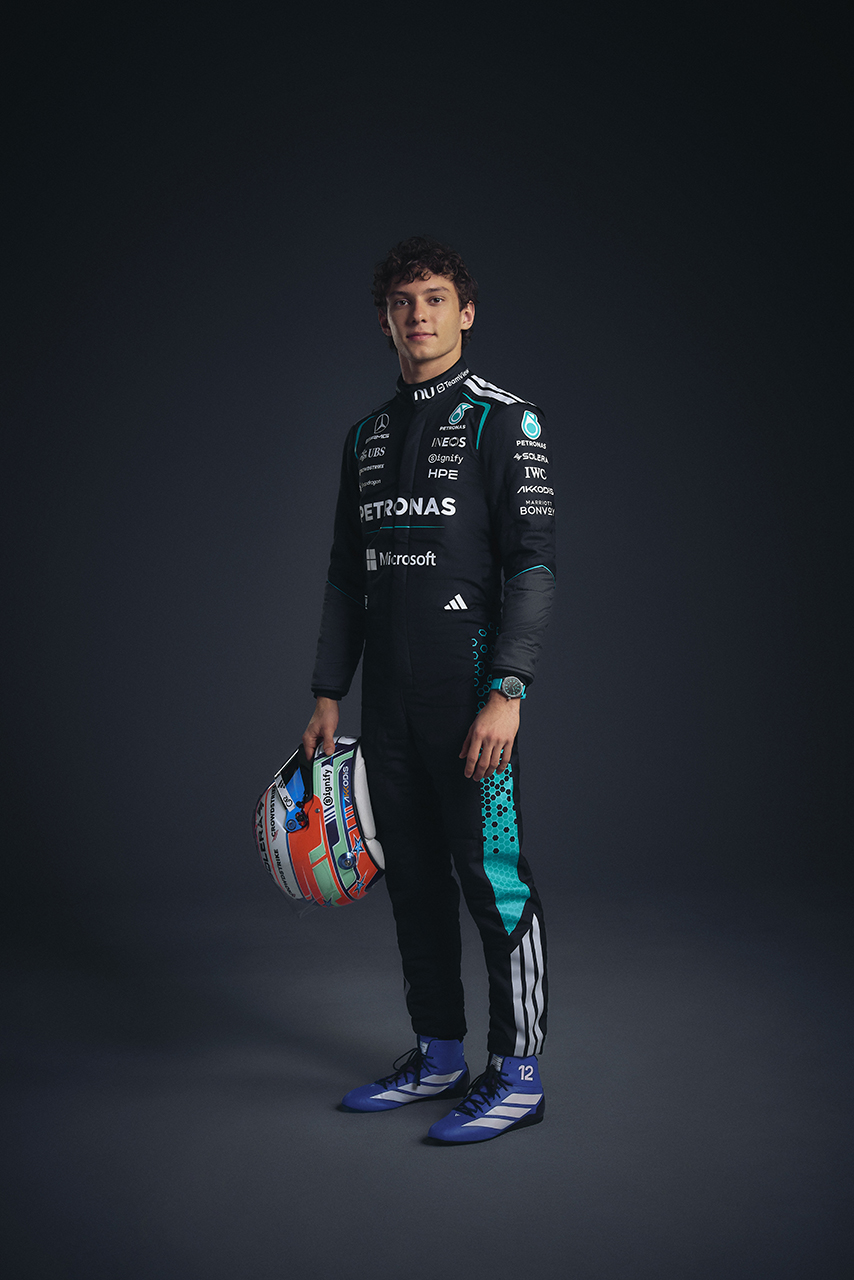
Horner's central point is that an elite team cannot keep every driver equally satisfied once the results begin to separate them. In his view, both drivers should receive a fair opportunity and competitive equipment, but that promise is different from guaranteeing both a realistic route to the championship until the final round. When one driver repeatedly outperforms the other, the team has to acknowledge that hierarchy rather than treating it as a political embarrassment. He singled out Antonelli as an example of a driver establishing his standing through performances, not through a contract clause or a manager's preference.
The timing gives those comments weight. Antonelli has produced eight victories and 14 podium finishes in 2026, while Russell has three wins. The Italian is only in his second Formula 1 season, but he enters the United States Grand Prix with 340 points to Russell's 238. That 102-point difference is large enough to make the championship a matter of when, rather than merely whether, Antonelli can convert his advantage. Russell remains mathematically alive, and no driver is entitled to preferential treatment simply because an outside observer thinks he should receive it. The competitive evidence, however, is increasingly difficult to explain away.
Horner was speaking as a former Red Bull team principal, not as someone who sets Mercedes policy. That distinction matters. He is offering a philosophy formed during two decades of running a rival operation, not reporting an internal Mercedes decision. His argument is most relevant to a future season in which Antonelli might face a serious challenge from outside the team. If Mercedes had a clear championship leader and a team-mate taking points away at decisive moments, should it intervene? Horner's answer is that the team's collective objective must come first.
That is not identical to ordering Russell to move aside at every opportunity. Teams can preserve equal machinery and meaningful competition while acknowledging that a late-season championship situation sometimes requires a tactical choice. The question is where Mercedes draws that line, and whether its public commitment to fairness can survive a much tighter title fight than the one currently reflected in the standings.
Russell is still a race winner, but Mercedes' numbers have shifted

Russell's position is more complicated than the raw points gap suggests. He arrived in 2026 as the more established Mercedes driver and, by many preseason assessments, the leading candidate to take advantage of the sport's new technical regulations. He also opened the season by winning in Australia and has added victories in Austria and Azerbaijan. Those are substantial achievements, not evidence of a driver who has suddenly lost the ability to lead a front-running team. Yet Antonelli's run of results has changed what Mercedes must plan around.
At Singapore, Russell endured a bruising weekend. A crash in the wet Sprint and an engine-related setback left him with difficult recovery work in the Grand Prix, where he finished ninth. Antonelli finished third after passing Lewis Hamilton late in the race, adding another 15 points to a season built on converting strong weekends into podiums and wins. The contrast was not just the difference between ninth and third. It showed how quickly one imperfect weekend can compound a championship deficit, even when both drivers operate within the same highly competitive organization.
Mercedes has already demonstrated that it can support two drivers who win races. The team's 2026 record stands at 11 Grand Prix victories and 22 podiums through 17 rounds, according to its official season profile. That collective strength is precisely why the hierarchy issue matters. When a car is capable of winning, the identity of the driver who maximizes it becomes a strategic question rather than a debate over whether the machinery is competitive enough. Wolff must balance the need to reward Antonelli's season with the need to retain Russell's motivation, feedback and points-scoring capacity.
There is also an important distinction between 2026 and 2027. A 102-point lead with six races left gives Mercedes considerable room to avoid dramatic intervention now. Antonelli could mathematically clinch the championship at Austin, but only by winning while Russell finishes ninth or lower and Hamilton fifth or lower. That specific scenario is a championship calculation, not evidence that Mercedes has already chosen a permanent hierarchy. If the competitive order changes next year, team orders made too early could become just as damaging as refusing to make them when the title is genuinely at risk.
For Russell, the most convincing answer is still on track. A strong final six races would not erase Antonelli's lead, but it could reinforce the argument that Mercedes benefits from two race-winning drivers rather than one star and one permanent support act. For Antonelli, the task is to keep winning without allowing the leadership debate to distract from the driving that created it.

Why Horner invokes Williams, Vettel and Verstappen
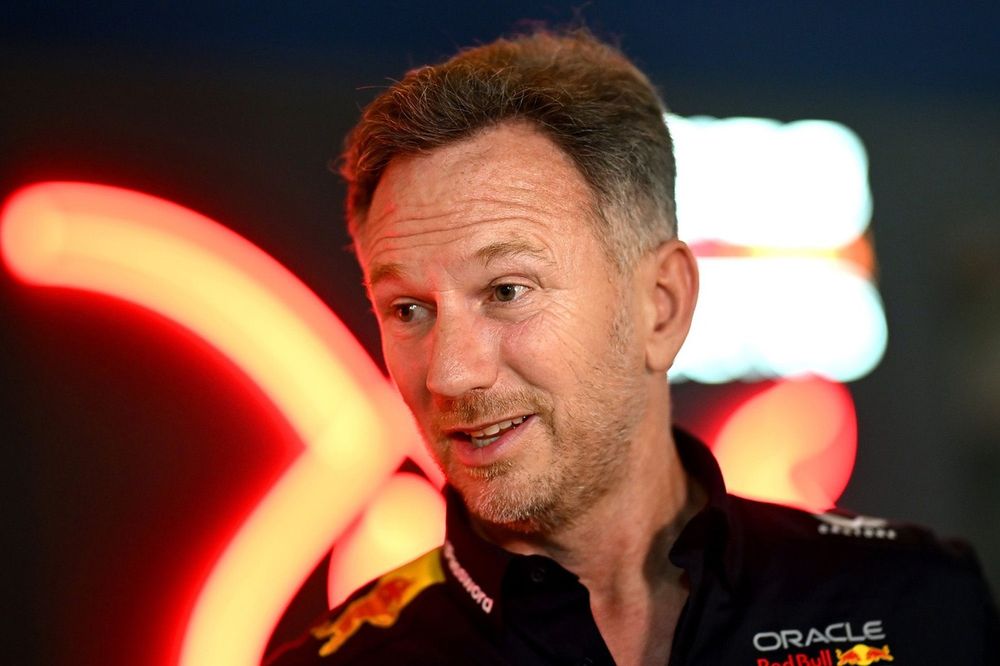
Horner did not arrive at his philosophy by watching Mercedes from a distance. He spent two decades managing Red Bull through the careers of Sebastian Vettel and Max Verstappen, with eight drivers' championships and six constructors' titles won under his leadership. The team often placed its competitive structure around a driver who had established himself as the best chance of winning. That approach attracted criticism whenever a team-mate felt constrained, but Horner argues that clarity can prevent a squad from giving away a championship it has the car to win.
The most revealing historical comparison in his comments was not even a Red Bull season. Horner pointed to Williams in 1986, when Nigel Mansell and Nelson Piquet competed for the drivers' title while Alain Prost ultimately claimed the crown for McLaren. Williams still won the constructors' championship, demonstrating that a successful car and two strong drivers do not automatically produce the individual title. The lesson is not that every championship loss can be traced to team orders. It is that splitting points between team-mates can become a real vulnerability when a rival has a clear path through the closing races.
Red Bull itself learned how costly internal conflict can become in 2010. Vettel and Mark Webber collided while fighting for position in Turkey, a moment that exposed the difficulty of allowing two title contenders to race without an agreed framework for risk. Vettel eventually won that championship, but the battle with Webber brought pressure inside the team and left Ferrari's Fernando Alonso in contention until the final round. Horner has said that winning increases scrutiny and makes it impossible to satisfy every interested party at once. His proposed response is to establish principles early and make decisions that serve the team's championship objective.
McLaren's 2025 season offers the contrasting model. The team continued to give Lando Norris and Oscar Piastri opportunities to race for the drivers' title, even as Verstappen applied pressure from outside. Norris ultimately secured the championship, but the margin became uncomfortable enough to renew debate about whether equal treatment was the right strategic choice. It is an example of a philosophy that can succeed, though success does not remove the risks it creates. Mercedes does not need to copy either team's approach word for word; it needs a policy that is transparent to its drivers and adaptable to the standings.
One additional wrinkle makes Horner's intervention unusually interesting. Red Bull is no longer his team, and Mercedes is a former rival rather than an employer. His comments therefore do not amount to an official challenge from one current principal to another. They are a public argument about how Formula 1 championships are managed. If Antonelli's pace stays ahead of Russell's, the same debate could emerge inside Mercedes whether Horner had spoken or not. His interview simply put the uncomfortable question into sharper focus before Austin.

Horner's intervention does not mean Mercedes has announced a number-one driver, nor does it mean Russell should surrender his ambitions. It does underline a reality that will only become harder to ignore if Antonelli secures the championship: status inside a leading Formula 1 team is earned over a season, not granted by experience alone. Russell remains a race winner and a major part of Mercedes' strength. Antonelli has simply produced the results that make the hierarchy debate unavoidable.
Austin may settle the drivers' title only if Antonelli wins and his nearest challengers finish far enough back. The larger question will outlast one weekend. When the 2027 title fight begins and Mercedes faces rivals with renewed pace, will Wolff be able to protect two drivers' ambitions without sacrificing the team's best championship opportunity? Horner has already made clear which side of that calculation he would choose.

















