

Jake Paul Added a Three-Belt Rematch. Cameron–Mayer II Just Raised Dubai's Stakes.
GOATIFYJake Paul's Christmas Eve boxing show in Dubai now has a second fight capable of carrying a major event on its own. On November 13, Most Valuable Promotions confirmed that Chantelle Cameron will defend her unified super-welterweight titles against Mikaela Mayer in a ten-round rematch on December 24. The headliner remains Paul against Cédric Doumbé, but the addition changes the balance of the card: a celebrity-driven comeback is now paired with a high-level championship rivalry that already produced ten fiercely contested rounds.
Three belts are on the line, a disputed August decision needs an answer, and a different blockbuster involving Claressa Shields has been put on hold. Those are substantial stakes regardless of whose name appears at the top of the poster.
Cameron won three belts. Mayer still disputes the way she lost.
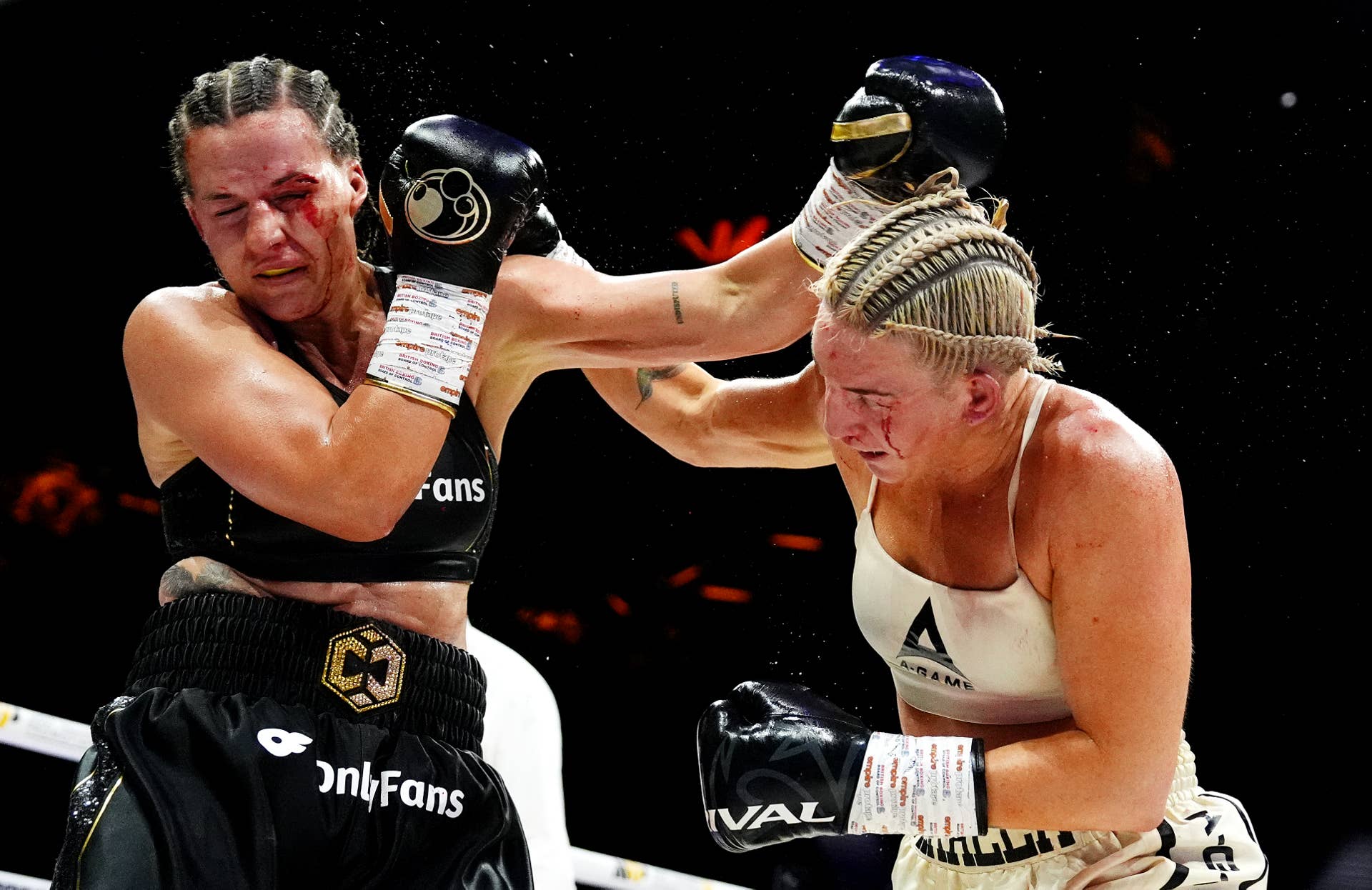
Chantelle Cameron left Birmingham on August 29 with more than an ordinary victory. She defeated Mikaela Mayer by unanimous decision, adding the WBA and WBC super-welterweight titles to the WBO championship she brought into the ring. The judges returned cards of 97–93, 97–93 and 96–94, giving Cameron a decisive result on paper even though the contest itself generated a much more divided conversation. The distinction matters in a rematch: Mayer is not trying to reverse a stoppage or recover from one catastrophic mistake. She is trying to persuade three judges that the same competitive match should be scored differently.
Cameron's pressure was a central feature of the first meeting. She was often willing to stand in range, initiate exchanges and force Mayer to work during stretches when the American might have preferred more room. Mayer's counterargument rested on her cleaner moments and her belief that she had done enough of the better boxing to earn the verdict. A rematch turns that disagreement into a tactical puzzle. Mayer needs to make her scoring shots unmistakable, create exits after combinations and deny Cameron the chance to finish each exchange with the more forceful impression. Cameron needs to keep the pace uncomfortable and make Mayer defend through entire sequences, not simply land a sharp opening punch.
There is another wrinkle: this is a ten-round fight, not a luxury exhibition fitted into a busy entertainment card. Championship rounds reward the boxer who can keep solving problems while fatigue and familiarity build. Because the two women already have a completed ten-round contest to study, the second meeting should be less about surprise and more about adjustment. Cameron has proof that her pressure can win over this opponent. Mayer has footage showing where she found success and where the contest escaped her control. Both corners will have to decide whether to sharpen their familiar approach or introduce a genuine change.
GOATIFY
GOATIFY Boxing
Cameron and Mayer are fighting for three belts again. Browse GOATIFY Boxing designs for fans who follow every championship round.


The location also alters the setting. Their August bout was staged in Birmingham, England, in front of a British crowd. Dubai offers a different audience, on a card promoted around Paul's international celebrity and Doumbé's combat-sports following. Neither woman needs that attention to justify the fight, but a strong championship performance in this slot could reach viewers who would not otherwise tune in for a super-welterweight title defense. The question is whether those new eyes watch a competitive sporting rematch rather than treating it as a supporting act.
The Shields superfight stalled. Cameron still landed a real challenge.

Only days before Cameron–Mayer II became official, the more extravagant possibility around Cameron was a showdown with Claressa Shields. The matchup was discussed in terms of pound-for-pound status and star power. It also involved far more questions than a simple fight announcement could settle. Cameron and Shields have built their reputations across different weight classes, and a deal would have required agreement on the weight, financial terms, promotion and the wider strategic value of taking the risk. That is why an apparent breakthrough in negotiations was never the same thing as a signed bout.
The two promotional camps have given conflicting descriptions of what happened. MVP co-founder Nakisa Bidarian alleged that an offer that had initially been accepted was later reduced by almost 30 percent. Dmitriy Salita, who represents Shields, disputed that account and said his side remained willing to complete an agreement. Those are rival negotiating claims, not a verified account of which party caused the breakdown. They establish that the talks had become public and contentious, but they do not prove the economics or intent of either side. Cameron subsequently expressed disappointment and indicated that the Shields fight no longer looked likely in the immediate future.
Boxing often frames a pivot like that as settling for a lesser option. This particular pivot is more interesting. Mayer already shared a ring with Cameron, survived ten demanding rounds and left believing she deserved the decision. There is no need to invent hostility or manufacture unfamiliarity. The first fight supplies the sporting reason for a second one. Cameron can defend three unified belts against an elite opponent while keeping the door open to other opportunities. Mayer has a direct route to undo the result that altered her championship position. Whatever the original ambition, the replacement is a legitimate, independently valuable main-event-level contest.
There is a commercial logic, too. A Shields fight would offer a new style and a potentially different scale, but it also needs compromises between separate negotiating teams. An immediate Mayer rematch is a known matchup with a first result, existing footage, a clear grievance and an obvious title story. The promoters can place it on December 24 without asking fans to learn an entirely new rivalry. That does not guarantee the fight is better or bigger than the unrealized alternative. It does mean the Dubai card gains certainty and a credible sporting anchor while negotiations elsewhere remain unresolved.
GOATIFY
GOATIFY Boxing
From crossover main events to genuine title rematches, Dubai has boxing fans talking. Explore GOATIFY Boxing tees, caps and decals.
Paul–Doumbé still headlines, but the supporting card has its own stakes.

The wider event is still built around Jake Paul's return. Paul is scheduled to face former kickboxing standout and MMA fighter Cédric Doumbé at Coca-Cola Arena on December 24. Their Paris media appearance earlier in the week brought the expected noise and confrontational exchanges. The sporting backdrop is less straightforward. Paul has not boxed since Anthony Joshua stopped him in the sixth round in December 2025, a defeat that also left him with a broken jaw. Returning in a different kind of matchup is a test of readiness as well as a test of the story he wants to tell about his progress as a boxer.
Doumbé brings substantial striking experience from kickboxing, but success in that sport is not a guarantee of effectiveness under professional boxing rules. His last recorded MMA appearance came in May 2024, when he stopped Jaleel Willis, so ring rust and adaptation are both legitimate questions. The main event therefore has real uncertainties without requiring exaggerated claims about either man's standing in traditional boxing. Paul has professional boxing rounds against recognizable opponents and an unusually large audience. Doumbé knows how to fight, has an experienced striking base and is accustomed to performing with crowds reacting to him. Their respective strengths do not translate perfectly across the ruleset.
Adding Cameron and Mayer changes how that matchup is judged. If the Paul–Doumbé fight is competitive and well executed, it gives the show its headline drama. If it turns into a short or awkward crossover contest, the ten-round championship rematch offers a serious sporting center of gravity. That combination is not new to boxing promotions, but it is especially relevant to Paul's events, where the audience includes both traditional fight fans and viewers drawn by his online profile. A card that contains a proper title contest is a stronger answer to complaints that the whole attraction rests on spectacle alone.
Other announced additions broaden the mix. American Olympian Jahmal Harvey is listed to face Scotland's Craig Morgan in a lightweight fight, while former UFC heavyweights Alistair Overeem and Jimi Manuwa have been matched in another boxing bout. Those fights involve different levels of boxing-specific experience and should be evaluated on their own merits rather than folded into one promise of elite competition. Harvey offers a young professional career to follow; Overeem and Manuwa bring recognizable names from another combat-sports arena. As of the November 13 announcement, full broadcast particulars and an exact Cameron–Mayer ring-walk time had not been confirmed. Those details should not be guessed while the card continues to take shape.
For Dubai, the most meaningful development is not simply that another fight has been added. Cameron and Mayer now have a second chance to settle the same three-belt argument, after the first judges' verdict failed to settle the conversation. Their rematch gives a celebrity-led Christmas Eve event a championship contest with its own history, tactics and consequences. Paul and Doumbé will attract attention; Cameron and Mayer have every reason to make viewers stay for the boxing.
GOATIFY
GOATIFY Boxing
Shop GOATIFY boxing shirts, hoodies and stickers.


















