

Piastri's 10-Place Vegas Penalty Is Only McLaren's First Gamble
GOATIFYThe Las Vegas Grand Prix was already shaping up as a complicated weekend for McLaren. On Wednesday, November 18, the team confirmed a fresh problem: Oscar Piastri is set to drop ten places on the starting grid after a reliability issue forced a fifth internal combustion engine into his car. The Australian can still qualify well, but wherever he ends up on the timing screens, the penalty will undermine the reward for that performance. In a season where every hard-earned point has become valuable, it is a brutal way to begin the final stretch.
Yet the grid penalty is only part of the story. McLaren is also introducing a new floor, experimenting with ways to reduce aerodynamic drag and fitting an upgraded Mercedes-supplied turbocharger to both Piastri's and Lando Norris's cars. The team is trying to repair its immediate competitiveness and extract lessons for its next-generation project at the same time. The turbo upgrade is not what caused Piastri's penalty: those are different engine components governed by separate allocations.
The stakes extend far beyond one driver recovering positions under the neon lights. McLaren enters the weekend 17 points behind Red Bull in the fight for third in the constructors' standings, with a maximum of 129 points still available over the remaining events. Its drivers' title hopes are no longer the issue, but the difference between a disciplined recovery and another messy weekend could shape the team's final ranking, prize-money outlook and confidence heading into 2027.
One reliability fix has become a ten-place qualifying bill
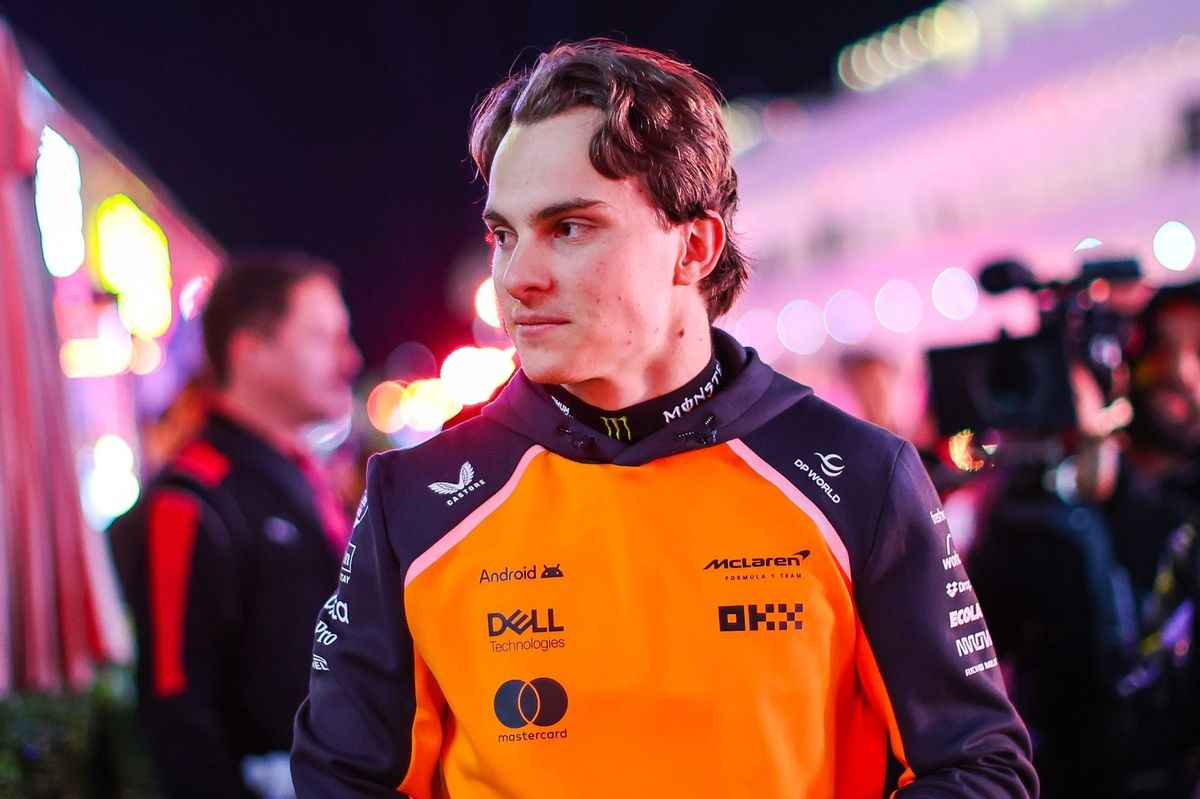
The essential distinction starts inside the power unit. Formula 1 limits how many examples of certain components a driver can use during a season without a sporting penalty. For the internal combustion engine, Piastri had already used his permitted allocation of four. McLaren says a reliability concern has now made a fifth necessary. That first excess ICE brings a ten-place grid drop, a penalty tied to the replacement part rather than to any on-track infringement.
This is not the same thing as saying Piastri has been disqualified from qualifying or automatically placed at the back of the field. He can still contest every session and set a representative lap. The final starting position depends on his classification, the formal application of the drop and any other relevant grid penalties. A front-row qualifying result would soften the numerical consequences, while a poor session could make the recovery problem much larger. The headline is ten places, but the starting context matters.
McLaren is also introducing a new Mercedes turbocharger through the power-unit supplier's Additional Development and Upgrade Opportunities programme. Both Norris and Piastri are scheduled to receive that change. Crucially, McLaren says neither driver exceeds the turbocharger allocation, so the new turbo itself does not generate an additional grid penalty. Conflating the two upgrades would make the team sound as though it chose an unnecessary punishment in search of speed. According to the team's account, the engine change was a reliability response.
The promised upside of the new turbo is not transformative either. McLaren describes its expected performance benefit as relatively small. That is the sort of incremental improvement that can count in a close midfield-to-front group, but it will not magically turn the Strip Circuit into an easy overtaking exercise. The extra component can help when the car is driven correctly; it cannot erase the places Piastri must surrender before the lights go out.
GOATIFY
GOATIFY Formula 1
Race-week styles for F1 fans following Piastri's comeback.


Teams normally weigh an ageing component's risk against the cost of replacing it. A failure in practice, qualifying or a race can be more expensive than an announced grid drop, especially when spare components and development time are limited. By accepting the penalty before the event, McLaren gets to manage the weekend around a known constraint instead of hoping a vulnerable part lasts one more round. That does not make the decision painless, but it explains why reliability can outweigh starting position.
The timing is particularly cruel for Piastri. In an exclusive interview published ahead of Las Vegas, the Australian discussed how adapting to the 2026 MCL40 had challenged his natural driving instincts. He had begun the year with two non-starts, found early podium opportunities and later faced a difficult stretch while Norris became the team's more reliable source of big scores. An engine penalty interrupts a driver who needs a clean qualifying-and-race sequence to build rhythm.
The immediate questions are therefore practical: will the replacement unit run cleanly, can Piastri extract pace from the revised package, and how much starting-position damage will qualifying actually leave him? A faster car matters, but repeatability matters more. If the team spends Friday constantly changing settings or chasing reliability alerts, the penalty may become only the first of several costly interruptions.
The best case is a stable power unit, a confident qualifying lap and a measured climb through the pack. The worst is a compromised setup followed by contact or tyre damage while attacking from further down the order. Those are scenarios, not predictions. What has actually been confirmed is the fifth ICE and the ten-place penalty it brings; everything after that remains to be earned on track.
Las Vegas offers overtaking chances, not a guaranteed comeback

On paper, Las Vegas looks like a friendlier destination for a driver carrying a grid penalty than a narrow circuit where overtaking requires the leader to make a mistake. The Strip Circuit has substantial straight-line sections and heavy braking zones, so a car with sufficient speed and traction can create passing opportunities. That is the basis for McLaren's confidence that Piastri can recover positions. But opportunities are not the same as guaranteed overtakes, and starting ten spots lower changes the entire shape of a race.
A driver beginning inside the top five usually fights rivals with broadly comparable pace. Someone dropped into traffic instead has to negotiate several kinds of opposition: teams that are quick on the straights, cars whose drivers defend aggressively, and midfield runners with different tyre and energy strategies. Clearing the first few cars can be straightforward; clearing the next ones without overheating tyres or burning too much energy can be harder. The difference often appears long before the chequered flag.
Vegas also asks an awkward question about temperature. The night race is expected to take place in cool, dry conditions, with forecasts ahead of the weekend suggesting a substantial drop in ambient temperature after sunset. Getting tyres into a useful working window can make the difference between a pass planned for the end of the straight and a lock-up that costs two positions. Low grip, tyre warm-up and brake confidence are especially relevant when the driver spends the opening laps on an unfamiliar line through traffic.
Energy management adds a further layer in the current regulatory era. A defending car may be prepared to spend available electrical deployment in the places where a following car wants to attack. Piastri will need enough straight-line performance to reach the braking zone alongside a rival rather than merely closing to the rear wing. Conversely, using too much of the available energy to complete a marginal pass can leave him vulnerable at the next opportunity. The ideal recovery is not a succession of desperate lunges.
GOATIFY
GOATIFY Formula 1
Browse Formula 1 gear before the Vegas night race.


Those dynamics help explain why qualifying remains central despite the penalty. Moving the McLaren nearer the front of the timing sheet will improve the position from which the grid drop is calculated. Qualifying poorly before suffering a drop means more cars to pass and less margin for a clean recovery. One strong lap will not nullify the sanction, but it can transform the race from a near-impossible climb into a more manageable points-gathering assignment.
Pit strategy may be as decisive as overtaking speed. Stopping before the cars around him might allow Piastri to use clean air, while extending a stint could place him on fresher tyres late in the race. Either approach depends on tyre wear, traffic and the actual pace of the upgraded McLaren. Strategy charts drawn up on Wednesday cannot account for every safety car, incident or unexpected tyre response. The team needs options rather than a single heroic plan.
The official event schedule gives the crew time to study those variables: two practices take place on Thursday, November 19, the third practice and qualifying follow on Friday, and the Grand Prix begins at 8 p.m. local Pacific time on Saturday, November 21. The evening format means track evolution from practice to qualifying and race remains worth watching. Any practice setup conclusion must be tested against the conditions under which the points are awarded.
The result Piastri needs is not necessarily the most spectacular charge through the field. A clean drive that turns an unavoidable grid punishment into a useful finishing position would be a strategic success. In contrast, forcing a low-percentage move could waste the value of the new engine and upgrades. For a team chasing a season-long points target, the difference between ambition and impatience is not philosophical. It is measurable in the constructors' standings.
McLaren's new floor is a 2027 experiment wearing a 2026 race number
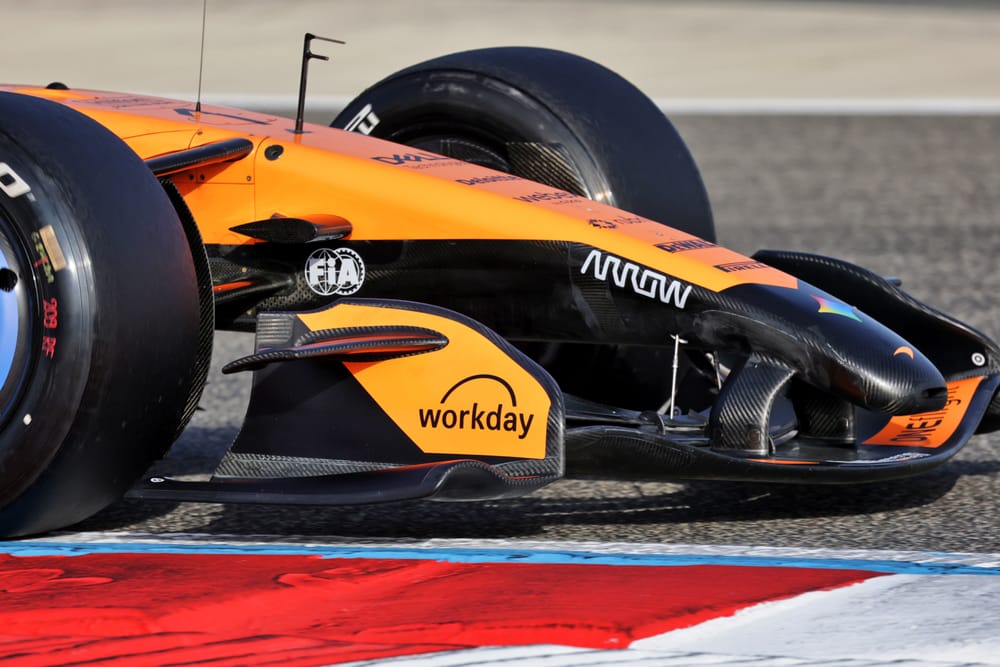
The other large decision McLaren has made for Las Vegas concerns the air passing around its car. The team is bringing aerodynamic upgrades led by a new floor, after introducing a revised front-wing concept at the previous round in Brazil. It also intends to test solutions designed to reduce drag during practice before deciding which of those ideas should make the competitive sessions. That is a substantial amount of experimentation for a team already trying to navigate a ten-place grid penalty.
The temptation is to treat every new part as an instant improvement. Real aerodynamic development is rarely that neat. A floor may generate a different distribution of downforce, alter the car's sensitivity to ride height or change how the balance behaves when the driver enters a fast corner. Even if wind-tunnel or simulation numbers look encouraging, the driver must be able to use the package consistently across one lap and a long run. A nominally quicker car that is unpredictable under braking can be slower where it counts.
Las Vegas makes drag an especially visible factor. An efficient car can convert its available energy into useful speed on the long straights without surrendering so much grip that the corners become a liability. Finding that balance is harder than simply taking wing off the car. Less downforce can improve maximum speed but force the driver to brake sooner, struggle for traction or overwork the tyres. McLaren's practice experiments should show whether any drag-saving devices or aerodynamic configuration changes survive that trade.
GOATIFY
GOATIFY Formula 1
F1 fan essentials for the McLaren development battle.


The new floor and Mercedes-supplied turbo upgrade are distinct engineering stories. The turbo change sits within the power-unit supplier's permitted ADUO opportunities and is expected to yield a relatively small gain. The floor is part of McLaren's own bodywork programme. Either could help the team, but the improvements should not be added together as though they were guaranteed seconds per lap. Interactions between propulsion, active aerodynamic settings, mechanical grip and track conditions are the real test.
McLaren has also been explicit that the latest components serve a future purpose. The design and development of its 2027 car are already moving forward, and the team wants information from the MCL40 while the current season remains competitive. That can mean using real race weekends to validate how particular shapes behave under airflow and loading conditions that simulation cannot reproduce perfectly. The reward is better evidence for the next car, even if a specific experiment is not kept for Sunday's race.
There is an important risk in that approach. A team using practice sessions as a rolling laboratory can lose setup time and leave its drivers less certain about the car's balance. That uncertainty is manageable if both drivers are starting near the front and the package's direction is obvious. It is more expensive if one of them already needs to recover from a grid penalty and would benefit from stability. McLaren must learn quickly without turning the weekend into a perpetual comparison test.
That pressure reflects how the campaign began. McLaren acknowledged that late design changes left it with a simpler, less-developed launch platform, so more of the in-season programme had to arrive later than originally desired. The latest floor therefore belongs to a longer effort to correct the MCL40's weaknesses, not a single surprise package conceived just for Nevada. Whether the revised parts help immediately or mostly inform next year, the quality of the evidence collected still matters.
Saturday evening offers the verdict on what the team actually chooses to race, but practice will reveal the decision-making. Watch whether Norris and Piastri use comparable configurations, whether straight-line competitiveness improves without sacrificing corner exits, and whether the drivers report a car that responds more predictably. McLaren needs both immediate points and a better foundation for 2027. The gamble is that the same work can contribute to both objectives without compromising either.
Seventeen points to Red Bull makes damage limitation a team sport

The reason this is not merely an Oscar Piastri story is the championship table. McLaren arrives in Nevada 17 points behind Red Bull in the contest for third in the constructors' championship, with 129 points still mathematically available over the remaining events. Both world championships have already been decided, so this fight will not change the identity of the champion. It can still change a team's finishing position, its financial returns and the story it tells its staff and partners about a difficult year.
Brazil demonstrated how much ground can shift over one weekend. Norris won the wet São Paulo Grand Prix, finding the right balance of speed and judgement in changing conditions. Max Verstappen charged from 21st on the grid to finish second, while fellow Red Bull driver Isack Hadjar took third. Piastri finished sixth. Those results underline why a one-driver breakthrough is not sufficient by itself: both teams have opportunities to score heavily, and an outstanding rival recovery can cancel out much of a race winner's gain.
GOATIFY
GOATIFY Formula 1
Show your Formula 1 passion through the season finale.


There is an instructive symmetry to Piastri's situation. Verstappen's climb through the field at Interlagos is fresh evidence that a bad grid position need not end a competitive Sunday. But it is not a template that can simply be copied in Vegas. The track, the weather, traffic behaviour and the relative strengths of the cars will be different. Treating that result as proof Piastri can reach the podium from anywhere would be poor analysis. It shows the possibility of recovery, not the probability.
Norris has become the dependable scoring pillar for McLaren during the most difficult parts of 2026. The value of that consistency increases when his team-mate carries a compulsory grid drop. McLaren can protect a strong result for Norris while giving Piastri a recovery-oriented strategy, but the pit wall also needs to avoid sacrificing one driver's race for a speculative advantage to the other. The optimal decision is a team-points calculation constrained by real track position.
Piastri's personal narrative adds urgency. His 2026 season has involved missed starts, promising podiums and a sustained adaptation challenge in a car that does not always flatter his instinctive approach. A late-season weekend with a clean engine, predictable balance and consistent race pace would therefore matter even if the final finishing position looks modest. It could provide a repeatable baseline as McLaren determines which characteristics to preserve for the next car.
Red Bull has its own reasons to take the fight seriously. Verstappen's ability to extract a major result from an unfavourable starting position has made him a threat even when the weekend begins badly. Hadjar's podium in Brazil provides another example of the second car contributing meaningfully. The battle is not simply Norris versus Verstappen or Piastri versus a stopwatch; it is two operations attempting to convert their combined performance into the best possible points yield.
The practical scoreboard to monitor in Vegas has several layers. First, how much pace does McLaren find during practice with its floor and drag experiments? Second, how much of Piastri's qualifying position survives the grid penalty? Third, can Norris finish ahead of the nearest Red Bull challenge? Finally, how do those outcomes interact when tyre strategy and any race interruptions reshape the order? The 17-point margin is close enough that each of those details could matter.
A weekend of damage limitation can still be a good weekend when the initial conditions are poor. McLaren would prefer both cars fighting near the front on pure merit, but that option was partly removed with the fifth ICE decision. What it controls now is preparation, technical clarity, strategy discipline and how aggressively it converts available opportunities. The bigger measure of success will be whether its drivers take points out of Red Bull across the remaining races while the engineers collect useful data for the next campaign.
The ten-place grid drop is painful because it arrives just when McLaren is trying to turn development into reliable points. It does not prevent Piastri from delivering a strong drive, but it changes what a strong drive should mean. His job is to make qualifying count, keep the new engine healthy, choose sensible overtakes and finish without giving away the recovery to impatience.
Meanwhile, the new floor, drag experiments and modest turbo improvement must prove useful beyond a press-release promise. McLaren can still challenge Red Bull for third while learning from its 2026 weaknesses. Vegas will test whether those two objectives can coexist on the same weekend. That is the real gamble behind the engine penalty.
GOATIFY
GOATIFY Formula 1
Discover the GOATIFY Formula 1 collection.


















