

Kartal Beat Three Seeds After Six Months Out — Wuhan's Final Is One Win Away
GOATIFYSonay Kartal arrived in Wuhan ranked No. 170, still rebuilding her season after a back injury kept her off the tour for six months. On Friday she beat world No. 6 Elina Svitolina 6-2, 2-6, 6-4 and reached the first WTA 1000 semifinal of her career. It was not a routine upset by an in-form outsider. It was the third seeded opponent Kartal had beaten in three rounds, and the deciding set turned on the only break point either woman faced.
The 24-year-old Briton had already beaten Belinda Bencic and Jasmine Paolini, but Svitolina brought a different test: a top-six ranking, an experienced defensive game and two previous victories over Kartal. The match lasted two hours and three minutes. When Svitolina served at 4-5 in the third set, Kartal created a break point that doubled as match point and took it immediately. Now Jelena Ostapenko stands between a player returning from injury and an unlikely Wuhan final.
One break point in the third set changed the Svitolina match
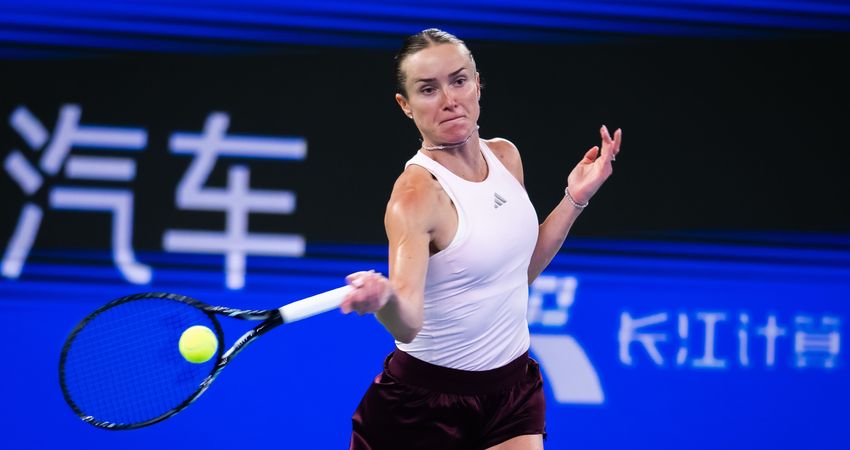
Against Svitolina, the scoreline tells only part of the story. Kartal opened with a 6-2 set in which she established the tempo early and kept the fifth seed under pressure. Svitolina responded with a 6-2 set of her own, changing the rhythm and making Kartal play through longer, more demanding exchanges. That response was a reminder of why the Ukrainian entered the quarterfinal as the favorite: she had won both previous meetings and was the highest-ranked player remaining in her part of the draw.
The deciding set looked like it might require a tiebreak. Neither player faced a break point through the first nine games, an unusual stretch after two sets that had produced such lopsided scores. Kartal did not manufacture an early lead; she stayed level, held serve and waited for the one opening that mattered. Serving at 4-5, Svitolina finally faced a break point. Kartal made that first chance count and finished the match without having to play another game.
The moment was especially significant given their January meeting in Auckland. There, Svitolina edged a three-set contest that ended 7-6 in the decider. Kartal had pushed an established top player to the brink but left without the win. Nine months later, the same matchup again reached a deciding set, only this time Kartal was the one who handled the crucial final points. She had learned that she could compete with Svitolina and, more importantly, converted that knowledge into a result.
Her tournament record also helps explain why the win was earned rather than accidental. She defeated Anhelina Kalinina 7-5, 6-3 in round one, then Bencic 6-0, 7-5 and Paolini 6-2, 6-0. She dropped her first set of the week only against Svitolina. A player outside the top 150 does not ordinarily put together that sequence at a WTA 1000 event; Kartal has done it while still measuring her return from a major physical setback.

Six months out made No. 170 misleading — and Kartal's patience is paying off
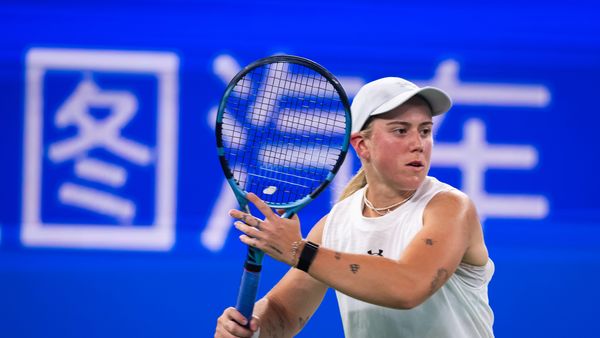
Six months away from professional competition can erase ranking points, match rhythm and the small habits that make tight points feel manageable. Kartal's ranking fell from No. 54 to No. 170 during her absence. She returned last month, represented Great Britain in the Billie Jean King Cup and played in Beijing before arriving in Wuhan. There was little reason to assume that her best tennis would reappear immediately, particularly against opponents who had been competing throughout the season.
Kartal has described the return as a surprise even to herself. The temptation after a long layoff is to race back as soon as training feels comfortable. She said she was close to returning in late August but followed advice from her medical and support team to wait. That decision cost her more time on tour, yet it also meant that she arrived at the Asian swing better prepared for the physical demands of consecutive matches.
The Wuhan results make that patience look valuable. Bencic, an Olympic gold medalist, was held to one game in the opening set of their second-round meeting. Paolini, a two-time Grand Slam finalist, managed only two games in the next round. Kartal's win over Svitolina was her second career victory over a top-10 opponent, and her first against the Ukrainian in three attempts. Each step required a slightly different skill: fast starts, disciplined returning, then composure when an experienced opponent fought back.
There is a rankings story here, but it should not obscure the tennis. At No. 170, Kartal became the third-lowest-ranked WTA 1000 semifinalist since the format began in 2009, behind Sloane Stephens at Toronto in 2017 and Victoria Azarenka at Miami in 2018. The ranking is partly a reflection of lost playing time rather than a precise measure of her current level. Her previous career high of No. 44 shows that she has already demonstrated top-50 potential. Wuhan is evidence that she may be capable of rebuilding toward that standard faster than expected.
Her performance in the deciding set against Svitolina is the clearest signal. Players coming back from injury often talk about confidence in general terms, but here it was visible in a concrete situation: nine games without a break-point opportunity, no room for a loose service game, and a chance to end the match at the first opening. Kartal took it. That is a more useful indicator of competitive readiness than a single spectacular shot or a comfortable early-round score.
Ostapenko's 138 winners make the semifinal a different kind of test
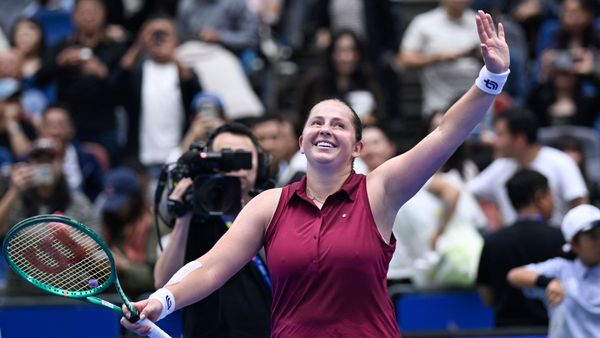
Jelena Ostapenko presents a different problem from Svitolina. The Latvian is an aggressive first-strike player who can take time away from opponents by attacking early in rallies. She reached the semifinals by beating Diana Shnaider 7-6(6), 6-1, after surviving three-set battles against Jessica Pegula and Leylah Fernandez. The win over Shnaider included a difficult opening set before Ostapenko took control of the second. Her willingness to hit through pressure has made her one of the most dangerous players in the Wuhan draw.
The head-to-head is level at 1-1, with both meetings played on grass in 2025. Ostapenko won in Eastbourne, while Kartal took their Wimbledon encounter in three sets. Those matches offer a reference point, but hard courts in Wuhan create a different pattern of movement and timing. Kartal will want to make Ostapenko hit extra balls and use changes of pace to prevent the Latvian from setting up repeated clean strikes. Ostapenko will want the opposite: short points, attacking returns and the freedom to dictate with her forehand.
The numbers underline the contrast. Ostapenko hit 138 winners across her first four Wuhan matches, the most in the field entering the semifinals. Kartal's route has been built more on maintaining pressure without giving away easy points. Against Paolini she struck 14 winners against only eight unforced errors, a controlled performance that ended with 11 consecutive games. She may not need to match Ostapenko's winner total to win; she needs to make the Latvian earn those winners over enough rallies.
The stakes are straightforward. Kartal is one win from her first WTA 1000 final and the biggest title opportunity of her career. Ostapenko is trying to reach a fourth final at this level and pursue a first WTA 1000 trophy. Neither outcome is decided by the quarterfinals, and the semifinal should not be treated as a foregone conclusion simply because Kartal has beaten three seeds. The match will test whether her consistency can withstand a much higher volume of attacking shots.
Wuhan has already transformed the narrative around Kartal's season. The semifinal will answer a different question: can the level she rediscovered after six months out survive an opponent whose best tennis leaves little time to settle? That makes the encounter more than a comeback celebration. It is a genuine tactical test with a place in Sunday's final on the line.

Whatever happens against Ostapenko, Kartal has already changed the direction of her 2026 season. A six-month absence and a slide to No. 170 could have made the final months a slow exercise in rebuilding. Instead, she has beaten three seeded players in succession, overturned an 0-2 head-to-head against Svitolina and reached a WTA 1000 semifinal for the first time.
The next challenge is more specific than proving she belongs. Ostapenko's pace and attacking returns will demand precise serving and resilient defense. Kartal has earned the opportunity to test both, but the final remains a possibility rather than an achievement. Wuhan has provided the breakthrough; Saturday will show how far that breakthrough can go.
Shop GOATIFY tennis products from the Tennis-filtered collection scope.
















