Leclerc Put Ferrari on Top at Sepang — But the Tyres Say This Weekend Is Wide Open
GOATIFYCharles Leclerc ended Formula 1’s first Friday back at Sepang on top of the timesheets, but the most important number of the day may not have been his 1m37.528s. It was the gap between what the stopwatch showed and what the teams still do not know.
Ferrari looked sharp enough for Leclerc to lead FP2 and Lewis Hamilton to take fifth, yet Leclerc himself immediately pointed toward Red Bull and Mercedes as threats. Max Verstappen had already led FP1 and never used the soft tyre in FP2, while Mercedes lost its clean soft-tyre laps and still believes it can recover overnight. Add unusually heavy degradation on a dusty, hot Sepang surface and Friday becomes less a hierarchy than a warning: this weekend may be decided by who understands the tyres fastest.
Ferrari’s P1 matters — but Leclerc is right not to trust it yet

Leclerc’s 1m37.528s was a proper statement because it came on the soft tyre during the most representative qualifying-style phase of FP2. Ferrari did not stumble into the top spot through a late red flag or an unusual tyre choice. The SF-26 produced a clean lap, and Hamilton’s fifth place reinforced the idea that the car was operating in a competitive window rather than relying on one exceptional driver lap.
But Leclerc’s own reaction was more useful than the headline. He said Ferrari did not look like the most competitive team and specifically pointed toward Red Bull and Mercedes. That caution reflects what practice timing screens cannot show cleanly. Verstappen never completed a soft-tyre run in FP2. Mercedes’ George Russell aborted his best soft lap after running wide at the final corner, while Kimi Antonelli had a quick effort deleted for track limits. Ferrari therefore has a benchmark without having seen every rival’s best comparable lap.
The track itself also makes Friday unusually unstable. Sepang had not hosted Formula 1 since 2017, so the surface began dusty and low-grip. Every lap adds rubber and changes the balance. Leclerc described the circuit as slippery, and that matters because a car that feels comfortable on Friday can move out of its ideal window as grip rises and temperatures shift.
Ferrari’s result is still valuable. After Leclerc complained in Baku that rivals had developed faster, putting both cars near the front at the next event is evidence of competitiveness. It just is not proof of superiority. The smarter reading is that Ferrari has earned a place in the fight, with qualifying still likely to depend on who adapts fastest overnight.
Verstappen’s medium-tyre run may be Friday’s most important clue
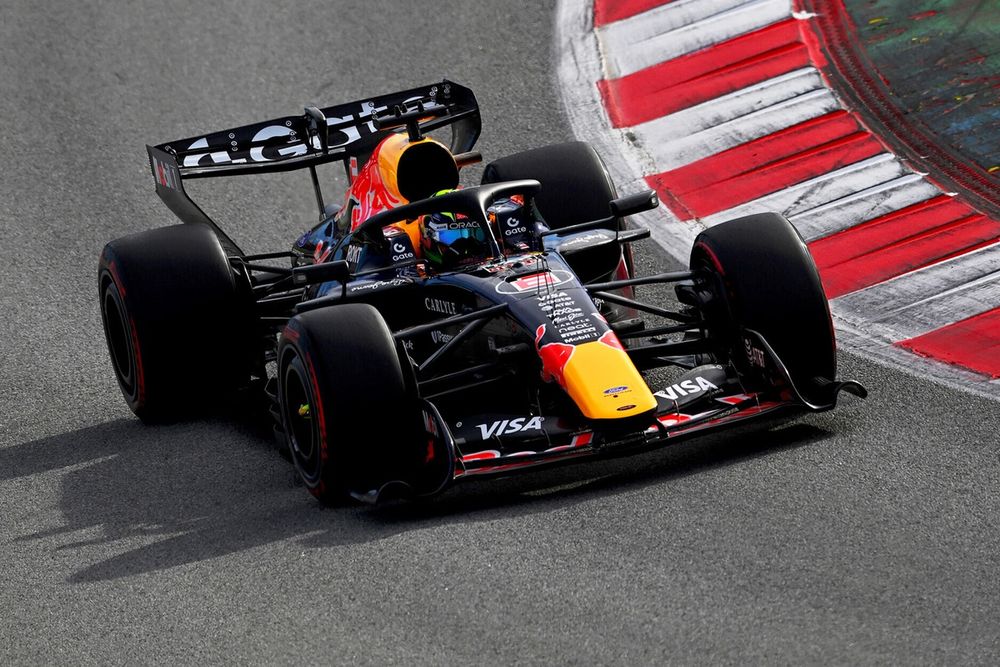
Verstappen’s fourth place in FP2 is the easiest result on the sheet to misread. Unlike Leclerc, Hadjar and Norris, he never switched to the soft tyre for a conventional qualifying simulation. Red Bull kept him on the medium and used the session to collect longer-run information, partly because rain had been expected. That makes the 0.257-second gap to Leclerc much more interesting than fourth place sounds.
The morning provides the other half of the picture. Verstappen’s 1m37.520s in FP1 remained the fastest lap of Friday, eight thousandths quicker than Leclerc’s FP2 benchmark. Hadjar then put the second Red Bull second in FP2 on softs, only 0.099s behind Ferrari. Different fuel loads prevent a clean conversion, but both cars repeatedly appearing near the front is stronger evidence than one headline lap.
Red Bull’s choice also gave Verstappen more information about the race problem everyone is trying to solve. He described the track as extremely hot and the degradation as substantial. On a circuit where small changes in corner approach can alter tyre temperatures, understanding the medium over multiple laps may be more valuable for Sunday than squeezing out a soft-tyre lap on Friday afternoon.
That does not make Red Bull the automatic favorite. It does mean Ferrari cannot assume the FP2 order represents true qualifying pace. Verstappen has hidden the most obvious comparison, while Hadjar has already shown the RB22 can be fast on the softer compound.

Mercedes’ upgrade has run straight into Sepang’s hardest problem
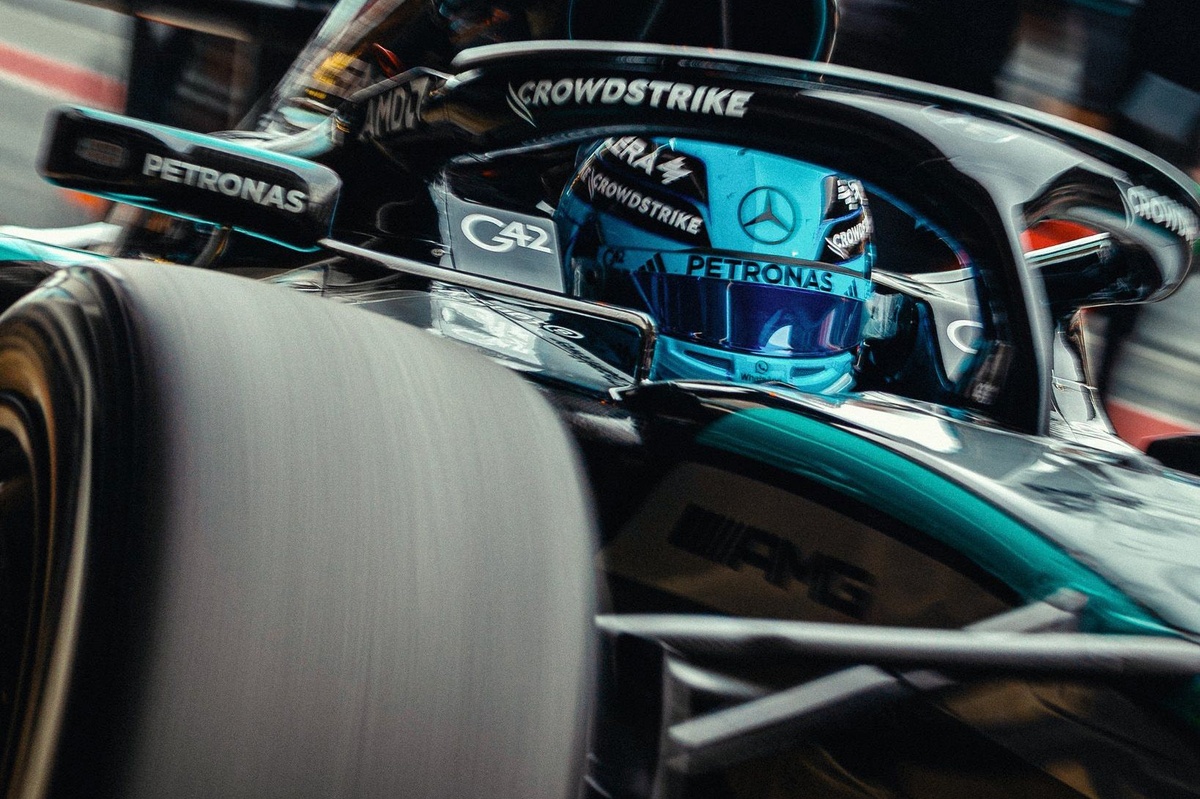
Mercedes arrived at Sepang with one of its biggest update packages of the season, but Friday offered almost the worst possible conditions for judging it cleanly. Russell finished seventh and Antonelli eighth in FP2, yet neither completed the kind of soft-tyre lap that would make the positions fully representative. Russell ran wide at the final corner on his stronger attempt, while Antonelli lost a lap to track limits.
The more worrying signal came over longer runs. Mercedes said the car was fighting tyre overheating and a difficult balance, with the abrasive surface and high temperatures reducing the benefit of added downforce. Russell’s concern after FP1 was already tyre wear; by the end of FP2, the team’s own assessment was that the long-run deficit mattered more than the headline single-lap positions.
That distinction is crucial. A messy qualifying simulation can be repaired with a cleaner lap and better preparation. A car that repeatedly overheats its tyres through Sepang’s long loaded corners has a deeper race problem. Mercedes therefore has two overnight jobs: unlock enough of the update to recover one-lap pace, then make sure the extra performance does not simply turn into more thermal stress over a stint.
With Antonelli leading Russell by 66 points in the championship, Mercedes also cannot afford a weekend where both cars drift behind Ferrari, Red Bull and McLaren. Friday was incomplete evidence, but it gave the championship leader a very real warning.
The race may be won by the team that stops chasing the stopwatch
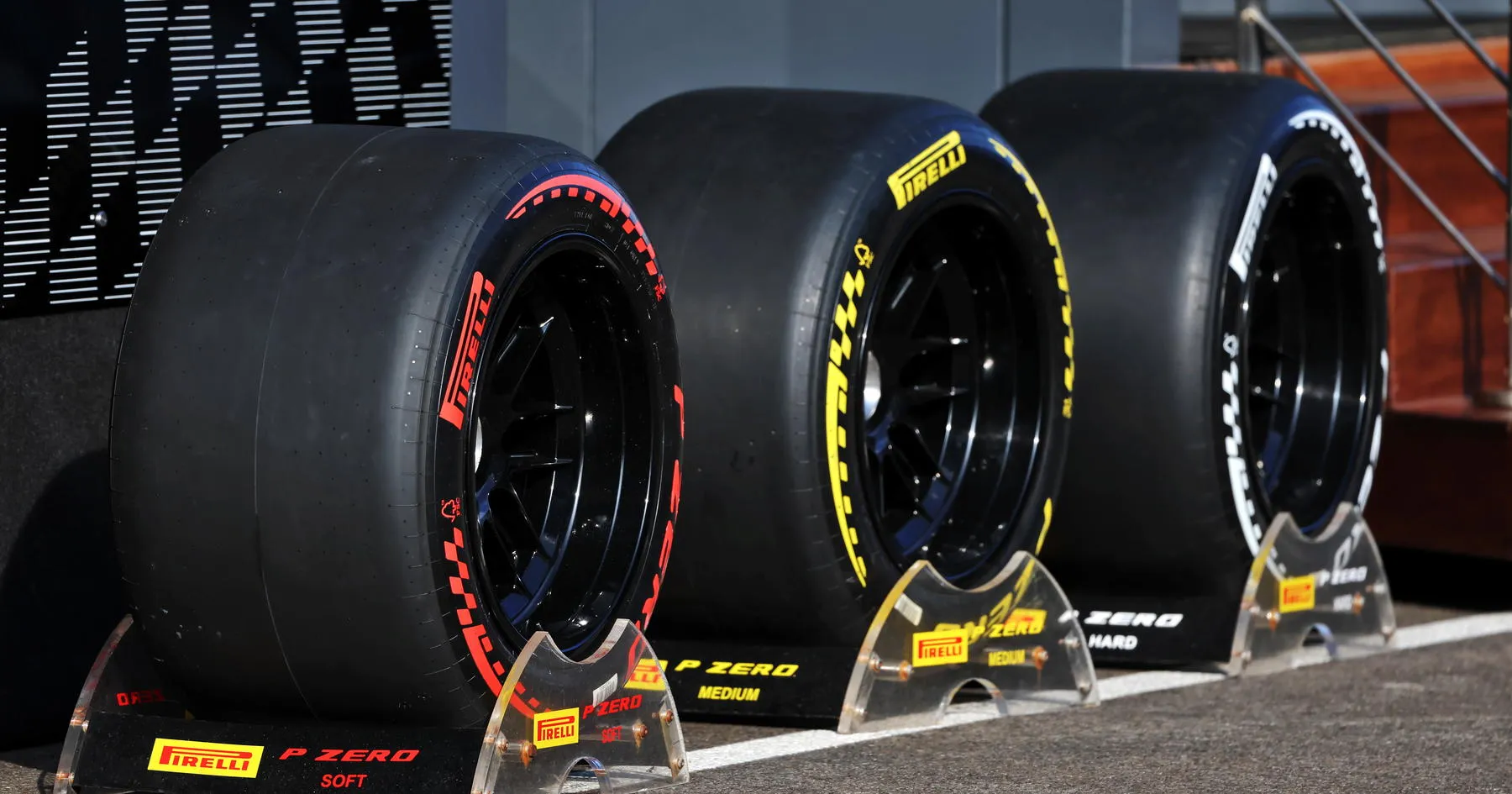
Pirelli’s Friday data makes the race picture more dramatic than the practice classification. The supplier measured heavy thermal degradation as the dusty, abrasive surface encouraged sliding and heat build-up. The C3 medium and C4 soft produced surprisingly similar degradation in long runs, while the C2 hard remained unused and therefore carries the biggest strategic unknown into Saturday.
The projected drop-off of roughly two to three tenths per lap is enough to make a simple one-stop race difficult if the same conditions persist. Pirelli believes two or more stops could become realistic, which changes what teams should value in setup. A car that is a tenth quicker over one lap but burns the tyres several laps earlier can surrender far more time across a stint than it gains in qualifying.
That is where Ferrari’s Friday becomes especially interesting. Leclerc has demonstrated front-row speed, but Sunday will demand restraint as much as aggression. Red Bull has already devoted meaningful running to the medium. McLaren’s Norris moved to third in FP2 and remains part of the long-run equation. Mercedes, meanwhile, has the clearest overheating question to solve.
There is another complication: Sepang weather can rewrite the strategy in minutes. The hard tyre has not been tested, rain remains possible, and the track is still gaining grip after nine years away from Formula 1. Teams are not merely choosing a fastest compound; they are building contingency plans. Friday gave Ferrari the headline, but the weekend may reward whichever pit wall is most comfortable abandoning its original plan first.
The unused hard compound is the most important unknown. If the C2 switches on without excessive warm-up time, it could let a front-runner extend the middle stint and avoid being trapped into an extra stop. If it proves too slow or difficult to bring into its window, teams may be forced to cycle through medium and soft rubber more aggressively. That makes Saturday’s final practice valuable not just for qualifying preparation but for answering a question nobody solved on Friday.
Traffic will matter too. Sepang’s long straights create overtaking opportunities, but losing several laps behind a slower car can erase the theoretical advantage of fresher tyres. The quickest strategy on paper may therefore be the one that creates clean air rather than the one with the fewest stops. Ferrari, Red Bull, McLaren and Mercedes all have enough pace to influence one another’s windows, so an early undercut or an unexpected long first stint could force the rest of the leaders to react. That is why the degradation story is not a side note to Leclerc’s P1; it is the mechanism that could decide whether Friday’s fastest car actually wins on Sunday.

Ferrari should leave Friday encouraged, not convinced. Leclerc put the SF-26 at the top, Hamilton stayed close, and the car appears capable of joining the qualifying fight. But Verstappen’s medium-tyre pace, McLaren’s long-run strength and Mercedes’ incomplete soft-tyre picture all argue against treating FP2 as a forecast.
The bigger opportunity is Sunday. Sepang has returned with exactly the characteristics that made it memorable: heat, long loaded corners, rapidly changing grip and the threat of weather. If degradation remains as severe as it looked on Friday, the fastest single lap may matter less than the team that protects the tyres, reacts to track evolution and keeps strategic options open. Ferrari has put itself in that conversation. Now it has to stay there when the race becomes difficult.