

Jake Paul's MVP Wants Schofield–Bahdi Rematch — But Schofield Is Eyeing Mason
GOATIFYFloyd Schofield left Chicago with the WBA lightweight belt, a 20-0 record and three judges in agreement. Ten days later, the argument over how he won is growing louder. Most Valuable Promotions, the company co-founded by Jake Paul that represents Lucas Bahdi, has formally challenged the officiating in their October 10 title fight and wants an immediate rematch. The complaint centers on moments when Schofield appeared to touch the canvas without receiving a knockdown count.
Schofield's side is moving in a different direction. The new champion dismissed the disputed incidents as wrestling rather than legitimate knockdowns, while his father and trainer says discussions could lead toward WBO champion Abdullah Mason in early 2027. That leaves the lightweight division with two competing narratives: Bahdi's team wants the original result scrutinized, and Schofield's team wants to turn its first title into a unification opportunity.
Neither position automatically decides the next fight. The official scorecards remain 119-108, 116-110 and 115-111 for Schofield, and an appeal is not the same thing as a reversed decision. The more revealing question is whether the contested rounds could change the sport's view of the result enough to force a rematch before the champion can move on.
What MVP's missed-knockdown appeal can actually change
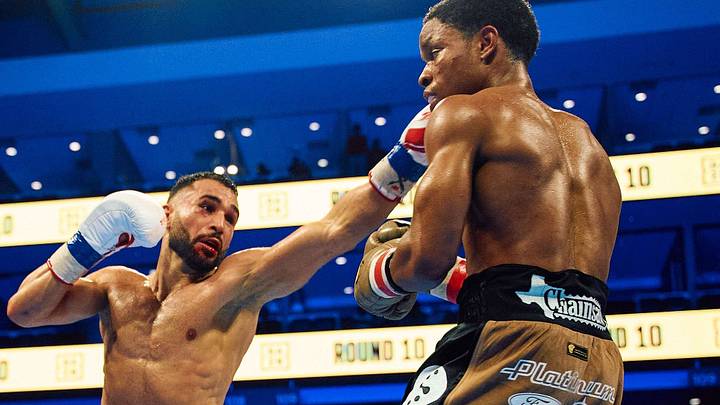
The protest is aimed primarily at the referee's decisions, not at a claim that all three judges secretly favored the wrong fighter. MVP says its video review identified significant missed knockdowns and that recognizing them would have changed the championship outcome. The promotion has submitted material to the WBA and asked for an immediate rematch. Those are allegations from Bahdi's camp, not an official finding that the result was incorrect.
The disputed sequences include a sixth-round exchange in which Schofield went down after Bahdi's offense but the referee ruled a slip, and a ninth-round right hand after which Schofield's knee appeared to touch the canvas without a count. The third round has also been cited in some accounts, although the interpretation of that tangle is disputed. A legitimate knockdown ordinarily changes a close 10-9 round to 10-8, so each ruling can matter beyond the spectacle of seeing a fighter hit the floor.
The arithmetic is less simple than saying two missed counts automatically make Bahdi the winner. Schofield won on the official cards by margins of eleven, six and four points: 119-108, 116-110 and 115-111. Adding one point for Bahdi and subtracting one for Schofield in two affected rounds would produce a four-point swing on each card, assuming the judges' round winners and every other deduction stayed unchanged. That could turn the closest card into a draw, but it would not erase the widest margin. The precise result also depends on whether the disputed incidents occurred in rounds the judges already scored for Bahdi and whether a knockdown actually met the rules.
That is why a transparent review matters. Video can establish whether a knee touched the canvas; it must also establish what caused it. A slip, a push, an entanglement and a legal scoring punch are not interchangeable. Even a persuasive argument that one call was wrong does not by itself rewrite twelve rounds of judging. The WBA can consider the appeal and a rematch request, but the official result remains Schofield's unanimous decision unless the relevant authorities take further action.
Why Schofield still has a strong case for the decision
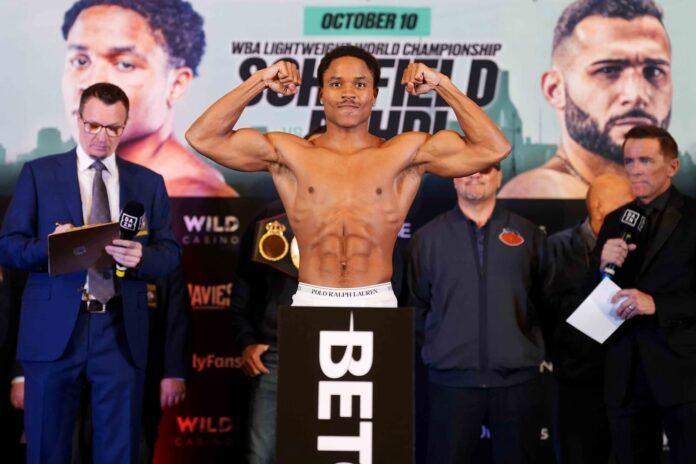
It is possible to believe the referee missed an incident and still recognize why Schofield became champion. The 24-year-old did not win because Bahdi never troubled him. He won because he produced enough clean work, movement and controlled stretches to convince three judges that he had taken most of the rounds. His speed allowed him to strike first and change the angle before Bahdi could settle into the combinations he wanted.
Schofield was particularly effective when he stopped treating every exchange as a chance to prove he was the harder puncher. Bahdi's right hand was a persistent threat, especially when the Canadian could get his feet planted and force an exchange. Schofield's response was to make those moments less frequent. He jabbed, stepped away and occasionally switched stance, asking Bahdi to reset instead of allowing the fight to stay in a narrow pocket where one heavy shot could change everything.
The champion also had a major moment of his own. In the third round he hurt Bahdi and scored a recognized knockdown, banking a valuable advantage before the middle rounds became more difficult. Bahdi had successes later, including an official knockdown in the eleventh, but Schofield's ability to collect rounds without standing still was central to the decision. One live ringside account credited him with 117 landed punches to Bahdi's 74, a useful illustration of the gap in activity even if punch counts are not the same as judges' scoring criteria.
That distinction is important because fans often treat a dramatic late punch as evidence that the fighter landing it controlled the entire contest. Boxing scores are built round by round. A fighter can deliver the single most memorable moment and still lose if the other boxer has consistently won the less dramatic minutes. Schofield's team sees the controversy through that lens: the result reflects the work he did across twelve rounds, not a handful of disputed clips.
None of this removes the referee from scrutiny. It does explain why the champion can be both confident in his win and resistant to returning immediately to the same opponent. The WBA must separate whether an officiating error occurred from whether that error justifies mandating another title fight.

Bahdi's rematch case is about more than two moments
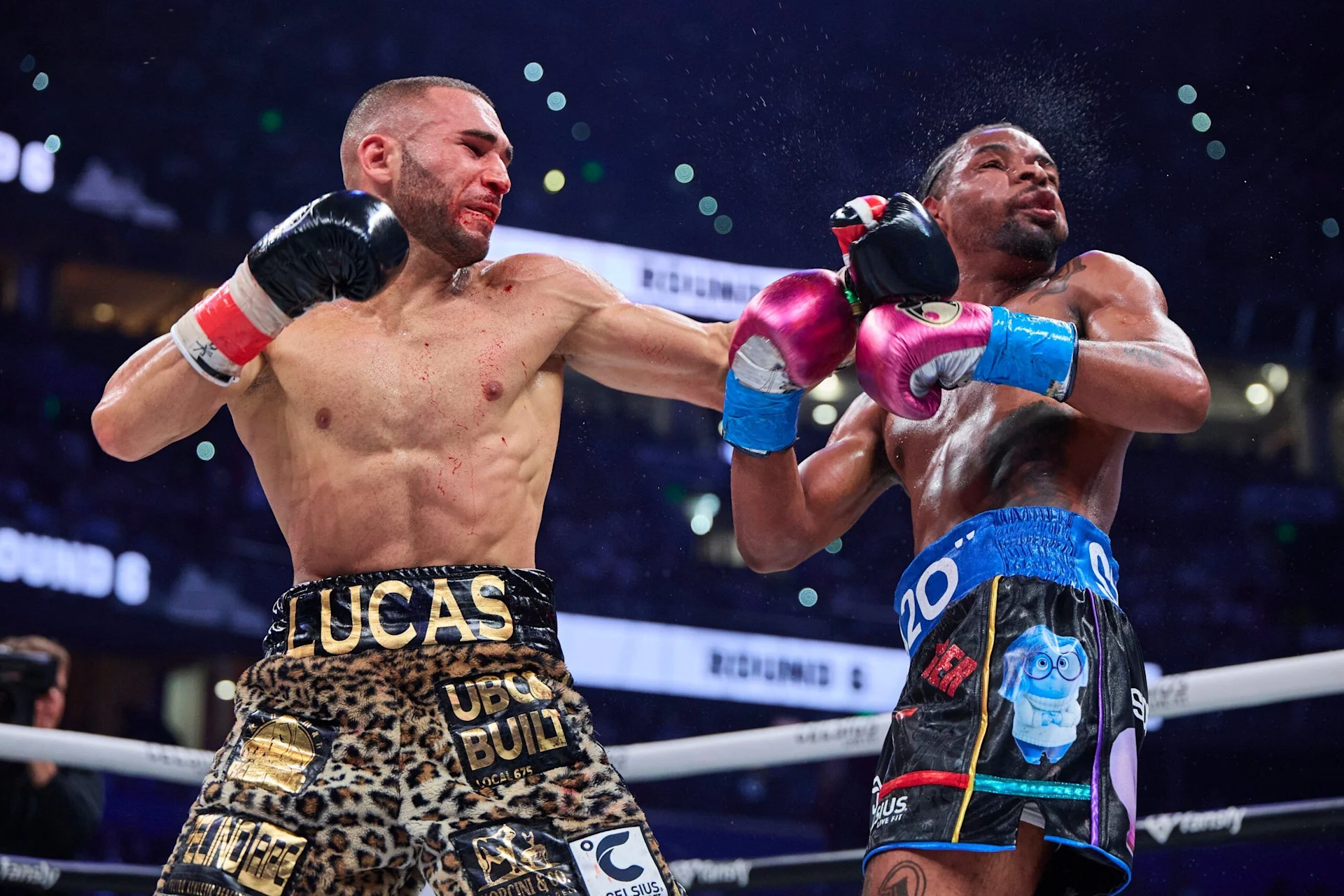
For Bahdi, the appeal is not merely a complaint about a close fight. It is an attempt to preserve the momentum of a career that reached a world-title opportunity through patience and a string of meaningful wins. The 32-year-old from Niagara Falls entered Chicago unbeaten at 20-0 with 15 knockouts. He left with his first professional defeat and a belief, shared by his promoter, that the officials failed to reward some of his best work.
His rise had been built on the ability to change a fight with one punch. The clearest earlier example came in 2024, when Bahdi knocked out the previously unbeaten Ashton Sylve and announced himself as a serious lightweight threat. That result mattered because it showed he could turn an unfavorable-looking exchange into a defining victory. The historical photograph accompanying this section shows Bahdi in that earlier Sylve fight, not the October 2026 championship bout.
Against Schofield, the power remained real, but landing it often enough was the problem. Bahdi could hurt the American when he pinned him down, yet he spent long periods following a mobile opponent and searching for a single opening. His official eleventh-round knockdown proved that danger lasted into the championship rounds. The disputed sixth- and ninth-round sequences are therefore especially frustrating for his camp: in a fight where clean opportunities were scarce, a ruling on each one could have changed how the last rounds felt and how close the contest looked.
MVP has asked the WBA for an immediate rematch rather than simply accepting the scorecards and moving to another opponent. That request gives Bahdi a chance to argue he deserves a second title opportunity without pretending that the sanctioning body has already sided with him. An appeal can prompt review, public explanation or a rematch order; it does not guarantee any of those outcomes. Questions about a formal result change also involve the authority of the commission that regulated the bout.
Bahdi's best long-term argument may be broader than the protest itself. He demonstrated that he can threaten a fast, technically gifted champion even when the rounds are slipping away. If the appeal fails, he still has a credible route back through another high-level opponent. If it succeeds in producing a rematch, the tactical adjustment is clear: pressure alone will not be enough. He needs to cut off the ring earlier, raise his output and make the scorecards less dependent on two or three dramatic moments.
Abdullah Mason could become the next fight before Bahdi gets an answer

Schofield's father and trainer says the team has discussed a potential WBA-WBO unification against Abdullah Mason. San Antonio and a February or March 2027 date have been mentioned, but money and location are unresolved. No contract has been announced. Mason, an unbeaten southpaw, defended his WBO lightweight title in July by stopping Albert Bell in the twelfth round. He offers a different challenge from Bahdi: long-range skill, speed and the pressure of two belts at stake.
For Schofield, unification would turn his first championship into a bigger career opportunity. Golden Boy also promotes WBC champion William Zepeda, giving the division several potential routes to major fights. For Bahdi, the problem is timing. An ordered rematch could interrupt those plans; a rejected appeal might leave him seeking another route back to the title. The WBA has not publicly ordered a rematch, and Mason negotiations are preliminary. Neither outcome is settled.

The championship result remains Schofield by unanimous decision, and that is the starting point for every conversation. MVP has raised specific officiating complaints and asked for a rematch, but no public ruling has overturned the result or ordered a second fight. Schofield can legitimately point to his cleaner stretches, superior movement and the margins on the official cards. Bahdi can legitimately ask why certain trips to the canvas were not counted as knockdowns.
The two arguments do not have to cancel each other out. A fighter can deserve the win over twelve rounds while individual referee decisions still warrant review. The sport's next decision should be transparent about both. If the WBA sees enough to mandate another meeting, Schofield's plans change. If it does not, the emerging Mason negotiations may quickly become the bigger story at 135 pounds. For now, the belt is Schofield's, the appeal belongs to Bahdi, and the next move is not yet settled.

















