

Adames Won 100–90. Warburton Celebrated Just Surviving.
GOATIFYThere are unanimous decisions, and then there are decisions that tell you nearly everything before the cards are read. Carlos Adames beat Gerome Warburton over ten rounds in Riyadh on November 14, with one judge giving the WBC middleweight champion every round. The other two found only marginally more to reward in the challenger. Yet the strangest image of the night was not Adames celebrating a commanding victory. It was Warburton celebrating that he had made it to the final bell.
The scores — 100–90, 99–91 and 98–92 — described a fight that rarely threatened to change direction. Adames stalked, landed the heavier work and gradually increased the pressure; Warburton spent long stretches trying to deny the champion a clean target. He succeeded at surviving. He did not build a convincing case for winning. That contrast made a routine result more revealing than a quick knockout might have been.
This was also a peculiar assignment for a world titleholder: a non-title fight at a 165-pound catchweight, above Adames' usual 160-pound championship limit. Evaluating it as a meaningful title defense would be misleading. The better questions are why it unfolded so cautiously, what Warburton actually achieved, and where Adames goes when he returns to the middleweight title picture.
Adames controlled the geography long before he controlled the scorecards
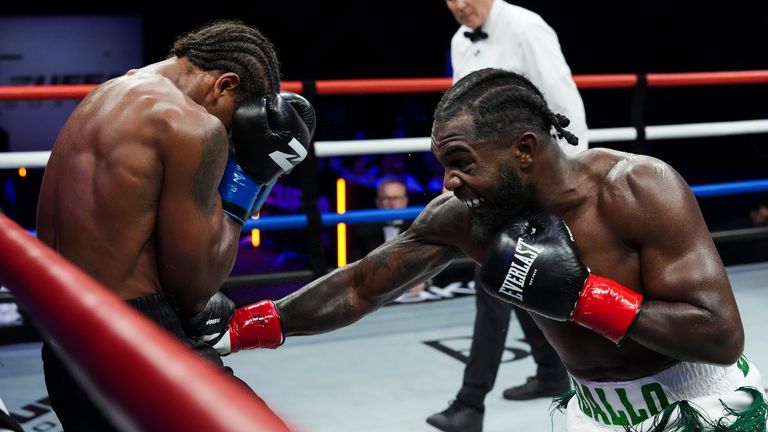
Adames did not begin as a fighter desperate to manufacture a highlight. The early rounds were restrained, especially for a champion with an obvious advantage in pedigree and physical authority. Warburton, a southpaw, mostly retreated behind movement and a tentative jab. Adames followed rather than sprinted. In practical terms, those opening minutes established the bout's geography: one man was choosing the direction of travel, and the other was choosing how much risk to tolerate while moving backward.
A retreat can be a smart tactical decision when it creates a counterpunching lane, draws an opponent onto mistakes or preserves enough space for a meaningful reset. Here, Warburton's movement too often came without a second step. He could make Adames pursue him, but he struggled to make the champion pay for pursuing. Single punches from the front foot therefore counted for more than they might have in a livelier exchange. Adames was not producing spectacular combinations at every opportunity; he was winning the minutes in which Warburton produced almost nothing in reply.
The tone became more decisive around the fourth and fifth rounds. Adames pushed Warburton toward the ropes more frequently and began working behind stronger right hands, including attacks downstairs. Body punches do more than add a different target. They punish an opponent whose entire defensive system depends on repeatedly changing direction, and they encourage the guard to move in ways that open the head. Adames was able to touch both levels while keeping the Welshman occupied with avoiding the next entry.
GOATIFY
GOATIFY Boxing
Adames dictated the pace and gradually worked his way inside. Explore GOATIFY Boxing gear for fans who appreciate the craft behind a decisive win.


The champion's work was not pristine. Some punches strayed toward the beltline, and he never turned his control into the sort of sustained, high-output assault that forces a referee to consider intervention. But dominant boxing does not require a stoppage. A useful distinction is between an opponent who looks comfortable avoiding punishment and one who looks increasingly satisfied merely to avoid catastrophe. Warburton belonged closer to the second category as the rounds accumulated.
The judges' margins fit the pattern. A 100–90 card means one judge saw no round Warburton had earned; 99–91 and 98–92 allow only narrow concessions elsewhere. These are not punch statistics and should not be confused with them. They are the officials' assessments of ten separate rounds, but they match the broader observation: Adames consistently supplied the cleaner offense, forward initiative and consequential moments. If viewers felt the bout lacked urgency, that did not make the decision difficult.
The lack of sustained resistance may frustrate an audience expecting a champion to press for a statement finish. It is nevertheless hard to fault Adames for banking clear rounds instead of taking reckless risks in a fight without his belt at stake. The result was a win built on position and reliable scoring rather than a cinematic eruption.
Warburton's survival meant something to him. The scorecards tell a different story.

Warburton's reaction after the final bell deserves to be understood rather than simply mocked. He was taking an enormous step in class against an established champion. There is a human difference between being knocked out on the sport's biggest stage and proving to yourself that you can absorb its pressure for ten rounds. His celebration spoke to that personal achievement. The scorecards spoke to the boxing contest, and they did not tell the same story.
The Welshman's route into the main event was not imaginary. Earlier in 2026 he had built momentum with victories over Nathan Heaney, including an upset that changed expectations of what he might do against better-known opposition. Those wins mattered because they suggested that Warburton could make a difficult night for fighters accustomed to dictating tempo. Adames, however, operates at a different level of opponent preparation, technical sharpness and championship experience. A blueprint that unsettles one fighter is not automatically transferable to another.
Warburton's defensive choices also contained an awkward trade-off. Moving away reduced the chance of being trapped in close-range exchanges, particularly when Adames brought his right hand into play. But judges cannot award rounds merely because a boxer has avoided the worst consequences of staying in range. If a fighter spends much of three minutes creating distance, he still needs enough crisp jabs, counters or sustained attacks to answer the opponent's scoring work. That second part rarely arrived.
He did jab more as Adames tightened the ring, and his resilience was real. Adames continued to land meaningful punches, yet Warburton stayed upright and saw out the scheduled distance. A boxer is entitled to regard that as progress, especially when the alternative might have been an early stoppage that made the assignment look hopeless. The problem is that professional scoring rewards effective offense, defense, ring generalship and clean punching, not private benchmarks about surviving a famous name.
GOATIFY
GOATIFY Boxing
Going ten rounds can mean something to a boxer even without winning many of them. Browse GOATIFY Boxing designs celebrating commitment to the fight.
There is also a trap in treating every wide decision as proof that the defeated fighter lacked courage. Warburton accepted the contest, absorbed a difficult night and kept trying to limit damage. What he did not do was create enough offensive threat to force Adames into major tactical revisions. Those are separate judgments. Calling the fight one-sided is fair; pretending the man who lasted ten rounds had no reason to feel proud is less interesting and less accurate.
Adames' postfight assessment captured the competitive imbalance. He suggested that Warburton had concentrated on making it through rather than trying to win. It was a pointed criticism, but it aligned with the activity split visible across the contest. For the Welshman, the next developmental question is not whether he can withstand an elite fighter's power for ten rounds. He has demonstrated that possibility. It is whether he can stand his ground long enough, and attack accurately enough, to make an elite fighter actually defend a lead.
In that sense the night had two winners of different kinds: Adames decisively won the sanctioned boxing match, while Warburton won a personal endurance test that was never part of the official scoring criteria. Conflating them only obscures what each man should learn.
The 165-pound result cannot replace Adames' middleweight obligations
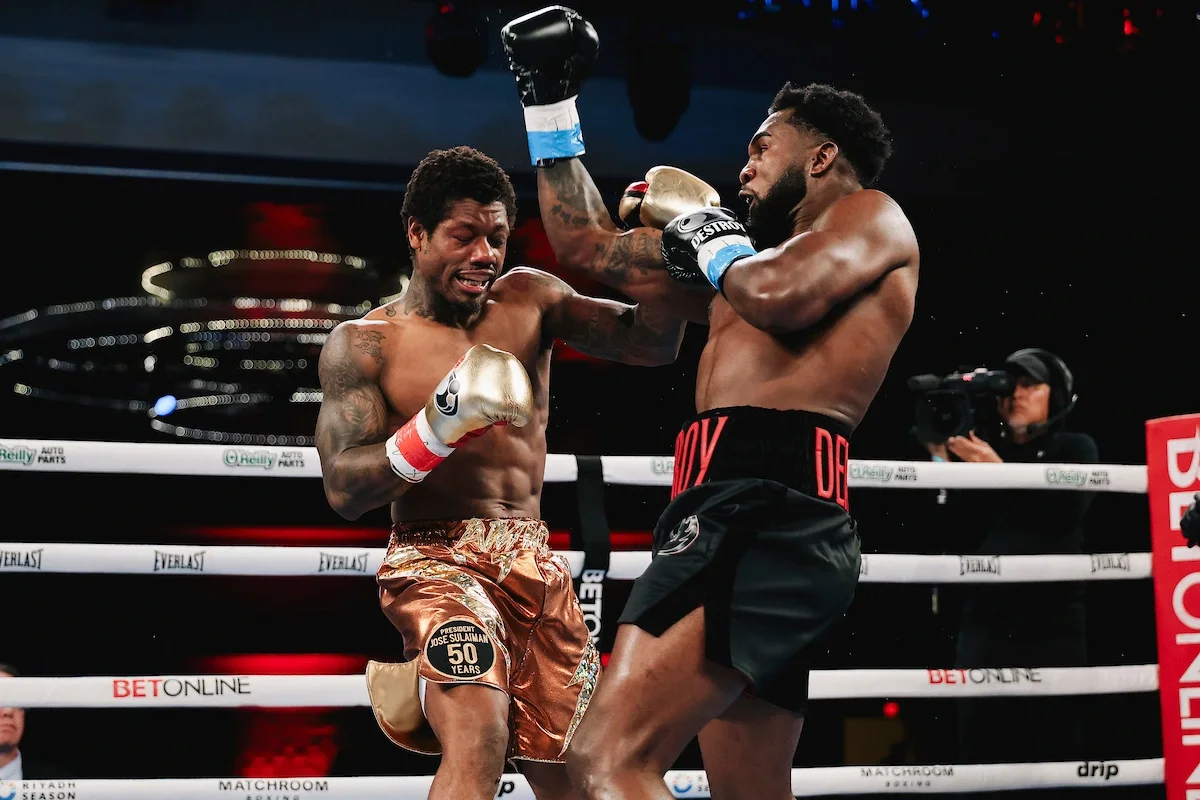
There is a reason the bout's weight matters as much as the scorecards. Adames holds the WBC middleweight title, whose division limit is 160 pounds. The Warburton fight took place at an agreed 165-pound catchweight and was not a defense of that belt. A victory over a resilient but comparatively unproven opponent above the championship limit can maintain momentum; it cannot settle the competitive questions posed by the middleweight contenders waiting in line.
That context stops the evening from being oversold. Adames was entitled to take a non-title appearance and collect a straightforward win. But a world champion's reputation is built by what happens when the opponent can threaten his preferred positions, return fire and take rounds off him. Warburton never consistently presented that test. The gap between a good performance and a strong piece of evidence for title supremacy is especially large when one of the scorecards reads 100–90.
The WBC has already addressed the division's next steps. Its published middleweight status and ordering materials identify unbeaten challenger Meiirim Nursultanov in the mandatory picture, with interim titleholder Jesús Ramos Jr. also relevant to the subsequent sequence. Those documents establish governing-body expectations, not an announcement that a date, venue or television arrangement has been finalized. Until a fight is formally made, it would be wrong to describe a specific next opponent as signed and sealed.
GOATIFY
GOATIFY Boxing
World title questions live beyond a non-title scorecard. Check out the GOATIFY Boxing collection for boxing fans following the middleweight scene.
Nor should fans read the catchweight as an automatic signal that Adames is moving permanently to super middleweight. He floated a willingness to take fights anywhere from 160 to 168 pounds after his victory, an understandable posture for a champion seeking the largest opportunities. The practical question is whether that flexibility becomes a negotiated matchup against another major name or simply a public challenge that must coexist with mandatory-title business. Words at the microphone are an opening bid, not a confirmed schedule.
A useful recent point of comparison is Adames' earlier work against Austin Williams. That was a meaningful test inside the championship conversation and demanded substantially more defensive responsibility and shot selection. Remembering that bout helps viewers avoid treating Warburton's ten-round survival as an unusually high measurement of Adames' ceiling. A fighter can dominate a lower-risk assignment and still have unresolved questions against opponents who can counter his combinations and sustain pressure of their own.
The rest of the Riyadh card illustrates how boxing nights contain different standards of success. Former bantamweight champion Jason Moloney beat Andres Teran by scores of 99–91, 98–92 and 97–93, while Bruno Surace also won a unanimous decision over Kamil Bednarek. Those fights offered their own technical narratives, but none changes the central main-event distinction: Adames won comfortably, Warburton lasted, and neither fact creates an additional title defense on the champion's record.
Adames' next genuinely consequential test would bring the conversation back to middleweight stakes, whether through the mandated challenger path or an appropriately sanctioned alternative. In that setting the demands will change. Controlling geography for ten rounds is a sound foundation, but a higher-class opponent can turn the same forward pressure into counterpunching chances, force Adames to reset behind a more active jab and make sustained body attacks much more expensive. Those are questions this fight could not answer, not failures that the champion somehow suffered in winning it.
Ultimately, the most revealing detail was not that one judge scored the fight 100–90. It was the contrast between the two fighters' definitions of a successful night. Adames wanted a win that kept his name active, protected his position and offered leverage for bigger matchups. He got it without serious doubt. Warburton wanted to show that a daunting step up would not simply overwhelm him. By reaching the final bell, he got that too — just not in a way that persuaded the judges.
Both truths can coexist. Warburton's resolve deserves acknowledgement, while his limited counteroffense explains why the decision was never competitive. Adames showed patience, ring control and increasingly committed body work, but his superiority was expected in a non-title catchweight assignment. The performance adds a victory and another set of useful rounds. It does not decide the WBC's middleweight order or prove what happens against its highest-ranked challengers.
The real measure of this outing will come later, when Adames faces somebody who has both the durability to remain in front of him and the offense to make him pay for every step forward. Until then, Riyadh will be remembered as the night one man dominated almost every round and the other celebrated surviving all ten.
GOATIFY
GOATIFY Boxing
Shop GOATIFY boxing shirts, hoodies and stickers.


















