

Bam Will Skip a Belt for Inoue — But the Superfight Still Needs a Deal
GOATIFYJesse “Bam” Rodriguez has a championship belt at 118 pounds, a perfect professional record and a choice that could define the next stage of his career. His team says he is prepared to abandon a possible December unification fight if that is what it takes to meet Naoya Inoue. That is a striking concession from a 26-year-old who only recently became a three-division champion.
The potential reward is enormous: an encounter with one of boxing’s most accomplished pound-for-pound fighters at 122 pounds. But there is no signed contract, no announced date and no assurance that Inoue will wait. What changed this week is not that the superfight became official. It is that Rodriguez’s corner publicly acknowledged how much flexibility it is willing to offer to make the negotiations possible.
Inoue wants a direct route — not another December detour

Naoya Inoue has drawn a sharp line around the timetable. The undisputed super-bantamweight champion does not want Rodriguez to squeeze in another title fight in December and then attempt to meet him early in 2027. A compressed turnaround could mean another training camp, another weight cut, another injury risk and less time to build a contest worthy of the fighters involved. Inoue’s position, as reported this week, is that the two should go straight to each other if the matchup is to happen soon.
That position carries leverage because Inoue has another route available. At 33, the Japanese champion could move from 122 to 126 pounds and pursue a fifth weight-class championship. He does not need to sit idle while another boxer collects a belt at 118. The difference between a firm deadline and a negotiating preference matters, however: neither camp has announced an agreement, and there is no verified public contract spelling out a March date. For now, the urgency is real but the exact calendar remains provisional.
Inoue’s standing is built on results rather than the promotional possibilities of a future bout. He retained his four major super-bantamweight belts by decision against Junto Nakatani in May, a major all-Japanese showdown that demanded concentration over the full distance. Rodriguez would offer a different stylistic puzzle: a younger southpaw with quick entries, layered combinations and the confidence of a fighter who has already won titles across three divisions. The attraction is obvious. So is the possibility that the moment disappears if either fighter takes a different path.
Why skipping Christian Medina would be a genuine sacrifice

Rodriguez did not arrive at this decision point by waiting for a famous opponent. In June he stopped Antonio Vargas in the sixth round to win the WBA bantamweight title, extending his unbeaten record to 24 victories and establishing himself as a champion in a third weight class. The performance showed how his speed and precision can carry upward in weight, but it also opened a perfectly legitimate next chapter at 118 pounds: unifying belts before leaving the division.
Christian Medina holds the WBO bantamweight title, and a proposed meeting between the two has been discussed as a possible December option. On sporting merit, that is no disposable stay-busy fight. A unification would add another championship to Rodriguez’s résumé, give him an opponent with his own standing in the division and help establish who really leads the bantamweight class. Skipping it would mean trading a relatively clear championship objective for a bigger, less certain opportunity at a higher weight.
The calculation is also about timing. Rodriguez has already moved up from 115 to 118 pounds, while Inoue competes at 122. Those numbers can look trivial on a chart, yet at elite lighter weights every additional pound affects conditioning, recovery and physical exchanges. Rodriguez’s June stoppage of Vargas demonstrated punching authority at bantamweight; it did not automatically prove how he would cope with Inoue’s timing and power at super bantamweight. A direct jump is ambitious precisely because it removes one more opportunity to settle into a heavier division.
Careers are not always rewarded for taking the most orderly route. A boxer can unify at one weight and still miss the marquee matchup that made the move worthwhile. Rodriguez and his advisers must decide whether the value of a potential Inoue fight outweighs the belt he could pursue now, without confusing willingness to sacrifice with confirmation that the prize is secured.

Robert Garcia's yes comes with one important condition
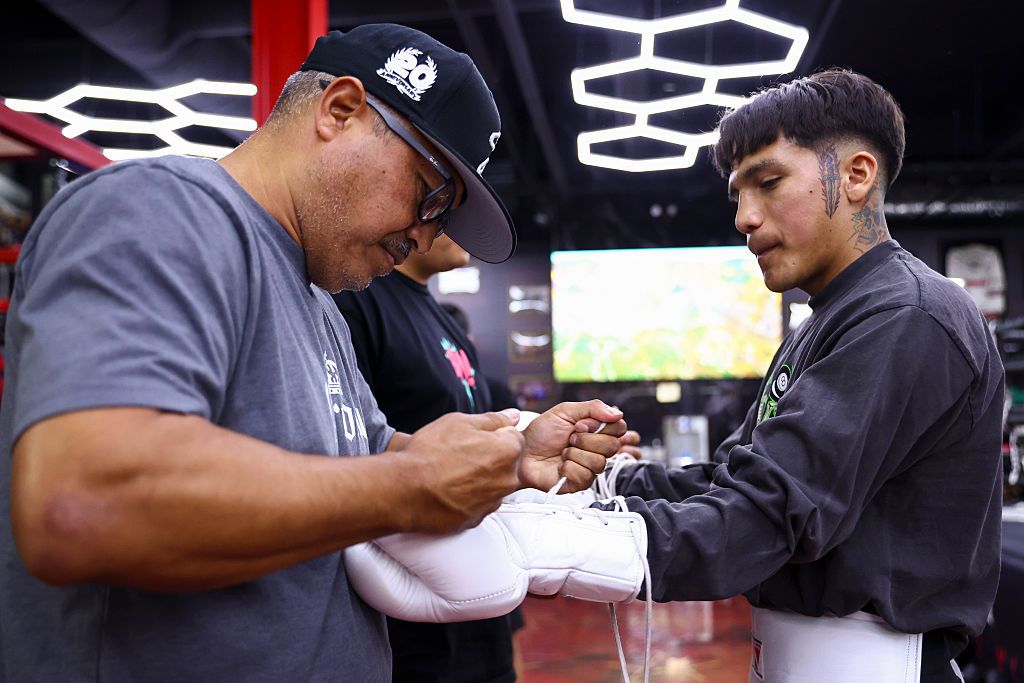
The strongest signal from Rodriguez’s side came through trainer Robert Garcia. Garcia said his fighter would be willing to bypass the next bout and go directly into an Inoue contest, provided the other side engages and the terms make sense. That is not a signed offer or a unilateral promise to accept any arrangement. It is a public expression of intent coupled with a request for serious contact from Team Inoue.
Garcia’s role makes that distinction important. Trainers can identify a technical opportunity and a sensible preparation window, but a fight of this scale also involves promoters, broadcast partners, venues, financial guarantees and sanctioning bodies. The weight and timing must be agreed before the coaching team can build a camp around them. A statement that Bam is ready to move directly is meaningful because it reduces one potential obstacle; it does not remove the commercial and logistical ones.
Rodriguez’s camp also has to protect the fighter from a false choice. If a firm Inoue proposal arrives, passing on Medina could be justified by the sporting and financial upside. If the proposal never becomes concrete, cancelling a championship fight merely to hold a date open could cost momentum and bargaining power. The prudent sequence is straightforward: establish that both sides genuinely want the bout, define the weight and window, then decide which existing plans must be sacrificed.
The public conversation is often reduced to whether one boxer is brave enough to face the other. Both have already shown they are prepared to face elite opposition. The harder question is whether the people negotiating can agree on an arrangement that lets them arrive healthy, fully prepared and without competing obligations. Until that happens, Garcia’s willingness should be understood as an opening, not the finish line.
The superfight is compelling — and the window is fragile
A Rodriguez–Inoue fight would put two aggressive problem-solvers into the same ring. Inoue controls distance with compact footwork, sharp counters and combinations that punish opponents for lingering after their attacks. Rodriguez brings a southpaw stance, educated angles and an ability to accelerate once he identifies an opening. Their reputations for offensive excellence are not identical: Inoue’s is anchored by his dominance at 122, while Rodriguez’s most recent statement was a knockout in his first major assignment at 118.
The tactical questions practically write themselves. Can Rodriguez get his lead foot into useful positions without walking onto Inoue’s counters? Can Inoue stop the American from building long combinations by intercepting him early? How will Bam’s body punching translate against a champion who is exceptionally dangerous when opponents commit their weight forward? Those are questions a genuine fight would answer. Neither side should be declared a winner on the strength of highlight reels or a speculative weight comparison.
Several futures remain possible. Rodriguez could receive an acceptable direct offer and abandon the Medina route. Negotiations could drag on, leaving him to defend or unify at bantamweight while Inoue considers featherweight. Or the two could agree in principle but still struggle over a date that accommodates preparation and promotion. The absence of a contract means none of those outcomes can yet be treated as the plan.
For boxing fans, the positive development is that Rodriguez’s side is not insisting on a December stop before entertaining the larger fight. That flexibility gives the matchup a clearer path than it had before. The negative is that a path is not a booking. Inoue’s desire to move on, Rodriguez’s ambition to add to his legacy and the commercial pressure around a potential pound-for-pound event all make the coming negotiations more consequential than another round of social-media callouts.

The next meaningful headline should be about negotiations producing terms, not simply another expression of mutual respect. Rodriguez has indicated through his trainer that he is prepared to move straight toward Inoue; the Japanese champion has signaled that he does not want a detour. Those positions are closer than they once appeared, but there is still substantial work between them and a signed fight.
If the deal is made, the contest could become one of 2027’s defining matchups. If it is not, Rodriguez still has a real bantamweight championship path and Inoue still has a possible move to featherweight. The crucial distinction today is simple: Bam may be willing to sacrifice a belt opportunity for the superfight, but he has not yet been given a confirmed superfight to sacrifice it for.

















