Murray Wants Out. The Pelicans Paid Two Firsts and Dyson Daniels for 54 Games.
GOATIFYDejounte Murray has asked the New Orleans Pelicans to trade him. The club confirmed the request on Friday, November 13, and the transaction that brought him to Louisiana in 2024 suddenly looks less like an expensive gamble and more like a bill New Orleans still has to settle. Two first-round selections, Dyson Daniels and two other players went to Atlanta. Murray has appeared in just 54 games for the Pelicans across an injury-interrupted stretch, and his third season with the team is already moving toward an uncertain ending.
The argument is not that Murray stopped being a talented guard. At his best, he can organize an offense, get into the midrange and create turnovers. The problem is the gap between the player New Orleans expected when it made the deal, the player injuries allowed it to use and the reality of a roster now trying to develop younger ballhandlers. Murray is averaging 13.4 points through nine appearances this season, and his trade request comes after the team lost eight of those games. Both parties now have to confront a question they could postpone while he was hurt: what does his next season, and the Pelicans' next phase, actually look like?
The Request Is Confirmed. The Destination Is Not.
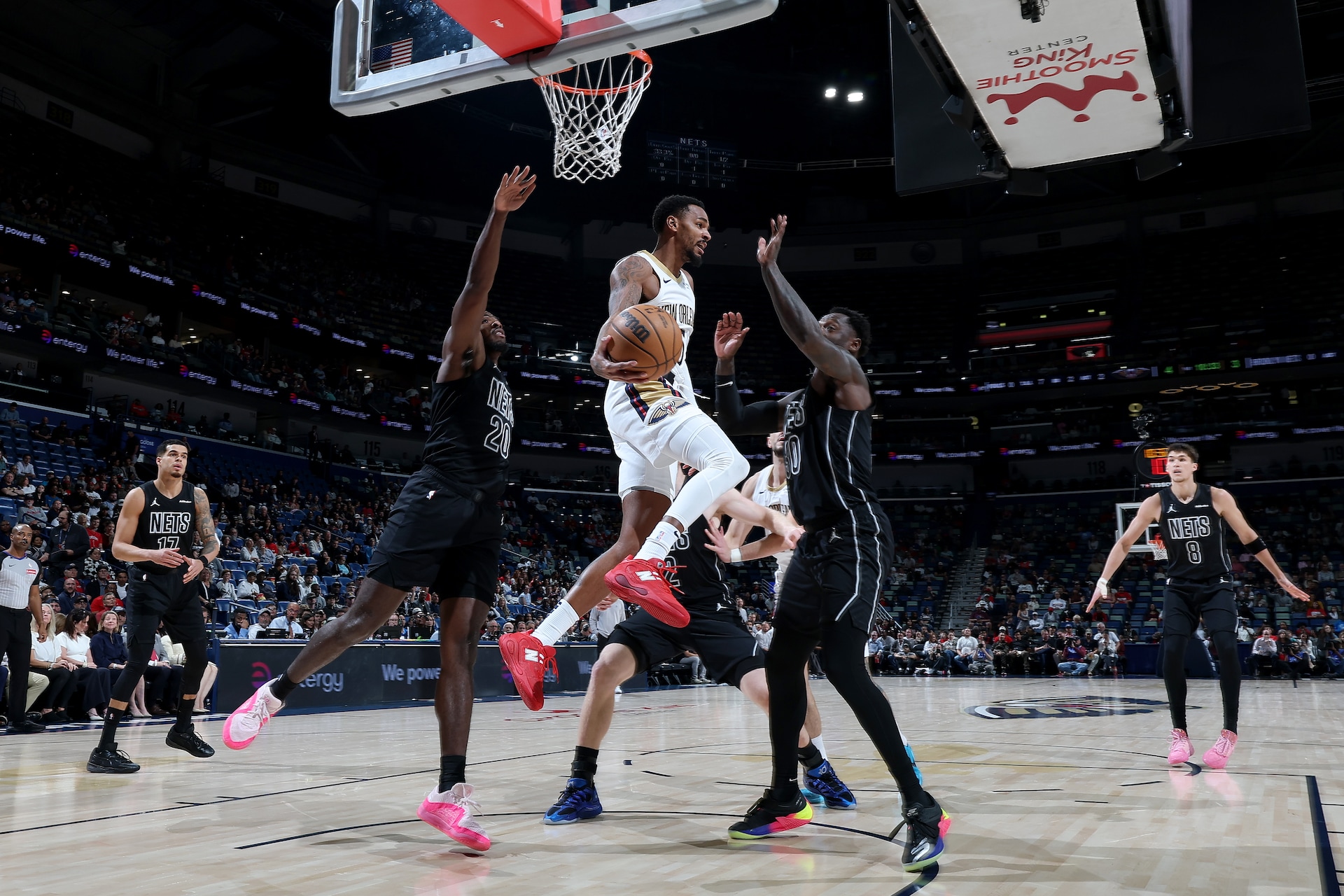
New Orleans did not leave much room for interpretation. Murray's representatives told the club he wanted a trade, and the Pelicans responded that they would assess opportunities in their own organizational interests. That is a confirmed request, not a confirmed agreement, an imminent deal or evidence that any particular destination has a transaction ready. The difference matters when a frustrated veteran and a struggling team are suddenly attached to half a dozen trade rumors.
The timing is uncomfortable. Murray was absent from Friday's game against Memphis because of a left ankle sprain. Coach Jamahl Mosley said he had been told the guard was not in the building. The team was also trying to address a run of poor play, with its record standing at one win in Murray's nine appearances. A player request cannot explain all of those losses: no individual guard controls every defensive possession, shooting night or rotation decision. But it does make the locker-room situation and the team's immediate priorities harder to separate.
For the Pelicans, the safest response is also the least theatrical: keep the public discussion focused on basketball while the front office evaluates real offers. They have no obligation to accept the first package pitched in an online rumor. Equally, forcing an unhappy guard into a central role without a coherent plan could damage the development time of players they may eventually have to build around. The official language gives New Orleans flexibility; the coming weeks will show whether it can use it.
GOATIFY
GOATIFY Basketball
Murray's trade request has opened an NBA-wide conversation. Browse GOATIFY basketball apparel and fan gear while New Orleans evaluates its options.

Zion Williamson G.O.A.T. - Basketball Decal Sticker
Add basketball personality to your favourite gear.
Shop Now ↗
Michael Jordan – The GOAT Chicago Bulls Sweatshirt
A basketball fan design for everyday wear.
Shop Now ↗
Zion Williamson G.O.A.T. - Basketball - Hoodie
A basketball fan design for everyday wear.
Shop Now ↗

Zion Williamson G.O.A.T. - Basketball - Sweatshirt
A basketball fan design for everyday wear.
Shop Now ↗
Murray has reasons to want a different setting. His healthiest stretches in Atlanta featured far greater offensive responsibility, and his first New Orleans season never established a stable rhythm after the hand injury. His Achilles injury then cut off the chance to build continuity. None of that automatically makes another team a good destination. The acquiring club would be buying both the possibility of a more productive Murray and the downside that his recent availability and efficiency warn about. For New Orleans, this is now a trade negotiation rather than a debate over whether the relationship is working.
Two Firsts, Dyson Daniels and Just 54 Games: The Price of the Bet
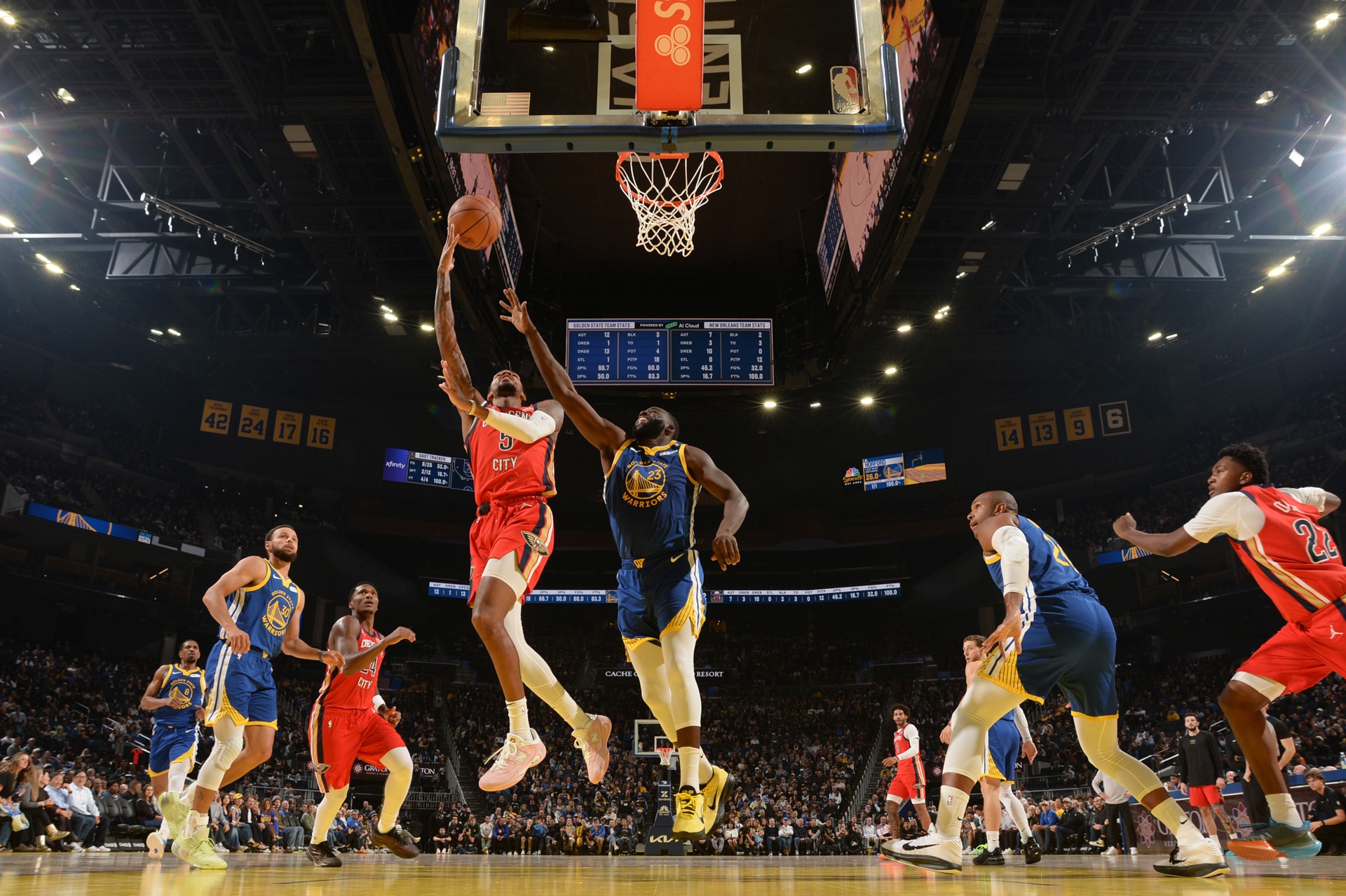
The original deal was not a minor bet on a backup guard. In June 2024, New Orleans sent two future first-round picks, Dyson Daniels, Larry Nance Jr. and E.J. Liddell to Atlanta for Murray. The basketball case was understandable in isolation. Murray was coming off an Atlanta season averaging 22.5 points, 6.4 assists and 5.3 rebounds. The Pelicans wanted another ballhandler who could ease the creative burden on Zion Williamson while contributing at the point of attack on defense.
That was the theory. The return on the investment has been brutal. Murray broke his hand in the 2024 season opener, disrupting the start of an arrangement that relied on familiarity between new teammates. A season-ending Achilles injury followed in January 2025. He has appeared in only 54 games for New Orleans over the three-season span covered by the current trade conversation. Across those appearances he has averaged 16.6 points, 6.6 assists and 5.9 rebounds, useful totals but nowhere near enough availability for a trade priced around two firsts and a young rotation player.
It is tempting to grade that trade only by pointing at Daniels. He went the other way in the deal, and every strong performance he has delivered since makes the lost development opportunity more painful. Yet the criticism should be more precise than pretending the front office could have known Murray would suffer two major injuries. Teams cannot predict every medical event. They can, however, be held accountable for concentrating so many assets in a roster solution with limited margin for error. New Orleans traded both future flexibility and a young defender for an immediate upgrade that has barely been on the court.
That leads to the distinction between sunk cost and current market value. The Pelicans cannot demand two first-round picks today merely because that is what they surrendered in 2024. An interested team will price Murray's 2026 production, medical risk, age, salary and remaining contract. If that produces a smaller offer, the difference does not disappear by leaving him on the roster. It becomes the ongoing cost of the original decision, with the added risk of consuming minutes and attention that a rebuilding team needs elsewhere.
Murray is earning approximately $32.8 million this season and has a $30.8 million player option for 2027–28. That is a significant commitment for a guard shooting 41.9 percent from the field through nine games. It does not make a trade impossible, but it sharply narrows the number of teams that can make the fit and money work without unwanted obligations moving back to New Orleans. The more honest trade evaluation starts with what teams would reasonably pay now, not the value the Pelicans wish their 2024 gamble had produced.
GOATIFY
GOATIFY Basketball
The Pelicans' high-priced 2024 gamble is a reminder that NBA trades carry a cost beyond the box score. Explore GOATIFY Basketball fan designs.


Shrequille O'Neal - Shaquille O'Neal as Shrek Hoodie
A basketball fan design for everyday wear.
Shop Now ↗
Luka Doncic G.O.A.T. - Basketball Decal Sticker
Add basketball personality to your favourite gear.
Shop Now ↗

LeBron James G.O.A.T. - Greatest of All Mug
Add basketball personality to your coffee break.
Shop Now ↗Jeremiah Fears Changes the Backcourt Calculation
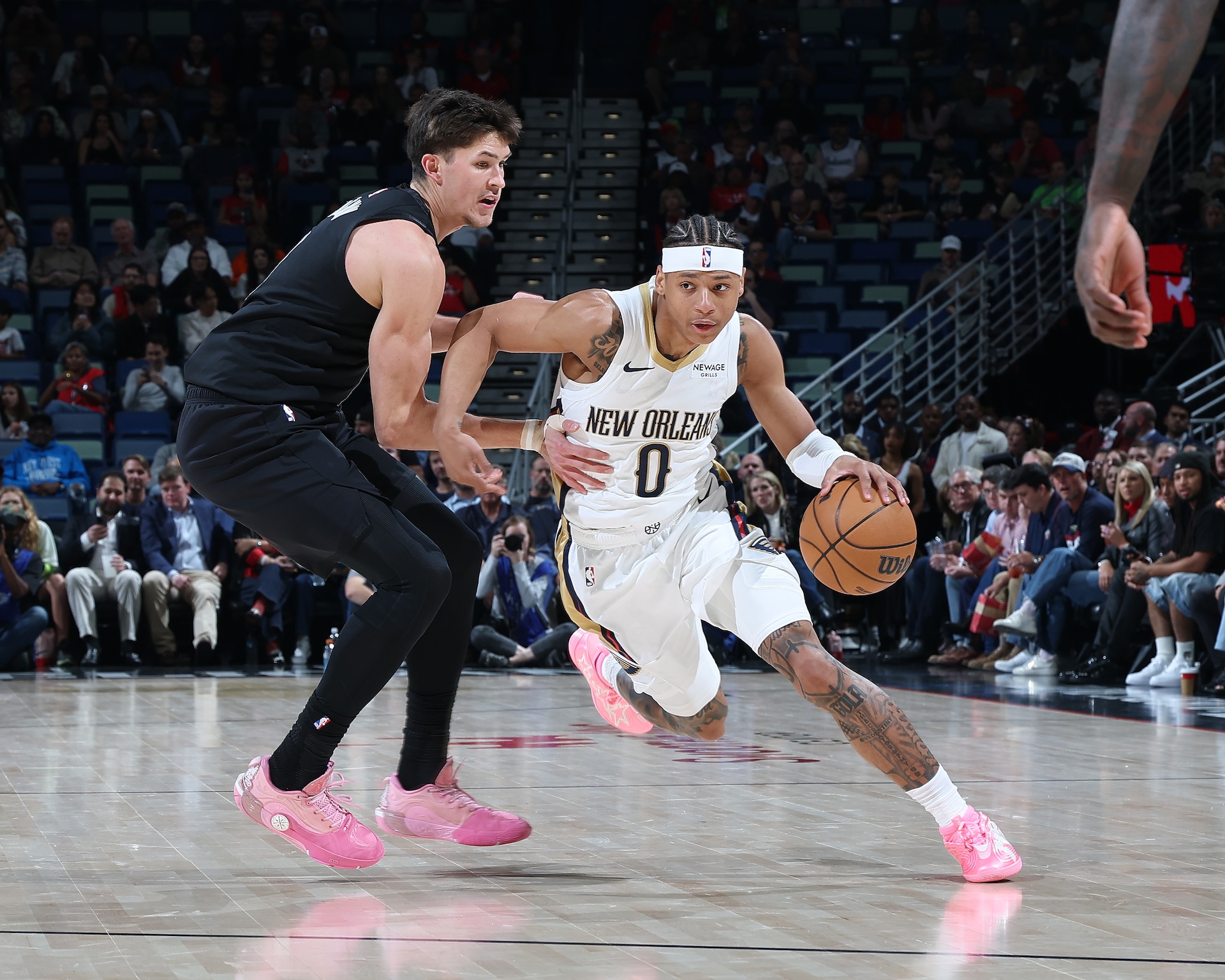
The urgency is not simply about moving a disgruntled veteran. It is about deciding which players should have the ball as the Pelicans attempt to build a team that can survive more than one good quarter. Jeremiah Fears represents a different clock. New Orleans has already invested in his development and that of other younger pieces, including Derik Queen. The value of playing them is not confined to a hot stretch of scoring; the club needs to learn which combinations can handle pressure, defend competently and create sustainable offense.
Fears has already had meaningful opportunities during Murray's absences. Recent reporting highlighted a three-game stretch in which the young guard averaged 18 points and nine assists while the team won all three. Those numbers are a useful indication of what greater freedom can produce, not proof of a complete season-long solution. A tiny sample can be inflated by opponents, shooting variance and game circumstances. Nevertheless, it forces the Pelicans to ask what they learn by giving that time back to a veteran who wants to leave.
The fit is not as simple as replacing Murray's name in the starting lineup. Murray has experience reading NBA defenses, managing possessions and generating shots late in the clock. Fears must develop those skills against defenses that will adjust to him. Zion Williamson and Trey Murphy also need offensive touches that do not become a turn-taking exercise. A sensible rotation would test combinations that create space, defend collectively and avoid leaving every young player to solve the offense alone. More youth minutes without structure are not a rebuild; they are merely more possessions.
The request also removes an uncomfortable ambiguity. If Murray were happily committed to this roster, New Orleans could justify asking whether he still had a productive mentorship or leadership role. Once his camp has formally sought a move, those benefits become harder to bank on. The club's next decision should be driven by long-term role clarity rather than a desperate attempt to make an old acquisition look successful. It may be better to accept an imperfect return now than continue to spend developmental minutes protecting the reputation of a transaction made more than two years ago.
Phoenix Is a Rumor, Not a Deal — and the Contract Sets the Market
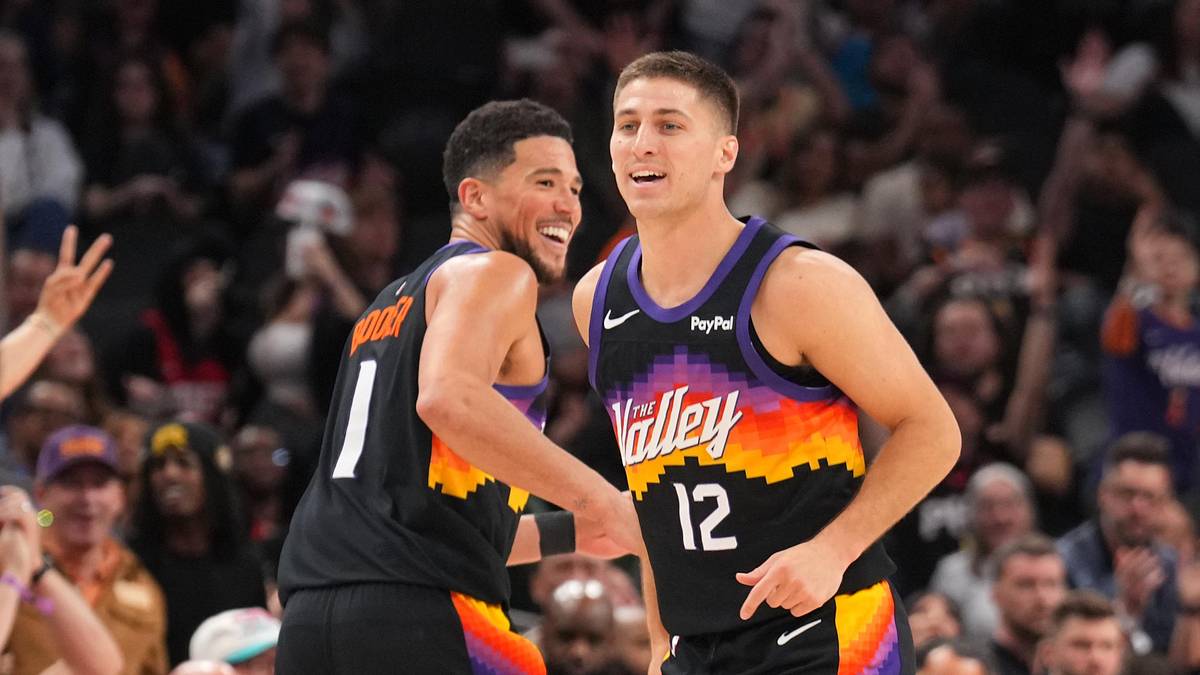
Phoenix has surfaced in reporting about Murray's possible next stop. That does not mean a trade is close. The distinction is important because a recognizable destination can quickly turn into a false assumption that the teams have exchanged viable offers. Public interest, speculation and actual negotiations are different stages of a process, and the available reporting does not establish a completed framework between the Suns and Pelicans.
GOATIFY
GOATIFY Basketball
As Jeremiah Fears and the next Pelicans core take larger roles, find GOATIFY basketball styles for fans following the next generation.

Michael Jordan – GOAT Cigar Celebration Sweatshirt
A basketball fan design for everyday wear.
Shop Now ↗


Shai Gilgeous-Alexander G.O.A.T. - Basketball Sticker
Add basketball personality to your favourite gear.
Shop Now ↗
Kevin Durant G.O.A.T. - Basketball Coffee Cup Mug
Add basketball personality to your coffee break.
Shop Now ↗On paper, Murray offers something a team chasing postseason games might like: size for a guard, an established ability to handle the ball and experience creating shots when the possession breaks down. In the right role, a player whose recent output has dipped could still add secondary creation. But Phoenix would have to ask what function Murray performs alongside its existing backcourt, including Devin Booker and Collin Gillespie. A bigger name is not automatically a better rotation. A guard-heavy team can lose rebounding, interior defense or floor balance if the acquisition merely redistributes the same possessions.
At least one Suns-focused report has cautioned that frontcourt needs and rebounding are more pressing priorities than adding another point guard. That is a useful counterweight to the idea that all supposed trade interest is equal. A deal requires both basketball logic and a workable matching package. The Pelicans would have to decide whether the compensation advances their timeline, while Phoenix would have to live with Murray's $32.8 million salary this season and the risk attached to his $30.8 million option the following year.
There are other possible teams in the abstract, but listing them without evidence would confuse fantasy roster-building with reporting. A team should only pursue Murray if it has a clear role, confidence in the medical evaluation and an acceptable price. New Orleans should prioritize assets that fit a younger core or flexible contracts that do not create a new version of the same problem. Getting back a useful defender or future draft value could matter more than matching Murray's current scoring average on paper.
The negotiations may take time, especially if the market is cautious. New Orleans can listen without pretending the 2024 trade was recoverable in full. Murray can seek a change without assuming the Pelicans owe him a particular city. The success of the eventual decision will be judged on fit and roster direction, not on which side wins a news cycle or how many teams are named in rumors.
The Pelicans' confirmation has settled one question: Murray wants to leave. It has not settled the harder ones about price, timing or whether any interested team can match his contract to a credible on-court plan. New Orleans gave up two first-rounders and Dyson Daniels for a guard who has played 54 games for the franchise. That exchange cannot be undone by a clever headline or by waiting for Murray's trade value to magically return to its 2024 level.
The next step is to identify an honest market, keep the youngster-development plan coherent and avoid treating a reported destination as an agreed transfer. For Murray, a change of scenery could offer another chance to prove that his Atlanta-level creativity still belongs in a meaningful role. For New Orleans, the goal is different: to leave this expensive, injury-damaged chapter with a clearer backcourt and fewer decisions tied to money already spent.
GOATIFY
GOATIFY Basketball
Shop GOATIFY basketball shirts, hoodies and stickers.

Trae Young G.O.A.T. - Atlanta Hawks Basketball Sticker
Add basketball personality to your favourite gear.
Shop Now ↗
Steve Nash G.O.A.T. - Basketball Muscle Shirt Tank
A basketball fan design for everyday wear.
Shop Now ↗

Larry Bird G.O.A.T. - Basketball - Greatest Sweatshirt
A basketball fan design for everyday wear.
Shop Now ↗
Magic Johnson G.O.A.T. - Basketball - Greatest Hoodie
A basketball fan design for everyday wear.
Shop Now ↗
Ja Morant Gun Suspension Memphis Grizzlies NBA Mug
Add basketball personality to your coffee break.
Shop Now ↗