

Heiskanen Played 26:44. Dallas Needed a Miracle Anyway.
GOATIFYA Dallas Stars defenseman returned from five games on the sidelines, played 26:44 and scored the overtime winner. That sounds like the complete story of Tuesday's 4-3 victory over the Vegas Golden Knights. It is not even the strangest part. Dallas still trailed by two with 78 seconds left and needed two goals while its goaltender sat on the bench. The equalizer arrived with only 4.6 seconds left in regulation.
Miro Heiskanen's finish at 3:36 of overtime therefore became the last act of a game that Vegas had controlled for most of the night. William Karlsson scored twice. Brett Howden restored a two-goal lead in the third. Then Wyatt Johnston scored with an extra attacker, Mikko Rantanen banked in a desperate shot, and Dallas suddenly had a chance to win a game it had nearly lost.
Rantanen finished with a goal and three assists, contributing to all four Stars goals. Heiskanen supplied the decisive shot but also handled an enormous workload immediately after an upper-body injury absence. The Golden Knights were left to explain not a lack of effort throughout the contest but a late failure to end two offensive-zone sequences. The score is dramatic; the tactical questions it raises are more useful. How did Dallas keep the puck alive with six attackers? Why was Rantanen's contribution bigger than the lucky final bounce? And what does a 26:44 return say about the Stars' reliance on one defender?
Two pulled-goalie goals rewrote the last 78 seconds
A 3-1 lead with less than two minutes on the clock is normally an invitation for the leading team to shorten the game. Keep the puck off the middle of the ice. Force the opponent to recover dumps behind its own net. Do not allow a clean second possession after the first chance is blocked. Vegas had already done most of that work for almost the entire night. What happened over the next 78 seconds changed not only the score but the meaning of the previous 58 minutes.
Dallas trailed 3-1 after Brett Howden finished a clever Jack Eichel pass from behind the net at 12:43 of the third period. Coach Glen Gulutzan eventually pulled Jake Oettinger, converting a goaltender's place into an additional attacker. That decision did not guarantee a comeback; it merely exchanged protection against another Vegas goal for a better chance to keep the puck alive in the offensive zone. A sixth skater creates an extra passing option, but only if the group holds its shape under pressure.
At 18:42, Wyatt Johnston made it 3-2. The finish was close to the net rather than the product of some impossible individual rush: Mikko Rantanen tried to create a chance, Roope Hintz kept the sequence alive, and Johnston found space at the left post. That layered contribution matters. One player forcing the initial action, another recovering a puck and a third finishing before the defensive structure resets is exactly how a six-on-five advantage becomes more than an additional body.
The second goal was even more improbable by the clock. With the score still 3-2 and only seconds remaining, Rantanen sent a shot from the right side toward the goal rather than searching indefinitely for a perfect seam. The puck redirected off Vegas defenseman Rasmus Andersson and crossed the line with 4.6 seconds remaining. The official game summary rounds the moment to five seconds; the more precise timing captures the desperation. Dallas had almost exhausted every opportunity to do anything else.
GOATIFY
GOATIFY Hockey
From chaos in the crease to two last-minute goals, discover GOATIFY hockey fan gear for the wildest NHL nights.


The rebound on the first goal and the deflection on the second are not evidence that every six-on-five shot is a masterpiece. Hockey is far too noisy for that. But neither outcome materializes without puck recovery, shooters willing to challenge the goal from less-than-ideal angles, and teammates maintaining enough traffic to deny defenders a comfortable clearance. Rantanen's shot involved a fortunate carom. His choice to release it before time expired made that luck possible.
There is a tactical distinction between preventing the first shot and ending a sequence. The Golden Knights allowed Dallas to keep extending shifts until one attempt became a second attempt. When a defending team survives one dangerous puck but cannot exit the zone, the defensive unit stays on the ice and the attacking team gets another route. Fatigue, traffic and split-second uncertainty then accumulate. That is a plausible explanation for the collapse, not proof that Vegas stopped trying.
The lesson for Dallas is equally double-edged. Two empty-net-pressure goals in such a short interval demonstrate genuine offensive urgency and organization. They also reveal how little margin existed. The Stars needed two nearly perfect late possessions after failing to control the contest for long stretches. The emotional memory is a comeback; the coaching film will be much less romantic. Building a repeatable winning formula means needing fewer last-gasp rescues in the first place.
Rantanen's four points came from a chain of decisions, not one lucky bounce
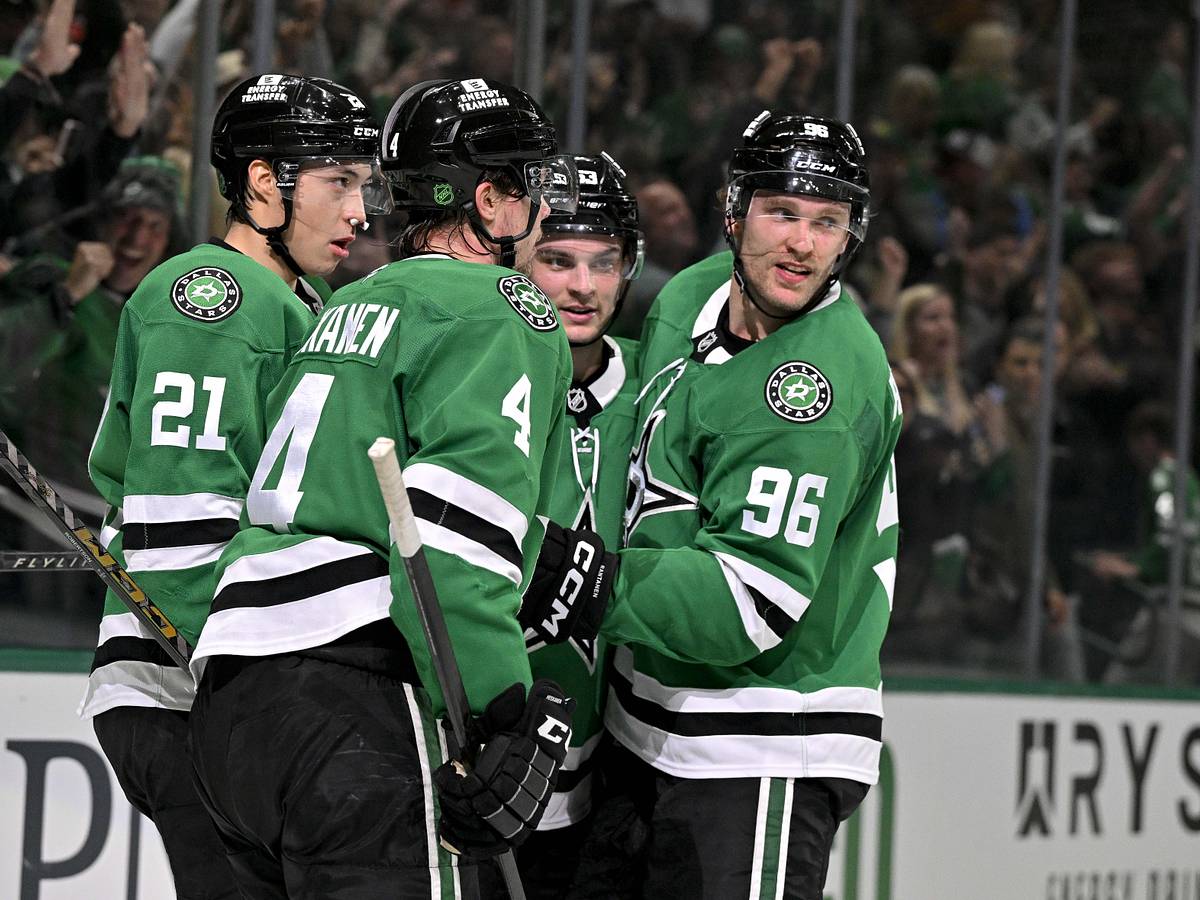
Mikko Rantanen finished with a goal and three assists, meaning he registered a point on every Dallas goal in the 4-3 win. The neat four-point total hides the variety of his involvement. Some nights a star scores on a special-teams one-timer and collects secondary assists while standing in the same familiar lane. This game required Rantanen to solve three different situations: break open a five-on-five sequence, create under six-on-five urgency and recognize an overtime opening.
The first sign arrived at 10:59 of the third period. Vegas had stretched its advantage to 2-0 just 32 seconds earlier, and the building could have settled into a comfortable script. Instead, Rantanen worked around Ivan Barbashev near the left point and delivered the puck across to Nils Lundkvist. The defenseman finished from the right side to cut the deficit to 2-1. A quick answer did not erase the earlier mistakes, but it restored the game's uncertainty before Vegas could drain momentum from it.
The important part is not merely that Lundkvist hit his shot. Dallas needed a winger capable of attracting a defender without shutting off the weak side. Rantanen's movement created a passing lane that transferred the attacking threat from a contested location to a more dangerous one. This is why judging a playmaker solely by highlight assists often misses the real mechanism. The preparatory skating and deception determine whether the receiver has time to act.
Rantanen then had a role in Johnston's 18:42 goal, again without being the final shooter. Under the extra-attacker setup he drove the first attempt toward the goal; Hintz extended the opportunity and Johnston converted near the post. This is not an exotic system. It is a high-skill team refusing to let a failed first effort become a dead possession. Rantanen supplied the instability that defenders had to manage, even if the last contact belonged to somebody else.
His goal with 4.6 seconds left was a different category of decision. At a normal moment, a low-percentage shot from the boards might look like a wasted possession. With a single-digit countdown, waiting for a prettier opportunity is its own gamble. Rantanen put the puck into a path where a stick, body or defender might redirect it. Andersson's touch supplied the decisive deviation. Call it favorable fortune, but do not confuse fortunate execution with indecision. The shot had to exist first.
GOATIFY
GOATIFY Hockey
Mikko Rantanen's four-point performance was pure hockey creativity. Explore GOATIFY NHL-inspired apparel and gifts.
In overtime, the sequence shifted once more. A scramble near the crease opened the possibility of moving the puck laterally. Rantanen spotted Heiskanen arriving in the left circle and transferred it to him. Heiskanen's finish at 3:36 capped the night. The same winger who had fired in desperation with almost no clock left now had time and awareness to choose the teammate with the clearer angle. Being able to switch between those instincts is what makes elite puck carriers hard to defend.
Jason Robertson contributed two assists and Hintz also had two, so this was not Rantanen winning a solo skills contest. Dallas' best attackers operated as connected pieces. That is worth emphasizing because a four-point line tends to make one player sound like the entire explanation. Rantanen was the engine, but others supplied the recovery work, net-front positioning and finishing that let the engine deliver.
One night's production cannot settle who drives this club over an entire season. It does show the ceiling of the current construction when the Stars can get Rantanen the puck in motion. He can shoot, draw pressure, pass across the grain of a defense and react to chaos. The trade-off is that Dallas should not require him to touch every scoring play to steal points. Greater depth and cleaner earlier possessions would turn his special night from a life raft into a multiplier.
Heiskanen's 26:44 return solved a problem but raised another question
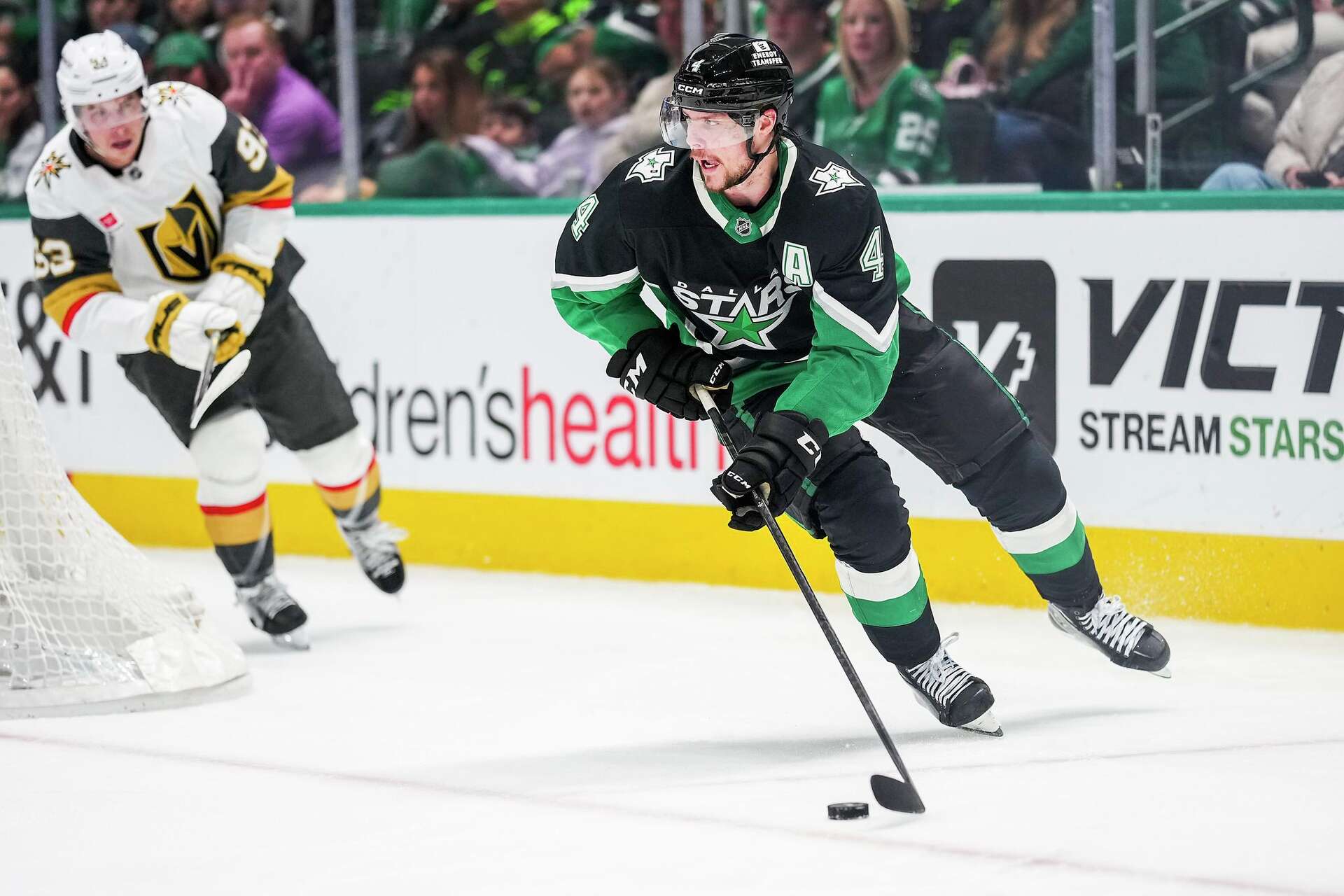
Miro Heiskanen could have made his return memorable simply by surviving a normal workload after five games away with an upper-body injury. Instead, he played 26 minutes and 44 seconds, defended in high-leverage situations and scored the overtime winner. The goal will dominate the highlight package. His ice-time distribution explains why Dallas so urgently needed the player behind it.
The minutes were not all easy attacking shifts. Heiskanen logged 6:08 while shorthanded and 2:11 on the power play according to his November 17 game log. He was used on 25 shifts and recorded three blocked shots. Those details matter because they show that Dallas was not treating its returning defenseman as a narrowly sheltered offensive specialist. Gulutzan asked him to absorb difficult situations even after time away from game action. The move paid off on the scoreboard, but the demand itself deserves examination.
A top defenseman earns those assignments by changing the choices available to everyone else. On the penalty kill, good positioning narrows the seams that force a goalie into desperate lateral movement. In transition, a composed first pass allows a forward to receive the puck with speed rather than along the wall at a standstill. On the power play, walking the blue line can shift the defensive box a few feet and open a shooting lane. Those contributions are rarely credited as cleanly as a goal or assist, yet they are the connective tissue of a competitive team.
Heiskanen's first game back was not statistically flawless simply because the last shot went in. Vegas scored three times and threatened Dallas on several counterattacks. Karlsson found the net twice, Howden added a third, and Oettinger needed 24 saves. One defenseman cannot be held responsible for every breakdown, especially while moving among special-teams and even-strength assignments. Nor should one overtime goal be used to declare that every vulnerability disappeared the moment his skates touched the ice.
The finish itself showcased a different type of asset. At 3:36 of three-on-three overtime, Rantanen worked the puck across after a scramble near the crease. Heiskanen came into the left circle with enough time to release a shot through traffic. In a format where odd-man opportunities appear quickly and a mistake can end the game, an experienced defender must balance a scoring instinct with awareness of the danger behind him. He read the opening and accepted it. He did not score by abandoning every defensive responsibility; he chose the moment when joining the attack was worthwhile.
GOATIFY
GOATIFY Hockey
Two-way defenders do the work that highlight reels miss. Shop GOATIFY hockey designs for the game’s most committed fans.
There is one risk the Stars should resist romanticizing: heavy minutes immediately following injury absence do not automatically prove an athlete is free from all recovery considerations. Heiskanen said after the game that his legs felt good. That is encouraging, but it is not a substitute for medical information or a guarantee about subsequent games. Dallas' staff, not the scoreboard, has to decide what sustainable usage looks like. The fact that he delivered in this contest should not force the club into a permanent expectation of 26-plus minutes every night.
His previous season supplied a baseline for why the team trusts him. He finished 2025-26 with 63 points in 77 regular-season games and averaged 25:28 of ice time, according to the Stars' August player profile. That kind of long-run reliability gives a coach confidence that a heavy workload is not automatically an emergency. Yet a previous season's average is a trend, not a green light for an unlimited increase after any injury. The stronger conclusion from Vegas is that Heiskanen's two-way influence remains central to Dallas' identity.
His return therefore created two stories. The obvious one is a defenseman scoring the winner after sitting out five games. The more consequential one is a team immediately using him as a problem-solver across special teams, transition and overtime. If Dallas wants this victory to signify more than a dramatic night in November, the remaining blue line must help spread that burden. The best version of the Stars is dangerous because Heiskanen improves everybody else's choices, not because the team needs him to save every possession.
Vegas owned 58 minutes. The empty-net defense still has to answer
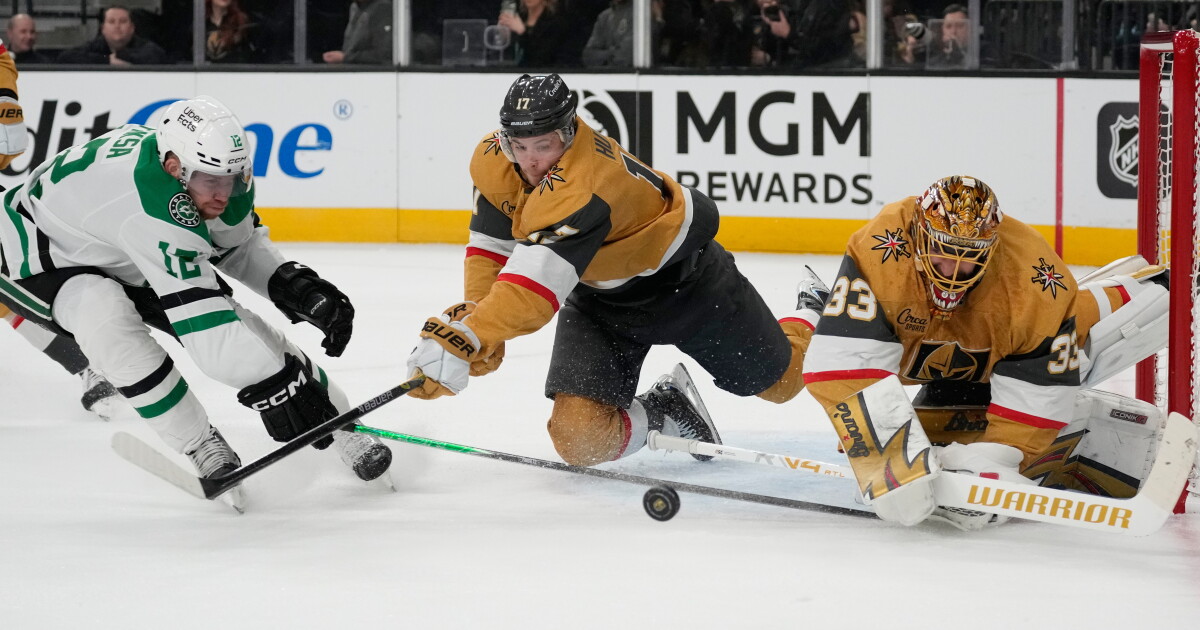
From Vegas' side, the cruelest element of the 4-3 defeat was that the game had been largely under control. William Karlsson put the Golden Knights ahead just 40 seconds into the second period. He added another goal at 10:27 of the third, with Trevor Connelly providing his second assist. The margin was 2-0 and there appeared to be a straightforward path to ending Dallas' night. Even after Lundkvist answered, Brett Howden made it 3-1 at 12:43. Vegas had recovered a two-goal cushion and removed much of the time Dallas needed to fight back.
Karlsson deserves more than a cameo in a story about the opponent's comeback. His first goal emerged from Connelly getting a shot into a dangerous area and the puck becoming available in the slot. The second came when Connelly intercepted a clearing attempt and created a fast opportunity. The pair did not need a drawn-out offensive-zone cycle to cause damage. Their two goals illustrated how quickly Vegas could punish a loose puck and turn a defensive read into a scoring chance.
What followed was not a referendum on the entire team. A strong 58-minute performance and a dreadful 78-second finish can exist in the same game. Coach Ryan Craig's postgame assessment centered on the six-on-five possessions and missed chances to clear the zone. That is a more useful starting point than saying his players failed to care enough. The unit must identify which exits were available, whether a defender chased the wrong pressure point, and where the sixth attacker turned one recovered puck into an additional shot.
GOATIFY
GOATIFY Hockey
Even a 58-minute lead cannot guarantee an NHL win. Find GOATIFY hockey favorites for the next Vegas–Dallas showdown.
Some commentators may instinctively blame goaltender Adin Hill whenever two late goals slip through. That simplifies the sequence. Hill stopped 18 shots on the night, and both tying-period goals happened with Dallas using its extra attacker. Johnston finished near the post after an extended scramble; Rantanen's speculative attempt redirected off a Vegas teammate. A goaltender still has to make the next save, but the precise mechanism of each goal changes where the video review should begin. Treating two very different plays as identical goalie mistakes would waste the lesson.
Vegas had chances to create an even safer cushion earlier. The official box score gives the Golden Knights a 27-22 advantage in shots on goal and a clear faceoff edge, but they went scoreless on five power plays. Neither statistic alone explains the ending. Taken together, they suggest a team capable of winning plenty of normal game states yet unable to extract the extra special-teams goal that could have made the late scramble irrelevant. Dallas' penalty kill, including a newly returned Heiskanen, absorbed an important share of the pressure.
The standings complicate the emotional reaction. Dallas moved to 13-6-2 with a third straight victory. Vegas fell to 13-6-4 and was winless in its previous three games, a 0-1-2 run. Those are not crisis records, and overtime losses can mask meaningful stretches of quality play. But conceding two late six-on-five goals in one game is a distinct execution problem regardless of where a team sits in November. The risk is repeating the same failure because the larger record looks respectable.
The immediate schedule offers unusually clean evidence: Dallas and Vegas play again at T-Mobile Arena on Thursday, November 19. A rematch so soon does not leave much time for a wholesale overhaul, but it does give each coaching staff a clear tape assignment. Vegas can revisit clearance routes, net-front communication and how its defenders rotate when a sixth attacker stretches the ice. Dallas can prepare for Vegas to be more aggressive on exits while trying to build an offense that functions before desperation time. Either side can adjust without treating a single result as destiny.
The outcome should not be rewritten as 58 minutes of incompetence. Vegas was a few seconds from collecting the win. But elite teams cannot choose which seconds count. A narrow late failure is precisely the kind of weakness an upcoming opponent will try to reproduce, and Dallas now knows it can keep those possessions alive. The next meeting will test whether this was a bizarre one-night collapse or the first sign of a correctable structural leak.
Dallas did not dominate Vegas for 60 minutes. The Stars survived a game in which they spent long stretches chasing, then made their limited extra-attacker chances matter in a way most teams cannot count on repeating. Johnston's finish, Rantanen's last-chance deflection and Heiskanen's overtime winner gave the visitors two points and an extraordinary memory. They did not erase every defensive problem that preceded them.
The biggest positive is that Dallas' best players did different jobs well. Rantanen created, recovered and shot; Heiskanen handled hard defensive minutes and recognized his opportunity to attack; the supporting cast maintained offensive-zone pressure in the final minute. The biggest caution is that a team cannot build its normal game plan around pulling the goalie and asking for two goals in 78 seconds.
Vegas has a narrower, equally urgent assignment. Karlsson's finishing and Connelly's creation showed how much the Golden Knights did right. The last two six-on-five possessions showed what the club has to clean up. With the teams meeting again on November 19, there is almost no time to hide behind either the scoreboard or the highlights. Dallas must prove it can create better margins earlier; Vegas must prove that an excellent 58 minutes can actually become a completed win.
GOATIFY
GOATIFY Hockey
Discover six GOATIFY hockey fan favorites before your next NHL story.


















