The Steelers Didn’t Trade Joey Porter Jr. Over Money — They Traded Him Over Security
GOATIFYThe most important number in Joey Porter Jr.’s exit from Pittsburgh was not $28 million. It was two.
The Steelers were reportedly prepared to pay the 26-year-old cornerback roughly $28 million per season. The negotiation still collapsed because Pittsburgh would not give Porter the second-year injury guarantee he wanted. That changes the trade to Dallas: this was not simply a player demanding the biggest salary and a team refusing to pay it. It was a disagreement over who would carry the risk after the first season of a long-term deal.
The disagreement was about the second year, not the headline salary

A $28 million average annual value sounds like the kind of number that should end a holdout. According to the latest reporting, Porter considered the salary acceptable. The sticking point was Pittsburgh’s refusal to guarantee money for injury into the second year.
That is a meaningful difference for a cornerback entering the final season of his rookie contract. A large first-year payment rewards past performance; a second-year guarantee protects the player if an injury changes his market before the club has fully committed. Porter was asking for certainty that the relationship would survive more than one season of risk.
The Steelers have historically resisted that structure for most players. T.J. Watt is an exception, but exceptions are the point: Pittsburgh reserves that level of security for a very small group. Porter’s camp believed his age, production and positional value justified joining it. The Steelers disagreed strongly enough to trade him.
The split was therefore about leverage as much as money. Porter had little reason to accept a structure he believed exposed him after one year, while Pittsburgh had little interest in rewriting a contract philosophy it uses to control future risk.
Pittsburgh chose its contract principle over a 26-year-old starting corner
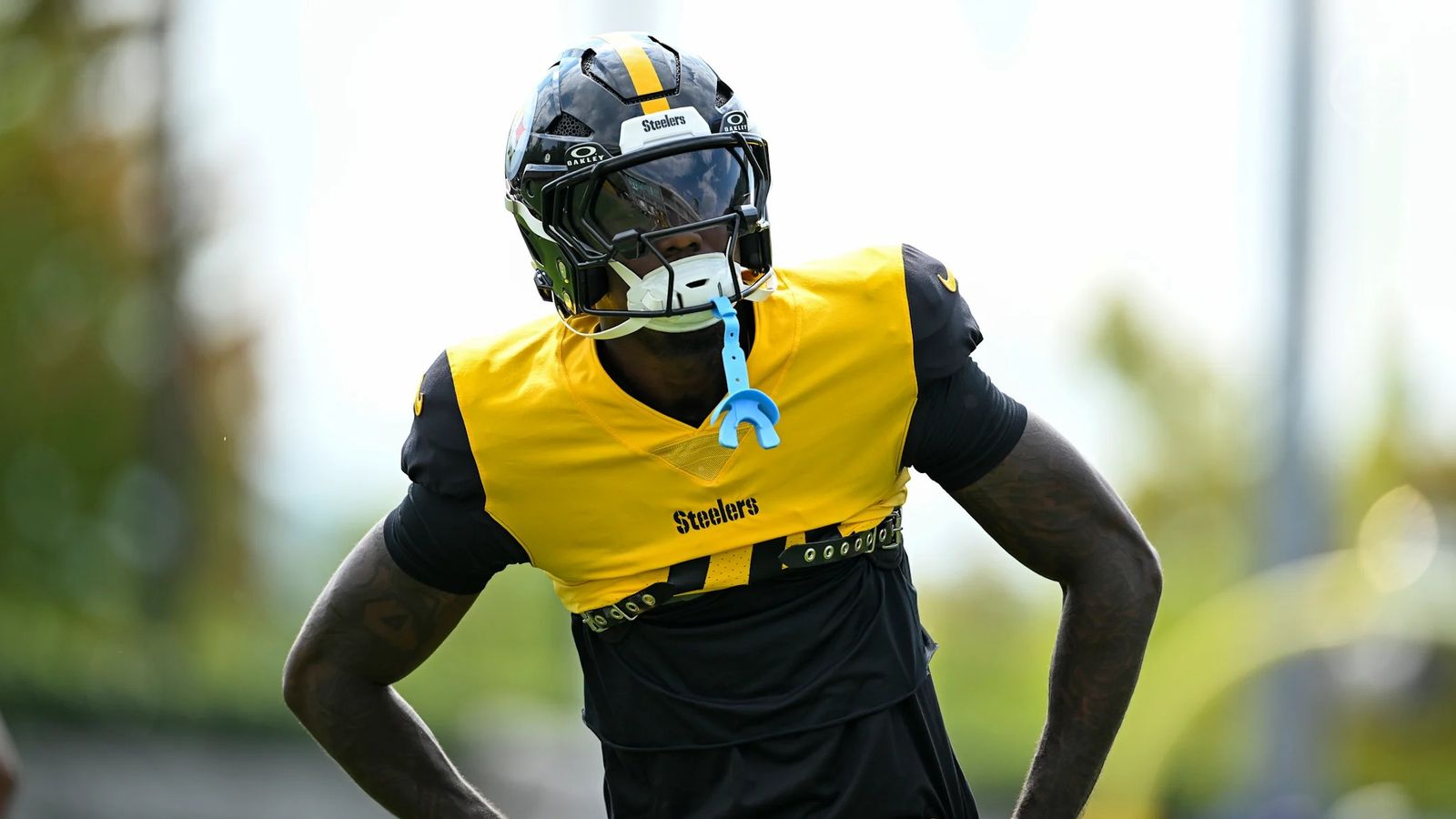
The Steelers’ calculation is easier to understand when separated from the emotion of losing a homegrown starter. Front offices do not negotiate one contract in isolation. Every guarantee becomes a reference point for the next agent and the next player who believes his résumé deserves the same treatment.
Pittsburgh had to decide whether Porter was valuable enough to create another exception. His 2025 coverage numbers make a strong case: opposing quarterbacks produced only a 57.2 passer rating and completed 48.5 percent of their throws when targeting him. Those are premium results at a premium position.
But Porter had also dealt with a back issue, had not played in the first three games and wanted long-term security before returning to normal business. Once the relationship hardened, the Steelers could bend, let the standoff consume more of the season or turn the asset into draft capital.
They chose a 2027 sixth-rounder and a 2028 second-rounder. Pittsburgh protected its negotiating model immediately and accepted that the football replacement may take years to arrive.
Dallas could afford to make the opposite bet

Dallas entered the deal from the opposite position. The Cowboys did not need to defend Pittsburgh’s guarantee policy; they needed help in a secondary hit by injuries and a defense that entered Week 4 near the bottom of the league in points allowed.
That urgency makes the price easier to justify. A future second-round pick is valuable, but Porter offers something Dallas needed immediately: length, man-coverage experience and a proven ability to make quarterbacks work for completions. The Cowboys can evaluate him inside their own defense before deciding what a long-term contract should look like.
That is the hidden advantage of the trade. Dallas did not have to resolve Porter’s entire future on arrival. It acquired the player and the negotiating relationship. If he performs, the Cowboys can revisit the extension with firsthand information. If the fit is weaker than expected, they have not already guaranteed multiple future seasons.
The risk is obvious too. Dallas gave up meaningful draft capital for a player who had not appeared in a game this season. But contenders often pay to solve a present weakness rather than wait for a cleaner offseason option.
The first proof comes now, not when the next contract is signed

Porter’s first Dallas week moved quickly from negotiation story to football test. He was expected to handle a limited workload against Houston after missing the opening three games, giving the Cowboys a chance to integrate him without pretending one practice week could erase the layoff.
The larger team result bought Dallas breathing room. The Cowboys rallied from a 10-point halftime deficit to beat Houston 34-30, with Dak Prescott throwing for 335 yards and CeeDee Lamb catching 17 passes for 189 yards and the winning touchdown. Dallas improved to 2-2 instead of carrying a losing record into the next phase of the schedule.
For Porter, the evaluation is straightforward. He wanted a contract structure that treated him like a long-term cornerstone. The fastest way to strengthen that argument is to become indispensable in a secondary that needed his skill set. Every healthy week and difficult coverage assignment gives Dallas more evidence about whether Pittsburgh undervalued the security he deserved.
The trade will not really be judged by the 2028 pick for a long time. In the short term, it will be judged by whether Porter stabilizes Dallas’s coverage and whether Pittsburgh can replace what it lost.
Pittsburgh can defend its contract structure and Dallas can defend betting on the player. Both positions can be rational. What makes the trade fascinating is that the disagreement was narrow enough to be solvable and important enough that neither side chose to solve it.
Porter now gets the chance to prove that the security he wanted was justified. Dallas gets a starting-caliber corner without paying an immediate first-round price. The football will decide who was right.
Shop GOATIFY NFL and American football shirts, hoodies and stickers.