

Seattle Got Maikel Garcia. Kansas City Bet Three Pitchers Are Worth More.
GOATIFYThe first major trade of the 2026-27 MLB offseason has a familiar shape and a rather unusual price. Seattle finally acquired the kind of third baseman its front office has been describing for months: an elite defender with enough offense to improve a competitive lineup and enough contract certainty to keep the position settled beyond one winter. Kansas City made that happen by taking something the Mariners have traditionally guarded carefully: a controllable, established starting pitcher.
On November 18, the Mariners announced they had acquired Maikel Garcia, reliever James McArthur and pitching prospect L.P. Langevin from the Royals. Kansas City received right-hander Bryce Miller, right-hander Logan Evans and left-handed reliever José A. Ferrer. Six players crossed the ledger, but the argument is fundamentally about Garcia against Miller, and about how each organization believes its next winning team will be built.
Garcia was a 2025 All-Star and Gold Glove third baseman who lost much of 2026 to hand and hamstring injuries. Miller is 28, has previously shown front-of-rotation ability and is coming off his own interrupted season. This is not a clean exchange of certainty for certainty. It is a defense-first team addressing its infield by spending pitching depth, while a rotation-needy club sacrifices a premium defender to acquire multiple arms with several different risk profiles. The winner might not be obvious in the first month of 2027.
Garcia is Seattle's defense-first purchase, not a home-run gamble

Seattle did not pay for Garcia's 2026 home-run total. The 26-year-old hit only three in 82 games and finished with a .268/.334/.381 slash line, 38 runs batted in and a .715 OPS. An ordinary glance at those numbers could make the move look like a team trading away starting pitching for a modest bat. It would also miss almost everything the Mariners were trying to acquire. Garcia recorded 10 Defensive Runs Saved in the limited season, one of the stronger American League totals at third base. His feet, first step and throwing accuracy are part of the value before a single ball is put into play by Seattle's offense.
The clearest picture of his ceiling remains 2025. In a full 160-game season he hit .286 with a .351 on-base percentage and .449 slugging percentage, adding 16 home runs, 74 RBIs and 23 steals. He was an All-Star and won a Gold Glove at third base. That offensive profile is not the same as carrying a lineup with 35 homers, but it combines contact, extra bases and pressure on the defense with skills that survive a poor power month. Seattle's hope is to purchase those repeatable attributes without paying for a slugger it does not require.
The contract makes the bet particularly interesting. Garcia's five-year, $57.5 million extension runs through 2030, with a club option for 2031. Trading for an ordinary 26-year-old with one good year is one thing; getting a young Gold Glove winner whose salary structure is already mapped out is another. Seattle can now plan its next several infields around an actual person rather than allocate more money and prospects to a new third-base search every winter. Contract certainty is valuable because it gives the club options elsewhere, not because it guarantees the player's form.
GOATIFY
GOATIFY Baseball
Baseball fans know how much a Gold Glove can change an inning. Explore GOATIFY's Baseball GOAT fan apparel and stickers.

Gold Baseball GOAT Sticker
A gold baseball GOAT decal for your bottle, laptop or game-day gear.
Shop Now ↗


White Baseball GOAT Dad Hat
A white baseball GOAT design for ballpark days and everyday fan style.
Shop Now ↗
White Baseball GOAT Sweatshirt
Rep baseball’s greatest with a white GOAT graphic sweatshirt.
Shop Now ↗There is an unavoidable health qualification. Garcia spent time on the injured list with a left hand muscle strain and later a left hamstring strain in 2026. Those setbacks can sap both swing confidence and baserunning aggressiveness even after a player is technically active. A good spring cannot erase that history, and projecting his 2025 line straight onto 2027 would be irresponsible. Seattle instead needs him to show that the burst behind his defense and the balance behind his contact are still available over a demanding schedule.
His versatility is an additional safeguard. Garcia has played second base and shortstop as well as third and has appeared in the outfield in limited situations. That does not automatically make him a full-time solution everywhere, but it creates tactical escape routes when injuries or matchups require a shift. President of baseball operations Jerry Dipoto emphasized athletics and balance in explaining the deal. The interpretation is straightforward: Seattle is prioritizing how many different ways a position player can help win a close game, not just the loudest column on a baseball card.
The offense still matters, especially if a cold season limits extra-base damage. A glove can save a run; it cannot reliably overcome an entire lineup's failure to reach base. What Seattle needs is not necessarily a career-high home-run number but a healthy Garcia making better contact, stealing efficient bases and avoiding lengthy slumps. That is a plausible demand. It is also why the difference between 82 games and 145 games may matter more than the difference between 10 and 16 home runs.
Bryce Miller gives the Royals a rotation ceiling — and a medical question

Kansas City is betting that Bryce Miller's past excellence is a better guide than the harshest reading of his latest season. The right-hander made 21 starts in 22 appearances in 2026, going 4-10 with a 4.17 ERA and 119 strikeouts in 118 2/3 innings. Those are not ace numbers, and the win-loss record is especially unhelpful as a scouting tool. What should interest the Royals is the pitcher who posted a 2.94 ERA across 180 1/3 innings in 2024, striking out 171 hitters and demonstrating that he could handle a full starting workload at a high level.
The difficult question is whether the 2024 version is still accessible. Miller dealt with injuries over the last two seasons, including a left oblique strain that delayed his 2026 campaign. A pitcher recovering command, strength and innings capacity can produce an uneven statistical season without permanently losing his best stuff. But a team cannot build a rotation merely by assuming every health issue was temporary. Kansas City's medical evaluations, workload planning and ability to develop a coherent pitch plan will be central to whether this deal looks clever or rash.
Control is another reason the trade works on a spreadsheet. Miller is expected to remain under club control for three more seasons, allowing Kansas City to test its belief without negotiating a long free-agent contract immediately. If he supplies 150-plus credible innings, that creates value even before the possibility of a near-ace performance. For a club coming off a 69-93 season in which pitching problems compounded injuries and ineffectiveness, dependable innings can change how the bullpen is used and how often a game enters its final three frames already out of hand.
GOATIFY
GOATIFY Baseball
From the first pitch to the final out, keep the baseball conversation going with GOATIFY hats, tees and hoodies.

White Baseball GOAT Sticker
A white baseball GOAT decal for your bottle, laptop or game-day gear.
Shop Now ↗

Gold Baseball GOAT Sweatshirt
Rep baseball’s greatest with a gold GOAT graphic sweatshirt.
Shop Now ↗


Kansas City can place him alongside established options including Michael Wacha and Seth Lugo, with Noah Cameron also projected in the starting picture. The club has additional pitchers returning from serious arm issues, so the rotation is not a static depth chart. It is a collection of health timelines and performance ranges. Miller moves the odds because his ceiling is higher than that of a generic fifth starter. He does not single-handedly erase the possibility of further injuries or the need for a second wave of arms.
There is a human component to the deal as well. Miller had been an identifiable part of Seattle's rotation for several seasons and helped the club through meaningful games. Moving him for a position player signals how strongly the Mariners value Garcia's fit. Kansas City, meanwhile, gains a pitcher who understands a competitive environment and may be asked to lead rather than simply survive his starts. None of those qualities should replace velocity or command in an evaluation, but they can influence how quickly a new staff builds trust.
A subtle danger for the Royals is treating Miller as an automatic top-of-rotation answer. His 2024 season supports the upside, yet the 2026 record supports caution. A sensible projection should carry both possibilities: a healthy season that anchors the staff and an interrupted one that forces the club back into emergency innings. Kansas City effectively chose that range of outcomes over Garcia's established defense and long-term contract. It may be the correct trade, but it is deliberately a riskier form of roster construction.
The secondary arms make this much more than Garcia for Miller

This is not a simple two-player transaction disguised by four footnotes. Kansas City acquired three pitchers who offer three different ways to fill holes, and Seattle acquired two arms whose ceilings and readiness are far less straightforward than Garcia's. Understanding those smaller pieces is essential because a team can lose the headline exchange and still win the broader trade if the secondary players change its pitching depth at the right moment.
José A. Ferrer is the most immediately identifiable relief answer for the Royals. The left-hander appeared in 73 games for Seattle in 2026, collecting three saves with a 4.18 ERA over 64 2/3 innings. That workload is an asset in itself for a club reconstructing a bullpen: he has recent experience getting major-league hitters out repeatedly across a season, rather than merely promising to be ready someday. His new team can use him against difficult left-handed stretches or in flexible middle-to-late-inning assignments, depending on the rest of the relief staff.
The warning is that a 4.18 ERA does not transform a relief unit simply because its owner throws with the left hand. Ferrer's effectiveness will depend on command, the precise matchups he is asked to take and whether the Royals avoid burning him out as a universal solution. In a deep bullpen, he can be a useful component. In a shallow one, the same pitcher can be overexposed. That difference makes roster planning as important as Ferrer's individual pitch mix.
Logan Evans represents the delayed-return side of Kansas City's calculation. He made 15 starts among 16 major-league appearances in 2025 and finished 6-5 with a 4.32 ERA over 81 1/3 innings. He then missed all of 2026 following right elbow surgery in January. If his recovery goes well, he can supply additional starts without a large free-agent outlay. But no responsible evaluation can pencil him into 160 innings on the basis of his rookie line alone. Throwing bullpens, completing spring training and holding velocity while his workload increases will tell the club far more.
GOATIFY
GOATIFY Baseball
Every bullpen has its own heroes. Browse GOATIFY baseball fan designs for the next game-day debate.


White Baseball GOAT Dad Hat
A white baseball GOAT design for ballpark days and everyday fan style.
Shop Now ↗

Seattle's auxiliary return carries its own injury warning. James McArthur saved 18 games for Kansas City in 2024 but has not pitched in the majors since that season. An elbow operation kept him out in 2025; inflammation limited him to a handful of minor-league rehabilitation outings in 2026. A healthy McArthur could make the club's late-inning choices more interesting, yet Seattle is buying a recovery opportunity, not proven current bullpen production. His presence should be viewed as upside attached to the Garcia acquisition rather than its guaranteed supporting pillar.
L.P. Langevin is the higher-variance prospect part of the return. In High-A during 2026 he struck out 106 hitters in 55 1/3 innings, an extraordinary 44.9 percent strikeout rate. Those numbers are difficult to ignore, but so are the 39 walks. Missing bats at that frequency creates a path to leverage innings; issuing free passes at that rate can keep a pitcher from finishing them. The Mariners will be trying to preserve the strikeout weapon while turning the control into something that can survive higher levels. That work can take time, and minor-league dominance is not a promise of immediate major-league impact.
Put the four secondary pitchers side by side and the logic becomes clearer. Kansas City chose one proven current reliever and one recovering starting option behind Miller. Seattle received a recovering former closer and a strikeout-heavy prospect behind Garcia. Each front office accepted uncertainty, but the timing differs: the Royals need innings soon, while Seattle may be more comfortable letting its ancillary arms develop after securing an everyday third baseman. The trade is asymmetric by design, and it should be judged that way.
Kansas City's new third-base problem will decide the trade's second half
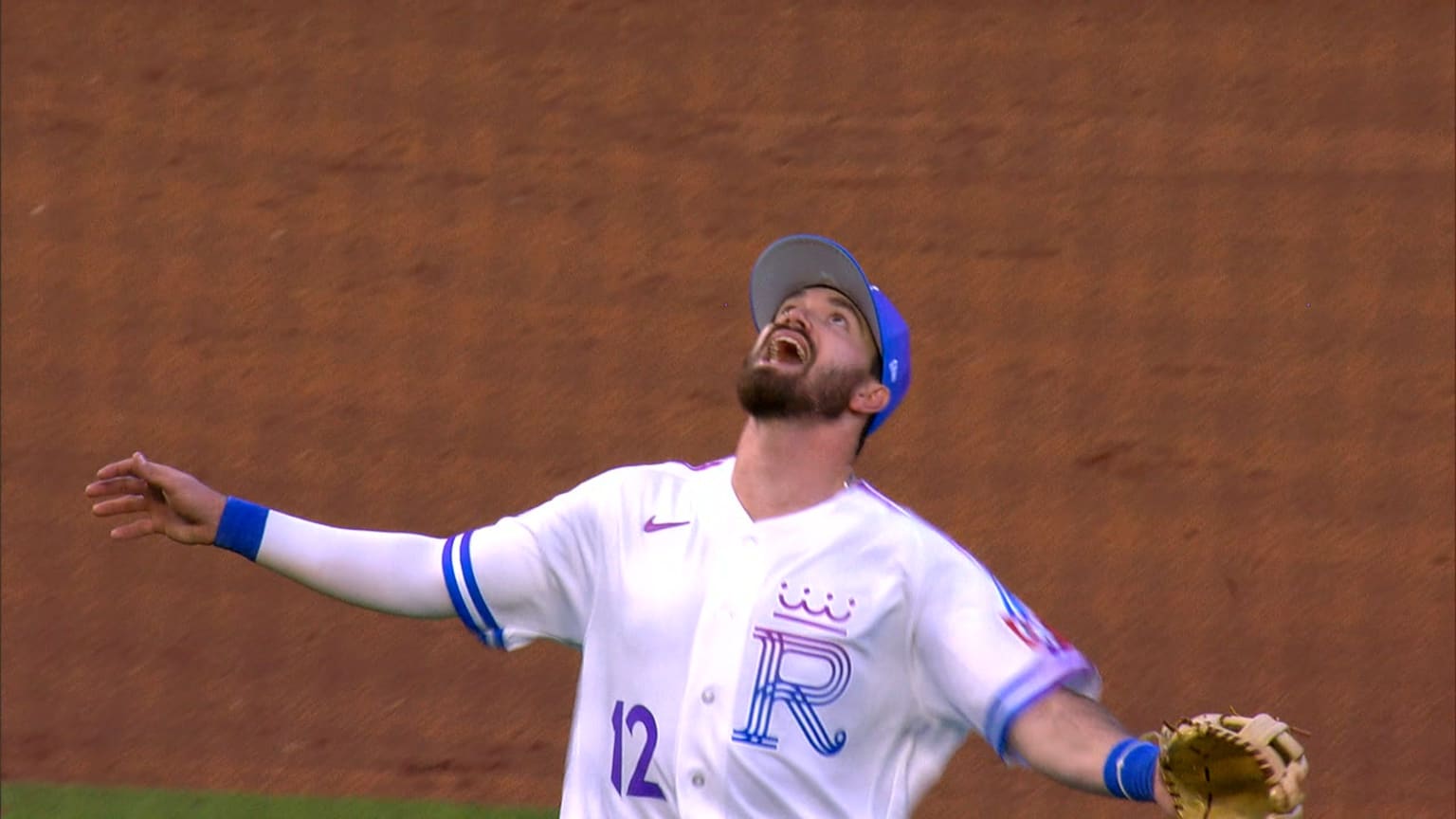
The easiest part of trading Garcia was knowing exactly who would leave. The harder part for Kansas City is knowing who will stand at third base in April. Nick Loftin now moves closer to the front of that conversation after filling in at the position during Garcia's injury absences. He appeared in 118 games in 2026, batting .240 with eight home runs and 45 RBIs, and earned recognition as a Gold Glove finalist at third base. That gives the Royals a plausible internal answer without pretending the two players are identical.
Garcia's defensive reputation and ability to create offense on the bases were established across several seasons. Loftin's versatility is valuable and his defensive showing makes the succession more realistic, but replacing one starter requires more than finding someone who can field the same ground balls. The Royals have to decide where Loftin bats, how they protect him against difficult pitching matchups, and whether his experience across the diamond is more valuable as an everyday third baseman or as a movable piece in a larger lineup. If they choose the wrong balance, the roster can suffer even while Miller pitches well.
There is a wider financial trade-off. Garcia is already committed through 2030 at the terms of his five-year extension, with a 2031 club option. That is a known cost for the type of production he can provide. Kansas City is effectively converting a secured position-player contract into multiple years of pitcher control and immediate payroll flexibility elsewhere. Flexibility has little value on its own; it matters only if the club uses it to improve the team. An additional right-handed outfield bat, more rotation cover or better bullpen depth would make this trade look more coherent than leaving the new savings untouched.
GOATIFY
GOATIFY Baseball
The trade may shape seasons of baseball. Find baseball-inspired GOATIFY clothes and gifts for diamond fans.

Gold Baseball GOAT Dad Hat
A gold baseball GOAT design for ballpark days and everyday fan style.
Shop Now ↗White Baseball GOAT Sticker
A white baseball GOAT decal for your bottle, laptop or game-day gear.
Shop Now ↗For Seattle, the short-term test will be whether the pitching staff continues to handle pressure without Miller and Ferrer. It is easy to praise a Gold Glove addition when the projected rotation is healthy in November. It is less easy in June if two starters miss time and a winnable game disappears because the club needs an unready replacement. The Mariners are wagering that their organization can absorb those innings and that improved infield defense will help all the remaining pitchers. Defensive improvement can reduce traffic and extend starts; it does not create starting arms from nowhere.
A healthy Garcia may also make the Mariners' offense more resilient without turning it into a highlight reel. A player who reaches base, runs intelligently and makes contact adds pressure in low-scoring games. That pressure could become more valuable against high-end postseason pitching than a boom-or-bust substitute. Still, the on-field benefit depends on the legs that were compromised in 2026. If the hamstring issues recur, much of the advertised advantage becomes harder to realize, and the club has spent Miller before it knows the answer.
Kansas City has the opposite path to winning the deal. Miller does not have to become a perennial Cy Young candidate if he gives the Royals dependable, above-average starts for several seasons. Evans can add meaningful value simply by recovering to become a useful starter, and Ferrer can fill enough leverage innings to protect the rest of the relief corps. Loftin does not need to be a Garcia clone if the team upgrades other weak spots. The trade is a portfolio of attainable improvements rather than a one-for-one replacement.
The verdict should therefore be conditional, not theatrical. Seattle is favored to receive the most immediately predictable everyday impact, provided Garcia stays on the field. Kansas City has a plausible route to greater total value because controllable pitching is expensive to acquire, but it needs several medical and performance questions to break its way. That is why one team's excitement and the other's frustration can both be rational on the morning after the trade. The first full 2027 season will supply evidence, not a final judgment on a multi-year decision.
Seattle has a relatively simple scoreboard. If Garcia is healthy enough to approach his 2025 level, keeps turning difficult chances into outs and provides consistent at-bats across a full season, the club will have bought a long-term defensive solution rather than another temporary third-base experiment. The return on that choice is measured in runs prevented as well as the more visible offensive line.
Kansas City's scoreboard is wider and harder to read. Miller needs to stabilize a rotation, Ferrer must be useful in meaningful innings, and Evans' elbow has to permit a real return. The Royals also need to replace Garcia's glove without losing too much at the plate. Those are four moving parts, not one trade-grade headline.
The risk is that Seattle misses Miller precisely when its pitching depth is tested. The counter-risk is that Kansas City gives away a controllable, elite defender and receives a collection of injured or inconsistent arms instead of the dependable run prevention it needs. November's six-player swap is complete; the verdict is nowhere near ready.
GOATIFY
GOATIFY Baseball
Following the Mariners and Royals offseason shake-up? Explore GOATIFY Baseball shirts, sweatshirts, caps and stickers.
White Baseball GOAT Sweatshirt
Rep baseball’s greatest with a white GOAT graphic sweatshirt.
Shop Now ↗Gold Baseball GOAT Dad Hat
A gold baseball GOAT design for ballpark days and everyday fan style.
Shop Now ↗


















