

Marko Says Russell's Title Chance Is Gone — Wolff Fires Back at Mercedes Doubters
GOATIFYGeorge Russell's eighth-place finish in Austin was already a bruising result. Then the argument about his future became even more personal. Former Red Bull adviser Helmut Marko suggested that Kimi Antonelli had permanently displaced Russell as Mercedes' leading driver and questioned whether the Briton would ever get another genuine shot at the Formula 1 world championship. Toto Wolff was having none of it.
The Mercedes boss has defended Russell's championship credentials even as Antonelli stands within two points of a historic title. His response was not a denial that the younger driver has been better in 2026. It was a rejection of the idea that one season, one car's characteristics and one teammate's breakthrough can permanently define another driver's ceiling. That distinction matters as much as the latest standings.
Russell began this campaign widely regarded as a leading title candidate. He now trails his 20-year-old teammate by 123 points with only 125 available. The numbers are devastating, but the disagreement between Marko and Wolff is about what they actually prove: an irreversible change in the Mercedes hierarchy, or a difficult technical and psychological season from which an established race winner can still recover.
Marko's verdict goes beyond the 2026 championship

Marko's criticism was unusually absolute. The former Red Bull motorsport adviser, who left the organisation in 2025, argued that Russell was no longer Mercedes' number-one driver. He went further by expressing doubt that Russell would be given another opportunity to fight for a world title or regain top-driver status elsewhere. Those are predictions about a career, not simply assessments of the current points table.
The timing sharpened the attack. Antonelli had just converted pole position into victory at the United States Grand Prix, while Russell finished eighth after starting sixth and receiving a five-second penalty. The Italian's ninth win of 2026 left him on 365 points, compared with Russell's 242. A championship that had once appeared to offer Russell his biggest opportunity is now overwhelmingly likely to belong to the driver in the other Mercedes.
Yet there is a gap between saying Antonelli has earned priority through performance and saying Russell has lost his championship potential forever. A team can have a clear form leader without making a permanent judgment about two drivers' abilities. Motorsport careers are full of seasons shaped by vehicle characteristics, reliability, confidence and timing. A points deficit is an outcome; it does not, on its own, identify every cause.
Marko's position also comes from outside the Mercedes operation. He is entitled to judge what the results suggest, but he does not control the team's contracts, development direction or internal evaluation. That makes his intervention potent as paddock commentary rather than a statement of Mercedes policy. The question for Russell is whether the public narrative becomes a burden or a challenge he can answer on the track.

Wolff's defence is about the driver — and the car Mercedes gave him
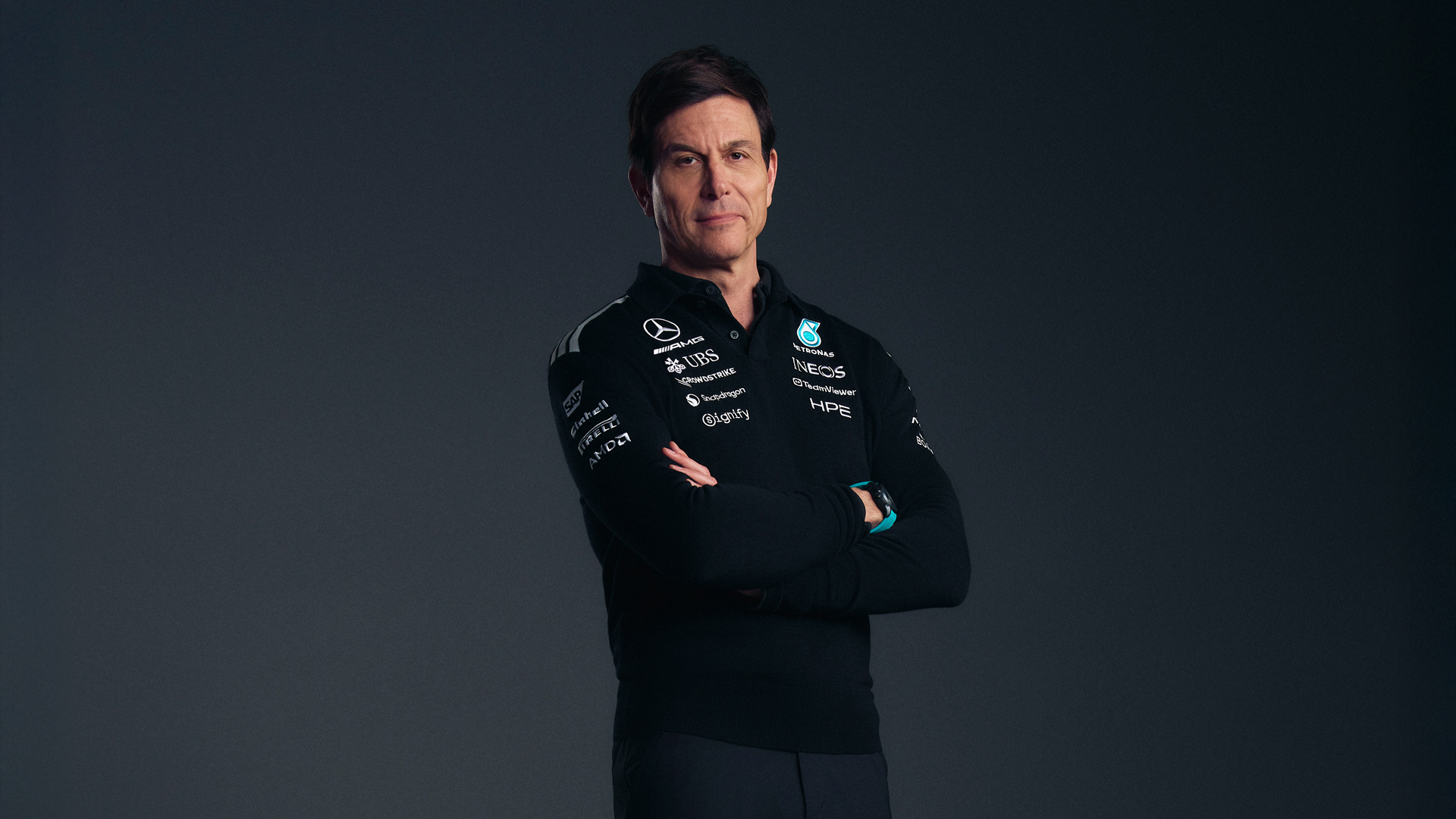
Wolff did not pretend the comparison with Antonelli was flattering. Instead, he challenged the leap from disappointing results to permanent decline. He said Russell retains the ability to become champion and pointed to the possibility that the current Mercedes does not suit him. The team principal's argument places responsibility on both sides of the garage: Russell must adapt, but Mercedes must also provide a car whose performance he can consistently access.
That is a more nuanced explanation than simply claiming Russell has been unlucky. The 2026 Mercedes has shown enormous pace in Antonelli's hands, so it cannot be dismissed as an uncompetitive machine. But the team's own Austin assessments described a narrow operating window following its recent upgrades. Finding the ideal balance through changing temperatures, tyre compounds and circuit characteristics has been difficult. A fast car can still be hard for one driver to extract consistently.
Wolff also acknowledged the mental challenge of beginning a season with championship expectations only to watch a younger teammate take control. Russell was not an outsider hoping to steal a result. He was the established Mercedes driver, a multiple Grand Prix winner and a proven junior-series champion, entering a major regulation reset with a realistic opportunity. Antonelli's rapid rise changed that internal context before Russell could settle into the role many expected him to occupy.
There is no guarantee that a different setup or a new season would erase the gap. Antonelli's speed, consistency and race execution deserve credit on their own terms. But Wolff's response highlights an important distinction: supporting Russell does not require diminishing Antonelli. Mercedes can recognise that its young star is the 2026 benchmark while still believing the driver beside him has the tools to win when circumstances align.
Austin supplied the evidence — but not a simple verdict
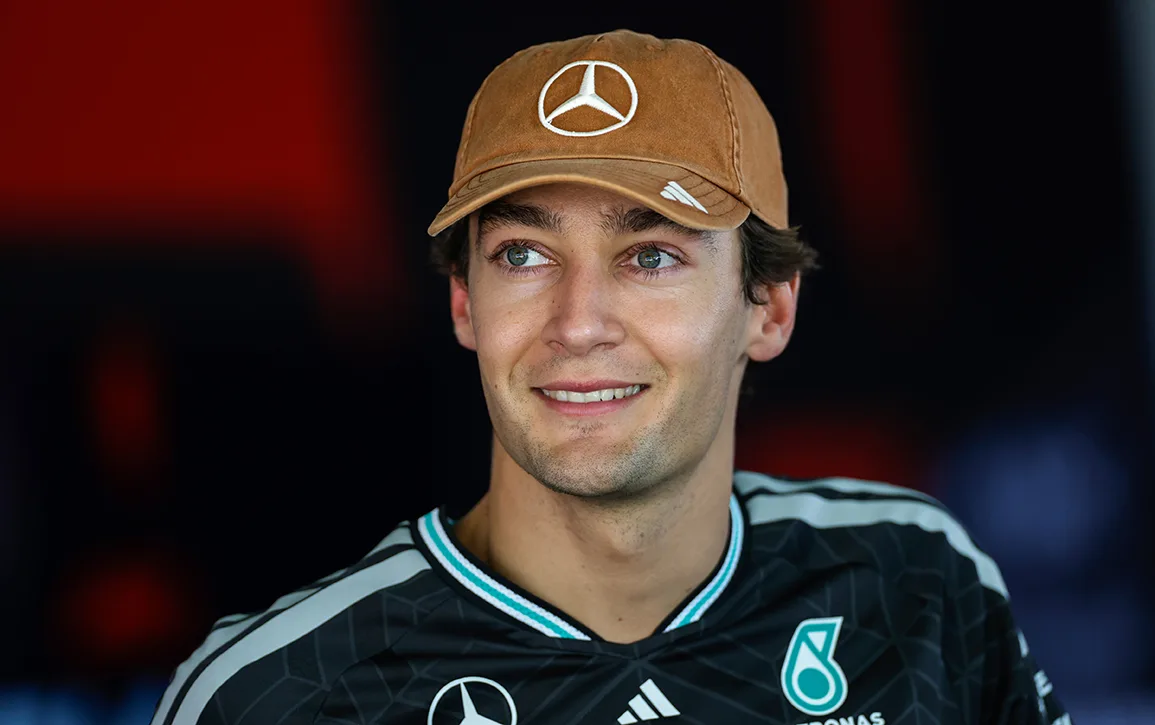
Russell's United States Grand Prix offered plenty of ammunition to critics. He qualified sixth as Antonelli took pole, then lost ground in the opening-lap battle with Oscar Piastri. The stewards issued a five-second penalty for leaving the track and gaining an advantage. That sanction cost time at his pit stop, but Russell's problems were not confined to the penalty: he struggled for pace during the first stint and could not make the most of the second.
There was a brief glimpse of something better. After switching to hard tyres, Russell reported a handful of laps comparable with his teammate's speed. Then he caught Piastri, failed to find a way past and spent much of the remaining race trapped behind the McLaren. Eighth place was the result. Antonelli, by contrast, launched cleanly, managed his tyres on a one-stop strategy and won by 13.078 seconds. The contrast was visible from the start to the finish.
The mistake would be to treat the two performances as a controlled laboratory test of pure talent. They were not. The drivers started from different grid positions, encountered different traffic and had different races to manage. None of those factors erases Antonelli's superiority in Austin; they simply show why the finishing order cannot quantify how much of the gap came from car balance, driving execution, penalty damage or track position.
Russell has a difficult task because both interpretations contain some truth. He needs to be more effective when the car is outside his preferred window, especially in qualifying and the opening stint. Mercedes also needs to understand why a machine capable of winning comfortably can leave its other driver so far from the podium. Blaming only the car would excuse too much. Blaming only Russell would leave a potentially important technical problem unsolved.

Mexico can crown Antonelli — Russell's bigger fight runs beyond it
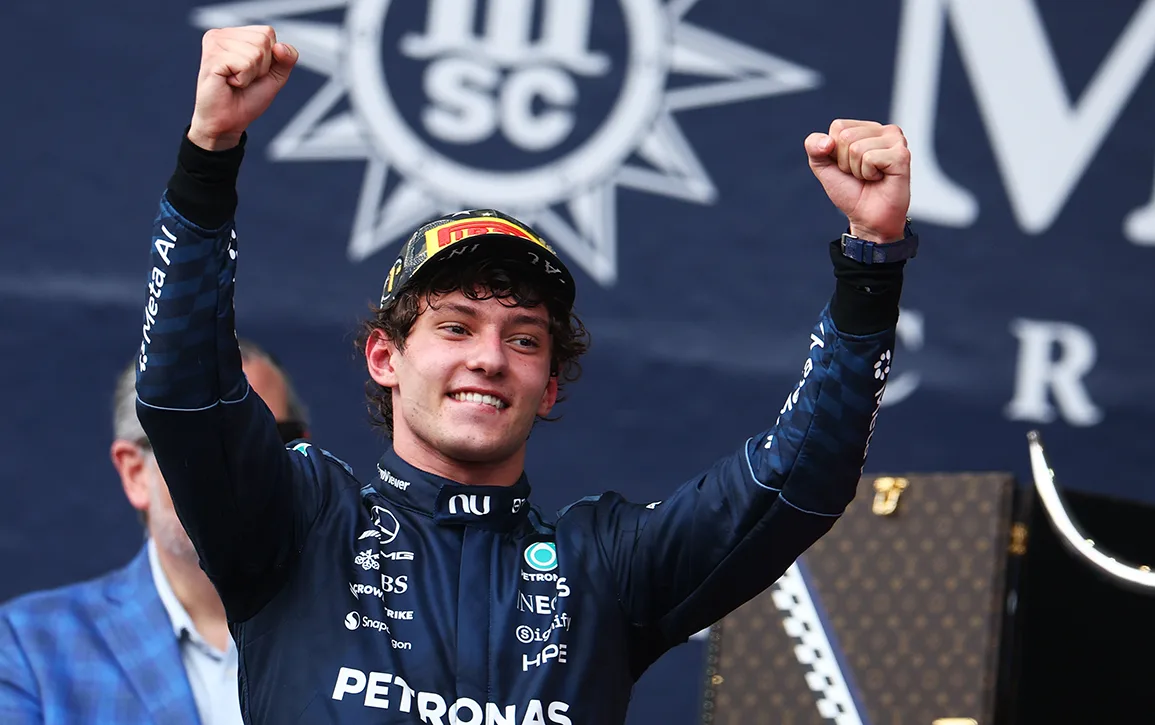
The championship arithmetic is now stark. Antonelli leads Russell by 123 points and Lewis Hamilton by 124, with 125 still available across the final five Grands Prix. At the Mexico City Grand Prix, two points would guarantee Antonelli the title regardless of what his rivals do. Even a scoreless weekend could be enough if the challengers fail to make the extraordinary gains required. A first Italian drivers' champion since Alberto Ascari in 1953 is suddenly close to reality.
For Russell, the immediate goal is no longer simply to delay the inevitable. He must also defend second place. Hamilton sits only one point behind him, while Charles Leclerc is nine points adrift. Ferrari's strong Austin result, with Leclerc second and Hamilton fourth, means the contest behind Antonelli remains live. Russell cannot afford to spend the closing rounds exclusively explaining why his own season has gone wrong.
His longer-term challenge is more substantial. A credible response would begin with clean qualifying sessions, stronger opening stints and a consistent ability to keep the W17 inside its effective balance window. It would also require Mercedes to make progress on the sensitivity that has troubled him. Winning the internal comparison in an isolated session is not enough; Russell needs repeatable pace across different circuits and conditions.
Marko's judgment is dramatic because it offers a permanent answer before the evidence is complete. Wolff's defence is persuasive because it leaves room for both the car and the driver to improve. Neither man can settle the matter with words. Antonelli has already done the hard work of turning promise into a championship-level season. Russell's opportunity now is to make sure 2026 becomes a painful chapter in his career rather than the final definition of it.
Wolff's rebuttal to Marko is not a claim that Russell has matched Antonelli this season. The standings make that impossible to argue. It is a defence of the difference between losing a title fight and losing the capacity to fight for titles at all. Mercedes has a potential youngest-ever champion on one side of its garage and an established winner struggling to extract the same car on the other.
Mexico may soon settle the championship, but it will not settle that second question. Russell's next few weekends, and Mercedes' work on the W17's operating window, will provide better evidence than any paddock prediction. For now, Antonelli owns the results. Russell still has the chance to change what they mean for his future.

















