

Bradley Predicts Canelo KO — But Mbilli's Pressure Could Flip the Fight
GOATIFYTimothy Bradley expects Canelo Alvarez to stop Christian Mbilli late on Saturday. It is a striking prediction for a fighter who has not won inside the distance since 2021, and it says as much about the opponent as it does about Alvarez. Bradley's case is that Mbilli's constant forward movement will give Canelo repeated opportunities to land the kind of compact counters that can change a fight even after several difficult rounds.
The WBC super-middleweight title is at stake in Riyadh on October 31, 2026. Alvarez is trying to regain championship status after Terence Crawford outpointed him in September 2025; Mbilli, elevated from interim to full champion after Crawford retired, is making his first defense. Both are returning after roughly 13 months without a professional fight. This is not simply a question of whether Canelo can still punch. It is whether Mbilli can impose a demanding pace without giving a seasoned counterpuncher the same opening over and over.
Bradley's late-knockout prediction has a tactical catch

Bradley's forecast is not that Alvarez will stroll through the first round and overwhelm an inexperienced challenger. His argument is more interesting: Mbilli will offer chances for uppercuts, body shots and hooks because he commits to exchanges. The former two-division champion sees Canelo taking some return fire, investing in damaging punches and eventually finding the shot that turns an exhausting contest into a stoppage.
That prediction contains an important condition. Bradley also acknowledged that Mbilli's activity could become a problem if Alvarez cannot hurt him or earn his respect. A pressure fighter who keeps coming after clean counters can change the geometry of a bout. Instead of Canelo setting traps at his preferred distance, he may be forced to fight at a tempo selected by the champion, with less time to reset his feet between exchanges.
Alvarez has built much of his elite career around making opponents pay for predictable entries. He does not need to throw the most punches in a round to land the most memorable ones. His best counters arrive when an opponent moves straight in, leaves the center line available or pauses after a combination. Mbilli's willingness to engage could therefore become both the source of his best work and the reason he loses control of the fight.
But a stoppage forecast should not be mistaken for a certainty. The veteran's recent fights have repeatedly reached the judges, while Mbilli has shown the physical confidence to force exchanges against dangerous opponents. If the champion absorbs the first clean counter without retreating, the tactical problem changes immediately. Canelo must then decide whether to raise his own output or accept long stretches in which Mbilli is the visibly busier fighter.
The most revealing early sequence may be a simple one: Mbilli advances behind a combination, Alvarez counters to the body, and Mbilli either pivots away or marches back in on the same line. Repeat that exchange several times and the direction of the fight will become clearer. Bradley's prediction rests on Canelo learning from those repetitions faster than the challenger can change them.

Mbilli's pressure can win rounds — or feed Canelo's counters
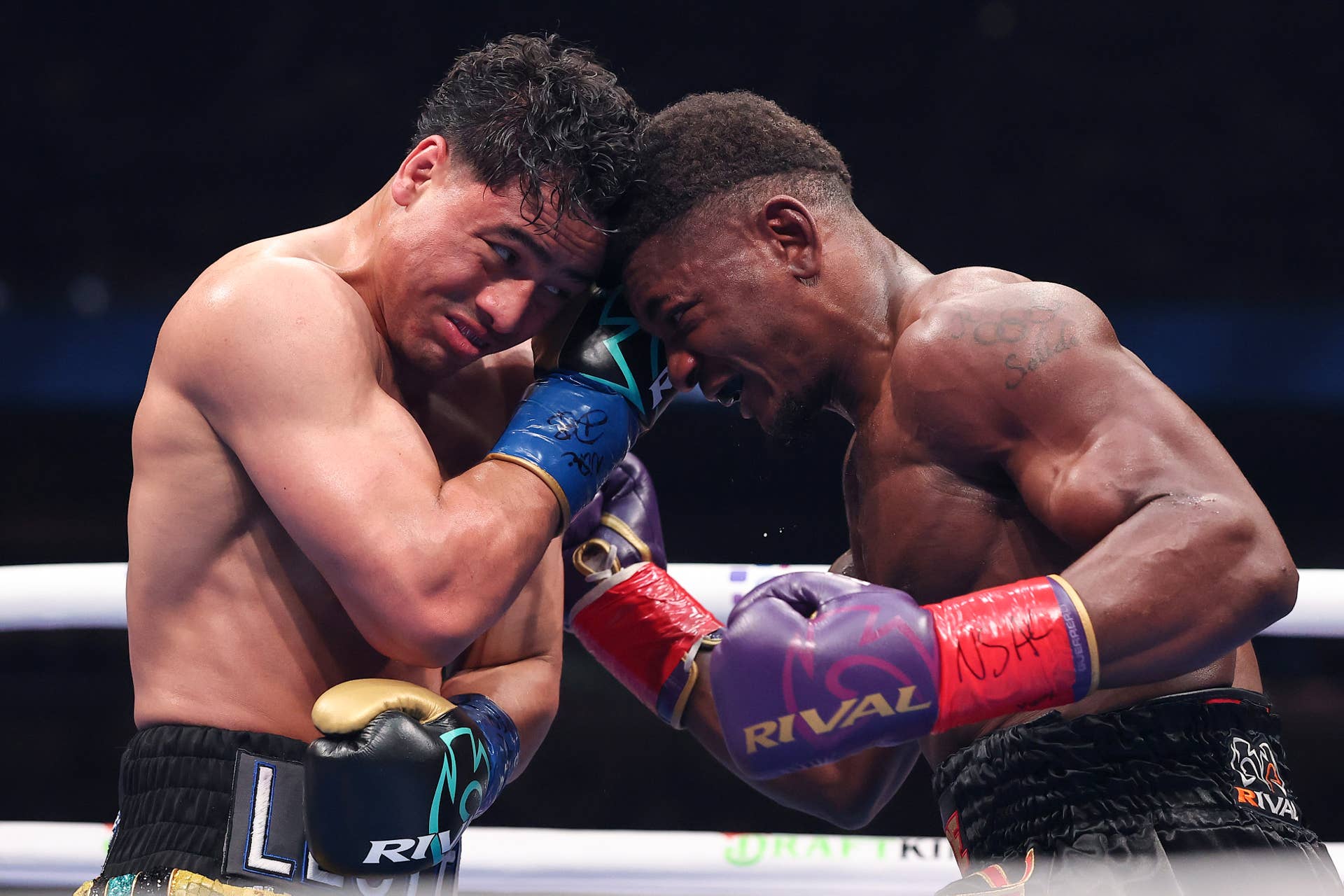
Mbilli arrives as the champion with 29 wins, no losses and one draw, including 24 knockout victories. Those numbers help explain why his pressure is not just a stylistic label. He is comfortable making opponents work continuously, and his best stretches turn the ring into a small space where the other fighter has little time to choose a comfortable range.
His split draw with Lester Martinez in September 2025 matters precisely because it interrupted the pattern of straightforward victories. Mbilli did not lose, but the contest showed that a capable opponent can remain competitive when he meets the champion's aggression with his own technical answers. It was also the last time Mbilli fought, meaning he has not had a recent bout in which to demonstrate adjustments made since then.
Against Alvarez, rushing forward without moving the head or changing the angle is a costly habit. Shawn Porter, another former champion evaluating the matchup, has argued that Mbilli needs to attack the body and step around Canelo rather than stand directly in front of his right hand. That is the difference between intelligent pressure and simply providing a stationary target between bursts of offense.
The champion does not necessarily need an early knockout to prove his style works. If he can make Alvarez defend for long spells, take the outside lane after combinations and resume his attacks before Canelo has completely reset, he can accumulate rounds. Judges do not reward pressure in the abstract, but clean work, effective aggression and ring control can make the busier fighter difficult to outscore.
The danger is that Mbilli may feel obliged to prove his toughness when Canelo lands. A fighter trying to demonstrate he cannot be discouraged can turn a small mistake into a sequence of mistakes. The smarter version of Mbilli's game is still aggressive, but it includes exits, changes of rhythm and enough restraint to make the next entry less predictable. The titleholder's biggest test is not whether he can walk forward. It is whether he can keep doing so without becoming easy to time.

Eight straight decisions do not make Canelo harmless
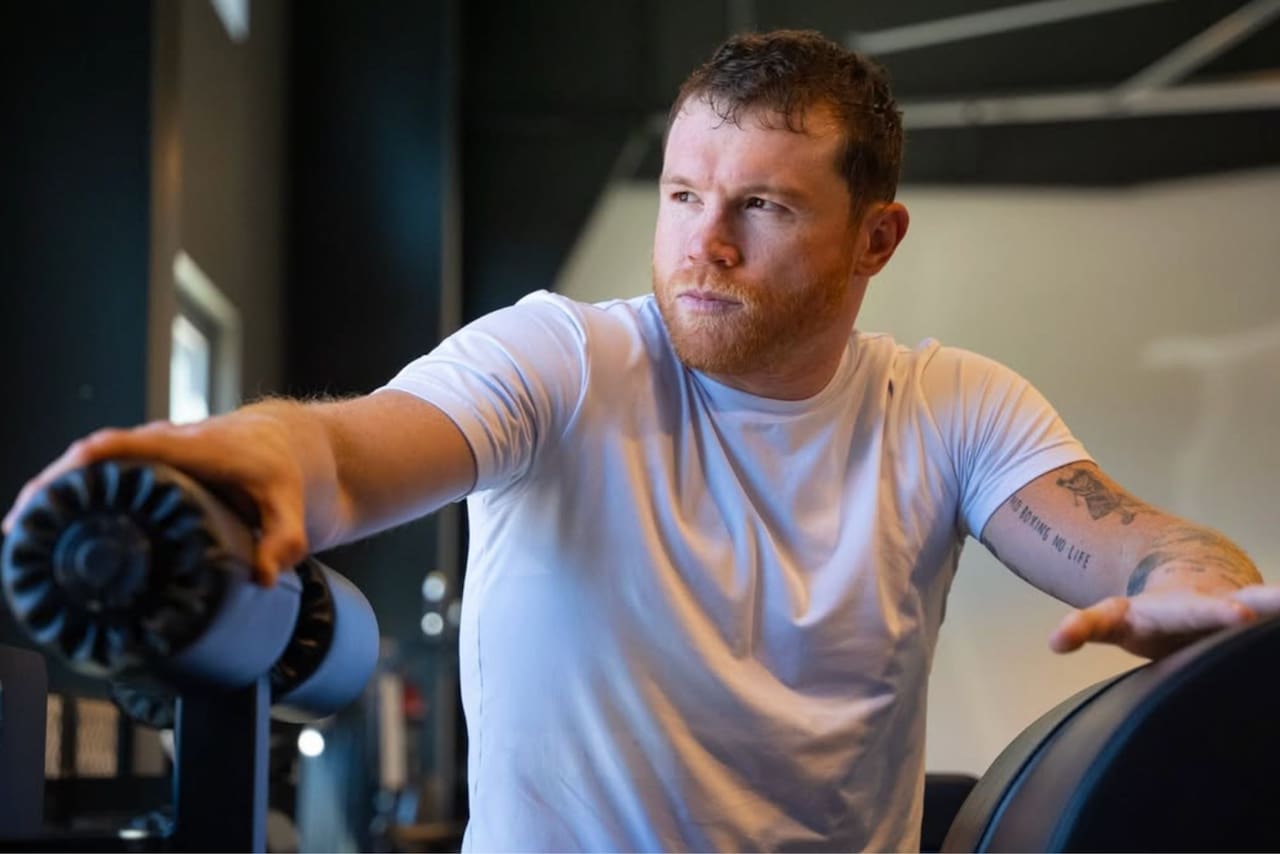
The statistic hanging over Bradley's prediction is unmistakable: Alvarez has gone the full distance in eight consecutive fights since stopping Caleb Plant in the eleventh round in 2021. It is a long stretch for a boxer whose reputation was partly built on body punching, counterpunching and the ability to close the show when a rival began to fade.
Yet a knockout drought is not a single diagnosis. The opposition, weight, tactical approach and willingness of an opponent to exchange all influence whether a fight ends early. Some boxers prioritize surviving and limiting exchanges against a dangerous puncher. Others are skilled enough to make the favorite spend energy finding clean opportunities. A run of decisions can indicate diminishing finishing ability, difficult matchmaking or some combination of the two.
The September 2025 loss to Crawford sharpened the question. Crawford's movement, timing and accuracy disrupted Alvarez's preferred rhythm and helped him win a unanimous decision for the undisputed championship. That result showed Canelo could be outboxed at the highest level; it did not prove that a forward-moving super-middleweight with a very different approach would reproduce the same problem.
Alvarez, now 36, has also spent an unusually long time outside the ring. He underwent elbow surgery after the Crawford fight and has described the extended break as useful recovery time. Rest can help a veteran arrive fresher, but inactivity brings its own uncertainties: the first exchange under bright lights is not the same as a controlled gym session, and timing against a high-output opponent can take rounds to settle.
That makes a late stoppage more plausible as a tactical scenario than an automatic return to vintage Canelo. He may need to invest in the body, defend efficiently and wait for Mbilli's entries to slow before the biggest counter lands. Conversely, if his feet look heavy or his punch volume stays too low, the champion can make the veteran's patience look like passivity. Saturday will tell us more about the meaning of those eight decisions than the raw statistic alone.
The title fight is a test of who controls the terms of engagement

Terence Crawford, the last man to beat Alvarez, has offered a related but not identical assessment. He believes Mbilli's forward-moving style suits Canelo and that the champion's best opportunity is to make the bout rough and physical rather than attempt to win a conventional technical contest. Porter also sees a possible Alvarez stoppage. Their reasoning converges on the same tactical question: can Mbilli bring pressure without letting Canelo choose exactly where the exchanges happen?
That agreement among experienced observers is meaningful, but predictions are still opinions. A champion with Mbilli's record is not merely a convenient comeback opponent. He carries a world title, a powerful attacking style and the motivation of a first defense against one of boxing's most recognizable names. Winning would instantly alter the balance of the division and establish that his rise was more than a consequence of belts being redistributed after Crawford retired.
Alvarez's route is narrower than the name recognition might suggest. He needs clean counters, disciplined defense and enough offensive activity that Mbilli cannot bank rounds through sustained work. If the Mexican can make the champion hesitate before entering, he can begin dictating the tempo. If Mbilli walks through the first significant punches and keeps Alvarez near the ropes, the pressure may begin to erode that control.
The timing makes the stakes sharper. Both men last competed in September 2025, and both are returning in a title fight rather than taking a low-risk tune-up. The October 31 event in Riyadh is therefore a test of preparation as well as skill. Nobody can be certain how either fighter's rhythm will look after a lengthy layoff, particularly once the pace becomes uncomfortable.
Bradley's late-knockout pick is a credible reading of the matchup, not the only credible ending. A measured Alvarez decision, a pressure-driven Mbilli points win or a sudden stoppage for either man all follow recognizable tactical paths. The decisive question is whether the champion can keep his volume while removing the predictable openings that Canelo has spent a career punishing.
The attraction of Canelo against Mbilli is that the same exchanges can reward opposite strengths. Mbilli wants to force activity and make the veteran fight every minute; Alvarez wants to convert that ambition into counterpunching opportunities. Bradley sees the latter eventually winning by knockout, while the champion's record and work rate explain why the prediction carries genuine risk.
Saturday's result will be bigger than one expert call. For Canelo it is a chance to recover a world title and answer the questions raised by his loss and long stoppage drought. For Mbilli it is the opportunity to prove that his pressure can survive the highest level of timing and experience. Whoever wins will have to make the other man fight a contest he did not want.

















