

Struff's 27th Ace Stuns Djokovic — And Blows Open the Turin Race
GOATIFYFor eight meetings, Novak Djokovic had treated Jan-Lennard Struff as a problem with a familiar solution. In Basel on Thursday, October 29, the German finally tore up that script. He recovered from losing the first-set tiebreak, held his nerve through two more brutal sets and finished with his 27th ace to win 6-7 (4), 7-5, 7-6 (5). It was Struff's first victory over Djokovic in nine attempts — and it arrived just as the 39-year-old Serbian needed a deep run to strengthen his case for the ATP Finals.
This was not a routine upset built on an off day from a superstar. Struff struck 66 winners, saved all six break points he faced and came forward repeatedly rather than accepting Djokovic's preferred baseline patterns. The result left the former world No. 1 without a Basel quarterfinal and sent Struff into a Friday meeting with Nuno Borges. More importantly, it changed the shape of a season-ending race that has very little room left for recovery.
Twenty-seven aces, 66 winners and the end of an eight-match curse
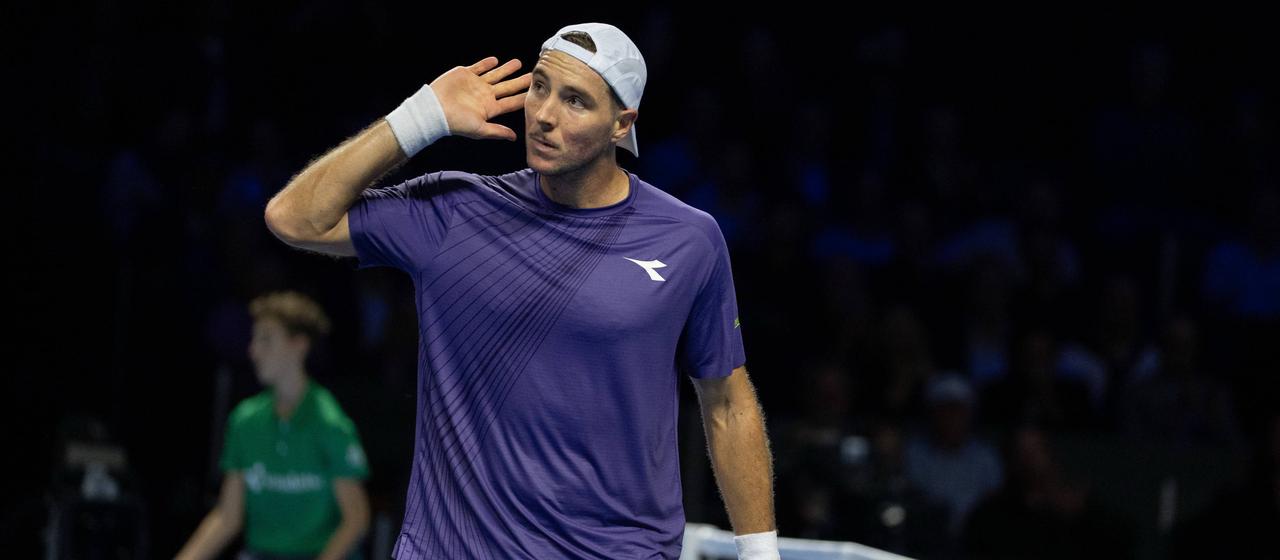
The scoreline tells you Struff won two sets after losing the opener. The deeper numbers explain why Djokovic could not stop him. The German produced 27 aces and 66 winners, 23 more winners than his opponent. He saved six break points out of six and won 29 of 38 points when he ventured to the net. Against one of the greatest returners and defenders in tennis history, those figures are the foundation of a very deliberate attack.
Djokovic entered their ninth meeting with an 8-0 head-to-head record. Across the previous eight matches, Struff had taken just one set from him. Their most recent Grand Slam encounter, at the 2025 US Open, ended in a straight-sets victory for the Serbian. It would have been easy to conclude that Struff's huge serve and heavy groundstrokes simply did not translate into a winning matchup. Basel supplied the counterexample: the same weapons, deployed more boldly and with fewer concessions.
Indoor hard courts reward a player who can make first strikes count. There is no wind to disrupt the ball toss, and a well-directed serve can create a short, predictable reply. Struff used that environment to force Djokovic to defend before he could establish the patient exchanges that have defined so many of his victories. Crucially, the German did not rely exclusively on hitting from behind the baseline. His selective serve-and-volley plays asked Djokovic to pass him under pressure and gave Struff chances to finish points with his hands rather than another full-blooded forehand.
That approach carries risk. A rushed volley or an overhit first ball can give away a service game in seconds, particularly against an opponent who reads patterns as quickly as Djokovic. Yet Struff committed to the plan even when the match became tight. Saving every break point is not proof of invulnerability; it is evidence that, on the most important defensive points of his own service games, he found the aggressive response he needed.
The symbolism of the final ace was almost too neat. After eight unsuccessful meetings, Struff did not need a lucky net cord or a Djokovic collapse to close the door. He finished the biggest result of his week with the shot that had powered it. The victory was earned over two hours and 35 minutes of repeated risk, not gifted in a single loose game.

How Djokovic lost control of the second set — and the final tiebreak
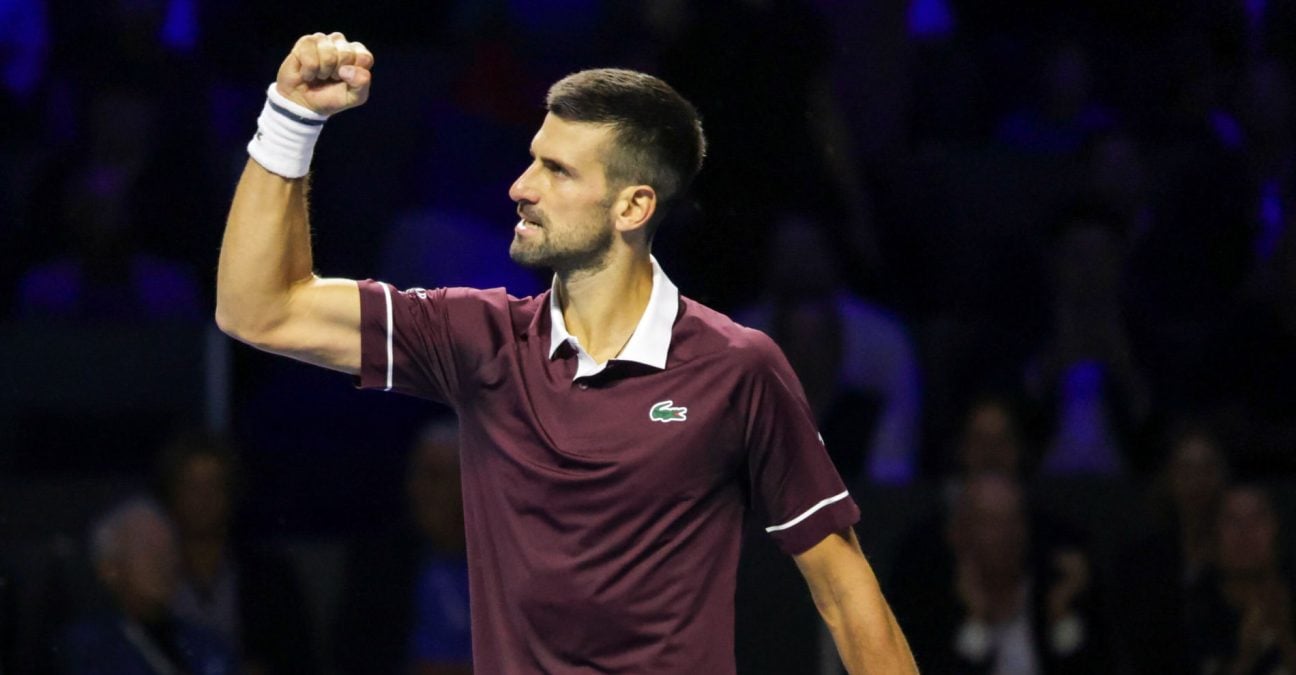
Djokovic took the first set in a tiebreak, seven points to four, and looked capable of extending a matchup he had always controlled. There was no early sign that Struff had found a magic tactical switch. Both players were protecting serve, and Djokovic's experience in the compressed moments of a tiebreak still seemed to carry weight. But a first-set lead is only a starting position when the opponent is serving this well.
In the second set, Struff's holds became a message. He kept getting through service games, including a love hold that took him to 5-4. At 5-5, Djokovic earned a break point in the eleventh game. A conversion would have given him the chance to serve for the match. Instead, Struff erased the danger with a forehand down the line, held for 6-5 and invited the crowd to turn up the noise.
The next game produced the match's only break of serve. Djokovic committed three double faults, offered Struff two set points and could not escape. It was an extraordinary reversal: the player who had failed to convert his own opportunity suddenly had the set, while Djokovic had gone from the brink of serving for victory to facing a decider. One service game, in an otherwise fiercely protected match, changed everything.
Struff still had to survive a third-set break point at 4-4. His response was another serve-and-volley play, this time finished with a forehand volley, and he eventually held for 5-4. Djokovic later struck consecutive aces to force the deciding tiebreak. That sequence matters because it rules out the simplistic idea that the Serbian had stopped competing or forgotten how to serve. He was still finding elite shots under pressure; Struff was simply matching him.
At 4-2 in the final tiebreak, Struff's movement forward and forehand execution created the separation he needed. Djokovic saved two match points, putting one last burden on the German's serve. Struff answered with an ace. A match featuring only one service break had ultimately been decided by who was willing to seize the small openings that remained. Djokovic won the first tiebreak, but Struff won the one that mattered most.

Djokovic's Turin problem is now bigger than a single Basel defeat
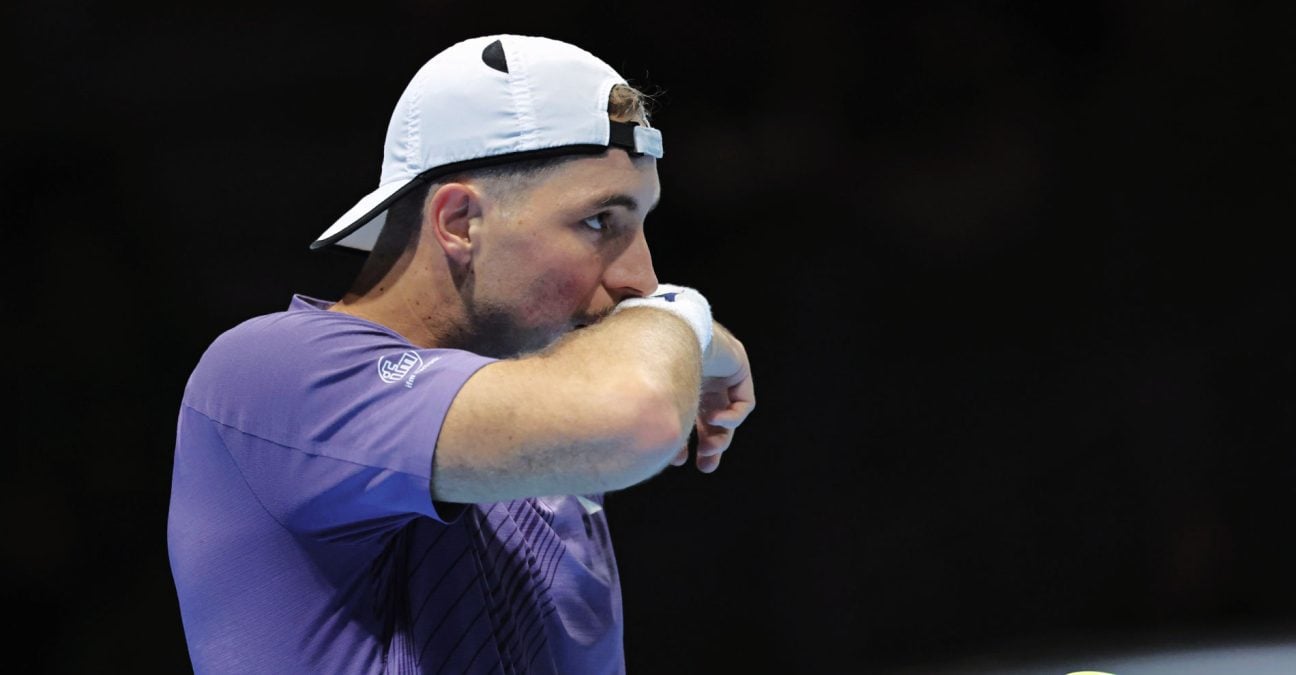
For Djokovic, the damage goes beyond an unexpectedly early exit. The ATP Finals reward an entire season's results, and the live Race to Turin is unforgiving in late October. The Serbian sits outside the effective qualification places after Basel, with Rafael Jodar and Alex de Minaur among the players occupying the ground he needs to recover. Jannik Sinner's withdrawal from the season-ending event changes the practical cutoff, but it does not hand Djokovic a place.
The arithmetic is especially awkward because Basel was one of the remaining opportunities to add a meaningful block of ranking points before the Paris Masters. Winning the tournament would have done far more for his position than winning one opening match. Instead, he leaves with the points from a comeback against Ugo Humbert and the knowledge that several direct rivals still have chances to progress in their own draws. Djokovic's Paris campaign now carries extra significance, although the final qualification picture will also depend on what those rivals achieve.
There is an important distinction between the ATP ranking and the annual race. Djokovic's opening Basel victory can help his position in the rolling world rankings, but that does not automatically put him among the players who qualify for Turin. A player can climb in one table while remaining stuck behind competitors in the other. The headline is not that Djokovic has mathematically been eliminated. It is that he has lost a valuable route to improving his position before the final Masters 1000 event of the regular season.
Basel also carried an emotional and historical subplot. Djokovic returned to the tournament for the first time since 2011, having won the title in 2009. Another trophy would have brought his career ATP title total to 103, level with Roger Federer, who built an extraordinary relationship with his hometown event. Instead, the 39-year-old left before the quarterfinals, with that particular milestone still waiting.
Djokovic has built a career on finding solutions after setbacks. That history is a reason not to write him off prematurely, but it is not a substitute for the points he now needs. Paris offers a new draw and a new chance; it also offers a field full of players with their own urgent ambitions. The next chapter of his season will be decided by actual results, not by the assumption that his reputation guarantees a late escape.
Struff's reward is Nuno Borges — and a chance to turn one upset into a run

Struff has earned the right to enjoy a first win over Djokovic, but the draw does not stop for a celebration. His next opponent is Nuno Borges, the Portuguese player who came through a three-set contest against Casper Ruud in Basel. Borges is not the same tactical challenge as Djokovic. He will ask different questions in return games, movement and rally construction, and Struff will need to reset quickly after a physically and emotionally demanding evening.
The German arrives with more momentum than one surprise result might suggest. Just days earlier, he reached the final in Brussels after a gripping semifinal victory over Arthur Fils. Struff twice fought back from a break down in that deciding set, including when Fils served for the match, and prevailed in a final tiebreak. He then took the opening set of the Brussels final against Tallon Griekspoor before losing in three. The sequence is revealing: his Basel win was the latest chapter in a sustained stretch of aggressive, resilient indoor tennis.
At 36, Struff is no longer a prospect waiting for a breakout season. He won his first ATP singles title in Munich in 2024, and the 2026 campaign has already supplied major moments, including a Wimbledon quarterfinal and the Brussels final. Those achievements do not mean his best years are guaranteed to be ahead of him. They do show that an experienced player can still improve the way he manages big points and adapts his shot selection to different opponents.
Borges has his own reasons to be dangerous. He recovered from losing the first set against Ruud in Basel, has a tour title on his record and has previously beaten elite opponents at Grand Slam level. The two players' strengths make this a real quarterfinal rather than a ceremonial next round for the man who eliminated Djokovic. Struff will again have to protect serve, manage second-ball pressure and decide when coming to the net is worth the risk.
There is also a wider opportunity. Djokovic's departure guarantees Basel will crown a new champion this year, removing the last former winner from the field. Struff has already knocked out the name that dominated the headlines. If he wants the result to mean more than a one-night highlight, he has to back it up against Borges and whoever follows. Beating a legend is a career memory; turning that victory into a title run would be something larger.

Struff did not beat Djokovic because the Serbian suddenly ceased to be a great player. He won because he served with precision, attacked with conviction, survived every break point and kept that nerve when the final tiebreak threatened to turn. The eighth loss to Djokovic never came. Instead, the ninth meeting became the first breakthrough.
Djokovic now travels toward Paris with his ATP Finals hopes more fragile than they were before Basel, while Struff prepares for Borges with a rare chance to make an already memorable week even bigger. One match has reshaped two very different ambitions: a veteran champion fighting to keep his season alive and a veteran challenger discovering that an old obstacle can finally be beaten.
Shop GOATIFY tennis products from the Tennis-filtered collection scope.

















