

Tatum Scores 40 and Saves Boston — Brooklyn's Rookie Nightmare Was Self-Inflicted
GOATIFYJayson Tatum delivered the kind of finish that will be replayed for years. With Boston trailing Brooklyn by a point and only 2.3 seconds left in overtime, he found space at the elbow and knocked down a 17-foot jumper as the horn sounded. The Celtics escaped 125–124, Tatum finished with 40 points, and a night that had nearly become a spectacular embarrassment instead became a celebration at TD Garden.
The winning shot is the easy part of this story. The harder questions concern everything that made it necessary: a disastrous sequence at the free-throw line, Brooklyn rookie Mikel Brown Jr. alternately rescuing and hurting his team, a Boston offense that took half the game to locate its perimeter touch, and a veteran supporting cast that still needs to make life easier for its star. This was a dramatic win, but not a clean one.
Boston needed a third-quarter reset before Tatum could be the closer

Boston was the more established team, playing at home against a Brooklyn roster still searching for its first victory. None of that translated into an easy opening. The Nets closed the first quarter with a burst that turned a small Celtics advantage into a 31–26 Brooklyn lead, then protected their edge through a first half in which Boston repeatedly settled for shots it could not make. The Celtics went just 2-for-16 from three before halftime. That is not merely a cold percentage; it changes the geometry of an offense, allowing defenders to shrink driving lanes and help earlier against Tatum.
Brooklyn's energy was not accidental. Nolan Traoré attacked the paint with purpose in his first start, while Day'Ron Sharpe disrupted possessions and helped keep Boston from finding a comfortable rhythm. The visitors led 61–56 at halftime, a manageable margin on the scoreboard but an uncomfortable one for a contender with ambitions much bigger than surviving a winless opponent. Tatum was already producing, yet Boston had not consistently turned his touches into high-value team offense.
The third quarter finally altered the balance. Boston made eight three-pointers in the period, with contributions from the supporting cast and a key Tatum triple helping flip the lead. A 79–78 deficit became an 81–79 advantage when Tatum connected late in the quarter; the Celtics took an 86–82 edge into the fourth. The sudden shooting improvement forced Brooklyn to respect the perimeter again, which gave Boston more room to operate inside the arc.
That correction matters because it showed both the ceiling and the fragility of the Celtics' attack. Boston does not need every possession to finish with a spectacular isolation play. It needs enough movement, spacing and early-clock decisiveness that Tatum can choose when to dominate rather than being asked to rescue stagnant possessions. The third quarter demonstrated how quickly the team can look dangerous when several shooters are credible threats. The first half demonstrated how vulnerable it can become when those same looks repeatedly fail.
The score was still tight because the Nets had genuine offensive answers. Michael Porter Jr. punished late rotations, Julius Randle used his strength to create interior chances, and Brown grew bolder as the game developed. Boston's eight-point fourth-quarter advantage was never a guarantee. The closing minutes would become less a test of shooting and more a test of judgment under pressure.

Mikel Brown Jr. was almost Brooklyn's hero — then the clock became his opponent

Mikel Brown Jr. experienced almost an entire rookie season's worth of emotional swings in one fourth quarter and overtime. The sixth overall pick had entered the campaign with his workload carefully managed after an ankle problem, but in Boston he became one of Brooklyn's primary late-game creators. He hit big perimeter shots, attacked the basket and played with the confidence of someone who did not intend to wait for permission to influence an NBA game.
Brooklyn's comeback was powered by more than one hot hand. Porter and Brown combined for a remarkable stretch of fourth-quarter shooting, while Randle continued to put pressure on Boston's interior defense. The Nets erased deficits, repeatedly drew level and briefly moved ahead. When Boston appeared to have escaped with a three-point lead late in regulation, Brown still had another answer: a corner three in the final second that forced overtime. For a young guard on a rebuilding team, making that shot on the road against a veteran opponent is meaningful evidence of nerve.
Overtime, however, offered the crueler half of the lesson. Brown hit another long three to put Brooklyn in position, and the Nets led 124–119 with roughly two minutes left. But the final possessions became increasingly chaotic. Randle fouled out, Boston worked its way back to 124–123, and Brooklyn still had the ball with a narrow lead. After a successful challenge restored possession, the Nets needed to use the remaining seconds intelligently and make Boston foul. Brown instead attacked the rim and missed with the clock almost expired.
The decision gave Boston the one thing Brooklyn could least afford to surrender: a final, organized possession with a timeout and a chance to put the ball in Tatum's hands. It is tempting to define Brown's night by that choice. That would ignore the fact that his shooting had created the opportunity for Brooklyn to win in the first place. He finished with 17 points, five rebounds and five assists, and his late scoring made a previously unlikely upset feel possible.
The defensive possession that followed was another collective lesson. Brooklyn wanted a bigger defender staying attached to Tatum, but the coverage switched and the Celtics' star found a favorable look. A rookie's clock-management error and a team-level coverage error arrived within seconds of one another. Both mattered. Neither cancels out the progress Brown showed when the game demanded courage and creativity.
For Brooklyn, the useful response is not to remove Brown from these situations. It is to keep placing him in them with clearer late-game instructions, better support from veterans and more deliberate rehearsal of end-of-game scenarios. The franchise needs to learn what its young guards can do under stress. Boston gave Brown a painful education, but the experience could still become an important step in his development.
The Celtics nearly gave away the game with preventable late-possession mistakes
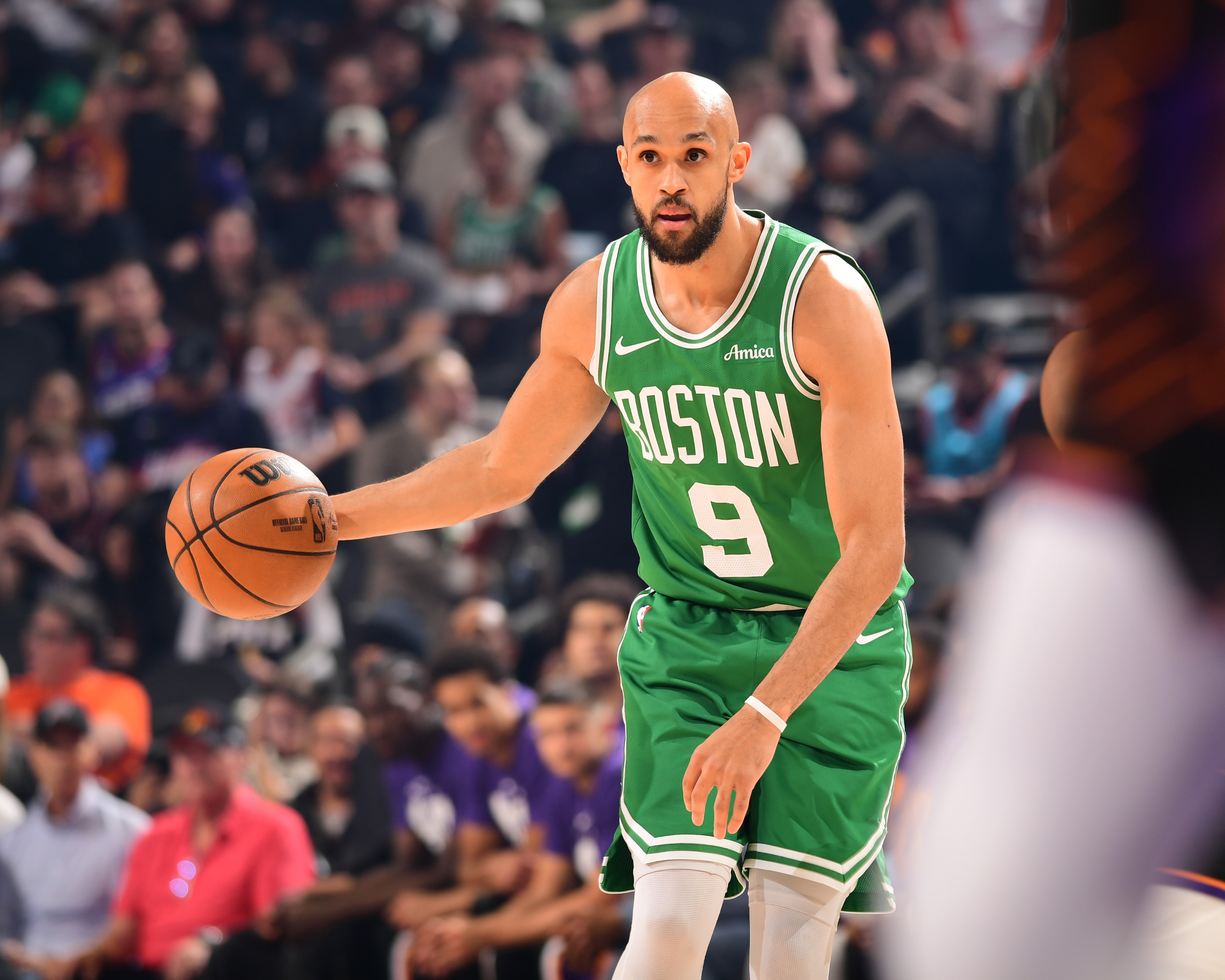
The final seconds of regulation were a reminder that winning basketball is often about avoiding small errors rather than producing a spectacular play. Derrick White had already made an important contribution, finishing a cut to the rim through contact after Tatum found him and converting the free throw. That three-point play restored Boston's lead at 114–111 with 33.7 seconds remaining. The Celtics then had multiple opportunities to close the game through ordinary possession management.
Instead, the sequence deteriorated. Tatum split a pair at the line. Boston committed a loose-ball foul on the ensuing rebound, allowing Randle to reduce the margin and intentionally miss a second attempt. The Celtics recovered possession, but the ball reached Mitchell Robinson, a notoriously inconsistent free-throw shooter. Robinson missed both shots with only a few seconds left, leaving Brooklyn a final chance to tie. Brown seized it with the corner three.
Each mistake had a different origin. Missing a free throw is a skill failure under pressure; fouling during a rebound scramble is an execution failure; failing to protect the right ball-handler in a late-game foul situation is a decision-making failure. Together they transformed a likely regulation win into five more minutes of risk. Boston did not need a new playbook to prevent that outcome. It needed its players to understand the scoreboard, the clock, the opponent's options and the relative value of each possible possession.
White's own night illustrates the tension. He supplied 16 points and a critical cut, yet the team around him still allowed Brooklyn to manufacture an extra possession. The responsibility for the collapse cannot be assigned to Robinson alone. Teammates and coaches must build late-game structures that avoid leaving the weakest foul shooter as the easiest player to trap with the ball. The final seconds should be practiced as a system, not treated as an improvisation contest.
Boston's escape should not erase the warning. In a playoff series, opponents will exploit the same mistakes with greater precision, and there may not be a final Tatum jumper to repair the damage. The Celtics can take confidence from their composure after being dragged into overtime, but the lesson from regulation is just as valuable as the celebration after it. A contender needs the discipline to finish routine games routinely.

Tatum's 40-point statement is real — but Boston's supporting cast still defines the ceiling

Tatum's final line was enormous: 40 points, eight assists and five rebounds, with 18 made free throws on 22 attempts. His shot-making provided the headline, but his foul drawing was equally important. He scored 40 despite making only 10 field goals, an indication of how effectively he generated contact and kept pressure on the defense when his teammates' outside shots were unreliable. The winning jumper was the punctuation mark on a night of sustained offensive responsibility.
The performance also carries additional significance because of the long road back from his Achilles injury. Boston has seen stretches in which Tatum looked dominant and others in which the rhythm was less certain. A 40-point night on the second half of a back-to-back is a useful marker of his capacity to shoulder a heavy workload, though it should not be confused with proof that every question about long-term health or consistency has been answered. The Celtics will still have to manage his minutes and maintain flexibility across an 82-game schedule.
Paul George is central to that equation. He contributed 20 points, seven rebounds and seven assists against Brooklyn, a versatile line that shows why Boston added another veteran creator. George can relieve pressure on Tatum by initiating offense, attacking a mismatch and defending across positions. His seven assists mattered because the Celtics need a second source of decision-making when Tatum is trapped or resting. The challenge is turning those contributions into a reliable offensive identity rather than alternating between isolated star turns.
There is a similar question for the guards and role players. Payton Pritchard had recently helped power a 35-point win over Chicago, and Boston's bench has shown it can change games with shooting bursts. Against Brooklyn, however, the team needed an eight-three-pointer third quarter simply to recover from an ugly first half. That volatility is manageable in October, but it will be costly against teams that can punish cold spells with transition points and offensive rebounds.
The Celtics are now 3–1 after losing their opener in Detroit and then beating New York, Chicago and Brooklyn. The three-game winning streak is real progress. So is the fact that Boston had to escape a 0–4 Nets team at the buzzer. Both truths belong in the evaluation. A contender is not judged only by whether it wins the game; it is judged by whether the underlying habits are strong enough to travel into difficult playoff environments.
Boston next hosts Chicago on Friday, while Brooklyn returns home to face Detroit. Those games will reveal different things. The Celtics must show they can keep their offense organized without requiring a miracle finish. The Nets must show their young players can absorb a crushing ending and turn it into better late-game execution. Tatum supplied the unforgettable moment, but the lasting value of this night may lie in how both teams respond to the mistakes that preceded it.

Tatum's buzzer-beater deserves every replay. It was a brilliant individual answer to a nearly lost game. Yet Boston's best takeaway is not that its superstar can bail it out; everyone already knew that. The important work is making sure he does not have to. Cleaner free-throw possessions, smarter clock management, steadier shooting and a more dependable second creator will determine whether this 3–1 start becomes the foundation of a serious postseason run.
Brooklyn leaves without its first win, but not without encouraging signs. Brown looked like a player willing to own the biggest moments, and the Nets found enough offense to put a veteran opponent on the ropes. Their next challenge is learning to close those moments. On Tuesday night, one team had the last shot and the other had the lesson.



















