

Alfonso Says Critics Wanted Him to Lose — Now Coello and Tapia Await
GOATIFYGonza Alfonso had heard the doubts before. When he and former partner Tolito Aguirre crossed into the elite Premier Padel circuit, he felt that some observers were waiting for them to fail. On Thursday, October 29, Alfonso answered the skepticism in the most convincing setting available: a Major quarter-final, with a scoreboard and a place in the last four on the line.
Alongside 21-year-old Tino Libaak, the Argentine eliminated Paquito Navarro and Martín Di Nenno 7-6, 6-1 in Kuwait, a day after knocking out Juan Lebrón and Leo Augsburger. Two highly regarded partnerships were gone in successive rounds. The No. 12 seeds had reached their first Major semi-final together, and the next names on the draw were even bigger: Arturo Coello and Agustín Tapia.
But the most revealing part of their breakthrough came after the rackets were put away. Alfonso discussed the criticism that followed his move to the top circuit, the personal sacrifices behind his rise and the mental work that now keeps him grounded. Libaak spoke with extraordinary respect about the very player he had just defeated. Their answers explained why this run feels like more than another two-match upset.
Two Giants Down in 48 Hours — and a Tie-Break That Changed Everything
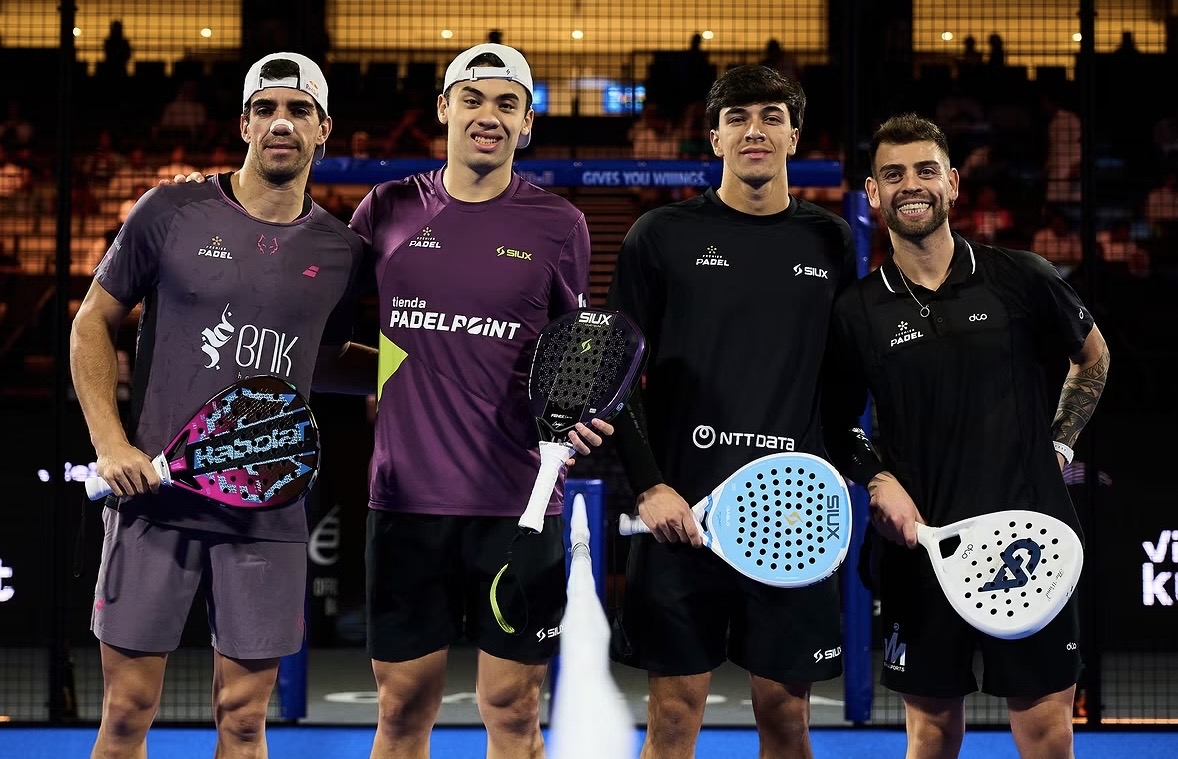
The first upset had already made the partnership impossible to ignore. In Wednesday's round of 16, Libaak and Alfonso lost the opening set to third seeds Lebrón and Augsburger, then recovered to win 4-6, 7-5, 6-1. The third set was emphatic, but the important achievement was keeping the match alive when the more established pair had control. It was also a repeat of their earlier victory over the same opponents in Madrid, suggesting a matchup that the Argentines understand rather than a result produced by one exceptional afternoon.
Thursday presented a different problem. Navarro and Di Nenno, the fifth seeds, offered vast experience, patience in the longer exchanges and the ability to change the tempo of a point. Libaak and Alfonso did not get an easy passage through the first set. In fact, they fell 2-5 behind in the tie-break. That deficit is the kind of moment when an outsider's momentum can disappear: the favorites need only a couple of clean points to take control of the match.
Instead, the Argentine pair escaped the tie-break and won it. The precise shot-by-shot explanation is less important than the competitive shift. Navarro and Di Nenno had been within reach of a set lead; now they had to chase the match. Libaak and Alfonso capitalized ruthlessly, taking the second set 6-1. The straight-sets score was 7-6, 6-1, but the match was effectively decided by the way the underdogs handled the most pressurized minutes of the opener.
There was a tangible reward beyond the headline. Their first Major semi-final guaranteed at least 780 FIP Race points, a meaningful boost with places at December's Barcelona Finals still being contested. The last four also represented progress beyond the quarter-final barrier they had repeatedly encountered during the recent European swing. Reaching a Major semi-final is not the same as winning one, but it changes the discussion around a team that was previously described mainly by the famous opponents it could trouble.
It also reframes the run from the previous day. Beating Lebrón and Augsburger was a story about a dangerous pairing producing another surprise. Following it by beating Navarro and Di Nenno turns the narrative into a question about sustained level. Two different challenges, two different match shapes, and two wins against seeded opposition: that is stronger evidence than a single inspired set.

Alfonso Says Some Wanted Him to Fail — His Response Has Changed

Alfonso's comments after the quarter-final reached back beyond this partnership. He remembered the skepticism that surrounded his arrival on Premier Padel with Tolito Aguirre, his former teammate on the A1 circuit. His account was not that every fan or rival opposed him. It was more specific: he believed some people wanted the newcomers to lose so their earlier judgments about the level of that circuit would appear justified. In a sport where the top tour carries enormous prestige, that kind of perceived hierarchy can follow players long after they change competitions.
His response was noticeably less confrontational than the setup might suggest. Alfonso acknowledged that people were entitled to doubt and said he no longer spends his energy chasing negative reactions. What mattered to him now was the support he has gained and the opportunity to compete against opponents he once watched from the outside. There is a difference between using criticism as a permanent grudge and recognizing it as a chapter of a career. The latter leaves more room for improvement.
He was equally candid about the time it took to commit fully to professional padel. Alfonso suggested that he might have preferred to start the serious phase of his career earlier. He also made clear that the transition required choices about lifestyle, focus and family. Touring internationally looks glamorous from a highlight reel, but the routine includes travel, training, recovery, repeated losses and long stretches away from people who make a player feel at home.
Those details help explain why the victories have carried such visible emotion. They are not only trophies on a ranking sheet. They are evidence that the choices to leave comfort behind were capable of producing something worthwhile. Alfonso's account of his mental preparation was particularly revealing. Rather than fixating on the reputations of Navarro, Di Nenno or any other established name, he tries to keep his attention on his own execution. The respect remains; the psychological burden of playing a legend is what he wants to remove.
That is a sensible approach for an underdog. If the entire match becomes a referendum on whether he belongs, every missed volley can feel like confirmation of the doubters' case. If the contest is treated as a sequence of decisions, he can respond to a lost point with the next tactical adjustment. The Kuwait tie-break was an excellent example of that difference. The score became uncomfortable, but the pair did not have to win an argument about status. They had to win the next few points.

Libaak Just Beat His Role Model — and Still Sounds Like a Student

Libaak's reaction to eliminating Martín Di Nenno may have been the most unusual part of the post-match discussion. The 21-year-old did not try to turn the victory into a declaration that the older generation had been replaced. He described Di Nenno as a player he admires and learns from, someone whose longevity at the top of the sport offers a standard that younger players are still trying to understand. Beating a respected rival did not erase that respect.
There is a valuable distinction here. A talented young player can occasionally produce a match good enough to beat a leading pair. Staying near the top for years requires far more: managing form when the schedule is unforgiving, adapting to different partners, handling opponents who have studied every favorite pattern, and recovering from defeats without rebuilding one's identity each week. Libaak's comments suggested that he recognizes the distance between a breakthrough and a career of sustained excellence.
He also spoke warmly about Pablo Crosetti, the coach and mentor whose family has provided an important base for him in Barcelona. Libaak's description of that relationship was intensely personal, closer to a second home than a conventional professional arrangement. That support matters in an international sport. It can provide continuity when the player spends most of the year changing hotels, countries and courts. Technical instruction is only one part of the job; a trusted environment can also help protect confidence during difficult stretches.
Like Alfonso, Libaak identified time away from family as one of the hardest costs of the profession. He enjoys the career and does not present himself as a victim of it, but the emotional trade-off is real. That is easy to miss when the public sees a teenager or young adult celebrating on a show court. A Major semi-final can be the visible reward for months of invisible travel, practice and adjustment.
There is another layer to his development. Libaak was part of Argentina's victorious 2024 world championship team, and the 2026 World Cup in Doha is next on the calendar. He and Augsburger, opponents in Kuwait's round of 16, will be part of the same national setup again. Elite padel is full of these overlapping relationships: a rival this week can be a teammate next week, and a personal role model can be the man standing across the net in a career-defining quarter-final.
That context makes Libaak's respect for Di Nenno more than a polite interview answer. He is learning to compete fiercely without treating every opponent as an enemy. The challenge now is to carry that maturity into matches where the margins become even smaller and the opposition is even less forgiving.

Coello and Tapia Are Next — and the Numbers Explain the Danger
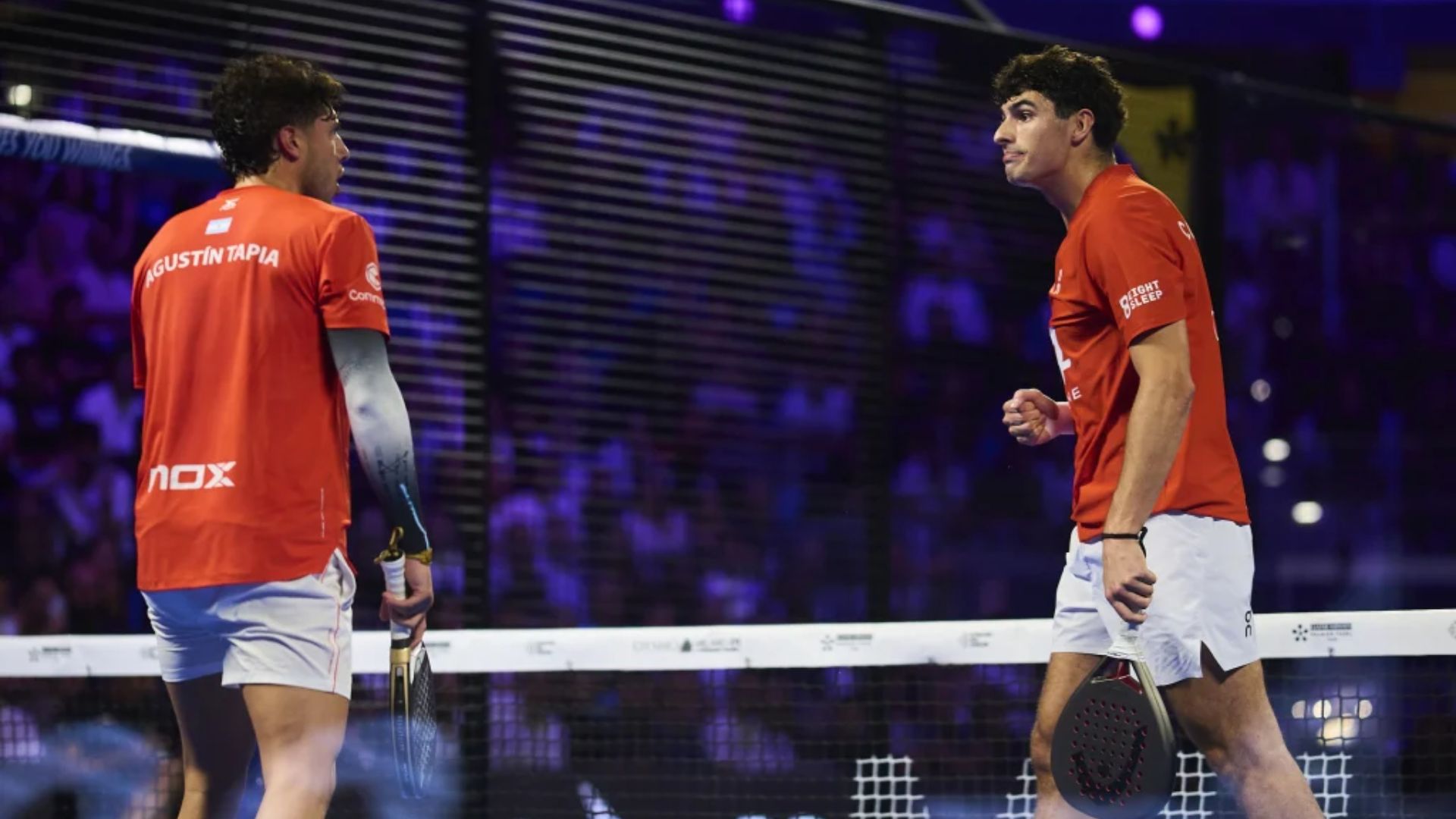
The next opponent is not merely another seeded pair. Arturo Coello and Agustín Tapia are the reference point for the men's game, and their route through Kuwait has looked ominously efficient. On Thursday they beat Jairo Bautista and Lucas Bergamini 6-1, 6-4. Their reward is a Friday semi-final against Libaak and Alfonso, the No. 12 seeds who have just eliminated two other heavyweight partnerships.
The contrast is sharp. Coello and Tapia entered Kuwait after winning four consecutive tournaments, including the Milan P1 on October 18. That final was not effortless: Lebrón and Augsburger took the first set before the world No. 1 pairing recovered to win in three. Yet their ability to survive the difficult spell and accelerate later is precisely what makes them so dangerous. Even a team that creates opportunities against them must keep making the right choices long enough to finish the job.
Recent head-to-head results also favor the favorites. Coello and Tapia have won their previous four meetings with Libaak and Alfonso, including clashes in Rotterdam and Düsseldorf during October. The Rotterdam quarter-final is especially instructive because the Argentines took the first set before losing 4-6, 6-3, 6-3. That score offers both encouragement and warning. Libaak and Alfonso can trouble the leaders for extended periods; sustaining that pressure across the full match has been the missing step.
To change the pattern, the underdogs will need more than an early burst of spectacular winners. Coello's reach and court coverage make rushed attacks expensive, while Tapia can change the direction and speed of a rally with very little warning. The challengers must protect the middle, avoid leaving comfortable overhead opportunities, and choose their aggressive moments carefully. Those are tactical possibilities rather than predictions: no one has yet shown that a particular plan will work against this pair on Friday.
The psychological test may be just as severe. Alfonso has spoken about removing the names and reputations from his preparation, but the scoreboard will inevitably bring pressure. If the Argentines lead, can they keep playing with purpose rather than retreating into caution? If they fall behind, can they find the same composure that rescued the tie-break against Navarro and Di Nenno? The favorites are capable of punishing both extremes.
There is no need to manufacture a guaranteed fairy-tale ending. The world No. 1s deserve to be favored, and the four-match head-to-head reflects a genuine gap in consistent performance. But the underdogs have earned a chance to test whether their latest progress is enough to narrow it. After successive victories over the No. 3 and No. 5 seeds, the next result will tell us how close this partnership really is to the top.
Whatever happens against Coello and Tapia, Kuwait has already changed the immediate outlook for Libaak and Alfonso. The pair that repeatedly ran into a quarter-final ceiling now has a Major semi-final, two high-profile wins in consecutive days and valuable points toward the Barcelona Finals. That is meaningful progress, not just a good headline.
Alfonso's memories of being doubted make the story more compelling, but revenge is not the only lesson. His inward focus, Libaak's respect for the players who came before him and the support network behind their rise point toward something more sustainable than anger. The next test is brutal. It is also exactly the kind of test a partnership must earn before it can credibly talk about joining padel's elite.
Shop GOATIFY padel products from the Padel-filtered collection scope.

















