

Alonso Calls Out F1's Backmarkers Again — Albon Fires Back
GOATIFYFernando Alonso has made a Formula 1 argument that is almost guaranteed to start a fight: he believes too many drivers at the back of the grid are making mistakes they should know how to avoid. And rather than soften the criticism after a bruising United States Grand Prix, the two-time world champion arrived in Mexico City and repeated it. Alex Albon, the driver involved in the Austin collision that ignited the row, has now answered him directly.
The dispute is bigger than one damaged Aston Martin. Alonso is questioning the judgment of rivals who race aggressively for minor positions, while Albon, Pierre Gasly and Oliver Bearman insist the standard of driving has never been higher. Underneath the insults is an uncomfortable reality of modern F1: when the fastest four teams occupy much of the points-paying territory, everyone else is asked to take risks in a race that offers very little reward.
The Austin Collision That Turned a Bad Sunday Into a Public Feud
The argument began on the opening lap at Circuit of The Americas, not in a press room. Alonso had started from 12th and was fighting to keep his Aston Martin in contention for points. Albon was moving forward in the Williams. With Esteban Ocon also part of the traffic, their paths converged at the Turn 11 left-hander. The cars touched, and Alonso's machine suffered aerodynamic damage that shaped the rest of his afternoon.
Neither driver was penalised. That is a vital fact because Alonso's subsequent criticism was a personal assessment, not an official finding of blame. He believed the Williams had attempted a move without sufficient room and that the contact cost him a realistic opportunity to score. Albon saw a congested corner in which Alonso was already dealing with another car, leaving the Williams driver with little room to escape. The same few seconds produced two fundamentally different readings of what a racing driver should have done.
Alonso continued with a compromised car, eventually finishing 16th, one place ahead of Albon. Aston Martin's post-race account described visible floor damage and a later front-wing change. Its pace before the extra stop was encouraging enough to make the lost opportunity especially painful. A team that struggles to reach the top 10 cannot shrug off half a second of missing downforce as a minor inconvenience. One damaged floor can transform a promising afternoon into an expensive test session.
Yet there is a difference between arguing that Albon misjudged a move and arguing that the lower third of Formula 1 is full of inadequate drivers. Alonso crossed that line in Austin when he connected the contact to a wider complaint about the quality of the field. He was not merely asking for more room. He was challenging the competence of people whose livelihoods depend on being among the best drivers in the world.
The incident also exposed how differently risk looks from each cockpit. For Alonso, a clean opening lap could have protected the best chance of points his team had seen in weeks. For Albon, an aggressive start offered a rare opportunity to gain ground before the cars settled into their normal performance order. Both incentives were real, and neither guarantees that the chosen move was sensible. The disagreement is exactly why stewards assess incidents individually rather than turning every collision into a verdict on a driver's career.

Alonso Refuses to Back Down — and Brings the Cost Cap Into It
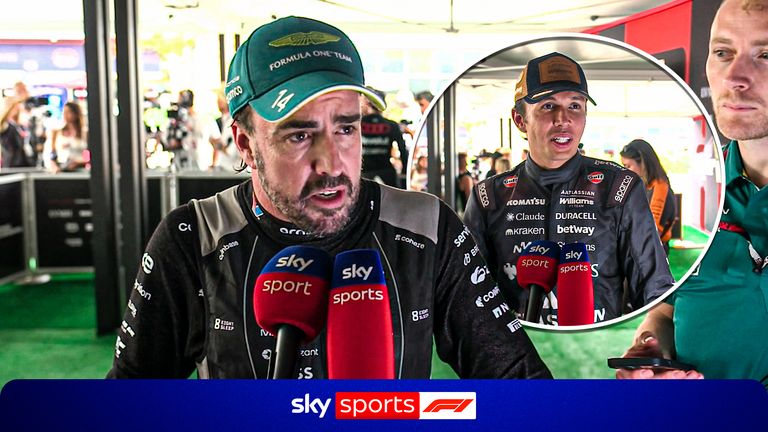
By the time the paddock reached Mexico City, Alonso had been given an obvious opportunity to cool the argument. He did the opposite. The Aston Martin driver stood by his belief that repeated first-lap mistakes reveal a problem with judgment among some competitors, arguing that drivers with the necessary confidence should not feel compelled to settle every fight in the first corner.
He pointed to established front-runners who have recovered from compromised starting positions as evidence that patience can be more valuable than desperation. His broader complaint was not that overtaking should disappear, but that too many collisions occur when the potential reward is minimal. From his perspective, a driver fighting outside the points should be especially reluctant to destroy another team's race in pursuit of a position that may not matter by the finish.
There is a financial dimension to the criticism. Formula 1 teams operate under a cost cap, and damaged floors, wings and suspension parts are not free. Repeated accidents can redirect money and manufacturing capacity away from upgrades. That burden can be especially irritating for teams trying to catch up from the back, where every planned development carries weight. Alonso's frustration is therefore partly an engineering argument: a careless collision can damage not only today's race but also tomorrow's development programme.
Still, his argument has a weakness. A driver cannot know on lap one exactly which position will matter at the chequered flag. Safety cars, retirements, tyre degradation and strategy can turn an apparently insignificant midfield fight into a points opportunity. Waiting politely behind a rival might be safe, but it can also surrender the one chance to gain track position against a car that is otherwise faster. Racing decisions are made with incomplete information, not with the benefit of a Sunday-night classification.
Alonso himself acknowledged that cars at the back are often harder to control. They have less grip, less consistent performance and smaller margins for error. That is an important concession because it complicates his claim about talent. A mistake can reflect a driver's judgment, a difficult machine, or both. Calling a rival's move unnecessary is fair criticism. Treating every incident as evidence of a defective generation of drivers is a much larger claim — and one that his competitors were never going to accept quietly.

Albon, Gasly and Bearman Push Back: The Grid Is Not Full of Amateurs

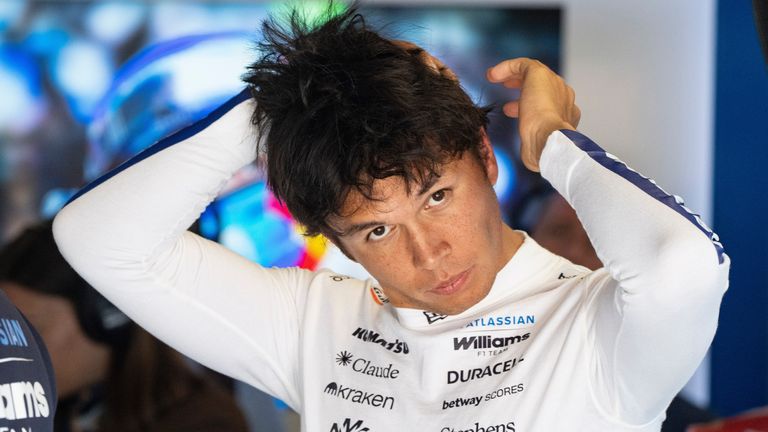
Albon's response was notable for its restraint. He made clear that he respects Alonso, a driver he admired while growing up, but he rejected the idea that the back of the modern Formula 1 grid is populated by weak competitors. In his view, the field is stronger from front to back than it was a decade or more ago, with fewer seats effectively secured by sponsorship money rather than racing ability.
That is not just a defensive talking point. The current grid includes race winners, podium finishers, highly rated junior champions and drivers who have beaten formidable teammates. Their cars are not equally competitive, but the machinery they are assigned should not be mistaken for a simple ranking of their talent. A driver finishing 17th in a difficult car may have executed a more impressive race than somebody cruising to seventh in a dominant package.
Pierre Gasly offered a similar assessment. The Alpine driver did not pretend every move in the midfield is clean, but he argued that the overall level of driving is extremely high. His perspective matters because he has experienced both the pressure of racing for a leading team and the struggle to extract points from machinery that cannot regularly challenge the front. He knows how little room exists for hesitation when a rare opening appears.
Oliver Bearman went further in explaining the incentives. With the strongest four teams frequently occupying most of the top eight, the midfield's remaining points can be painfully scarce. Drivers sometimes need to try an ambitious pass because simply following the car ahead is unlikely to change their result. That does not make every gamble wise, but it explains why a driver might accept more risk than a championship contender who has the pace to overtake later.
Bearman had fresh experience of the downside. In Austin he collided with Gasly while attempting an inside move, received a time penalty and ultimately retired with damage. Gasly managed to finish 10th despite his own car being hurt. Their disagreement about the move did not stop both from recognising that midfield racing is shaped by difficult choices. That example actually strengthens the nuance missing from the loudest version of this argument: good drivers can make poor decisions, and a poor decision is not automatically proof that a driver lacks the talent to belong in F1.
Albon's response also made the row personal without making it ugly. He could have answered Alonso's insult with another insult. Instead he defended his peers, disagreed with the assessment and left open the possibility that the pair would meet again on track. The argument is now out in public, but the only meaningful way either driver can change the other's mind is through the quality of the racing that follows.

Mexico Could Expose the Bigger Problem: Too Much Risk for Too Few Points

The Mexico City Grand Prix gives this dispute an immediate stage. At the 4.304-kilometre Autodromo Hermanos Rodriguez, the field must manage thin air, unusual cooling demands and a long approach to the opening corner. Those conditions can compress the margins between teams and make a first-lap position gain particularly tempting. They can also punish an overambitious move before the race has properly settled.
Alonso and Albon have another reason to care. Aston Martin and Williams are both trying to salvage results from difficult seasons, and every point matters when the teams are fighting near the foot of the Constructors' Championship. The difference between finishing 12th and 16th may not produce a headline, but it changes the story inside the garage: whether a setup worked, whether a strategy had potential, and whether a driver managed the car well enough to be in position when someone ahead retires.
The structure of the field is at the heart of the debate. There are 22 cars and only 10 points-scoring places in a normal Grand Prix. When several leading teams lock down most of those positions through outright pace, the rest are effectively fighting over scraps. A driver can produce an almost flawless afternoon and still come home with nothing. That makes the difference between prudent patience and missed opportunity much harder to judge than it is from a television replay.
The 2026 cars add another layer. Energy deployment, braking behavior and tyre management can change the speed difference between two cars from one corner to the next. A move that looks available as the battery delivers power can disappear as the car ahead changes its line or recovers energy. The driver must make a judgment in a fraction of a second. That does not excuse contact, but it makes blanket judgments about skill especially risky.
There is also a contradiction in asking midfield drivers to be more conservative while demanding that they prove they deserve their seats. Teams want aggression, opportunism and points whenever an opening appears. They also want clean races, undamaged parts and sensible decision-making. Those priorities cannot always be reconciled. The ideal driver takes every worthwhile chance and avoids every unnecessary collision, but the line between the two is not painted on the asphalt.
Alonso's criticism may still have a useful effect if it makes rivals examine the cost of reckless first-lap lunges. Albon's defense is equally useful if it prevents the grid from equating a slow car with a slow driver. Mexico will not settle the debate with one race, but it can remind everyone that the men fighting for 15th are not simply background characters in somebody else's championship. Their battles are real, their mistakes are costly, and their reputations are on the line every time they turn into the first corner.
Alonso is entitled to be furious about the damage to his car, and he is right that an ambitious first-lap move can cost a smaller team far more than one position. But the absence of a penalty in Austin and the different accounts from the cockpits make it difficult to turn that collision into proof that an entire section of the grid lacks talent. Albon, Gasly and Bearman have a legitimate counterargument: surviving in an uncompetitive car demands skill, and occasionally it demands a gamble.
The real test will come when the lights go out in Mexico. If these drivers meet again, every move will be viewed through the lens of this public argument. The championship leaders can race for trophies. The drivers behind them are racing for points, careers and the right to be taken seriously. That makes the midfield more complicated than Alonso's verdict suggests — and often more combustible.

















