

Honda Can't Explain Stroll's 13th DNF — While Alonso Calls Aston Martin 'Phenomenal'
GOATIFYFor Aston Martin, the São Paulo Grand Prix delivered two apparently incompatible verdicts on the same Formula 1 car. Fernando Alonso said the AMR26 felt exceptional through the corners, having qualified eighth in difficult conditions. Lance Stroll, meanwhile, parked his car after just 30 laps with another energy-system problem. It was his 13th retirement of a bruising 2026 season, and the most worrying part was not simply the number. Honda could identify the latest battery fault without yet explaining what caused it.
Alonso's eventual 12th-place finish and Stroll's retirement produced no points, but the weekend was not devoid of useful evidence. The chassis appeared responsive when grip was scarce; its power delivery and reliability remained substantial obstacles. That contrast matters because Aston Martin cannot convert an encouraging cornering performance into regular championship results until the whole package can complete races at competitive speed. The question after Brazil is not whether the car has any potential. It is how quickly the team can turn the glimpses of speed into repeatable, finishable weekends.
It is tempting to see an encouraging lap time and a costly retirement as separate stories, one for the chassis department and one for the engine supplier. In practice, the two belong to the same competitive equation. A qualifying position earns nothing if the car cannot stay healthy, and even a sound battery cannot make up for all the lost ground on the straights.
Honda knows the battery fault — but not the root cause

Stroll's retirement on lap 30 was the clearest symptom of a problem that had already appeared during the São Paulo weekend. The Aston Martin driver had started 16th, but his race ended while he was running 18th. His short explanation afterward was simply that it was a battery issue. A difficult result became more troubling when Honda's trackside chief engineer, Shintaro Orihara, described the state of the investigation: the team understood which error had occurred, but not the underlying cause.
That distinction is fundamental in a modern hybrid Formula 1 power unit. Recognizing an error code or an abnormal operating condition tells engineers what the system reported; it does not necessarily reveal which physical or control-system event started the chain. Replacing a component can get a car running again without preventing a similar failure if the trigger remains. Honda is examining the data and the battery itself, and its engineer warned that identifying the root cause could take weeks. That is an investigation, not a definitive diagnosis, and it would be premature to label one particular component, supplier or calibration as the culprit.
There is also an important difference between this late-season run of trouble and the battery damage Aston Martin encountered earlier in 2026. At the beginning of the campaign, engine vibrations repeatedly compromised batteries, creating an unusually severe durability problem. Honda now regards the new failures as potentially separate. Its midseason reliability had improved, only for issues to return over the last few races. Treating every shutdown as one continuous fault would make an easy headline but a poor engineering conclusion. The team must establish whether there is one recurring cause, different causes with similar symptoms, or an interaction between hardware use and operating conditions.
Stroll's 13 retirements require that same precision. The commonly quoted figure excludes the season opener in Melbourne, where he did not complete sufficient distance to be classified but was not recorded as a conventional retirement. Thirteen is nevertheless a stark record over the season, especially alongside the fact that eight of his past ten grands prix have ended before the flag. Repeated non-finishes affect more than the driver's result: they remove race-distance data, complicate comparisons with Alonso, and deny the team opportunities to test whether development changes work under sustained competitive load. A reliable car has to be a baseline, not a reward for an unusually trouble-free weekend.
GOATIFY
GOATIFY Formula 1
Aston Martin's reliability story has become a major talking point for Formula 1 fans — browse race-week apparel and accessories for the sport.


Why Alonso loved the car in the rain but finished 12th
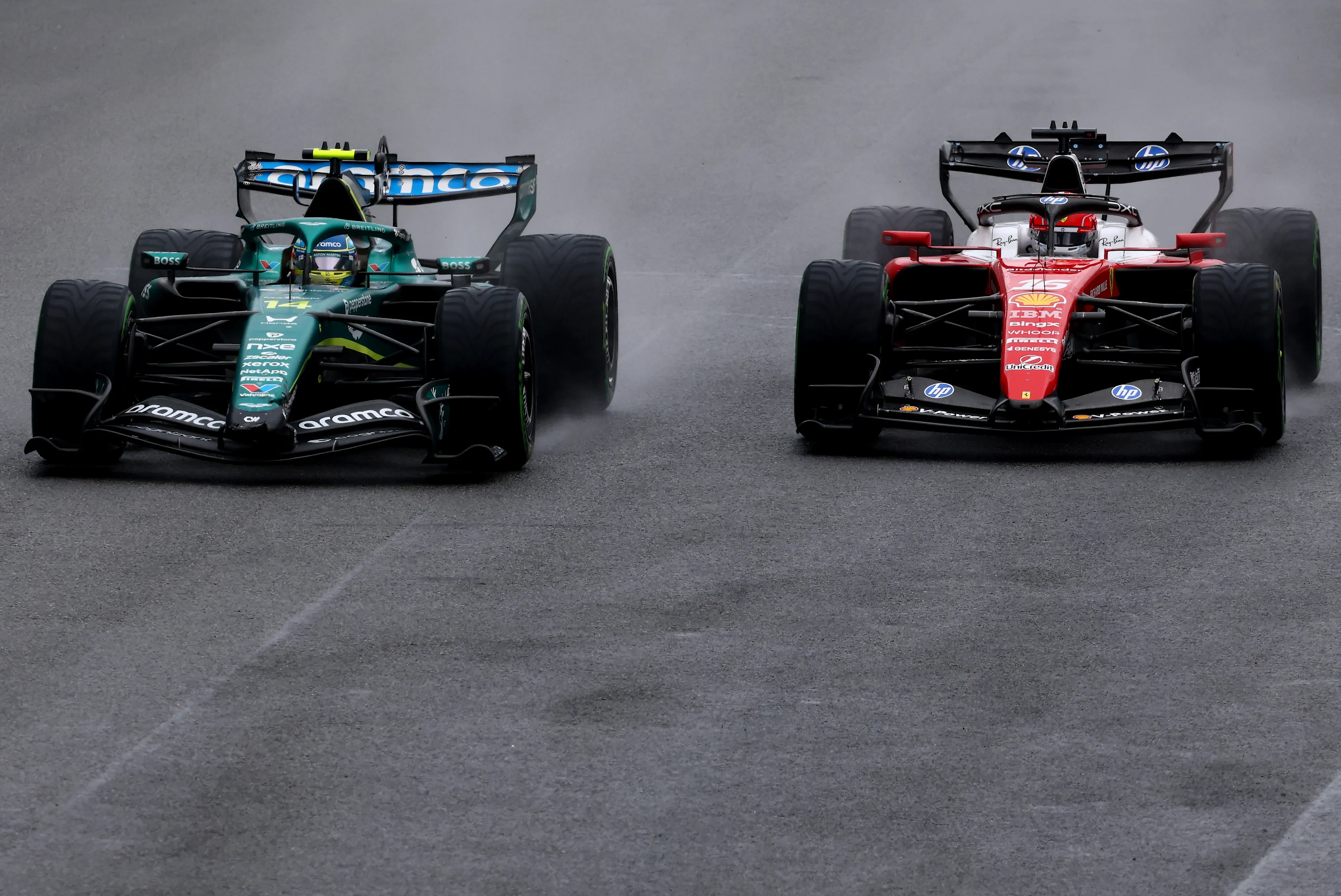
The other Aston Martin still offered an unusually positive assessment of the car. Alonso reached the top ten in all three qualifying segments in Brazil and put his AMR26 eighth on the grid. The wet conditions helped reduce the visibility of the Honda-powered car's principal weakness on the straights, while putting greater emphasis on control, balance and traction. Alonso was especially enthusiastic about how the car behaved through corners. This was meaningful praise from a two-time champion, but it applied to a particular set of conditions, not to the full performance envelope needed across a dry race distance.
The race quickly underlined why qualifying performance cannot be read as a finishing-position forecast. Alonso was involved in contact with Oliver Bearman at Turn 3 on the opening lap and fell out of the points-paying positions. He eventually crossed the line 12th, around 20 seconds behind Nico Hülkenberg in tenth. Even without the opening-lap disruption, Aston Martin's lack of straight-line performance and energy deployment would have made defending positions difficult. Alonso described being overtaken by cars that the AMR26 could match or trouble through the corners. The car's strengths were real, but they were not enough to erase its losses elsewhere on the lap.
Rain can rearrange the priorities of a Formula 1 car. With drivers managing wheelspin, braking confidence and changing grip, a responsive chassis and predictable power delivery may offer more usable time than outright horsepower alone. It does not mean engine performance suddenly stops mattering. Honda itself acknowledged that wet conditions hid some of its weaknesses while continuing to expose areas of driveability that need improvement. In a dry race, better traction cannot necessarily compensate for lost acceleration, inefficient energy deployment or lower speed at the end of a straight. The weekend showed the size of the opportunity and the persistence of the constraint.
There is a genuine positive in being able to separate those two observations. Alonso's qualifying run suggests that not every part of the Aston Martin package is failing at once. It gives the team a set of vehicle-balance characteristics worth retaining as it makes wider changes. Yet finishing outside the points is the reality that counts in the championship. The most useful takeaway from Brazil is therefore more specific than saying Aston Martin was either fast or slow: the car could be strong in certain corners and conditions while still lacking the complete power-unit performance and race reliability to translate that pace into a result.
The fix matters beyond Brazil, and Las Vegas is the next test
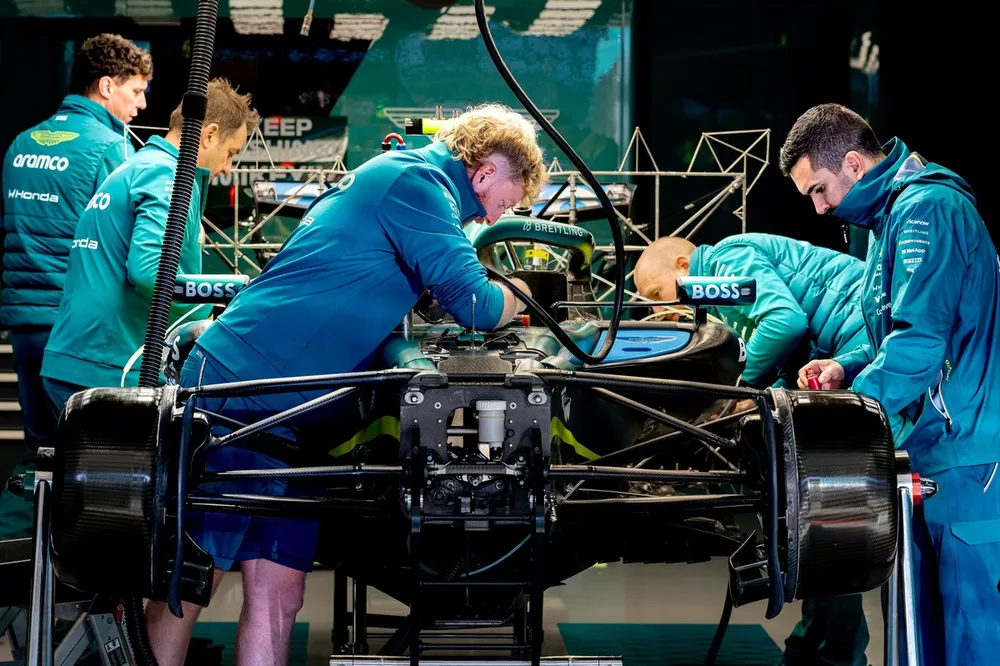
The next task is immediate. Las Vegas is scheduled for November 20–22, giving the team a short interval to analyze the São Paulo data and decide whether it can introduce a practical countermeasure. A countermeasure is not the same as solving the entire problem. Engineers may adjust operating limits or procedures to reduce exposure to a suspected failure mode while pursuing a more complete explanation. Honda's stated priority is to examine the evidence closely enough that the same kind of uncertainty does not carry into the following season. That is a challenging objective when the precise origin of the latest battery fault has not yet been confirmed.
Aston Martin and Honda also have to avoid allowing the reliability crisis to obscure a separate performance-development challenge. The rain in Brazil demonstrated that the chassis can produce an encouraging feeling and competitive sector performance, but the broader package continues to suffer from energy deployment and straight-line deficiencies. Those are different questions from whether the battery stays healthy until the chequered flag. Both matter. A car that finishes every race but cannot defend on the straights will collect limited points; a car that qualifies well but routinely retires cannot build a championship campaign. Improving one does not automatically solve the other.
The constructors' standings make the trade-off particularly sharp. Aston Martin sits tenth, five points behind Williams, with each remaining opportunity to score carrying disproportionate importance. Alonso's eighth-place grid start in Brazil was a chance to close the gap, but a first-lap incident and pace limitations turned it into another zero. Stroll's exit removed the second chance entirely. The team cannot control every piece of race contact or changing weather, but it can make reliability and usable race pace less vulnerable to them. A useful development programme should deliver measurable improvements on both cars, not just isolated flashes from one.
For the Honda engineers, the crucial evidence may come from comparing the battery events across different days and conditions rather than jumping straight to one attractive theory. For the Aston Martin engineers, Brazil's cornering performance offers something constructive to preserve. For Stroll and Alonso, the objective is simpler: reach the flag and be competitive enough to fight for points without relying on a rainy qualifying session. The next race will provide another data point, but a clean weekend would not in itself prove the root cause has disappeared. That will require a defensible technical explanation and repeatable results over time.
GOATIFY
GOATIFY Formula 1
As the championship heads to Las Vegas and the development race continues, explore GOATIFY Formula 1 fan favourites.


São Paulo did not show a team with no strengths. It showed one whose strengths are too easily cancelled out. Alonso's praise for the AMR26's cornering ability gives Aston Martin a platform to develop, while Stroll's 13th retirement puts a hard number on the cost of Honda's unresolved battery problems. The useful response is neither panic nor complacency: identify the fault, protect the good vehicle balance and improve the power delivery that leaves the car vulnerable on the straights. Until reliability and performance arrive together, the best qualifying laps will remain promising exceptions rather than a convincing turnaround.
Las Vegas will offer a fresh test, but the larger measure of progress is consistency. Aston Martin needs two cars that can finish, race and score without waiting for ideal conditions to disguise the weaknesses of the total package.

















