Tarik Skubal Just Made the Dodgers’ Deadline Gamble Look Worth It
GOATIFYThe Dodgers did not trade three prospects for Tarik Skubal because they needed help surviving August. They made the deal for nights like this. In his first postseason start for Los Angeles, the two-time Cy Young winner gave the defending champions six innings of one-run, two-hit baseball in 100-degree heat, striking out seven as the Dodgers beat Atlanta 5-3 in NLDS Game 1.
The box score was impressive, but the larger meaning was even clearer. Los Angeles spent aggressively to remove uncertainty from October, and Skubal immediately turned a dangerous Braves lineup into a game the Dodgers could control. Then Teoscar Hernández, Kyle Tucker and Max Muncy supplied three home runs. For one afternoon, the most expensive version of the Dodgers looked exactly like the one they imagined.
This is the start Los Angeles bought at the deadline

Los Angeles sent outfielder Zyhir Hope and right-handers River Ryan and Brady Smith to Detroit because the front office believed an elite starter could change the geometry of a short postseason series. Skubal had already won consecutive American League Cy Young Awards, and after the trade he settled into the Dodgers rotation with a 2.61 ERA across his final 10 regular-season starts.
Game 1 was the first real return on that October investment. Skubal allowed a leadoff single to Drake Baldwin, then retired 15 consecutive hitters. His fastball reached 101 mph, and the combination of velocity, command and quick innings mattered even more in conditions that reached 100 degrees at first pitch. He did not need to chase strikeouts at the expense of length; he kept Atlanta from creating traffic and gave the Dodgers six innings before the bullpen had to solve anything.
That is exactly why deadline aces cost premium prospects. In October, the value is not merely preventing runs. It is simplifying the rest of the series. Los Angeles can now arrange Blake Snell, Yoshinobu Yamamoto and the remaining rotation from a position of strength rather than scrambling after an opening loss. One Skubal start changed both the scoreboard and the pitching map.

Atlanta’s opener plan worked — until the Dodgers’ power arrived
Atlanta's pitching plan was not foolish. Dylan Dodd, who had spent the regular season as a reliever, opened with three scoreless innings and four strikeouts. For a while, the Braves had exactly the game they wanted: keep the Dodgers from settling into a normal starter matchup, change looks quickly and try to hand a close game to the late innings.
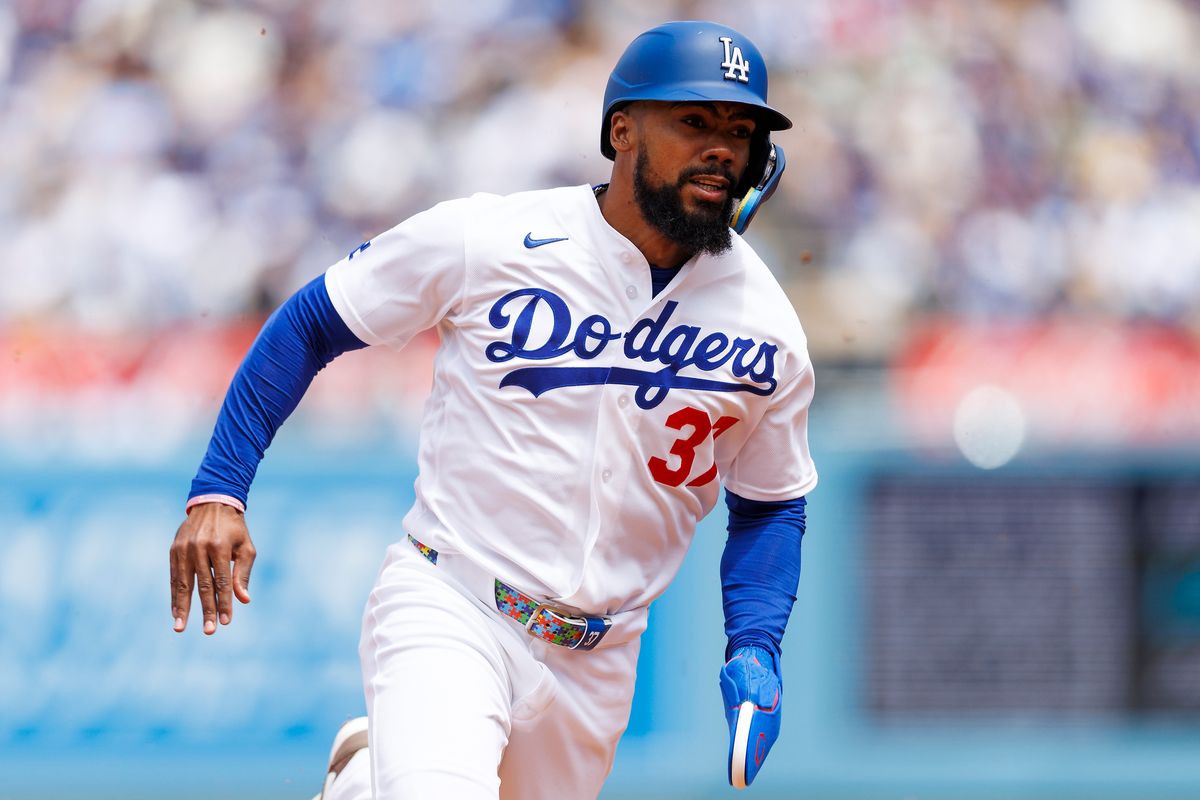
The problem with that strategy against Los Angeles is that one mistake can undo several clean innings. Victor Mederos walked Freddie Freeman in the fourth, then left a pitch where Teoscar Hernández could drive it. Hernández sent it 431 feet to left-center for a two-run homer and the first meaningful separation of the afternoon. Atlanta had executed the difficult part of its bullpen game and still found itself behind after one swing.
Max Muncy added another layer in the sixth. After Kyle Tucker's two-run homer, Muncy followed with a solo shot that stretched the lead to 5-1. That sequence is what makes the Dodgers exhausting in October. A team can navigate Ohtani, Betts and Freeman without catastrophic damage and still run directly into veteran hitters with long postseason histories. The lineup does not need one superstar to carry every night; it needs enough hitters to punish the small number of mistakes a playoff pitching plan inevitably produces.
Kyle Tucker can rewrite a disappointing season in October
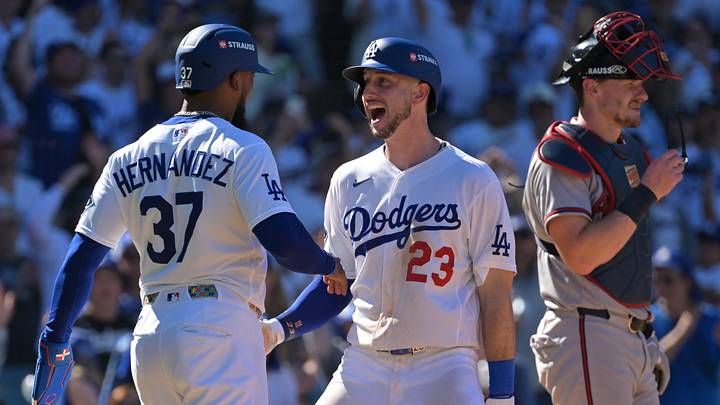
Tucker's sixth-inning homer mattered beyond the two runs it put on the board. His first Dodgers regular season never matched the expectations created by a four-year, $240 million contract. He finished with a .715 OPS, his lowest mark since becoming an everyday major leaguer, and spent much of the summer looking like a luxury addition who had not materially raised the lineup's ceiling.
September offered a different picture. Tucker's production improved late, and Game 1 gave him the kind of moment that can change how an entire season is remembered. He homered, stole a base and became part of the Dodgers' decisive sixth-inning surge. Postseason baseball compresses narratives brutally: months of frustration can be overtaken by a handful of swings if those swings decide October games.
The Dodgers do not need Tucker to become their best hitter. They need the version who controls the strike zone, uses the whole field and adds left-handed power behind the established stars. That is a much more realistic burden. If his late-season improvement is real, Los Angeles has effectively added another middle-of-the-order threat at the exact point when opponents are already spending their best pitching resources on Ohtani, Betts and Freeman.

The three-peat formula is depth, not just celebrity

The Dodgers' three-peat chase is usually framed as an argument about star accumulation. Game 1 showed the more practical reason they are so difficult to eliminate: the stars do not all have to dominate simultaneously. Ohtani, still managing biceps and knee issues, did not provide the decisive swing. The Dodgers won anyway because Skubal controlled the first six innings and three other hitters supplied the home runs.
That redundancy is the real competitive advantage. A short series can turn on one injury, one cold hitter or one starter having an off night. Los Angeles has spent to make those events less fatal. Yamamoto can follow Skubal. Snell can change the look again. Muncy can provide power from the lower half of the order, and Tucker can punish a pitcher who survives the top of the lineup.
Atlanta also supplied the warning against treating the opener as a coronation. Sean Murphy homered off Skubal in the sixth, and Ozzie Albies' two-run shot in the ninth pulled the Braves within 5-3 before Evan Phillips recorded the final out. The Braves have enough power to punish a sloppy inning, and a bullpen game kept them competitive deep into the afternoon.
Still, Los Angeles now owns the result that matters. The Dodgers won without needing a perfect bullpen finish or an Ohtani takeover, and they did it with the deadline acquisition delivering exactly what he was acquired to deliver. That is a much more sustainable October formula than simply waiting for the biggest star to save the season.
One win does not settle a Division Series, and Atlanta's ninth-inning push was a reminder that October games rarely stay comfortable. But Game 1 showed why Los Angeles was willing to pay a premium for Skubal and why its lineup remains so difficult to contain even when its biggest name is not driving the offense.
The Dodgers now have the advantage they wanted: a series lead without using every weapon in the rotation. If Skubal keeps pitching like an ace and Tucker's September rebound carries into October, the three-peat chase becomes less about star accumulation and more about the brutal reality opponents face — Los Angeles can win a playoff game in several different ways.