

Verstappen Passed 14 Cars in Five Laps. Red Bull's Simulations Never Saw It Coming
GOATIFYThere are recovery drives that look improbable on paper, and then there is Max Verstappen's afternoon at Interlagos. The Red Bull driver started the 2026 São Paulo Grand Prix in 21st place after power-unit penalties, yet reached eighth by the end of Lap 5 and ultimately finished second. Red Bull team principal Laurent Mekies said the team's pre-race simulations had no realistic route to the gain of 14 positions in those opening five laps. The result left a strange contrast: an astonishing recovery for the driver, an unexpected double podium for Red Bull, and a car that its lead driver still believed was not behaving correctly.
That contrast matters more than any highlight reel. Verstappen delivered his most decisive work when the circuit was wet and the field tightly packed. As the surface dried, the RB22 became harder to manage, and race winner Lando Norris ultimately maintained a clear advantage. Red Bull's Brazilian weekend showed how rapidly an exceptional driver can change a race without proving that his car has become the fastest one on the grid.
Fourteen places in five laps: the recovery Red Bull could not simulate
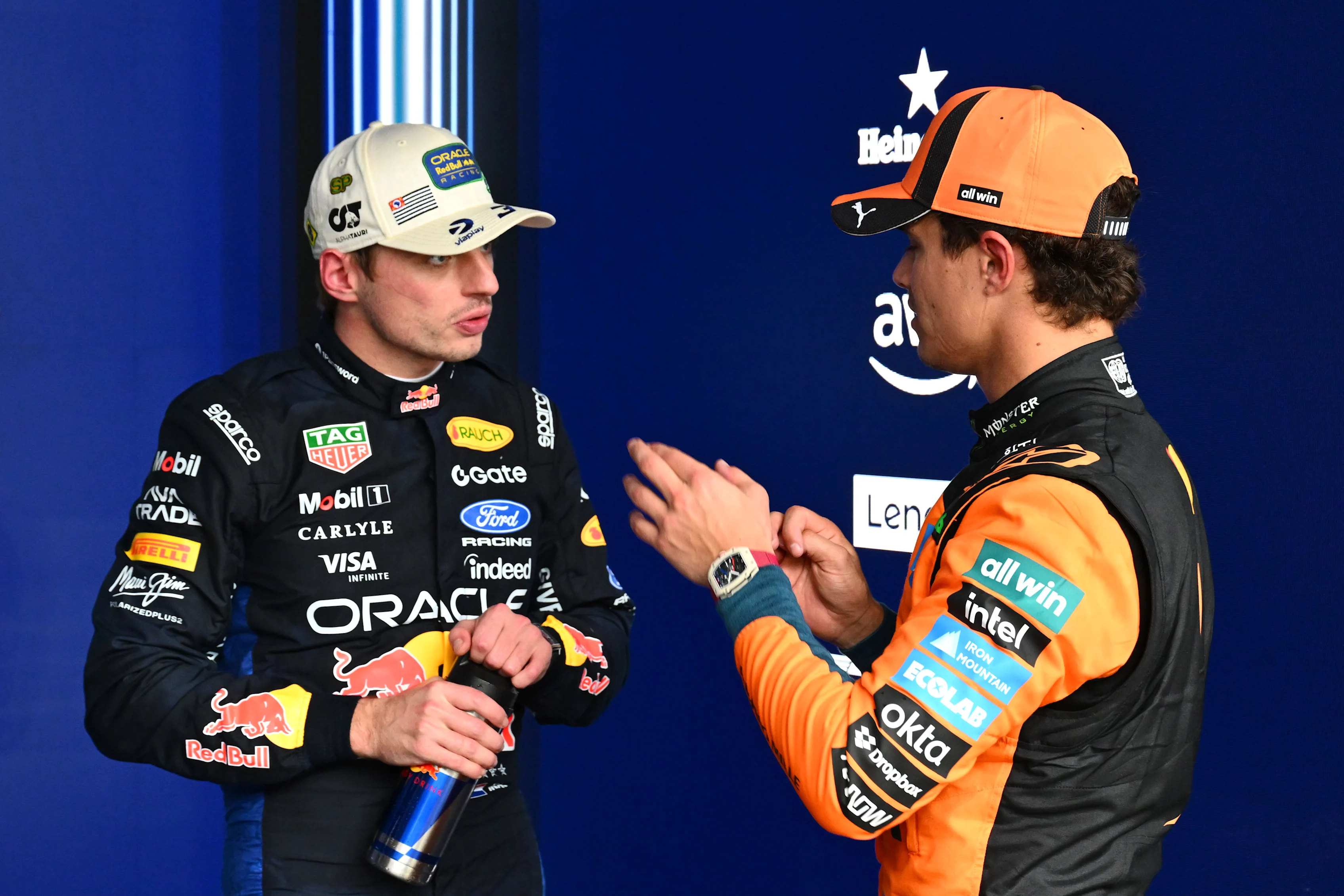
Verstappen was already facing a difficult Sunday before the formation lap. Power-unit component changes took him beyond the permitted allocation and produced a back-of-grid penalty. In qualifying he recorded a competitive Q1 lap but did not run in Q2, leaving the official starting position at P21. The decision made track position Red Bull's most obvious problem, but it also meant the team could begin the race thinking about opportunities rather than defending a front-row start.
Those opportunities arrived almost immediately. Interlagos began damp, with spray, uneven grip and a drying racing line making the first few laps unusually fluid. Verstappen gained eight places on the opening lap, climbing from 21st to 13th. By Lap 5 he was eighth. That is not simply another description of the eventual P21-to-P2 result. The first five laps account for a remarkable 14-place change before the strategy and incidents of a full 71-lap Grand Prix had time to shape the final order.
Red Bull's own race preparation had not assigned much probability to such an outcome. Mekies later stressed that its simulations did not foresee a driver starting 21st and finishing second, let alone passing through 14 grid places so early. A model can estimate pace and tyre performance; it cannot guarantee how a real driver will identify gaps, judge spray, manage changing grip and execute decisions against opponents reacting in the moment. Verstappen's speed and positioning made the model's conservative expectations look obsolete before the first pit-stop cycle.
Yet the detail that distinguishes this recovery is how little of it depended on late-race chaos. Verstappen was already in the points within minutes and close to the podium fight before the switch to slick tyres. He overtook Oscar Piastri and Alex Albon during the early charge and, by Lap 23, ran around seven seconds from the lead. The rain created multiple racing lines, but exploiting them repeatedly without contact still required precise braking and confidence about where the grip would appear. It was a performance constructed through successive decisions rather than a single fortunate safety car or strategic gamble.
Brazil has a history of rewarding that combination. Verstappen won here from 17th on the grid in 2024 and reached the podium from a pit-lane start in 2025. The 2026 drive was different in its engineering backdrop and in the quality of the opposition, but the common thread was an ability to make overtaking progress when the surface punished hesitation. Calling that experience alone would understate the work: the driver had to make his move while each rival was still discovering what the corner would offer on the next lap.
GOATIFY
GOATIFY Formula 1
A move from the back to the podium in São Paulo has F1 fans talking — explore GOATIFY's Formula 1 race-day gear.


A fast first stint did not fix the RB22's balance problem
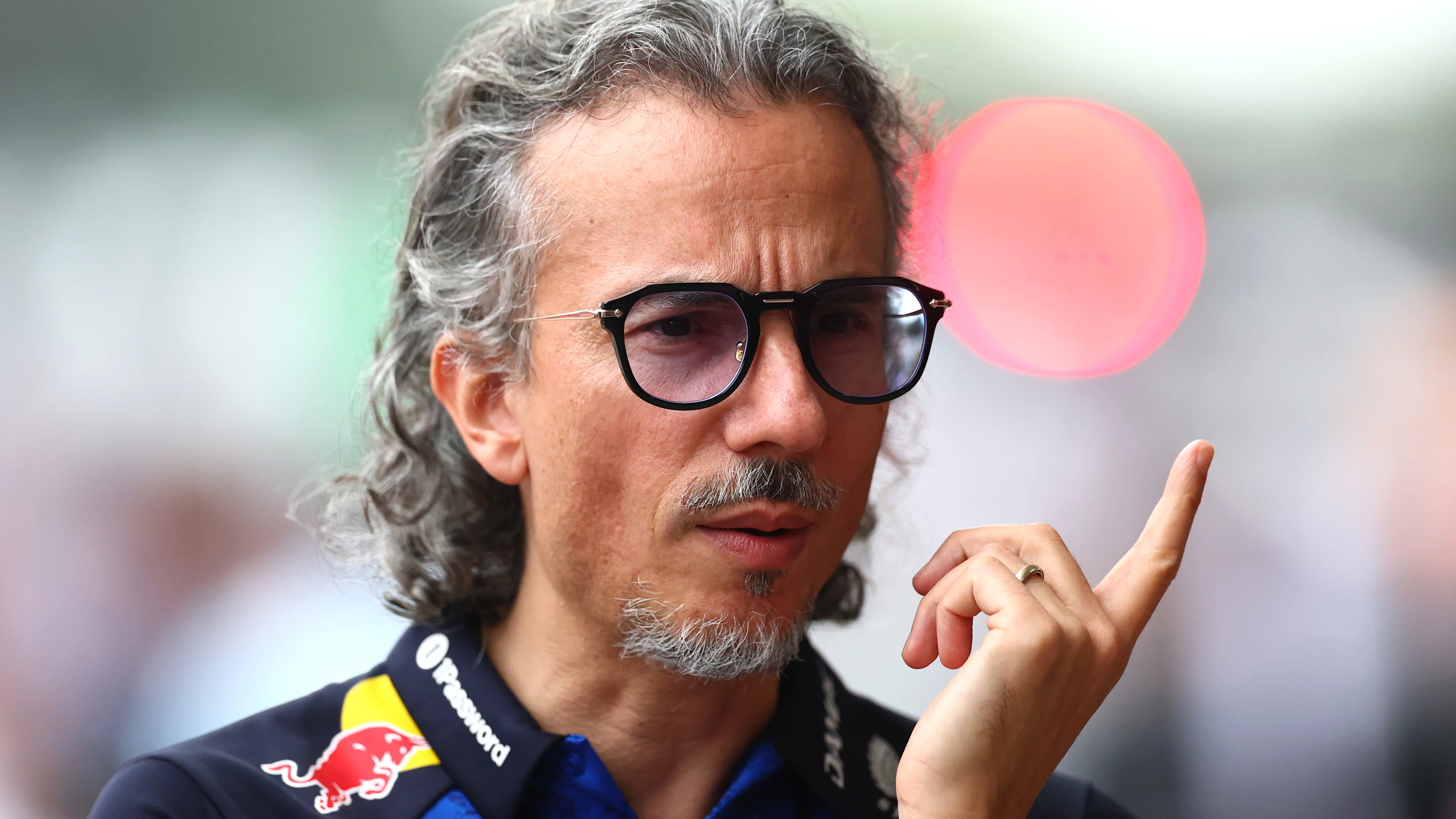
The scale of Verstappen's charge makes it tempting to describe the Red Bull as transformed. That would overlook the problem at the centre of the team's weekend. Mekies said the power-unit replacement and resulting grid penalty followed a small issue identified on Friday, even though practice and early qualifying offered signs of strong pace. Verstappen went fastest in the final practice session, but the penalty meant that raw speed could not buy a competitive starting slot. Red Bull had to recover positions in the race instead of earning them in qualifying.
More importantly, the first stint and the remainder of the race did not feel like the same car to Verstappen. On intermediates, the balance let him attack; once the surface had dried and he switched to soft slick tyres, he reported severe oversteer through fast corners. That change limited how confidently he could lean on the rear of the RB22. Red Bull could not establish from the driver's comments alone whether the problem came from damage, aerodynamic loss, changing conditions or another set-up interaction. It remained a question for the engineers, not a diagnosis the race result could answer.
The circuit was especially demanding because the grip window changed more than once. Early moisture made the intermediates useful, the dry phase pushed cars onto slicks, and rain returned late enough to force another round of decisions. A driver can look exceptional on one tyre in one condition but lose a comparative advantage when the track moves away from that window. That is why extrapolating the opening five laps across the entire Grand Prix would be misleading. The race was not a uniform 71-lap test of one stable set-up.
Verstappen said the handling felt different even after he returned to intermediates late in the race. That observation matters: if the car did not return to its original balance on the same broad tyre category, the issue was not necessarily explained by slick tyres alone. Still, no confirmed technical fault had been announced in Mekies' post-race assessment. The appropriate conclusion is that Red Bull has something meaningful to investigate, not that a specific component failed or that the victory was mechanically taken away.
The team deserves credit for more than changing hardware. Starting at the rear required a race plan that anticipated opportunities in traffic, protected tyre life and allowed for a wet-dry-wet afternoon. Hadjar's pace near the front and the team's ability to manage two different track-position stories made the recovery less isolated than it may first appear. The result was Red Bull's second double podium of the season, following Baku. That is encouraging evidence of race execution, but it should not be confused with a guarantee of qualifying consistency or the ability to repeat the same climb on a conventional dry Sunday.
Hadjar helped make it P2. Norris made sure it was not P1
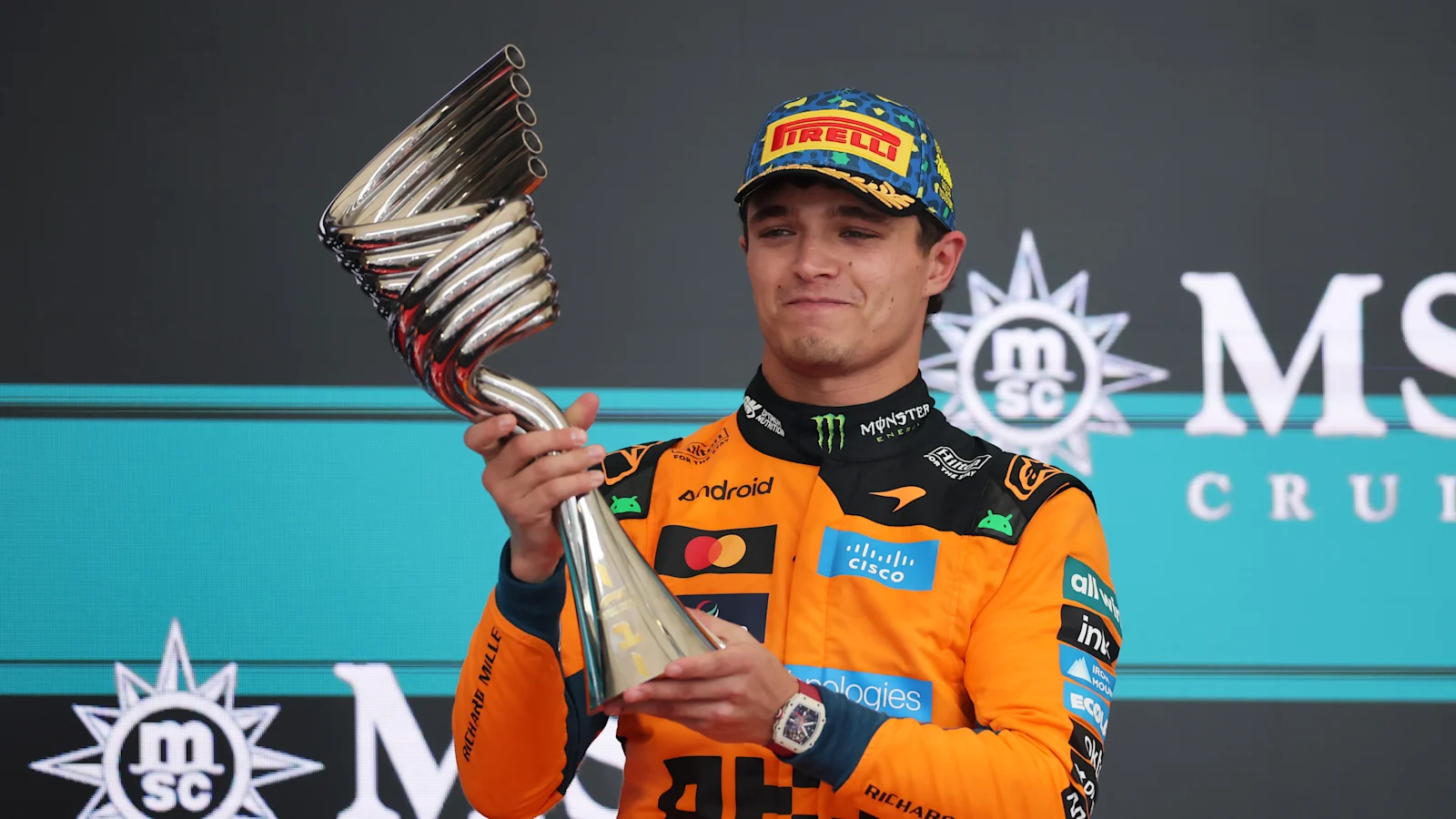
The most revealing comparison arrived not with the midfield cars Verstappen passed, but with the driver he could not catch. Lando Norris converted pole position into victory at São Paulo and crossed the line 14.602 seconds ahead. He did so after a turbulent opening, when Kimi Antonelli initially led and other drivers changed positions in the damp conditions. Norris recovered control as the race settled, handled the transitions between tyre types and kept a margin that Red Bull could not erase at the end.
Mekies was careful not to turn Verstappen's second place into a claim that Red Bull had the quickest car. He suggested that even a front-row start would probably not have been enough against McLaren's race pace. The hypothetical matters because the dramatic change from P21 to P2 can otherwise make the missing win seem like a matter of starting position alone. A 19-place net improvement in classification is not the same as 19 on-track overtakes, and it does not prove the last 14.6 seconds were recoverable.
There was also an important team dimension to Verstappen reaching second. Isack Hadjar began fifth and ran at the front through the middle phase. When he ran wide at Turn 1, Red Bull directed him to let his faster teammate through, promoting Verstappen into the runner-up spot on Lap 38. Hadjar continued his own difficult race and finished third, 24.485 seconds behind Norris. The maneuver was not a secret change of classification, and it was not proof that Hadjar had simply surrendered a secure second place: the Frenchman had made an error and the team chose the order it believed offered the stronger result.
Mekies indicated that Red Bull considered whether it might reverse the order if circumstances permitted, but the late rain and racing gaps ultimately made that impractical. Hadjar also had to protect himself against the recovering Mercedes drivers and manage a demanding late switch back to intermediates. Finishing third while completing a double podium helped demonstrate why Red Bull had confidence in his race craft. It also shows why a straightforward story about one superstar overcoming a weak team would be too simplistic.
For the wider grid, São Paulo supplied an unusually sharp warning against reading too much into one extraordinary performance. McLaren had the winning pace in Norris' hands; Red Bull executed a recovery that its own predictions did not anticipate; Mercedes secured the Constructors' Championship with George Russell fourth and champion Kimi Antonelli fifth. Each outcome revealed a different strength. Red Bull's challenge is to convert the speed behind Verstappen's early charge into a car that remains predictable as tyres and conditions change, rather than depending on another impossible starting-position reversal.
The next test will therefore be less cinematic than Brazil. In ordinary qualifying and more settled conditions, Red Bull must find a wider, repeatable operating window. Verstappen has already shown he can create positions a simulation does not expect. The engineering question now is how to give him a car whose pace remains credible when the weather, tyre choice and starting slot no longer produce the same kind of opportunity.
GOATIFY
GOATIFY Formula 1
As Red Bull and McLaren take their 2026 rivalry into the next Grand Prix, browse Formula 1 fan favourites from GOATIFY.


São Paulo will be remembered for those opening five laps, but the useful lesson for Red Bull comes after them. Verstappen's drive showed exceptional race craft, while the changing balance of the RB22 and Norris' 14.602-second winning margin showed why the recovery was not the same as outright superiority. With Hadjar completing a double podium, Red Bull leaves Brazil with points and confidence. It also leaves with an unresolved handling question that matters more to its next race than any simulation-defying headline.

















