

Wolff Won't Call Antonelli the Next Senna — Even After a World Title
GOATIFYToto Wolff has spent years trusting Andrea Kimi Antonelli with a future that once looked almost impossibly demanding. The 20-year-old now has a Formula 1 world championship, nine wins in 2026 and a place at the center of Mercedes' return to the top of the sport. What his boss still will not give him is one of racing's most loaded labels: the next Ayrton Senna.
It would be easy to understand the temptation. Antonelli grew up admiring Senna, races with the Brazilian's No. 12, visited his family in Brazil and drove past a towering Senna mural during the São Paulo weekend. His own championship was sealed in Mexico City a week earlier. Yet after Antonelli finished fifth at Interlagos and Mercedes secured its ninth constructors' crown, Wolff urged people not to impose an impossible comparison on a driver whose career is only getting started.
The immediate story is about more than a famous name. It is about the difference between respecting a legend and being expected to recreate one — and why Antonelli's frustrating but valuable São Paulo race may say more about his future than the myth-making around him.
Why Wolff is refusing Formula 1's easiest comparison
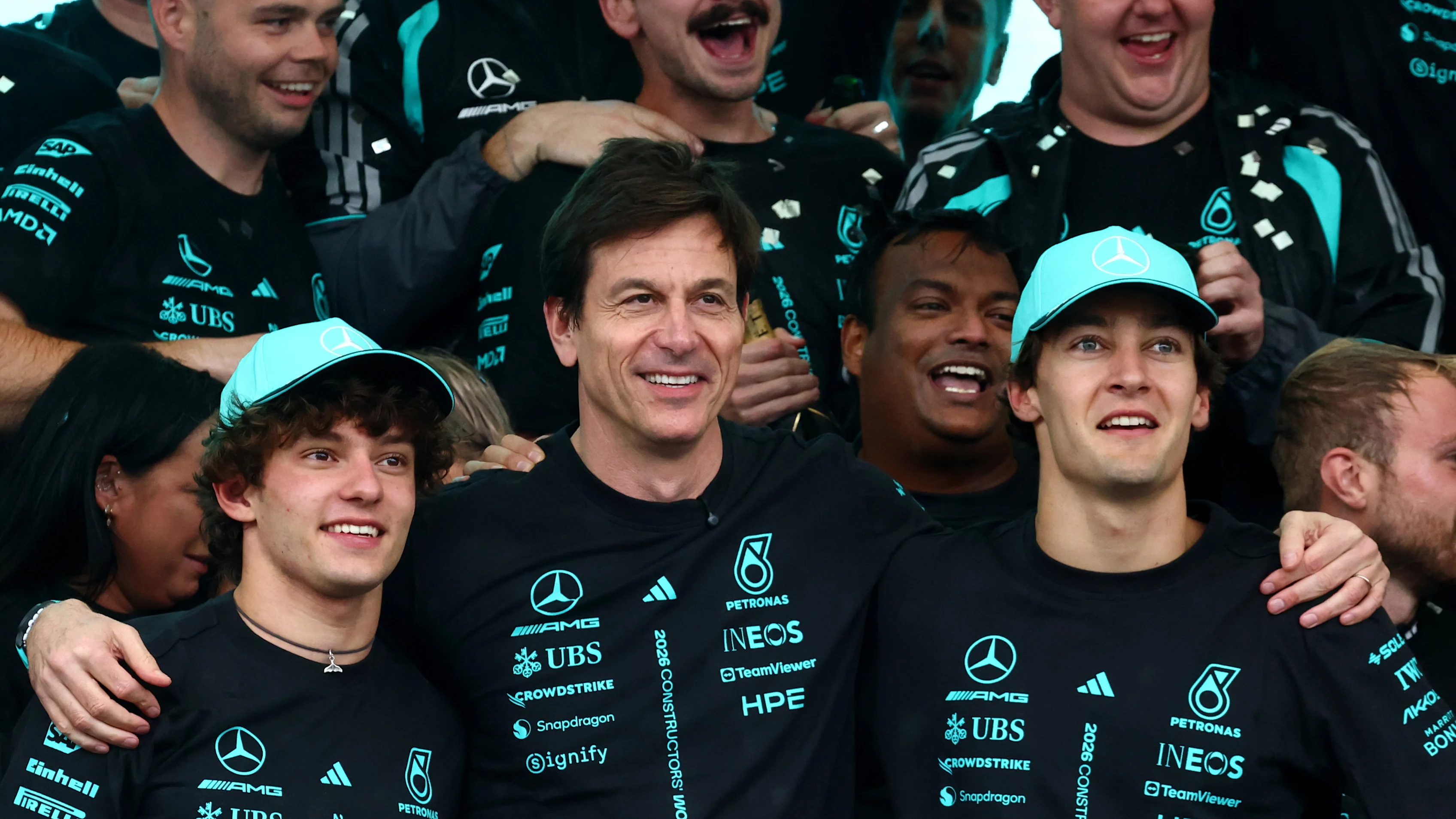
The simplest headline in Formula 1 right now practically writes itself: a gifted 20-year-old named Kimi has become world champion, drives a Mercedes carrying No. 12 and has been embraced by Ayrton Senna's family. Even the circuit in São Paulo offered a startling image of the Italian racing past a vast portrait of his childhood hero. But Toto Wolff is resisting the temptation to turn a meaningful connection into a prediction about an entire career.
Wolff's distinction matters because it separates inspiration from equivalence. Senna was not merely a three-time champion with an unusually committed following. His reputation rests on extraordinary qualifying speed, demanding relationships with teams and rivals, unforgettable wet-weather performances and the historical weight of a life cut short at Imola in 1994. Any young driver measured against that finished legacy faces a comparison that cannot be answered by a couple of fast laps, a race victory or even a first title.
Antonelli has accomplished something remarkable on its own terms. He secured the 2026 drivers' championship in Mexico City at 20, becoming the youngest champion in Formula 1 history. His nine race victories during the campaign and the speed with which he moved from prospect to title winner have already justified Mercedes' belief in him. None of that requires a claim that he has inherited Senna's place in the sport. It establishes a new story, not a replacement for an old one.
For a team principal, this is more than public-relations caution. The people who design the car, manage a race and coach a young champion need to judge what he can improve next week, not whether his career already resembles someone else's legend. An overblown comparison changes the question after every setback: a spin becomes evidence that the driver lacks Senna's instinct, while a brilliant lap becomes proof that the analogy was right all along. Neither reaction is useful to a driver still refining judgment under pressure.
There is also a contradiction inside the romantic framing. Senna's greatness came partly from insisting on his own distinctive way of competing. Treating Antonelli as an imitation could flatten the qualities that made Mercedes back him in the first place. Wolff can acknowledge the symbolism, admire the connection and still insist that his young driver deserves the time to become himself. That is not a retreat from ambition. It is a more demanding version of it: judge the champion by the driver he actually is, and by what he can build from here.
GOATIFY
GOATIFY Formula 1
Wolff's caution is a reminder that the best F1 careers are built, not inherited. Explore GOATIFY's Formula 1 fan designs between race weekends.


The Senna connection is real — and No. 12 makes it personal
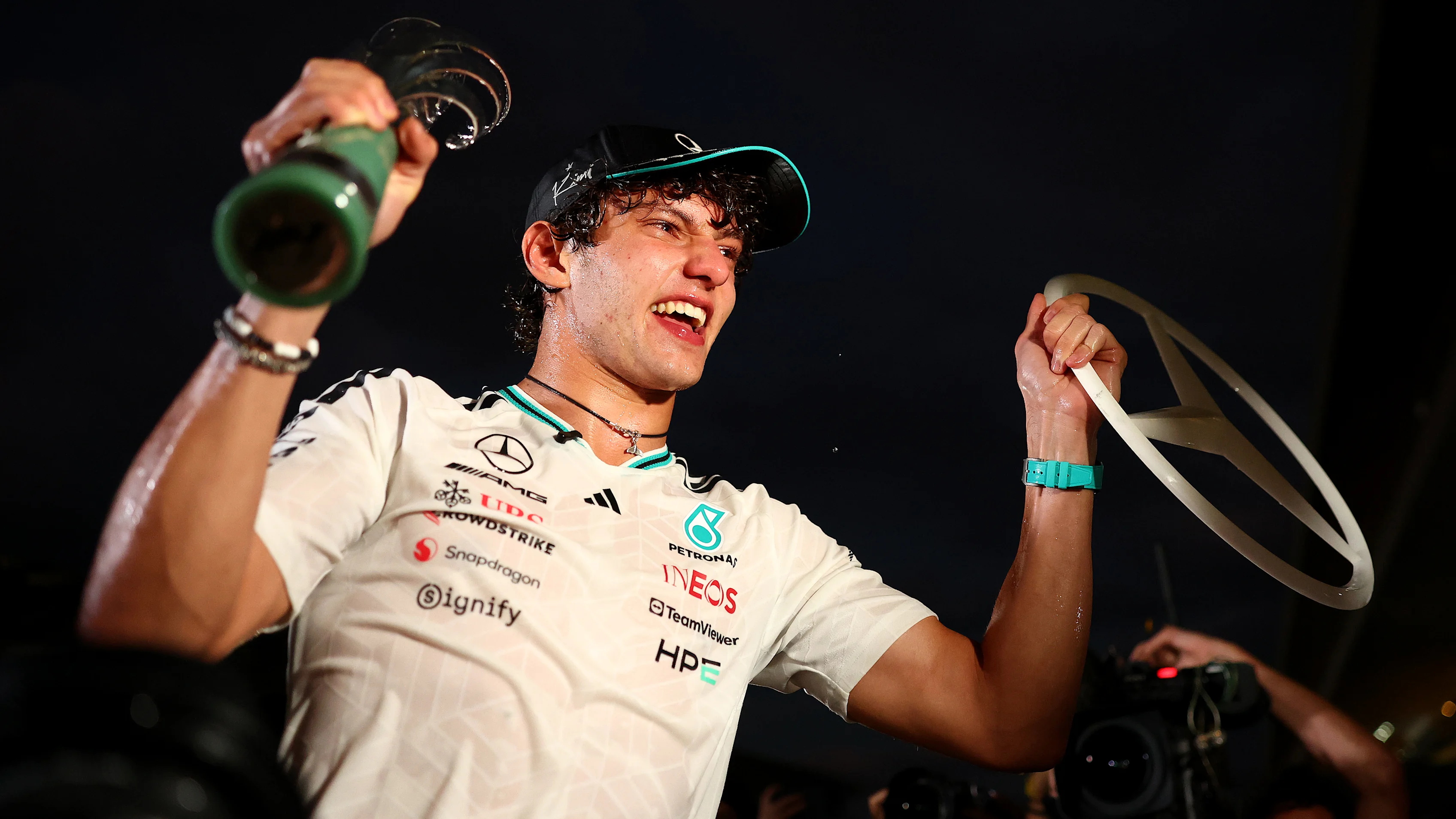
The story would feel much less convincing if Antonelli's Senna admiration were something attached to him by marketers after he started winning. Instead, the connection has a history. He watched recordings of Senna's races while growing up, admired the Brazilian's intensity and chose car No. 12 because of the number Senna used early in his Formula 1 career. The number is now part of Antonelli's competitive identity rather than a decoration for one race weekend.
That is why the decision about 2027 is revealing. As the reigning champion, Antonelli is entitled to use No. 1. He has chosen to retain No. 12 instead, saying after his Mexico City triumph that the familiar number helps him stay grounded. In the modern paddock, where a driver's number becomes a personal emblem, the choice is both modest and unmistakably intentional. It expresses continuity with the ambition that brought him to the championship without pretending the championship has made his development complete.
The São Paulo weekend made the relationship more emotional. Antonelli visited Senna's family estate, was welcomed by relatives and sat in the Lotus 98T that Senna raced in 1986. He also visited Senna's grave and shared the memory publicly. These were not abstractions about lap times or statistical records. They were encounters with the people and physical objects that connect a racing hero to a life outside the cockpit.
Paula Senna, Ayrton's niece, presented Antonelli with a sculpture she had made of her uncle. Wolff described the warmth with which the family received the Italian and referred to their nickname for him, Senninha — little Senna. The affectionate name has significance in Brazil, where Senninha is also a familiar comic-book character associated with Senna's legacy. In that context, it is better understood as a gesture of welcome than as a formal endorsement that two drivers should be ranked together.
The physical setting added another layer. During practice at Interlagos, Antonelli's black Mercedes passed a mural portraying Senna, an image that neatly captured why the story has resonated. Yet the two drivers competed in fundamentally different eras, with different cars, safety standards, seasons and competitive environments. The symbolism is strong precisely because the history is not interchangeable.
A champion is allowed to have a hero. He can learn from a hero's commitment without adopting every aspect of that person's reputation, and he can honor a memory without carrying an obligation to equal it. Keeping No. 12 may be the most elegant expression of that distinction. Antonelli is choosing to remember why he started racing even as his own results move him into a category that no longer needs borrowing from anyone else.
Interlagos showed the promise and the unfinished work in one race
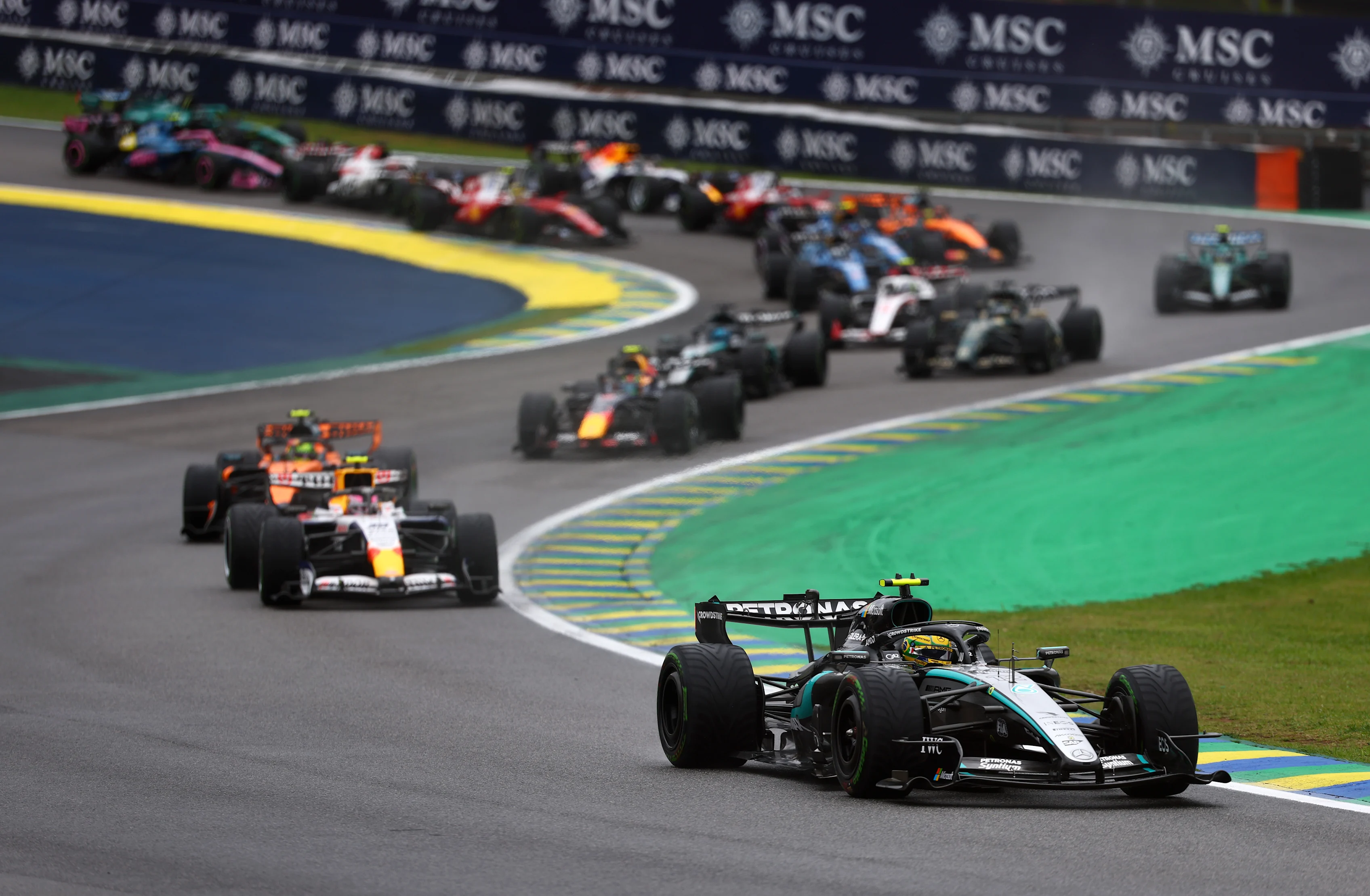
If anyone wants evidence for why Wolff is asking for patience, the São Paulo Grand Prix supplies it without diminishing Antonelli's achievement. The newly crowned champion was fast enough to take the lead from second on the grid. He was also vulnerable enough to make errors in conditions that continually punished overconfidence. It was a much more useful illustration of a developing driver than either an easy coronation or a disastrous collapse.
The race began before the lights went out with a reminder about the margin for error. Antonelli spun during a reconnaissance lap as he tested a damp circuit, recovered and returned to the garage without lasting damage. At the start, he answered that mishap with an assertive launch that moved him ahead of polesitter Lando Norris. For a driver carrying fresh championship celebrations and the attention of the home crowd of his idol, that response mattered. The raw pace and appetite for the lead were still unmistakable.
Then strategy, tyre temperatures and a drying track complicated the picture. Norris had stopped for slicks at the end of lap 16. Antonelli stayed out for one more lap and initially returned ahead of the McLaren, but the gap was narrow. Norris closed rapidly as his tyres reached operating temperature. On lap 20, Antonelli spun at Turn 1 and relinquished the lead. He later ran wide again as rivals closed. What had looked like an opportunity for a statement victory became a salvage operation.
That loss should not be confused with an inability to race in the wet. Interlagos transitioned from damp to dry and then back toward rain, with the timing of tyres and changing grip as consequential as outright talent. Nor can it be dismissed as merely bad luck. Managing that transition, keeping heat in the tyres and knowing when to accept a slower lap are skills that champions must continue to sharpen. A title can establish excellence without making every subsequent drive perfect.
Norris went on to win by 14.602 seconds from Max Verstappen, who had started 21st, while Isack Hadjar completed the podium. Mercedes collected fourth and fifth through George Russell and Antonelli. The Italian's fifth place was not the result he had chased after leading, but the ten points attached to it helped seal the team championship. In a team sport disguised as an individual contest, that contribution still has value.
For Wolff, the race provided a practical version of his message. Antonelli does not need to deliver a Senna-like legend every Sunday. He needs to keep combining the front-running speed that won the title with better judgment when grip and opportunity move in opposite directions. The driver's ceiling may be extraordinary. The work of raising the floor is more ordinary, more repeatable and ultimately just as important.
GOATIFY
GOATIFY Formula 1
From wet tyres to split-second decisions, the Brazilian Grand Prix delivered classic F1 drama. Explore racing-inspired designs in the GOATIFY F1 collection.


Mercedes has two trophies — and a fresh test of its champions
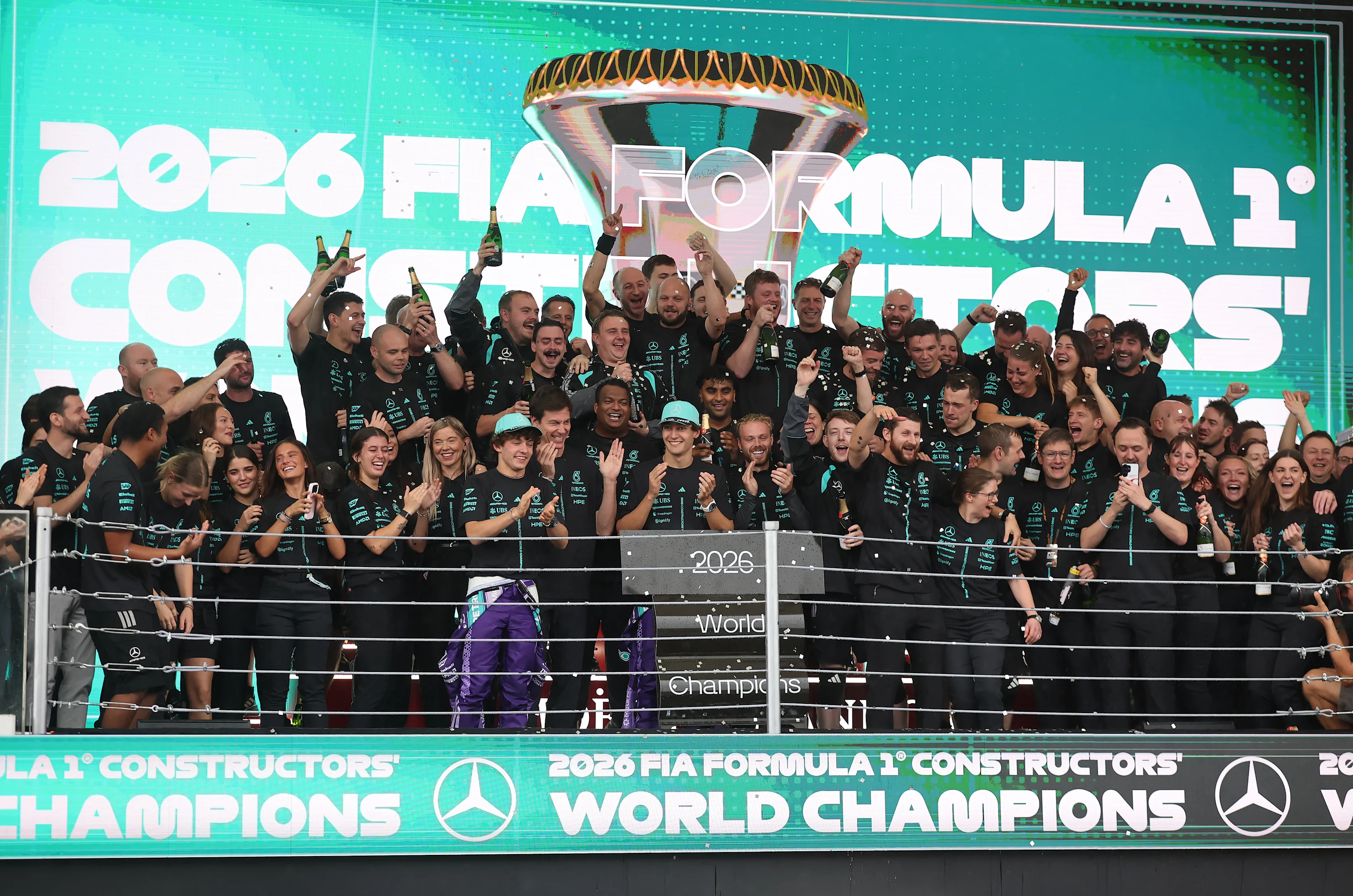
The timing of the Senna conversation is instructive. Mercedes left Brazil with its ninth constructors' title, adding to Antonelli's drivers' crown and securing the organization's first drivers-and-constructors double since 2020. It had been five years since the team last won the constructors' championship. In a season defined by the speed of a new generation and an intense development battle, that is a major organizational achievement, not simply the by-product of one young driver's talent.
Russell's fourth place and Antonelli's fifth were enough to settle the teams' contest at Interlagos. The Mercedes garage celebrated, and the team could recognize the work of its trackside engineers as well as the factories at Brackley and Brixworth. But Wolff's immediate public reaction was notable for what it did not contain: a declaration that the next era of Mercedes dominance had begun. His attention was already turning to where the car had underperformed in Brazil and what the team needed for the remaining rounds and for 2027.
There is sound competitive logic in that restraint. Mercedes was especially strong during the first half of 2026, but Red Bull, McLaren and Ferrari subsequently reduced its advantage. Norris's wet-weather victory and Verstappen's charge from 21st to second in São Paulo gave a vivid demonstration that rivals still have the pace to rewrite a race. A constructors' trophy measures the accumulated season; it does not guarantee the fastest car in every configuration or protect next year's development decisions.
The distinction is important for Antonelli, too. His youthful title and enormous race-win total make the next season more complicated, not less. Rivals will scrutinize his weaknesses with greater intensity. A Saturday mistake will be discussed as a championship-level lapse rather than a rookie lesson. If the Mercedes is not consistently superior, his racecraft will have to produce results on days when the stopwatch offers fewer favors. It is precisely the sort of challenge that makes blanket historical comparisons premature.
Russell is part of the equation rather than a footnote. He contributed important points to Mercedes' title and remains an experienced reference inside the same garage. Team expectations and intra-team pressure can shift quickly when a younger colleague becomes world champion. A healthy competitive environment gives both drivers space to deliver without forcing every choice into a narrative about succession, favoritism or a rivalry that must produce a villain.
Wolff's job is to keep those competing pressures in balance: celebrate an extraordinary season, protect the culture that produced it and refuse to confuse past success with future security. Antonelli's job is simpler to state and harder to perform. Keep the pace, learn from Brazil, win when the conditions permit it and collect the points when they do not. Senna's legacy can remain an inspiration in the background. Mercedes' 2027 development and Antonelli's next set of decisions will provide the evidence that actually belongs in the foreground.
GOATIFY
GOATIFY Formula 1
With Mercedes back on top and a new title defense ahead, F1 fans have plenty to debate. See the GOATIFY Formula 1 collection.


Wolff is not lowering the ceiling on Antonelli's career by refusing to call him a modern Senna. He is recognizing that a first world championship, however spectacular, begins a different phase of the job. The title makes mistakes louder and success feel expected. In São Paulo, Antonelli supplied both the thrilling start that explains the excitement and the untidy moments that explain the need for continued development.
The Senna family's embrace and the persistence of No. 12 are genuine, personal details worth celebrating. They do not require a verdict about who belongs alongside whom in history. Antonelli has already earned the right to define his own standard: win races, learn quickly, support Mercedes when a victory escapes him and arrive in 2027 better equipped to repeat the hardest parts of 2026. For now, that is a more compelling story than any comparison could offer.

















