Arsenal End 14-Year Anfield Curse — Liverpool Didn't Manage One Shot on Target
GOATIFYFourteen years of frustration ended with a tap-in and a defensive performance that left Anfield furious. Arsenal beat Liverpool 1–0 on November 1, 2026, with Kai Havertz finishing Declan Rice's low cross in the 16th minute. The champions went three points clear at the top of the Premier League, while Liverpool finished a home league match without a single shot on target.
That contrast tells the story better than the scoreline. Liverpool had periods of pressure, a free kick off the crossbar and a disputed penalty appeal. Arsenal had the goal, the organization and the discipline to keep the game on their terms. Mikel Arteta's team had just suffered an embarrassing cup exit to Fleetwood Town; four days later they produced the kind of away win that can define a title defence. Liverpool's anger at the officiating was understandable. Their inability to turn possession into a clean effort at goal was harder to explain away.
One Liverpool Error, One Havertz Finish, Fourteen Years Erased

The breakthrough began with Liverpool trying to do something entirely normal: build patiently from the goalkeeper. Alisson attempted a short pass towards Jérémy Jacquet, but Arsenal were positioned to punish any hesitation. Martin Ødegaard helped force the turnover, the visitors moved the ball quickly to their right, and Declan Rice drove a low delivery through the area. Havertz arrived at the far post to turn it in. Sixteen minutes had gone; the entire contest had changed.
There was nothing extravagant about the finish, and that was precisely why it mattered. Havertz had gone nine appearances without a goal. A striker who had been doing plenty of less glamorous work finally received the kind of chance that asks for positioning rather than invention. His movement completed the sequence, but the goal belonged equally to the press, the speed of Arsenal's passing and Rice's awareness of the space opening behind Liverpool's defensive line.
For Liverpool, it was the kind of avoidable concession that turns a big home fixture into an uphill climb. Playing out from the back is not inherently reckless. The danger comes when the first pass is imprecise and the receiving angles are too predictable. Arsenal anticipated the route, closed it down and reached the most valuable part of the pitch before Liverpool could reorganize. Anfield was loud, but its noise could not reverse the tactical mistake.
The historical weight was enormous. Arsenal had not won a Premier League match at Anfield since September 2012, when Arteta was still a player. They had visited repeatedly, sometimes playing attractive football and sometimes surviving uncomfortable spells, without collecting the result they wanted. This time the manager watched his players do what his predecessors and his own earlier sides had failed to achieve.
The goal also carried an individual landmark: Havertz's 46th Premier League goal made him the competition's highest-scoring German player, moving ahead of İlkay Gündoğan. Records can feel secondary in the middle of a title race, but this one gave an unusually simple finish a larger place in the forward's career. More importantly for Arsenal, it was the only goal they needed.

Sixteen Liverpool Attempts, Zero on Target — Arsenal Controlled the Danger

Liverpool were not passive after falling behind. Florian Wirtz curled a free kick against the crossbar, and Alexis Mac Allister sent a free header over before halftime. Those were real opportunities, not imaginary pressure. The home side pushed Arsenal back, attacked the spaces around the box and tried to use Anfield's momentum to force a mistake. But the longer the game went on, the more the quality of those openings declined.
The defining statistic was brutal: Liverpool finished with 16 attempts and zero shots on target. For a club accustomed to creating waves of chances at Anfield, that is a remarkably ineffective return. Arsenal did not prevent every entry into the final third, and they were not in control of possession throughout. They controlled the final action. Liverpool's crosses were contested, shooting lanes narrowed and attackers were repeatedly forced into rushed decisions or difficult angles.
That distinction matters when evaluating defensive football. A team can look under pressure while still protecting the areas from which goals are most likely to arrive. Arsenal's back line held its spacing, the midfield recovered into useful positions, and the players closest to the ball were disciplined about when to step forward. Liverpool often moved the ball around the defensive block without pulling it apart. David Raya had far less direct work to do than the territorial balance might have suggested.
It was Arsenal's sixth clean sheet in nine league matches. That consistency is more persuasive than one heroic afternoon because it points to repeatable habits. The defenders communicate, the midfield helps close passing lanes and the team understands when to slow the game without abandoning its shape. Even after the Fleetwood cup upset, the underlying league identity remained intact. Arteta's side were willing to suffer without turning the match into a sequence of emergency tackles.
Liverpool's frustration was visible in Virgil van Dijk's reaction after the final whistle. The captain was booked as tempers rose, but his team's attacking problem existed independently of the referee. Liverpool had time, territory and attacking talent. They did not turn those ingredients into a shot that required Raya to make a save. That is a coaching and execution question, not merely an officiating argument.

The Isak Shirt Pull Was Controversial — It Wasn't Liverpool's Only Problem
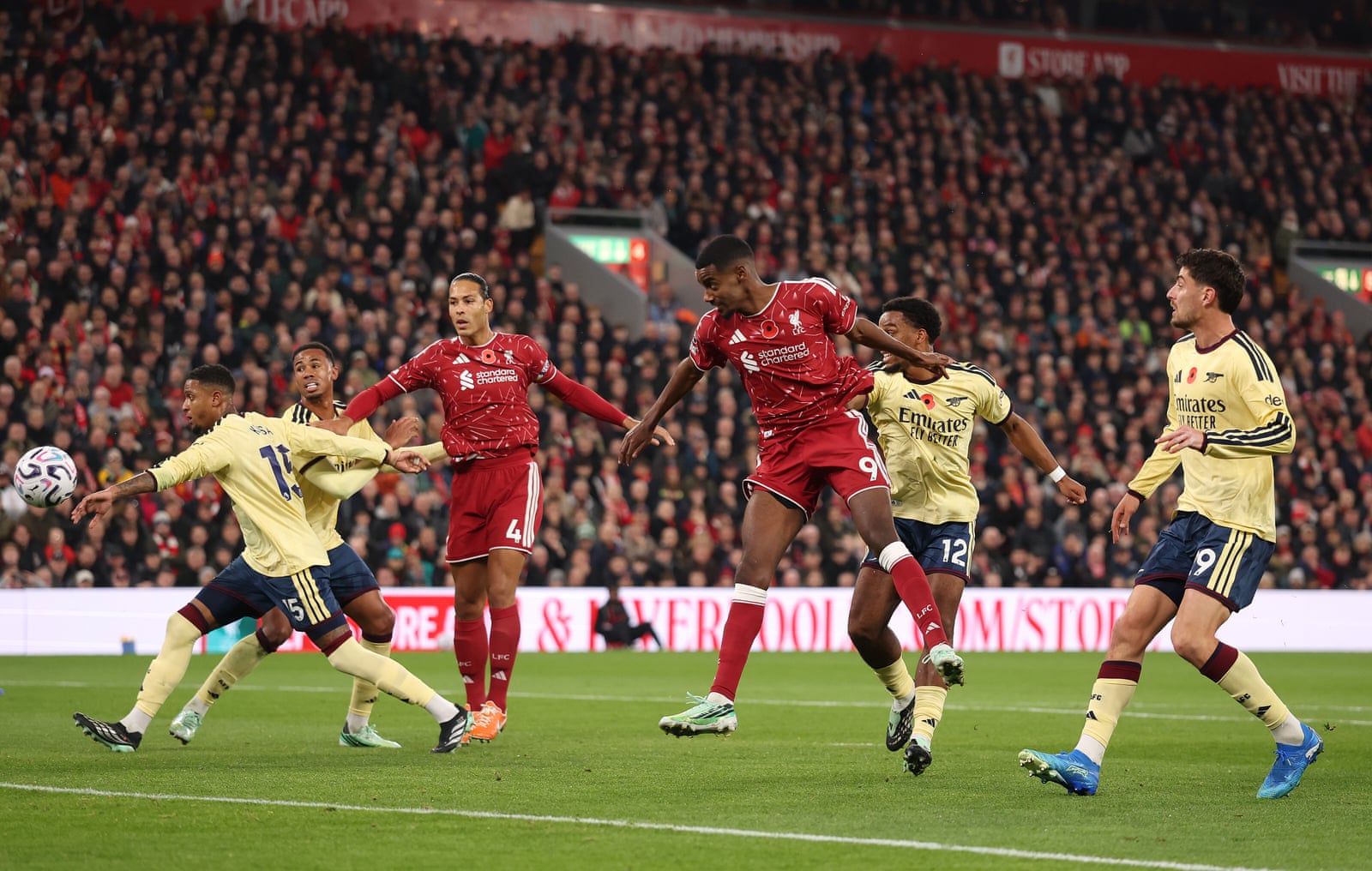
The match was not free of controversy. In the first half, Jurriën Timber grabbed Alexander Isak's shirt as the Liverpool forward tried to reach a delivery into the Arsenal area. Isak remained on his feet and the officials did not award a penalty. Liverpool manager Andoni Iraola later argued that the decision effectively punished his striker for trying to play the ball rather than falling to the turf.
It is a serious question for refereeing consistency. Holding an opponent's shirt can affect a player's ability to challenge for a ball even if the contact does not send him to the ground. Equally, not every instance of contact is automatically a penalty; officials must assess whether the offence is sufficient and relevant to the play. The incident was debated precisely because Isak appeared to be trying to reach a dangerous cross. Liverpool believed the intervention prevented that chance. The on-field decision and the video review did not produce a spot kick.
There was another appeal involving Cody Gakpo and Christos Tzolis. Iraola accepted that the second situation was less convincing because of the ball's trajectory, while questioning why the two incidents seemed to be judged differently. That is a more nuanced complaint than simply claiming every appeal should have been awarded. The disagreement concerns how contact, the likelihood of reaching the ball and the attacker's reaction are weighed.
The emotions spilled into other moments. Arsenal's players were accused by sections of the home crowd of going down easily and slowing the game. There were confrontations involving Mac Allister and Madueke, and the atmosphere became increasingly combustible. Those scenes are part of the story, but they should not obscure what happened between the whistles. Arsenal still scored the game's only goal and Liverpool still failed to register a shot on target.
A penalty might have changed the match; that possibility cannot be dismissed. But it is also impossible to reconstruct an alternative ninety minutes with certainty. Liverpool have a legitimate basis to ask for an explanation of the Timber-Isak decision. They also have to confront the more uncomfortable fact that Arsenal's defensive organization repeatedly frustrated their attacking play long after that incident had passed.
Arsenal Go Three Clear; Liverpool's Nine-Point Gap Is the Bigger Warning

The table sharpened the meaning of the result. Arsenal moved to 24 points from nine Premier League games, three ahead of Manchester City, whose defeat to Brighton the previous day opened the door. Liverpool sat fifth on 15 points, nine behind the leaders. In early November no gap is mathematically decisive, but nine points is already substantial when the team ahead is the reigning champion and has conceded so little.
For Arteta, this was a response to a very different kind of embarrassment. Arsenal had exited the League Cup against fourth-tier Fleetwood Town in midweek. That result raised questions about complacency and the ability to recover from an unexpected setback. At Anfield, the players did not respond with frantic attacking or a desperate need to entertain. They responded by being hard to beat, scoring when the opening arrived and remaining organized under pressure.
The away record is becoming a compelling part of the title defence. Arsenal have now won at four grounds where they failed to win during last season's championship campaign: Anfield, Villa Park, the Stadium of Light and the City Ground. That does not guarantee another trophy, but it indicates a team correcting old weaknesses rather than relying solely on last season's formula. Winning difficult away fixtures is often the difference between an impressive side and a champion with staying power.
Liverpool's situation is more complicated. Iraola has shown signs of building a recognizable identity, and the club entered this match with improving form. Yet a high-profile home defeat exposed the distance between creating pressure and converting it into effective attacking chances. The forwards need better service in dangerous spaces, the midfield needs to avoid leaving the back line exposed in buildup, and the team must recover its composure when the match becomes contentious.
Arsenal should not mistake one victory for an inevitable title. City remain close enough to respond, and a long season will test injuries, rotation and concentration. But the Gunners can point to something more valuable than the three-point cushion: proof that they can travel to a major rival, survive its best spell and win without needing an avalanche of goals. Liverpool have a choice after this setback. They can spend the week reliving disputed decisions, or use the result to confront the structural problems that left them with no shot on target.
There is a useful distinction between resilience and merely surviving. Arsenal did not wait for Liverpool to run out of ideas before making decisions; they repeatedly reset their positions, protected central spaces and trusted that the score would become more valuable as the clock moved forward. Liverpool, by contrast, allowed the urgency of the occasion to dictate too many possessions. That is fixable, but it requires patience in the final third rather than simply adding more attackers. A nine-point deficit should sharpen the work on the training ground, not encourage a frantic attempt to recover the whole gap in one weekend. Arsenal have already learned that the season rewards repeatable decisions more than isolated spectacles.

Arsenal's 1–0 victory at Anfield was neither a lucky escape nor a perfect attacking performance. It was a championship-style result built on an early press, a precise Rice delivery, Havertz's movement and a defensive plan that left Liverpool without a shot on target. Fourteen years after Arsenal last won a league match here, Arteta finally has the result his team had been chasing.
Liverpool's penalty grievances deserve scrutiny, particularly the hold on Isak, but the bigger lesson is about control. Arsenal knew which areas to defend and trusted the discipline of their shape. Liverpool produced energy and outrage without a decisive attacking answer. The gap is nine points, and while November leaves room for a comeback, the visitors now have a concrete reason to believe their title defence is moving in the right direction.