

Astros Lock In Paredes at $13.35M — Then Let Jake Meyers Walk
GOATIFYHouston has made two very different statements about its 2027 roster in the same afternoon. Isaac Paredes is staying under a $13.35 million club option, a commitment to a productive bat that also gives the Astros a potentially valuable trade asset. Jake Meyers, meanwhile, is leaving the organization after being outrighted from the 40-man roster and choosing free agency. One player receives a guaranteed place in the next chapter; another reaches the exit after a season wrecked by injuries and declining production.
Neither move can be understood in isolation. Paredes delivered 25 home runs and 94 RBIs in 155 games while Carlos Correa was unavailable for much of the year. Correa is expected back, Jeremy Peña remains part of the middle-infield equation, and the Astros already have expensive commitments around the diamond. In the outfield, the team used eight different starting center fielders and still finished near the bottom of the majors in production from the grass. Houston has secured an important hitter, but it has not solved where everyone plays—or who covers center.
The November 2 decisions are therefore less a tidy pair of transactions than the opening argument in a difficult winter. They protect one kind of roster value while admitting that another position needs a serious reset.
The $13.35 million option is about value, not just loyalty
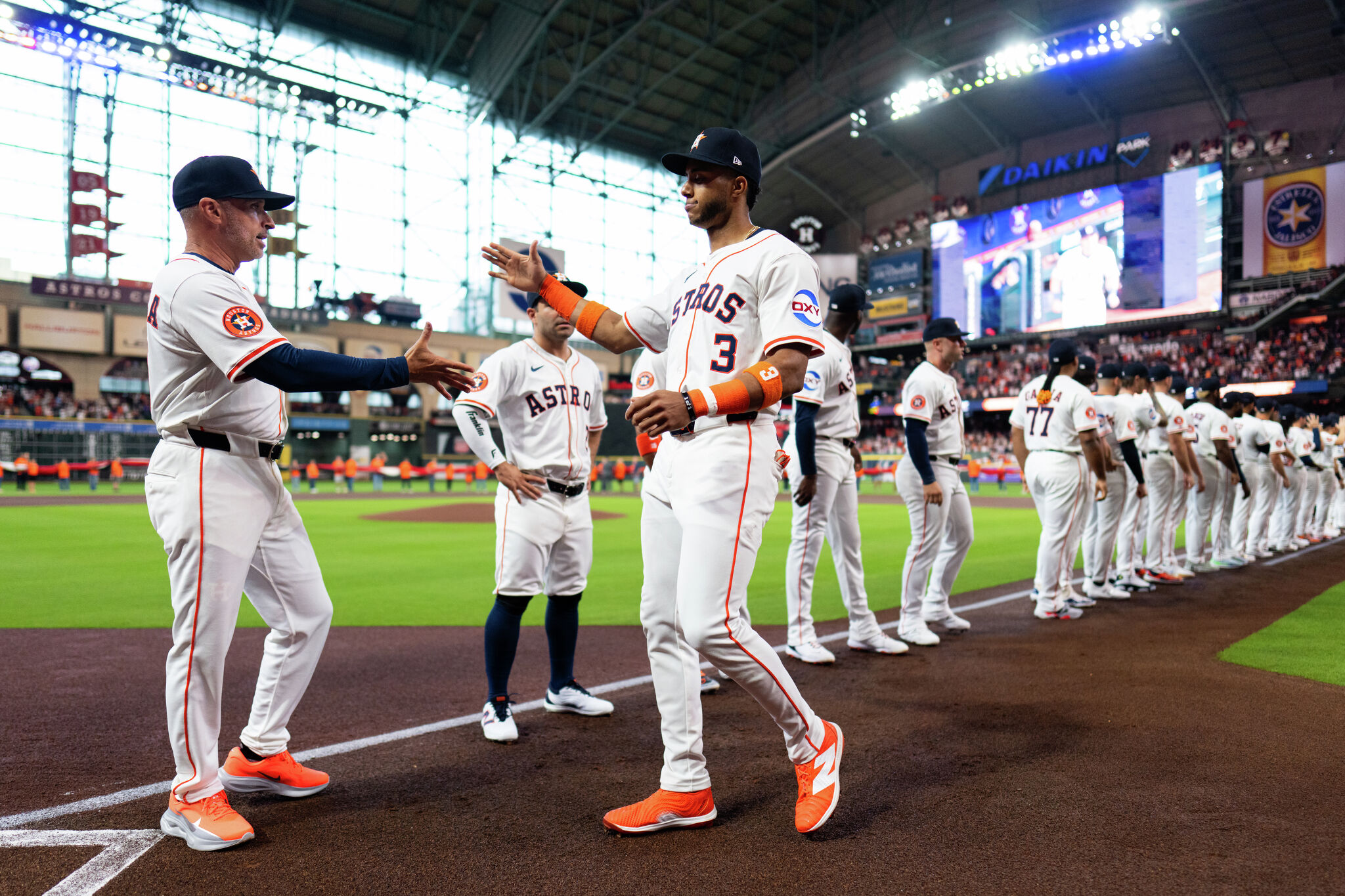
Houston could have declined the option and still retained Paredes through the salary-arbitration process. That distinction matters. This was not a choice between keeping him and immediately losing him to another club; it was a choice between a fixed salary and a potentially higher arbitration award. With his projected arbitration number around $15 million, the $13.35 million option offers an estimated $1.65 million advantage before anyone has to negotiate or argue a case. The savings are projected rather than guaranteed, but the financial logic is straightforward.
Paredes earned the security with an unusually complete season. He played 155 games, hit 25 home runs, drove in 94 runs and finished with an OPS a little above .800. His .262 batting average and .360 on-base percentage also underline why his value cannot be reduced to the long ball. He gets on base, gives opposing pitchers difficult decisions and offers middle-of-the-order production without requiring Houston to win a bidding war on the open market.
The contract has a technical wrinkle. Paredes' club option could become a mutual option if he finishes among the top 10 in the 2026 American League MVP vote. Those results are scheduled for November 12. Until the voting is settled, that provision deserves to be described as conditional rather than dismissed. The Astros have exercised their side of the agreement; the final structure still depends on an award result.
Even without the clause, the value of the decision extends beyond one season's payroll. Paredes is 27, has repeatedly demonstrated legitimate power, and has experience across the infield. A club considering a trade can see both his established offensive output and a known salary. A Houston front office considering keeping him can point to a strong return for a manageable commitment. Those are better choices to have than entering the winter with a productive hitter's future unresolved.
There is a catch, of course: paying a good player is only half of roster construction. The other half is finding the plate appearances and defensive assignment that allow him to help. Houston's crowded infield makes that part far less obvious than the arithmetic on the option.

Correa's return could make Paredes the most intriguing trade chip
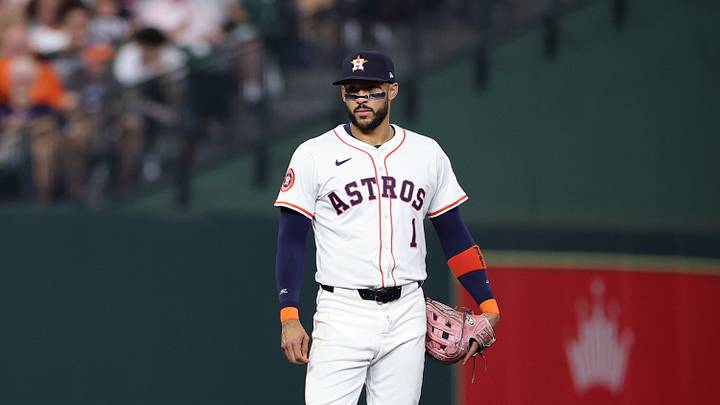
Correa's season-ending ankle injury in early May changed the Astros' infield problem into an opportunity for Paredes. With the veteran unavailable, Paredes took over third base and played enough to produce one of Houston's strongest offensive seasons. The solution worked while the injury dictated the alignment. Now the club must prepare for Correa's expected return in 2027, and the same players are competing for a smaller number of everyday positions.
Correa has already moved from shortstop to third base during his second spell in Houston. Peña remains a natural shortstop option, Jose Altuve occupies second base, and Christian Walker is an established first baseman. Yordan Alvarez also commands substantial designated-hitter time when healthy. Those are not six players for six separate spots. A manager can rotate a player through the DH role, move a corner infielder or create a rest-day arrangement, but regular offensive rhythm is harder to maintain when everyone expects full-time work.
The temptation is to label Paredes surplus and immediately predict a trade. That is premature. Injuries have repeatedly shown Houston why depth is valuable, and a club trying to compete cannot assume its projected opening-day lineup will remain healthy through September. Paredes' bat is too good to discard merely because a depth chart looks crowded in November. Equally, keeping every infielder without a coherent playing-time plan can leave value sitting on the bench while the outfield goes short of impact.
A sensible trade discussion would start with what Houston actually needs in return. A legitimate center fielder, a controllable starting pitcher or a package that solves multiple roster weaknesses could make moving a productive infielder defensible. A low-return salary dump would be much harder to justify when the club has just exercised a favorable option. Peña's name has also surfaced in speculation, but the fact that teams could consider different pieces does not mean an agreement is imminent or that either player is being actively shopped at a particular price.
The wider lesson is that the option preserves leverage. Houston can enter negotiations with Paredes under contract rather than trying to force a transaction before a deadline. It can also wait for Correa's health to become clearer. The club's challenge is not a shortage of talented infielders; it is turning that concentration of talent into a balanced roster.

Jake Meyers is leaving — and Houston still needs a center fielder
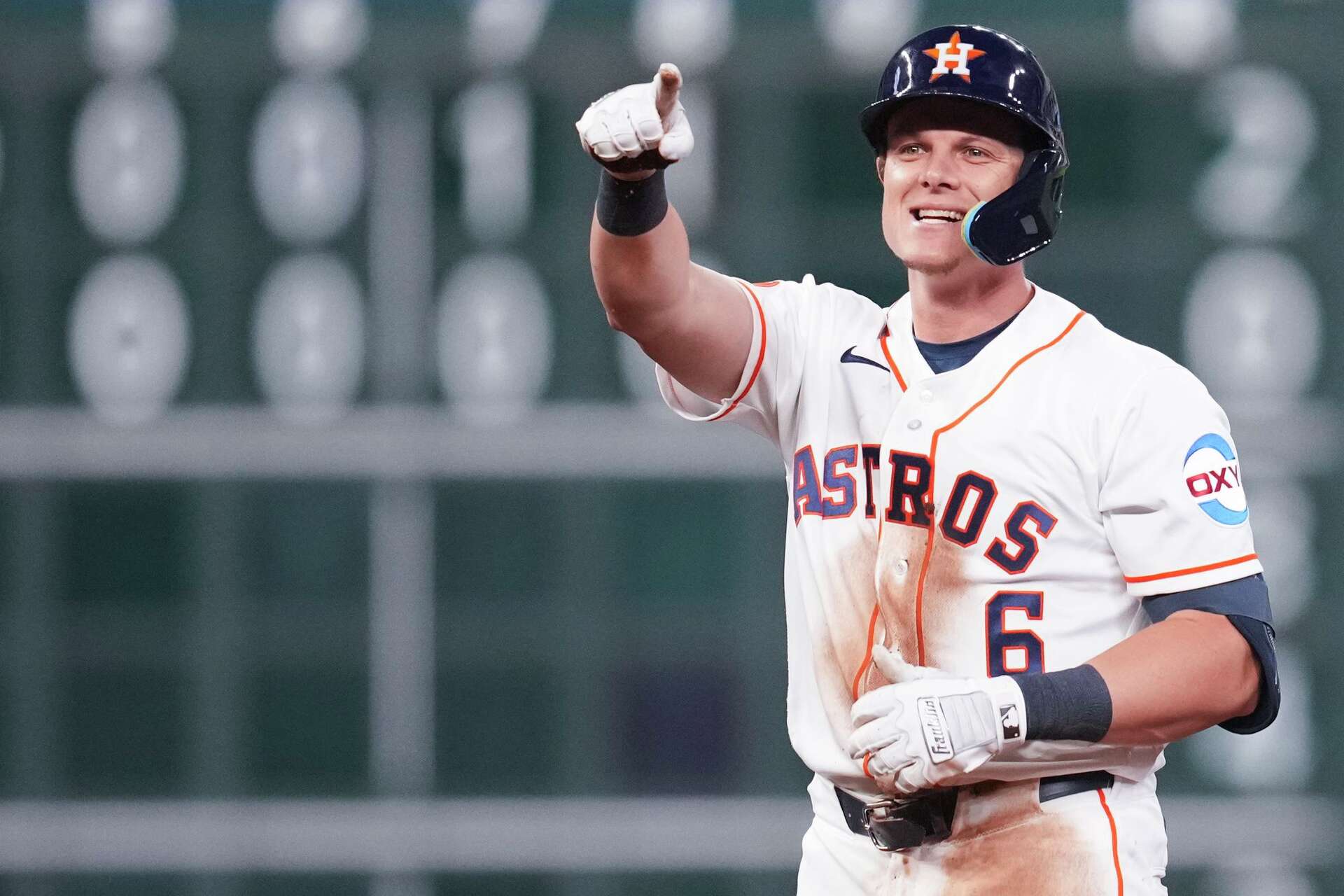
Meyers' departure tells a more complicated story than a simple release of an underperforming hitter. He was Houston's primary center fielder from 2023 through 2025, built a reputation for reliable defense and reached the Gold Glove finalist conversation in 2024. In 2025 he hit a career-best .292. Those are meaningful contributions, and they explain why the Astros had been willing to keep betting on his athleticism even as the lineup changed around him.
His 2026 season gave the front office much less to work with. An oblique strain interrupted his first half, he spent time at Triple-A after struggling, and a left-knee fracture from a foul ball ended his year on the injured list. He appeared in only 57 major-league games, hitting .213 with a .268 on-base percentage, .326 slugging percentage and three home runs. A player whose biggest selling point was steady presence in a demanding defensive position could no longer provide that stability.
Houston outrighted him off the 40-man roster, and his service time allows him to decline the minor-league assignment and become a free agent. That is not the same as saying his defensive ability has vanished or that another team will not find a role for him. It means Houston decided the roster spot and projected arbitration cost were better allocated elsewhere. His estimated 2027 arbitration salary was around $3.6 million, a real consideration for a club trying to spread resources across several holes.
The uncomfortable part is what the Astros are left with. Eight different players started in center field during 2026. Daulton Varsho arrived as a potential answer but struggled while managing a wrist issue and is himself entering free agency. The club also used a dozen different starters in left field. That churn contributed to an outfield group that produced the second-lowest OPS in the majors, a weakness that became especially visible whenever Houston needed offense from outside its established infield and DH core.
Replacing Meyers with another uncertain patch would repeat the same pattern. Houston needs to decide whether its priority is a genuine everyday center fielder, an offense-first outfielder who can survive defensively, or a trade that reshapes multiple positions at once. The answer should be judged against the full season, not the optimism of a spring-training depth chart. Meyers leaving clears a place. It does not automatically fill it.

The 40-man reshuffle is only the first step in a bigger reset

Alongside the two headline decisions, Houston selected three players to its 40-man roster: right-handers Roddery Muñoz and Evan Reifert, plus catcher César Salazar. The club finished the sequence with 39 players on the 40-man list. These are smaller moves than exercising an eight-figure option, but they reveal how the organization is trying to manage depth before the next wave of offseason decisions.
Reifert, acquired from Tampa Bay for cash considerations, has recorded a 2.48 ERA with 132 strikeouts in 87 career Triple-A innings. Those numbers make him an interesting bullpen candidate, although minor-league dominance is not a guarantee of immediate major-league success. Muñoz, who came through the Rule 5 process last winter, posted a 3.06 ERA over 53 innings at Triple-A Sugar Land after an earlier major-league roster setback. Salazar has supplied organizational catching depth, with 45 appearances in the majors over the previous four seasons.
Each decision has a practical purpose. Teams must protect useful depth without allowing the roster to become so crowded that a trade, waiver claim or free-agent signing requires an unnecessary loss elsewhere. The November deadline to reinstate players from the 60-day injured list made this week's choices more urgent. Correa, Mike Burrows and Brandon Walter were among the players on Houston's 60-day list, adding another layer to the calculation of available spots.
The club must also confront the difference between quantity and quality. An additional bullpen candidate or backup catcher can be useful, but neither resolves the lack of an everyday center fielder or the question of how Correa, Paredes, Peña, Altuve and Walker fit together. A roster can be technically full and still be unbalanced. The Astros need to preserve flexibility for a meaningful acquisition rather than spending every open place on marginal depth.
There is a broader calendar pressure, too. The current collective bargaining agreement is due to expire on December 1, and the possibility of a work stoppage could affect the pace of major-league transactions. That is a risk, not a certainty about what negotiations will produce. Houston's best response is to identify its priorities early: stabilize center field, make an honest plan for the infield, and avoid surrendering useful talent for too little simply because the offseason becomes compressed.
Keeping Paredes and moving on from Meyers are rational opening moves on their own terms. Whether they become a successful offseason depends on the decisions that follow them.
The Astros have not made a declaration that Paredes will be their everyday third baseman in 2027. They have made the narrower, smarter decision to keep control of a 27-year-old hitter coming off 25 home runs and 94 RBIs at a figure below his projected arbitration salary. That is useful whether he stays, changes positions or becomes the centerpiece of a trade.
Meyers' departure is the more painful admission. A player who once offered dependable center-field defense is leaving at a moment when Houston needs that position to become more reliable, not less. With Correa expected back and the outfield still unsettled, the Astros' next moves must connect the pieces rather than simply add names. The $13.35 million option was the easy part. Finding the right 2027 lineup will be considerably harder.

















