

Canucks Are 3–16–1. The Sedins Refuse to Blow Up the Roster.
GOATIFYThe number is difficult to dress up: Vancouver has won three of its first 20 games. A 3–16–1 record is the worst opening stretch in Canucks history, and a sixth consecutive regulation defeat has turned an already demanding rebuilding season into a public test of the people running it. On November 12, co-presidents Henrik and Daniel Sedin faced that reality instead of promising a dramatic rescue.
The brothers' message was both uncomfortable and unusually specific. They are disappointed by the standings and want demonstrable improvement, but they do not believe selling off veterans wholesale for future picks would automatically help the young players already trying to establish themselves. The next phase, in their view, is less about creating an impressive trade deadline headline and more about building a team capable of playing a reliable NHL game.
That distinction will not satisfy everyone watching the losses pile up. Vancouver is conceding goals faster than any other club, generating fewer shots than every other team, and has recorded just one win in its past 17 games. Yet the Sedins are asking for a kind of progress that the standings alone cannot capture. The real question is whether they can identify it clearly enough to keep patience from becoming an excuse.
The numbers behind Vancouver’s 3–16–1 nightmare

Start with the mismatch between the two ends of the rink. Through 20 games, Vancouver is allowing 4.50 goals per outing, the highest rate in the NHL. It is giving up 30.5 shots a game, tied for 31st, while producing only 21.8 shots itself, the league's lowest figure. Scoring 2.80 goals per game, 25th in the standings at that point, leaves almost no margin for an extended defensive breakdown.
Those numbers describe more than a goaltending problem. A team can survive stretches of uneven finishing if it controls the puck and reduces the number of dangerous possessions the opponent gets. Vancouver is struggling to sustain that sort of pressure in either direction. When shifts end without a shot, the next defensive sequence arrives too quickly. When a breakout fails or a battle is lost, the inability to create offense makes the mistake especially expensive.
The November 9 home defeat against Philadelphia offered a compact demonstration. The Flyers led 2–0 through 40 minutes; Vancouver had managed only six shots over those two periods. The Canucks finally produced a more urgent third, outshooting Philadelphia 13–2 and scoring when Jonathan Lekkerimäki converted a power-play chance after work from Brock Boeser. A second power-play opportunity nearly brought the tying goal, but Travis Sanheim ended the suspense into an empty net for a 3–1 final.
That late push is evidence of talent and resilience. It is not an adequate plan for a full season. Vancouver cannot routinely spend the opening 40 minutes chasing a game before discovering its forecheck and urgency. Manny Malhotra's postgame frustration centered on exactly that gap: the preparation called for an aggressive start against an opponent playing on consecutive nights, but the execution arrived far too late. The issue was not a shortage of instructions; it was a shortage of consistency.
GOATIFY
GOATIFY Hockey
The Canucks' cold start shows how much every shift matters. Browse GOATIFY Hockey designs while Vancouver works to reset its game.


The schedule has not been kind, including an 0–5–1 trip away from home, and management has argued that certain recent performances looked better than the final scores. That is possible without changing the broader verdict. One victory across 17 games, achieved in overtime against Anaheim after a late comeback, remains a severe indicator of the distance between promising moments and sustainable competitiveness. A team can show individual signs of growth and still be collectively miles from the standard it needs.
It also matters that these are not isolated numbers picked to make the record look worse. They describe a connected problem: too few possessions ending in shots, too many defensive shifts requiring emergency stops, and too few periods in which the team forces opponents to react. The first meaningful improvement would be a repeatable style of play: cleaner exits, more controlled entries, a more stable shot share and fewer stretches spent defending without relief.
Wins will eventually have to follow. But before the results change, the Canucks need an internal scoreboard that shows whether they are making opponents work harder every week. Without that evidence, appeals to patience risk sounding indistinguishable from resignation.
Why the Sedins are rejecting a veteran fire sale

Henrik and Daniel Sedin are not outsiders offering easy commentary. They became Vancouver's co-presidents of hockey operations in May, with Ryan Johnson serving as general manager, and this is their first full quarter-season under direct scrutiny. Their standing as franchise icons gives them credibility, but it also ensures that a historically poor start will be measured against the expectations attached to their names.
The most consequential part of the November 12 briefing was the refusal to promise an immediate veteran purge. It would be easy to turn a 3–16–1 team into a straightforward transaction: move established players, accumulate draft picks, and frame the current season purely as a lottery position. The Sedins instead argue that young NHL players need experienced teammates around them to learn professional habits, navigate long losing streaks and understand what winning actions look like before the results arrive.
That does not mean the roster is untouchable. The organization says it is considering ways to improve every day, and serious rebuilding inevitably requires difficult decisions about contracts, opportunity and the mix of players at different career stages. The distinction is between judging each move on whether it supports the future group and treating every veteran as a disposable asset merely because the current record is ugly.
A veteran's value in that calculation is not limited to goals, assists or a possible return of draft capital. Younger teammates see whether an experienced player arrives ready for practice after a bad loss, accepts difficult defensive assignments and stays composed when the crowd turns restless. There is also a hard counterargument: a veteran who cannot execute the system or offer a positive example should not be protected from evaluation by age or reputation. The Sedins' position makes sense only if those standards apply to everyone.
GOATIFY
GOATIFY Hockey
The Sedins are prioritizing a lasting hockey culture over quick fixes. Explore GOATIFY's NHL-inspired gear while the Canucks weigh their next moves.
The front office is therefore evaluating more than obvious trade value. It wants to learn which players respond to adverse conditions and which habits survive when the scoreboard provides no reassurance. Losing can reveal effort and leadership, but it can also normalize mistakes if coaches and managers cannot impose meaningful consequences. That makes the next several weeks important even if Vancouver remains near the bottom of the league.
There is a strategic difference between rebuilding the organization and merely losing for an extended period. The former requires developing players in roles they can eventually handle on a competitive team. The latter can leave prospects responsible for too much too soon while the roster around them becomes progressively thinner. Keeping the right veterans is one way to reduce that risk, although it creates a higher burden to explain why each remaining player contributes to that development.
By declining to advertise a fire sale, the Sedins have chosen the harder public argument. Draft picks are tangible and uncomplicated to market; improvement in defensive reads, communication and preparation is much harder to show in a headline. Vancouver supporters deserve to see those less visible investments translate into measurable hockey before they are asked to keep believing in the long view.
Malhotra’s challenge: develop players without accepting defeat
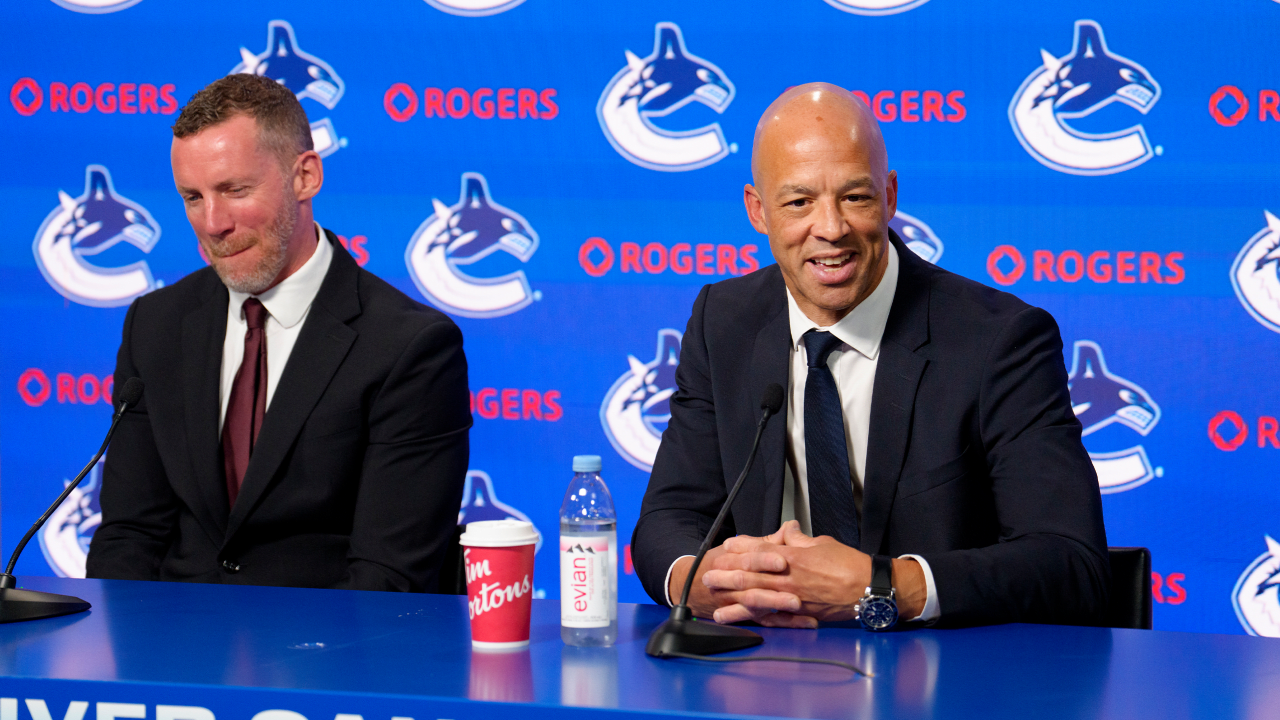
The decision to stand behind Manny Malhotra is the other half of management's message. In his first season as Vancouver's head coach, Malhotra has had to address poor starts, lapses in execution and long periods in which the Canucks cannot sustain their planned style. The Sedins praised the work of the coaching staff and resisted treating a disappointing record as proof that the basic system should be discarded.
The distinction they drew matters. Coaches can design a structure for exiting the defensive zone, supporting puck carriers and defending the middle, but every successful sequence still depends on individual decisions at speed. Losing a contested puck, hesitating on a breakout or taking a penalty at the wrong moment can undermine a sound plan. Conversely, simply pointing to mistakes by players is not enough if the same errors appear game after game. The staff has to identify what can be taught, what needs repetition and where personnel changes might be necessary.
Malhotra had a useful example in that Philadelphia loss. Vancouver's third period was competitive, but the opening two were not. Turning the strong portion of a bad night into the expected standard from the first faceoff is a coaching problem as well as a player-development problem. It demands preparation that translates into action, not merely a better effort after a deficit becomes urgent. The team has to attack with the same attention to detail when a game is scoreless as when the clock is running out.
GOATIFY
GOATIFY Hockey
Vancouver's next challenge is making hard-earned progress visible. Follow the NHL season with GOATIFY's hockey collection.
For young players, this is a particularly delicate setting. A prospect can improve in a losing season by learning to make the right read against stronger opponents and by earning trust in difficult minutes. That progress should not be confused with allowing repeated mistakes to pass without consequences. Development needs a clear explanation of why ice time is awarded, why roles change, and what a good performance looks like when the team is still struggling to score.
That is also why the Sedins' emphasis on mental resilience has practical value. A rebuild involves learning to respond to mistakes without letting one mistake create three more. The best teams are not immune to bad goals or difficult road stretches; they are better at resetting the next shift. Vancouver has too often let a weak period dictate the shape of an entire game. Building resilience means shortening those spirals, not pretending that the final score is unimportant.
There is no reason for management to abandon every aspect of its plan after 20 games, but neither should the next 20 look identical. Shot volume, chances conceded, penalties, turnover sequences and the ability to start periods with purpose all provide intermediate evidence of whether coaching is taking hold. An improvement in those areas would make an eventual rise in the standings more plausible. A continued slide across all of them would demand a more pointed explanation from the same leaders now calling for patience.
The next scheduled test comes at home against the New York Rangers on November 13. One result will not determine a rebuild, but it offers another opportunity to see whether Vancouver begins with the urgency that appeared only late against Philadelphia. The fans have already seen that the Canucks can deliver a competitive stretch. What they need next is proof that the team can reproduce it without first falling behind.
Vancouver's 3–16–1 start is a serious failure of results, and the Sedins are not asking anyone to pretend otherwise. Their bet is that this difficult quarter-season can still produce useful information: who can handle pressure, which young players are learning the right habits, what the coaching staff can improve and which veterans actually support the future.
Keeping established players rather than staging a blanket fire sale might prove patient and sensible. It could also become an expensive way of postponing difficult decisions if the team cannot make the development visible. The measure of the plan is not how confidently it is explained at a press conference. It is whether Vancouver creates more offense, defends with greater purpose and stops needing a comeback simply to look competitive.
The brothers have set a standard that is more demanding than a single trade or a temporary bounce in the standings. They want progress that will matter when the club is ready to compete again. The next quarter of the season must show what that looks like on the ice.
GOATIFY
GOATIFY Hockey
Shop GOATIFY NHL and hockey shirts, hoodies and stickers.



















