

Ramey Saved His Tour Card With a Bogey-Free 65. Austin Changed Everything.
GOATIFYChad Ramey arrived in Austin with his PGA Tour livelihood on the line. He left with a trophy, $1.08 million, and two years of playing security. The difference was a rain-delayed Monday round that turned a one-shot deficit into a two-shot victory without a single bogey. Ramey closed with a seven-under 65 to win the inaugural Austin Championship at 20-under 268, beating Ben Kohles at 18 under and 54-hole leader Trace Crowe at 17 under.
That score only tells half the story. Ramey was outside the top 100 in the FedExCup Fall race, the line for full Tour status in 2027. After a season of respectable golf but too few big finishes, he needed much more than another made cut. The second Tour victory of his career solved the problem in one afternoon, moving him from roughly 136th to the high 60s in points and securing an exemption through 2028.
There was pressure from every direction: a Sunday washout, a leaderboard full of contenders desperate for exemptions, a surging Kohles and Crowe trying to protect his lead. Ramey's response was not to force everything. He made birdies when the course offered them, kept his scorecard clean as the field chased, and took one final birdie at 18. This is how an apparently ordinary November tournament became a career-changing win.
Seven birdies, zero bogeys: how Ramey turned a one-shot deficit into a title

Chad Ramey did not inherit the Austin Championship. He took it with a round that gave the rest of the field almost no opportunity to exploit an error. Trace Crowe had led after 54 holes, with Ramey a shot behind. Heavy Sunday rain moved the final round to Monday, removing the usual Sunday rhythm and asking everyone to sit with the leaderboards, expectations and the prospect of losing a Tour card for another night. A fast start mattered because this was not a major championship with a cushion of dozens of guaranteed future starts. For many contenders, every shot carried a career consequence.
Ramey began the last round with birdies at the first, fourth and fifth holes. After five holes he had climbed from 13 under to 16 under, forcing Crowe, Ben Kohles and the chasing pack to respond before their rounds had properly settled. The precise pattern is important. This was not a desperate sequence of eagles or a single lucky chip-in. It was three ordinary opportunities taken early, followed by a patient stretch in which he refused to give shots back. Turning in three under gave him a platform from which he could attack selected back-nine targets without having to chase birdie on every hole.
The decisive passage began on the par-3 11th. Ramey hit the green and converted from roughly 12 feet. The next meaningful gain came at the par-4 13th, where an approach left a birdie putt of around nine feet. Then came the par-5 14th: reaching in two created a straightforward two-putt birdie and moved him to 19 under. In four holes he had made three gains. On a course that had soaked up a full day of rain and on a final round delayed for everyone, that compact run did more damage than an extravagant highlight shot. It transformed pressure on the leader into pressure on anyone trying to catch him.
GOATIFY
GOATIFY Golf
A seven-birdie closing round is the perfect excuse to revisit what makes a great golf day. Browse GOATIFY golf apparel and gifts.


There was still a job to finish. A late leader can make a fine round look ordinary with one unnecessary swing into trouble, especially when the scoring margin is only two or three strokes. Ramey avoided that mistake. He made pars at 15, 16 and 17, which sounds mundane only until the stakes are considered. Protecting the score was not a retreat from the attacking mindset; it was an ability to distinguish a hole that required an aggressive stroke from one where a safe par maintained the advantage. Knowing when not to give the field a chance was the foundation of his bogey-free closing card.
The 18th supplied the final piece. With Kohles setting a target at 18 under, Ramey still found a birdie at the last and signed for 20-under 268. His seven-under 65 was clean from beginning to end: seven birdies, no bogeys, and a two-shot winning margin. The four-round sequence of 68, 68, 67 and 65 had the shape of a golfer improving as an event tightened. The most telling feature is that the lowest number arrived in the round in which every missed putt or poor decision might have changed his playing rights the following season.
Ramey later talked about keeping himself aggressive despite the anxious delay. That does not mean he played recklessly. It means he kept committing to shots rather than trying merely to survive. The distinction shows up in the back-nine birdies: realistic chances, precise approaches and controlled putting. His late three-par run shows the other half of the formula. The win was built on knowing when the opportunity was worth chasing and when to let other players carry the risk. It is harder to execute that balance under employment pressure than it looks on a printed scorecard.
Kohles kept the heat on, but Crowe's early slip changed the chase

The final leaderboard suggests a convincing win. The round did not always feel that comfortable. Austin began Monday with a crowded leading group and several completely different career stories in play. Crowe was hunting a first Tour victory after opening the event with a remarkable 62. Kohles was close enough to make a late charge. Hayden Springer was fighting for his own place in the 2027 field, while Austin Smotherman had arrived after two fall victories and Blades Brown had won the previous week's tournament. Any one of them could have made the winner's score look different.
Crowe's best opportunity came before the rain delay. He had kept control of the top spot across three rounds, an achievement that required more than one exceptional Thursday. But his Monday card included bogeys at the par-3 third and eighth. Those two dropped shots did not end his event; they did, however, ask him to reverse momentum while Ramey was collecting birdies. After a player has spent days defending the lead, the psychological switch to chasing can be especially difficult. Crowe ultimately made birdies late, including at the last, and finished third at 17 under after a closing 69.
Kohles asked a more urgent question. He returned a 66, one of his four sub-70 rounds in Texas, and reached 18 under. With three birdies over his last five holes, he did exactly what a chaser needs to do: take the chances that appear and put an actual clubhouse number on the board. For a time, his finishing stretch made a Ramey mistake genuinely consequential. The leader answered with pars through the dangerous part of the closing stretch and then added a final birdie rather than playing for the narrowest possible victory. Kohles' late 18th-hole birdie had made it a one-shot contest; Ramey's answer restored two.
GOATIFY
GOATIFY Golf
For the fans who follow every last-shot leaderboard swing, explore GOATIFY golf caps, shirts and stickers.
Springer briefly made the leaderboard more volatile. His birdie-eagle-birdie burst featured a hole-out from 117 yards at the par-4 13th, the kind of single swing that can turn a broadcast and an entire tournament. But a bogey at 16 interrupted the surge. He eventually shared fourth at 16 under with Brown and Erik van Rooyen. Brown, still 19, posted a closing 66 and birdied four of the final five holes. The teenager's run reinforced the point that the pursuing field had no shortage of scoring power. It simply lacked the combination of early gains and late mistake avoidance that Ramey produced.
Smotherman was another legitimate storyline. His autumn had included back-to-back wins, creating the unusual prospect of a third victory in three consecutive starts. He reached the top of the leaderboard early in the final round but ultimately tied for seventh at 15 under. Joel Dahmen, meanwhile, signed for 65 and still finished only tied for tenth; his excellent round did not erase the damage from previous days. These outcomes are a useful reminder that the day's lowest rounds and the week's most important performance are not always the same thing. Context matters: starting position, patience and what the rest of the field can still do.
Neither Kohles nor Crowe should regard Austin as a simple missed chance. Their results moved them closer to the tour status they needed, with Kohles projected around 61st and Crowe around 87th in the FedExCup Fall after the finish. Those improvements matter because the race was being decided across a narrow run of events, not in one Monday afternoon alone. Ramey won because he turned his opportunity into a trophy; the others, especially Kohles and Crowe, may still look back on the week as the point when their 2027 prospects changed for the better.
From outside the top 100 to a two-year exemption: what Austin really bought
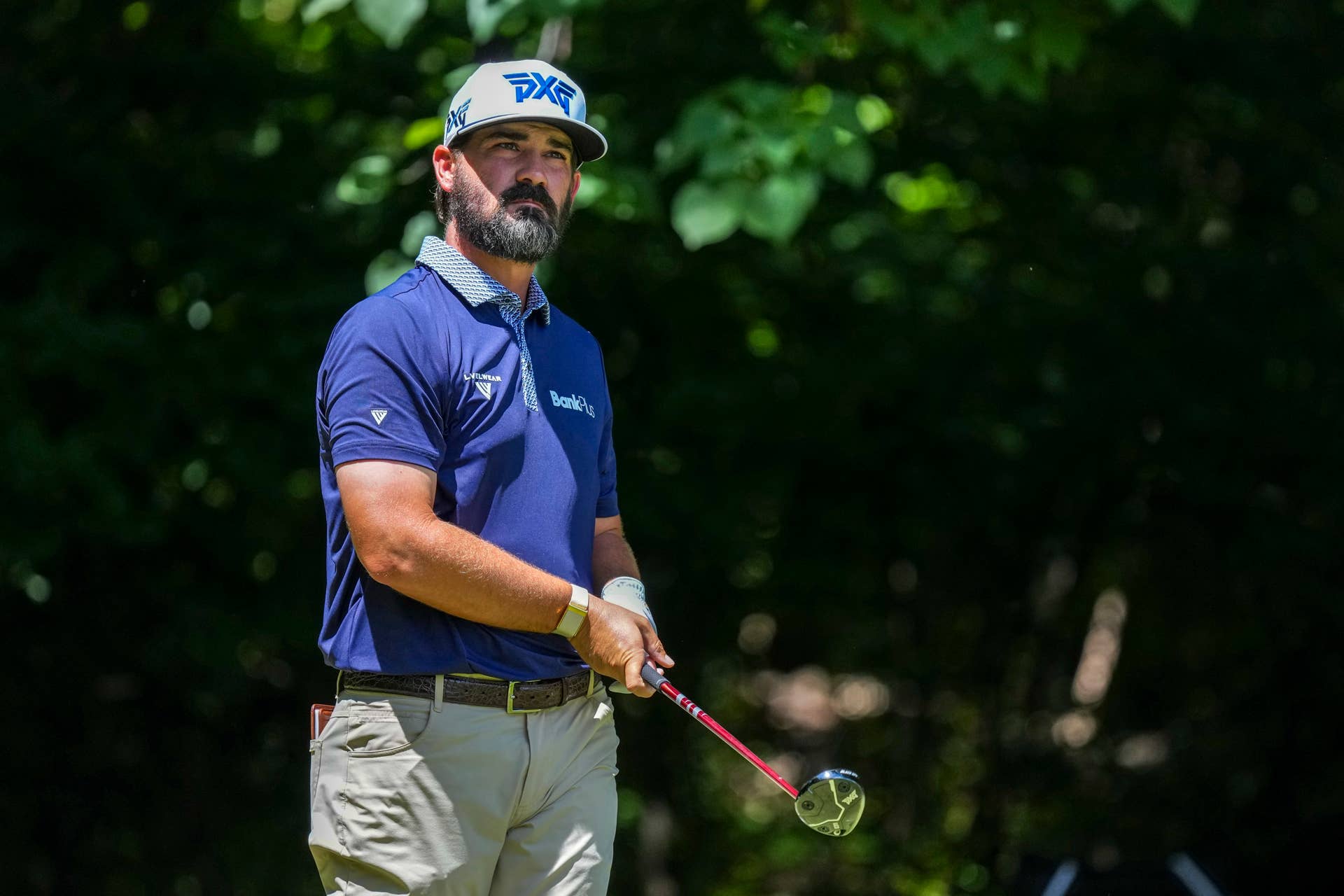
The most dramatic number in this story is not 65. It is the movement from the wrong side of the FedExCup Fall cutoff to the certainty of an exemption. Ramey arrived at the Austin Championship around 136th in the points standings, below the top 100 expected to retain full Tour status for 2027. One event remained afterward. A player in that position cannot assume he will have access to the same starts, planning certainty or sponsorship opportunities in the next season. Even a solid finish might still have left him dependent on results at Sea Island or on a less favorable playing category.
The victory changed the arithmetic entirely. It brought a two-year Tour exemption rather than merely a better position in the points race. Contemporary standings showed him climbing into roughly 68th after his win. That jump would be impressive on its own, but the exemption is the durable prize: the ability to shape a schedule and prepare for 2027 and 2028 without fighting for every invitation at the bottom of the priority list. Under the Tour's planned 2028 competitive model, the win also carries a route into its higher-tier Championship Series. That is a structural benefit, not simply a celebratory bonus.
The financial difference is substantial too. The first-place payment was $1.08 million from a $6 million purse. Reports after the round noted it was more than Ramey had earned across his previous 26 starts combined. That comparison gives some scale to the pressure on the final tee: this was not merely a chance to improve a ranking by ten places. It was the prospect of converting one extraordinary Monday into financial security and much more predictable competitive access. Those rewards should not be confused with guaranteed future results, but they create the runway a professional can actually use to build them.
GOATIFY
GOATIFY Golf
Tour-card pressure is part of the sport's drama. Take a look at GOATIFY golf gear for the next season.
His record explains why the moment mattered. Ramey's previous PGA Tour victory had come at the Corales Puntacana Championship in March 2022. He then went more than four years without a second title and entered Austin having made cuts in the fall without producing enough high finishes to escape the bubble. Consistency kept him in the conversation; it did not automatically protect his career. That distinction is familiar to anyone who follows professional golf beyond the stars. Making the weekend is a useful skill. Making enough money and points to protect a full playing category can be a different problem altogether.
He also won in front of people who understood what the gap between titles had meant. His father and wife had been present for the first victory in the Dominican Republic. In Texas, his young son was there too. The post-round emotion was a reminder that a scorecard contains no record of the nights spent calculating starts, watching standings or worrying about an exemption that might slip away. The delayed final round gave Ramey an extra hotel day to contemplate those consequences. The clean Monday 65 gave the family a different memory of the same week.
For everyone else, the cutoff drama continues into the RSM Classic at Sea Island. Top-100 status offers a very different 2027 from the conditional category for players placed from 101st to 125th. Kohles and Crowe made important moves toward the safe side; players around that boundary, including Dahmen and van Rooyen, still face their own calculations. There are also incentives higher up the table tied to access to early signature events. These are distinct contests nested inside the same leaderboard, and they help explain why players who never seriously threatened the winner were still treating the closing holes as extraordinarily important.
Austin therefore worked as both a tournament and a snapshot of how precarious the middle of professional golf can be. For Ramey, the outcome is clean: second career Tour victory, a two-shot win, and two years of security. For players chasing the remaining places, the nervous arithmetic has not ended. That contrast is why Monday's seven birdies are more than a highlight reel. They took one golfer out of a survival contest that most of the field must keep playing.
Ramey's Austin victory did not require a miraculous finish or a collapsed opponent. It required four progressively sharper rounds, seven clean Monday birdies and the nerve to protect a lead while challengers tried to turn the final holes into a shootout. Kohles and Crowe still improved their Tour-status prospects; Ramey crossed out the question entirely.
That is the peculiar power of the PGA Tour's autumn schedule. A single result can matter more to a player's next two seasons than months of quietly solid golf. In Texas, the familiar figures of 65 and 20 under carried larger consequences: an exemption, a major payday and a family moment that four years of waiting made possible. When the remaining field heads to Sea Island for the season-ending RSM Classic, Ramey will no longer be counting the points he needs to keep a job. He will be deciding what to do with the opportunity he just earned.
GOATIFY
GOATIFY Golf
Explore the GOATIFY Golf collection: golf-inspired shirts, hoodies, hats, stickers and gifts for players and fans.


















