

Horvat and Sorokin Held the Islanders Together — Toronto's Slide Got Worse
GOATIFYThe New York Islanders had every excuse to unravel in Toronto. Two forwards were gone before the first intermission, their road record had yet to include a win, and the Maple Leafs still had enough star power to make a one-goal game uncomfortable. Instead, New York turned an emergency into its most convincing example yet of how Pete DeBoer wants this team to play.
Saturday's 4-1 victory was not simply a Bo Horvat highlight reel or another strong Ilya Sorokin start. It was a lesson in how structure can survive a short bench. Anthony Duclair gave the visitors a lead, Horvat doubled it, and Simon Holmstrom struck twice late. Sorokin supplied 28 saves, while Toronto's three-game losing streak grew longer without injured veteran John Tavares. The result leaves the Islanders 4-3-1 and the Maple Leafs 3-4-2, but the more interesting questions concern what each side can sustain when the schedule becomes less forgiving.
Ten forwards, no panic: why New York controlled the terms

New York's first period could have become a survival exercise. Calum Ritchie left after his opening shift following contact in the neutral zone, and Matias Maccelli later went down awkwardly after an incident involving Darren Raddysh. Neither returned. The Islanders were down to ten forwards for most of the night, an awkward problem for a coach who wants predictable shifts, connected lines and a disciplined forecheck.
The response was to make every possession more deliberate. New York did not try to trade rushes with Auston Matthews and William Nylander. The visitors contested the boards, closed the direct passing lanes and forced Toronto to begin attacks from less dangerous positions. At one stage in the opening period, the Leafs went more than seven minutes without recording a shot. That stretch mattered because it gave the Islanders control before fatigue could become the dominant storyline.
Anthony Duclair's opener at 8:18 captured the method. Jean-Gabriel Pageau recovered a puck along the boards and found Duclair in the slot. The finish required skill, but the chance began with a puck battle and a quick move into the middle. It was the sort of sequence a short-handed team can repeat without demanding constant high-risk creativity.
DeBoer still has a personnel problem to solve. Maccelli entered the night on a five-game point streak, and Ritchie is part of the club's young forward depth. Losing either for an extended period would force more than a simple line shuffle, particularly with Mathew Barzal already absent. Yet the immediate lesson was encouraging: New York did not abandon its identity when the rotation became uncomfortable. The remaining players shortened their decisions before they shortened their shifts, and Toronto never consistently turned its longer bench into sustained danger.
Horvat and Schaefer flipped the shift that defined the game

The game's decisive turn came late in the second period. Toronto rookie Gavin McKenna broke toward the Islanders' goal, but Matthew Schaefer recovered and forced his attempt wide. New York attacked the other way. Kyle Palmieri tested Sergei Bobrovsky, and Bo Horvat collected the rebound for a 2-0 lead. One transition illustrated both teams' problems: Toronto could not complete a promising chance, while New York connected defense to offense with almost no wasted movement.
Horvat's goal was about timing and position rather than spectacle. The Islanders captain followed the play into the middle instead of waiting for a pass to arrive. He finished with a goal and an assist, giving him nine points through eight games. His 24:21 of ice time matched Schaefer for the team lead. With the forward group depleted, those difficult minutes were as valuable as the points.
Simon Holmstrom then protected the lead when Toronto threatened a comeback. Colton Sissons had cut the margin to 2-1 early in the third period, but Horvat found Holmstrom in the slot at 14:08. The winger restored the two-goal advantage and later added an empty-net goal. New York did not need to dominate every shift; it needed to recognize the important ones and finish them. Schaefer's recovery, Palmieri's chance, Horvat's rebound and Holmstrom's late release were separate contributions to the same disciplined approach.

Sorokin's 158th win was built on more than 28 saves
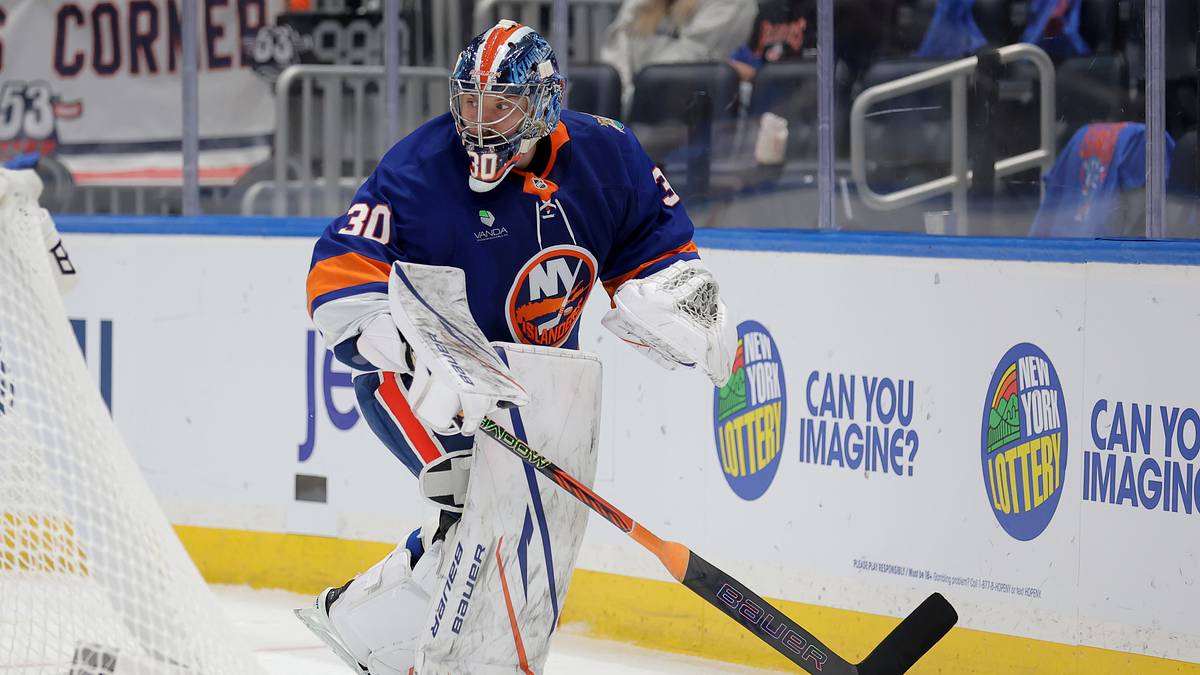
A short bench usually shows up most clearly when the opposition makes its late push. Toronto outshot New York 13-3 in the third period, and Colton Sissons' deflection at 3:54 briefly made the game feel unsettled. Ilya Sorokin kept it from becoming a full comeback. His 28 saves were important, but their timing mattered more than the raw total.
The Islanders went three-for-three on the penalty kill, including critical third-period opportunities when a Toronto power-play goal could have changed the ending. Sorokin made five saves while his team was short-handed. In front of him, New York's defenders protected the slot and denied the second chances that can turn an ordinary shot count into a dangerous one. The Leafs generated volume; they did not consistently convert that volume into quality looks from the middle.
There is a statistical milestone here too. Sorokin's fourth victory of the season was the 158th of his Islanders career, moving him past Chico Resch into sole possession of second place on the franchise's all-time wins list. It is a meaningful marker for a goaltender whose value is often measured in the games New York stays competitive rather than the games it dominates. Saturday was another example: the Islanders did not need him to steal every minute, but they needed him to prevent a bad spell from undoing a much longer stretch of sound hockey.
The penalty kill deserves a share of the credit. Adam Pelech and Ryan Pulock remain central to a defensive group that understands when to pressure and when to protect the middle. Special teams are often described as a separate contest inside a game, yet here they reinforced the same principles as five-on-five play. New York reduced dangerous space, forced decisions from the outside and trusted Sorokin to handle the shots that got through. That is a more repeatable winning formula than hoping a goalie will rescue an undisciplined team every night.
Toronto's third straight loss exposed a problem Tavares alone cannot fix

The Maple Leafs can point to the John Tavares injury as an obvious setback, and it is a substantial one. The veteran is week to week with a lower-body issue after leaving Thursday's loss to Buffalo, and he had already produced seven points in seven games. Nick Paul took the second-line center role against New York. That is a reasonable emergency adjustment, but it changes how Toronto distributes playmaking, faceoff responsibility and offensive-zone touches.
Still, the 4-1 defeat cannot be reduced to one missing forward. Toronto has lost three straight and conceded at least three goals in seven consecutive games. Sergei Bobrovsky stopped 16 of 19 shots before the empty-net goal, but the more concerning pattern is how often opponents have found a way to score despite stretches in which Toronto controls the puck. A roster with Auston Matthews, William Nylander and talented young players should not have to chase games so regularly.
Saturday's attack was revealing. The Leafs had 29 shots and a 13-3 edge in the third period, yet their only goal came when Colton Sissons tipped a point shot through traffic. Too many other possessions stayed on the perimeter, where the Islanders could keep their defensive shape. When the Leafs did create a potentially decisive rush, Schaefer forced McKenna wide and the play turned into Horvat's goal at the other end. Toronto's challenge is not simply to take more shots; it is to generate more of them from locations that demand difficult saves or create rebounds.
The upcoming home game against San Jose offers an immediate chance to respond, but the underlying work is bigger than one matchup. Coach Jim Hiller must find reliable second-line combinations while Tavares is absent, improve defensive support when possession changes and get more consistent results from his goaltending. The Islanders were shorthanded too, and they still looked more connected. That contrast is what should concern Toronto most: one team lost bodies and kept its system, while the other lost structure long before the final horn.

New York's first road victory of the season will be remembered for Horvat's two-point night, Holmstrom's late goals and Sorokin's climb up the franchise wins list. Its real value may be the evidence that the Islanders can defend and make smart decisions even when injuries shrink the bench. Whether Maccelli and Ritchie miss further time will determine how hard that identity is tested next.
For Toronto, the result was another warning that offensive talent is not enough when the game repeatedly shifts away from the dangerous areas. Tavares' absence raises the difficulty, but the solution must come from the entire lineup. The Islanders leave with two points and a clearer blueprint. The Maple Leafs stay home with more questions than answers.
















