

Jose Aldo Would Cut Unbeaten Evloev — UFC 333 Is About More Than a Belt
GOATIFYJose Aldo has turned the build-up to UFC 333 into a debate about what the world's biggest MMA promotion is supposed to reward. The former featherweight champion says he would not build a roster around undefeated contender Movsar Evloev — and even suggested he would cut him after a first loss. That is an astonishing position to take days before Evloev challenges Alexander Volkanovski for the title on October 24.
The dispute is bigger than one fighter's decision-heavy record. It asks whether an unbeaten grappler should be judged by victories or by the excitement those victories produce. Aldo's view is easy to understand from an entertainment perspective, but the implications for competitive legitimacy are much harder to defend.
Aldo's most explosive claim is about the UFC's business, not Evloev's skill
Jose Aldo did not say Movsar Evloev lacks the ability to become champion. That is what makes his argument so combustible. The retired featherweight great suggested that even an unbeaten contender can be a poor fit for a promotion built around selling live events, subscriptions and personalities. In Aldo's view, competitive success alone should not guarantee that a fighter remains on the roster, much less that he receives the sport's biggest opportunities.
The timing is extraordinary. Evloev enters Saturday's UFC 333 main event in Abu Dhabi at 20-0 professionally and 10-0 inside the UFC, with Alexander Volkanovski's featherweight championship waiting across the cage. Every UFC victory has come by decision. Aldo treats that record as evidence of a problem with the entertainment product; supporters of the challenger can reasonably see the same record as proof that he has solved ten different opponents without making a costly mistake.
There is a distinction between saying a fighter needs more compelling promotion and saying the fighter should be cut after his first defeat. The first is an argument about presentation and incentives. The second would punish an athlete for succeeding at the precise competitive task the promotion hired him to perform. Aldo is entitled to prefer a different kind of fight, but the UFC's claim to crown the best in each division depends on contenders like Evloev having a route to the belt.
That tension is not unique to featherweight. Fans want stakes and spectacle, while fighters are paid to win under the rules. The same tactics that make a contender difficult to beat can make him harder to market in a highlight-driven environment. Aldo has simply stated the conflict more aggressively than most former champions are willing to do.
There is a practical middle ground between rewarding every decision specialist automatically and discarding them. Matchmakers can pair a technical contender with opponents whose strengths make the contrast meaningful. Broadcast teams can explain the defensive decisions that stop a submission or create a reversal. And the fighter can be challenged to communicate what makes his method exceptional. Those are promotional choices, not changes to the scoring rules. Evloev's chance at the belt is also an opportunity for the UFC to show why ten straight wins against world-class competition should matter to viewers who have not watched every round.

The London win makes the 'boring wrestler' label too simple

Evloev's March victory over Lerone Murphy offers a useful test of the stereotype. He won a majority decision in London by scores of 48-46, 48-46 and 47-47, even after losing a point for an illegal low blow. He also completed nine of ten takedown attempts and accumulated just under four minutes of control time across a 25-minute contest. Murphy narrowly led 89-86 in significant strikes. Those numbers describe a competitive, tactical fight, not 25 minutes of one-way inactivity.
The final rounds mattered because Evloev could change the problem Murphy had to solve. When distance exchanges became difficult, he mixed in wrestling and positional pressure. That ability to move between phases is a core MMA skill, even if it produces fewer spectacular clips than a knockout. Evloev has also defeated recognizable contenders on his way up the rankings, including Aljamain Sterling and Diego Lopes. His unbeaten run has not been assembled against anonymous opposition.
None of this means spectators must enjoy his style. Ten decisions in ten UFC appearances are a legitimate marketing challenge for a company that sells finishes and dramatic turning points. A prospect with several emphatic stoppages is easier to advertise in a thirty-second trailer. Yet the absence of a finish is not the absence of risk, adjustment or technical difficulty. Evloev's route to victory often requires reading an opponent over multiple rounds rather than winning one exchange spectacularly.
Aldo himself represents the opposite aesthetic: sharp boxing, destructive kicks, explosive entries and moments that translate immediately to a highlight reel. His 2024 bout with Mario Bautista showed how recognizable that attacking identity remained late in his career. The comparison is revealing precisely because the two men optimize different parts of the same sport. A credible title picture needs room for both.
The London scorecards also demonstrate why a single finishing statistic can mislead. Evloev did not coast to a unanimous shutout. A point deduction narrowed the margin, Murphy found moments at range, and the challenger had to make late tactical decisions under genuine pressure. Nine successful takedowns do not automatically mean nine extended periods of control; the recorded control time shows that much of the fight still unfolded in transitions and on the feet. The distinction matters for judging the entertainment criticism fairly. A viewer may dislike the rhythm of repeated wrestling attempts, but it is inaccurate to describe every decision victory as five rounds of uninterrupted stalling.
Aldo's examples expose the UFC's entertainment double standard

To explain his preference, Aldo pointed toward fighters who can transform a card with the expectation of violence. Jean Silva is an obvious example: forward pressure and visible intent create urgency even before the first punch lands. Alex Pereira built extraordinary star power through high-level striking and knockouts, while Jon Jones became a draw by combining technical dominance with a larger-than-life public profile. Aldo sees that combination of ability and audience appeal as central to the UFC's success.
The complication is that excitement and merit do not always travel together. An aggressive contender can lose rounds while taking the risks fans love. A patient grappler can dominate elite opposition without creating a viral finish. If the organization rewards only one model, athletes receive a strange message: the better route to a lucrative opportunity might be to accept unnecessary danger rather than use the most effective strategy available.
There is also a commercial reason to be cautious with Aldo's proposed standard. A promotion that markets itself as the top level of mixed martial arts benefits when it can tell fans that the belt holder has beaten the strongest available challenger. Evloev's undefeated record makes him a credible obstacle. Removing that obstacle because his fights are difficult to package could undermine the title's sporting value, even if it improved a particular card's short-term sales pitch.
Better storytelling is another option. The UFC can present Evloev as the unbeaten technician who forces champions to answer questions nobody else can ask. Wrestling sequences can be explained through transitions, counters and positional stakes rather than treated as dead time. It takes more effort than replaying a knockout, but it also makes the audience more invested in the outcome. A promotion with the UFC's reach has the resources to make that case.
Aldo's criticism became personal when he pushed back on Evloev's comments about former champions and anti-doping testing. Those allegations and counter-accusations should not be confused with established findings about any individual. They explain why the dispute has become sharper, but the underlying debate is still about whether the UFC rewards sporting achievement, marketability or some negotiated combination of the two.
Volkanovski can settle the sporting argument — not the business one
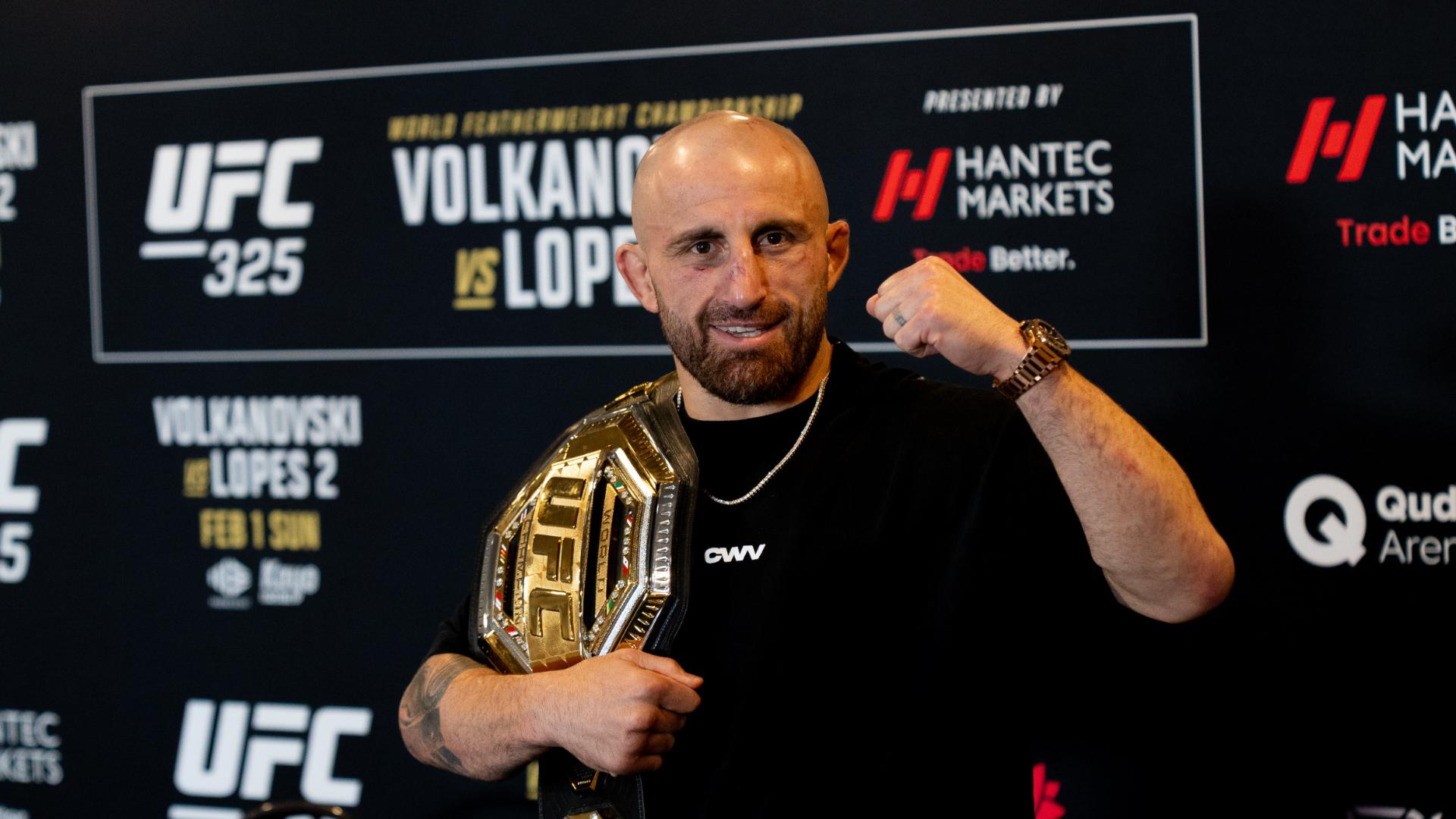
Saturday's fight offers the cleanest answer available to the question of Evloev's level. Volkanovski is not a ceremonial champion chosen for name recognition. The Australian regained the featherweight belt and defended it against Diego Lopes earlier this year, showing that his experience and tactical discipline remain dangerous at 38. Evloev must beat a champion who can manage distance, scramble through difficult positions and adapt over five rounds.
If Evloev wins by controlling long stretches, critics may still complain about the entertainment value. But a victory over Volkanovski would be difficult to dismiss on merit. If the champion turns back the undefeated challenger, it will show that Evloev's particular formula met a higher-level answer, not that his previous ten UFC wins were meaningless. Either result gives the division information that matchmaking alone cannot provide.
Aldo has said he will support Volkanovski despite the possibility that another successful defense moves the Australian beyond his own featherweight records. That matters. His remarks about Evloev are not simply a former champion guarding his statistical legacy. Aldo's preference appears rooted in the kind of fighting he wants the sport to celebrate, and in his frustration with comments he considered disrespectful toward earlier champions.
The tactical contest could be far more absorbing than its promotional shorthand suggests. Evloev will need to turn takedown entries into sustained advantage without giving Volkanovski clean counters on the break. The champion, meanwhile, cannot assume that keeping the fight standing will be enough; he must win the exchanges there while staying prepared for chain wrestling and late-round adjustments. Every failed entry and every successful escape can shift the next round's choices.
UFC 333 therefore has two different scoreboards. One belongs to the judges and the championship belt. The other belongs to the business of persuading casual viewers to care. Aldo has made the second scoreboard impossible to ignore. The first remains the reason Evloev has earned the chance to fight.
For Volkanovski, the stakes reach beyond a single defense. He has already shared the cage with wrestlers, power punchers and highly mobile strikers across championship rounds. The question is whether that breadth of experience lets him deny Evloev the sequences that have carried the challenger through his unbeaten run. For Evloev, a close decision would be a historic result if he wins the belt, yet it might do little to silence Aldo's promotional criticism. A convincing finish would address both arguments at once. Neither outcome can be assumed beforehand, which is exactly why the fight deserves to happen rather than be decided by popularity.

Aldo's comments make for a powerful headline because they expose a real problem rather than invent one: MMA has to be both a sport and a show. Evloev has earned his title shot by winning; he has not yet convinced every fan that his style is worth watching. Those are separate questions, and the UFC should be able to answer both without pretending that ten straight victories count for nothing.
Against Volkanovski, the challenger has an opportunity to make his strongest case in the only place where promotional arguments cannot replace the result: the Octagon. Whatever happens, the discussion about how the UFC treats effective but less flashy fighters will outlast Saturday night.

















