Malaysia Wants Formula 1 Back — Sepang Just Made Its Strongest Case Since 2017
GOATIFYSepang was supposed to be a one-off solution. Instead, Formula 1’s emergency return to Malaysia may have reopened a door that had been shut since 2017.
After a rain-soaked Bahrain Grand Prix in Malaysia brought F1 back to Sepang for the first time in nine years, Malaysian officials immediately started talking about what comes next. Motorsports Association of Malaysia president Mokhzani Mahathir said the circuit still has the capability and experience to host the championship, while Prime Minister Anwar Ibrahim separately confirmed that discussions about a future return are taking place.
The enthusiasm is easy to understand. The weekend reportedly sold 105,000 tickets, packed the circuit even during practice, and reminded the paddock why Sepang remains one of the sport’s most distinctive venues. But converting that emotion into a permanent race requires solving a much less romantic problem: who pays, what Formula 1 gets in return, and where Malaysia fits on an already crowded calendar.
Sepang did not need to relearn how to host Formula 1
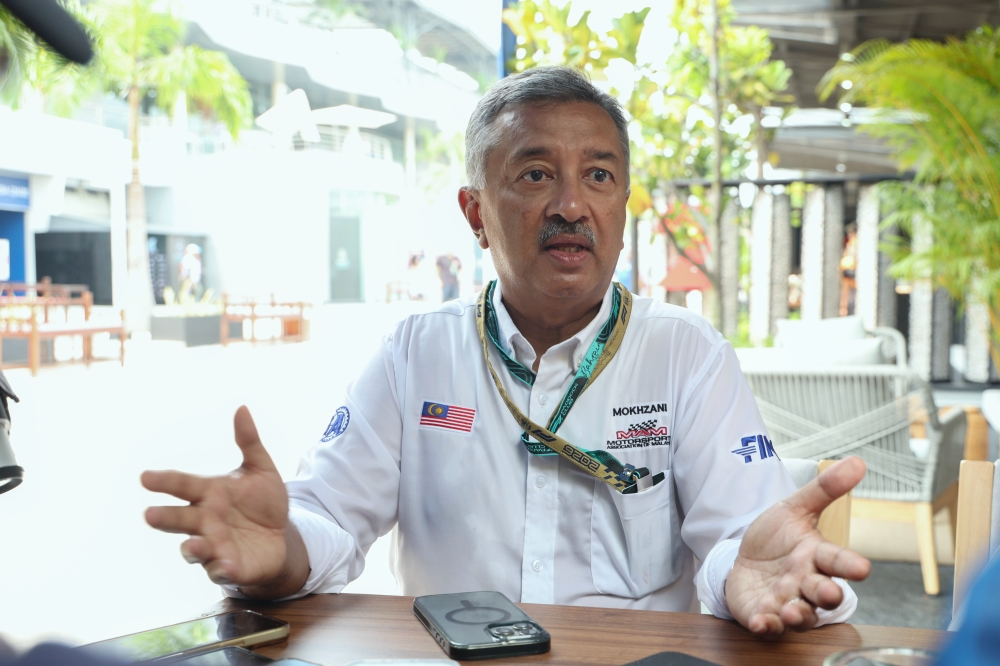
The most important thing Sepang proved in 2026 was not that people still remember the circuit. It proved that the venue can still function as a modern Formula 1 host.
Mokhzani Mahathir’s argument is straightforward: the institutional knowledge never disappeared. Sepang continued operating after F1 left, hosting MotoGP, track days, manufacturer events and other motorsport. When Formula 1 needed a replacement venue for Bahrain, the circuit was able to step back into the championship on short notice.
That matters because a permanent return would not be a cold start. Malaysia already has the track, paddock, logistics network and experienced organizers. The 2026 weekend also stress-tested those systems with a huge crowd and tropical weather. There were transport challenges around the circuit, but the sporting event itself demonstrated that Sepang remains capable of handling the scale of Formula 1.
For F1, that lowers execution risk. A new street race may promise a fresh market, but it also requires temporary infrastructure and years of operational learning. Sepang offers something different: a proven Grade 1 venue with history, recognizable corners and a local audience that already understands the product.
The real obstacle is not the circuit — it is the annual bill

Operational readiness does not solve the financial question. Malaysia stopped hosting Formula 1 after 2017 partly because the economics became difficult to justify, and that same issue remains the biggest barrier to a permanent comeback.
Sepang officials have indicated that securing a regular calendar place could require at least RM300 million per year. The 2026 event is a poor template for that cost because it was an emergency relocation: Bahrain had already carried much of the hosting burden, leaving Malaysia’s reported expenditure at roughly RM10 million to RM16 million.
That gap is the entire debate. A one-off event can look spectacular when another promoter absorbs the largest rights costs. An annual Malaysian Grand Prix would need to justify its own fee through tourism, sponsorship, hospitality, tax receipts and wider economic activity.
Mokhzani’s case is that the benefits extend well beyond ticket revenue. International visitors stay in Kuala Lumpur, spend on transport and hospitality, and often travel elsewhere in the country. That multiplier effect is real, but governments increasingly want evidence that major-event spending produces returns that cannot be achieved more cheaply elsewhere.
So the question is not whether Sepang can sell tickets. It is whether Malaysia can structure a deal where the national economic return is large enough to make the hosting fee politically sustainable year after year.

A multi-year deal only works if fans can plan around it

Mokhzani suggested a five-year arrangement built around a three-year commitment plus a two-year extension option. The interesting part of that proposal is not the contract jargon. It is the recognition that a race becomes more valuable when everyone knows it will still exist next season.
A surprise replacement event can generate urgency. A permanent Grand Prix needs repeat behavior. International fans need enough certainty to book flights, hotels and longer trips around the race. Sponsors need a horizon long enough to justify activation budgets. Formula 1 needs confidence that the promoter can deliver consistently rather than renegotiate after every edition.
Sepang also has a tourism advantage that many purpose-built circuits do not. Kuala Lumpur is a major destination, the airport is close to the circuit and Malaysia can package the race as part of a broader trip. A predictable date would let organizers sell that proposition internationally instead of relying primarily on pent-up local demand.
The risk is that a long contract also locks in the financial exposure. If the first comeback year benefits from novelty and later attendance normalizes, the promoter still has to meet its obligations. Any deal therefore has to balance the certainty F1 wants with enough flexibility for Malaysia to protect itself if the economics change.
The crowd made the emotional case — the calendar still has to make room

The strongest argument for Malaysia is visible in the attendance. Mokhzani said he was told 105,000 tickets had been sold, with strong crowds already arriving for Friday practice and Saturday qualifying. After nine years away, Sepang did not look like a market that had forgotten Formula 1.
That response matters because the sport has changed dramatically since Malaysia last held its own Grand Prix. F1’s global audience has expanded, younger fans have entered the sport and the calendar has become more commercially aggressive. A circuit that struggled to justify its place in 2017 can present a different proposition in 2026.
Prime Minister Anwar Ibrahim then moved the story beyond wishful thinking by confirming that Malaysia is discussing a future return. That does not mean a contract is close. Formula 1 already has a crowded schedule, and any new race competes with existing promoters and other countries willing to pay heavily for a slot.
Still, Sepang has now cleared the first two hurdles. The circuit proved it can host, and the public proved it will show up. The next stage is less photogenic: negotiations over money, dates and long-term value. If Malaysia can solve those, the 2026 Bahrain Grand Prix in Malaysia may be remembered not as a strange one-off but as the weekend that brought the Malaysian Grand Prix back to life.

Sepang proved that the circuit, fans and organizers can still deliver a Formula 1 weekend. That is an important first step, but it is not the same as proving that an annual Malaysian Grand Prix makes financial sense.
The strongest argument for a return is that Malaysia now has fresh evidence rather than nostalgia. The 2026 event drew a major crowd, produced a memorable race and generated enough political momentum for talks to become public almost immediately. The strongest argument against it is equally clear: the one-off economics were unusually favorable and cannot simply be projected forward.
If Malaysia can turn that burst of demand into a credible multi-year business case, Sepang deserves serious consideration. The circuit never forgot how to host Formula 1. The next challenge is proving that modern Formula 1 can afford to make room for Sepang again.