

Red Bull Found F1 Engine Speed Without New Hardware — Verstappen Is the Proof
GOATIFYMax Verstappen's two consecutive Grand Prix victories have made Red Bull's late-season recovery impossible to ignore. The surprise is what did not change inside the car. According to power-unit technical director Ben Hodgkinson, the Ford-backed engine programme has found meaningful performance through calibration and energy management rather than by installing a fundamentally new combustion engine. In a regulation year built around an unfamiliar balance of electrical and combustion power, that distinction matters.
Red Bull arrived in 2026 with an enormous task: build its own power-unit operation, integrate the new engine with a demanding chassis and learn a rulebook that rewards efficient energy deployment as much as outright horsepower. Early inconsistency made the project look vulnerable. Victories in Malaysia and Singapore have changed the conversation, but the engineering story behind them is more useful than the headline results. Red Bull has been learning to use hardware it already possessed.
Red Bull Found More Speed in the Same Engine
Hodgkinson's explanation starts with a problem that is easy to overlook: a modern Formula 1 power unit is not just an engine producing a fixed number of horsepower. It is a coordinated system in which combustion output, battery state, electrical deployment, recovery, cooling and drivability must all work together. Two cars using the same physical components can behave differently if the software maps and operating strategies do not extract their potential consistently.
That is particularly important under the 2026 regulations, which increased the electrical contribution to the powertrain. Drivers need strong acceleration out of corners, but teams also have to decide where to spend and recover energy across an entire lap. A deployment strategy that produces a spectacular burst on one straight may leave a driver short of electrical assistance elsewhere. Refining that trade-off can improve both lap time and the car's predictability without changing a single homologated engine component.
Red Bull's development timeline helps explain why gains were available. Work on the combustion system continued longer than originally intended, leaving less time to perfect the calibrations before racing began. Engineers were therefore still learning how the different parts of the package interacted in real conditions. Hodgkinson described continued work with technical partners, including ExxonMobil, as the team sought better operating maps and more dependable performance across different circuits.
None of this means software can magically compensate for unlimited mechanical deficiencies. A weak fundamental design remains a weak design. But a sound architecture can initially perform below its ceiling if the team has not yet discovered its most effective settings. In that sense, Red Bull's progress is evidence that the original power unit had more headroom than its early results suggested. The achievement is not a secret new engine; it is a more complete understanding of the existing one.
For Verstappen, the practical benefit is not limited to top speed. More predictable delivery makes braking, corner exit and tyre management easier to repeat lap after lap. When a driver can trust how the car responds as energy is harvested and released, the whole setup becomes easier to exploit. That creates a performance gain which may appear in the stopwatch without being traceable to a single dramatic hardware upgrade.

Why the FIA's Engine Upgrade Rules Made Calibration Crucial
Red Bull's options were also shaped by the FIA's Additional Development and Upgrade Opportunities system, usually shortened to ADUO. The mechanism was introduced to give manufacturers with sufficiently underperforming combustion engines extra scope to improve during the new regulation cycle. Its purpose is competitive balance: a manufacturer that starts badly should not necessarily remain trapped behind for years because the major components have already been homologated.
There was a twist for Red Bull. In the FIA's combustion-engine assessment, the manufacturer was classified at the leading end of the relevant ranking. That meant it did not receive the additional performance-related hardware opportunities available to manufacturers that met the deficit criteria. The team could still believe that rivals had advantages in certain operating conditions, but its official classification limited the route available for closing them through engine specification changes.
This distinction is essential when evaluating claims that Red Bull has suddenly found more power. The absence of a new homologated combustion-engine specification does not imply that development stopped. Calibration, integration, energy strategy and understanding of the existing package remain significant engineering tasks. They also have to be distinguished from chassis and aerodynamic upgrades, which are governed by different development considerations.
Mercedes provides the obvious comparison because it has been the season's benchmark and Kimi Antonelli leads the drivers' championship. Yet a championship table cannot isolate the combustion engine from the rest of the car. Qualifying gaps reflect aerodynamics, tyres, driver execution, deployment, setup and track characteristics. Red Bull's recent improvement therefore cannot be assigned to one system simply because Hodgkinson has described work on that system. His comments explain an important part of the recovery, not every part of it.
The bigger lesson is that the first season of a new technical era rewards learning speed. A team can improve by discovering where it loses energy, how to recover it without unsettling the car and which calibration choices make performance more repeatable. Under constrained hardware rules, that sort of development is not a consolation prize. It may be the most valuable work available.
Verstappen's Malaysia and Singapore Wins Are the Real Test
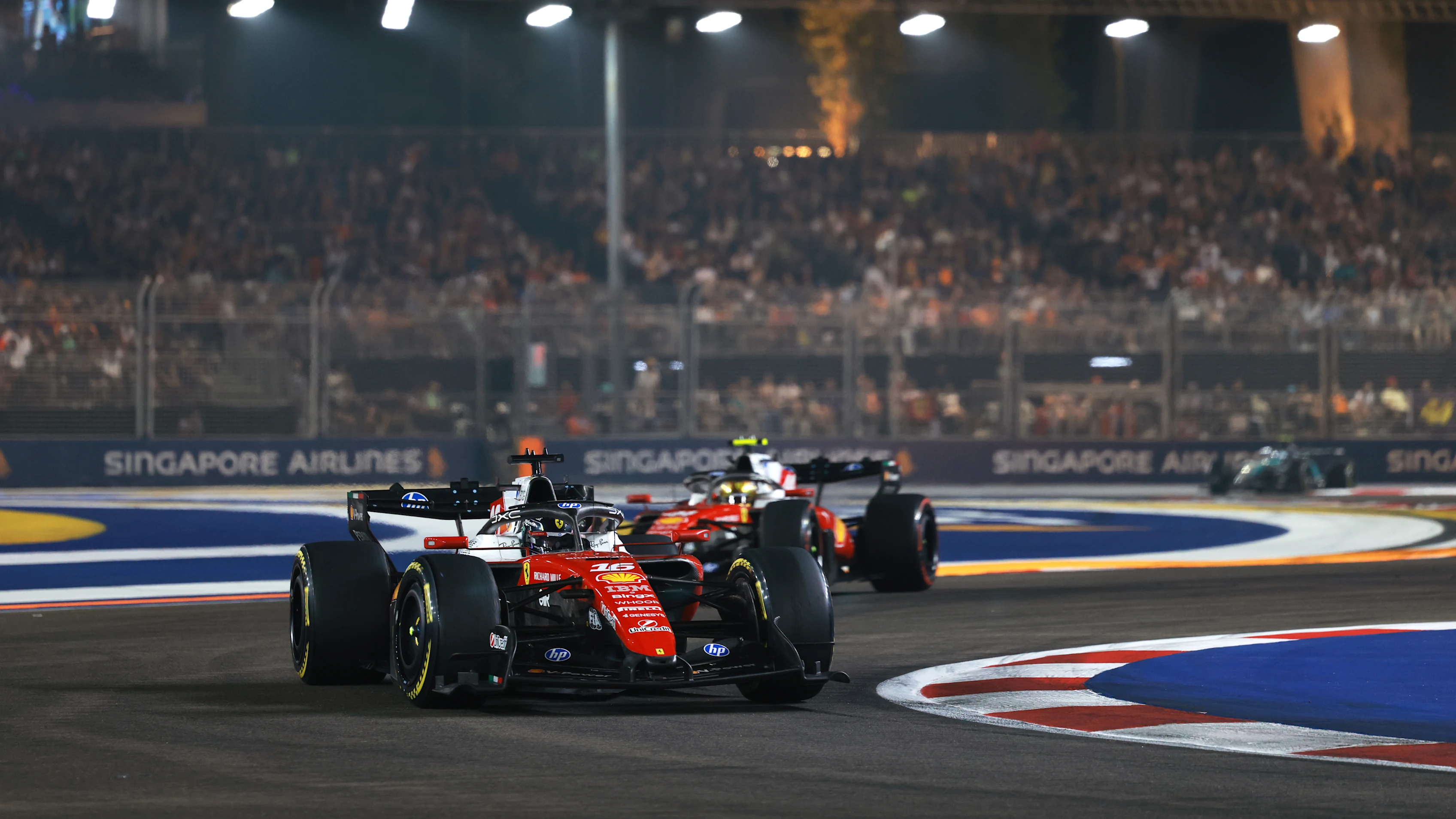
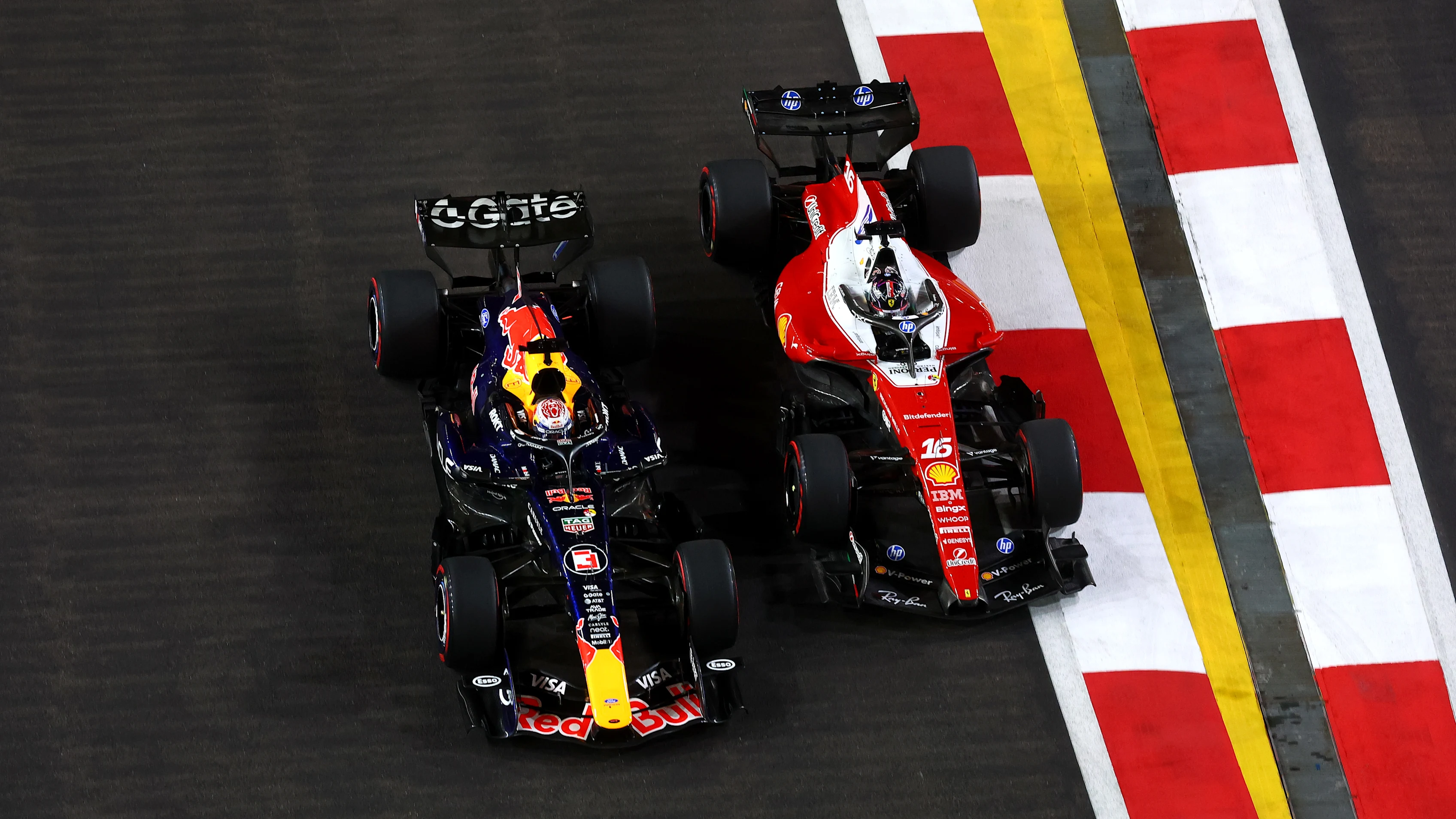
Technical explanations matter more when they survive a race weekend. Verstappen won in Malaysia and then controlled the Singapore Grand Prix from pole position, beating Charles Leclerc by 7.335 seconds at Marina Bay. The venues ask very different questions of a Formula 1 car. Sepang combines long straights, faster corners and severe tyre demands; Singapore emphasizes braking stability, traction and the ability to deliver precise performance through slower sequences. Success at both is more persuasive than a one-off result at a particularly favorable track.
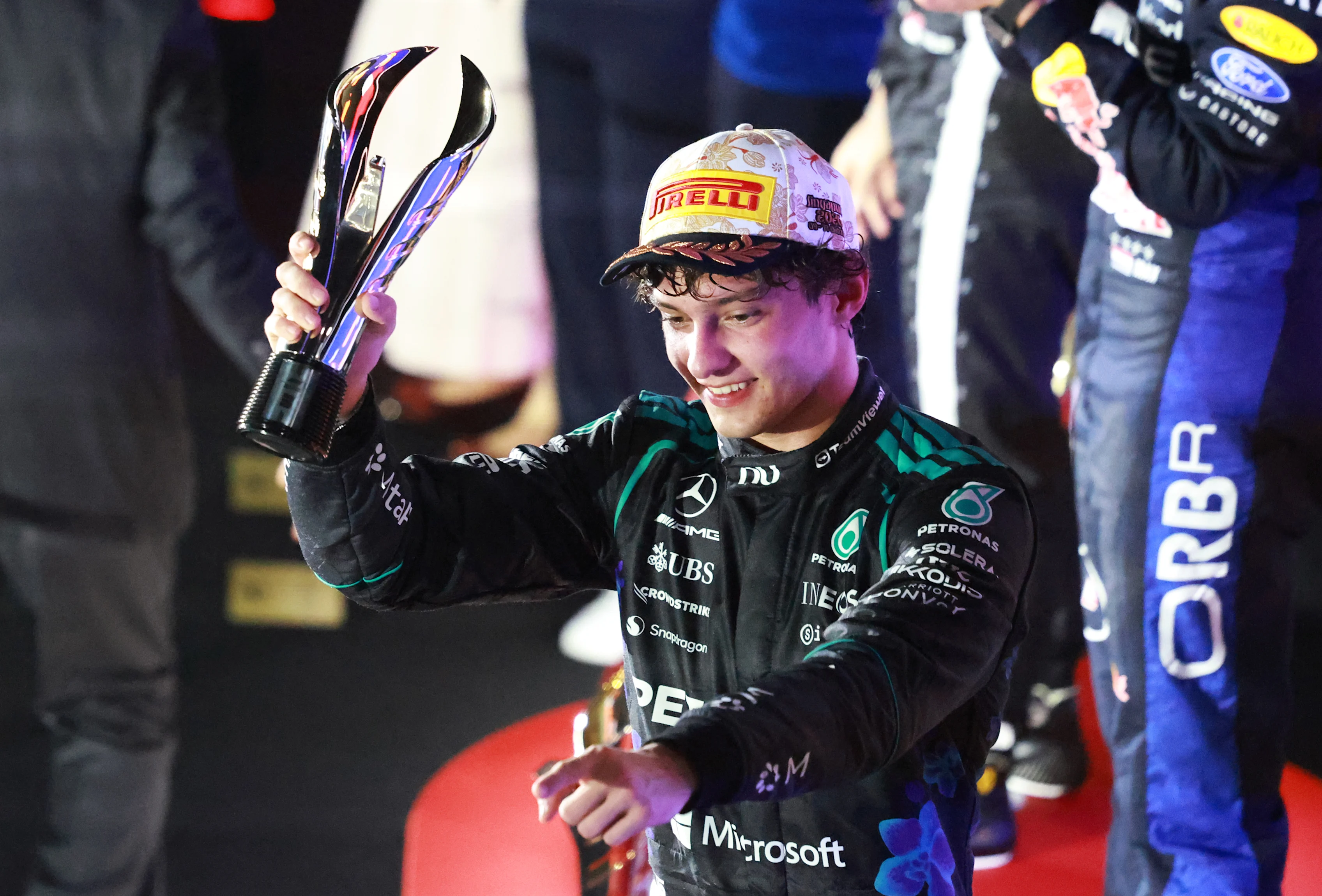
The official Singapore classification also provides useful context. Leclerc finished second for Ferrari, Antonelli third for Mercedes, and the McLarens of Lando Norris and Oscar Piastri fourth and fifth. Red Bull's pace was visible over the race distance, not only on a qualifying lap. Yet the result does not prove the engine alone created the advantage. The RB22 has also received aerodynamic development, and a more settled chassis can help the power unit operate inside a better window.
That interaction is precisely why it is misleading to divide a lap into an 'engine gain' and a 'car gain' as though they were independent. Better traction can let a driver deploy electrical energy more effectively. Improved balance can reduce wheelspin and tyre overheating. A cleaner aerodynamic platform can make energy management less costly on the straights. Once those pieces begin working together, a car can improve more dramatically than any single component change might suggest.
Red Bull still has questions to answer. Verstappen's exceptional ability to drive around weaknesses can make the package look stronger than it is across both cars, while reliability and setup sensitivity can remain hidden by one dominant Sunday. Isack Hadjar's performance and the team's ability to repeat strong results at different tracks will help show how broadly the gains apply. A development breakthrough should improve the operating window, not merely create another narrow sweet spot.
The next examination comes at the United States Grand Prix on October 23–25. Circuit of The Americas mixes rapid direction changes, a long straight and slower traction zones, giving engineers another varied set of conditions. For Red Bull, the objective is to demonstrate that the engine calibration and chassis development translate into repeatable speed rather than isolated brilliance. For Mercedes, Ferrari and McLaren, the challenge is to respond before Verstappen's revived momentum becomes the defining story of the final races.

Red Bull's recovery is a reminder that new Formula 1 regulations create a race to understand technology as much as a race to build it. Hodgkinson's account points to a power unit whose potential was initially obscured by unfinished calibration work and the demands of integrating an entirely new package. The ADUO restrictions made hardware change a less available route, so better energy management and operating maps became central to the response.
Verstappen's consecutive wins are convincing evidence that the whole car is now more competitive, but they do not identify a single magic component. That is what makes the comeback interesting. Red Bull has improved the way its systems work together, and Austin will reveal whether the team can keep extracting that advantage against rivals who are developing just as quickly.
















