Tacko Fall Got the Sixers' Last Two-Way Spot — Their Frontcourt Is Already Hurting
GOATIFYPhiladelphia has handed its final two-way contract to the tallest player in its building, but the real story is not Tacko Fall's 7-foot-6 frame. It is the state of the 76ers' frontcourt less than three days before the NBA regular season begins. A torn Achilles for Ariel Hukporti, a foot problem for Adem Bona and a back issue for Dominick Barlow have turned what looked like a deep, star-heavy roster into a team with an immediate question behind Joel Embiid.
Fall, 30, did not appear in the preseason because of a hip strain. He has played just 37 NBA regular-season games across earlier spells with Boston and Cleveland. Yet Philadelphia chose him for its third two-way slot alongside Caleb Love and Rayan Rupert. That is not a prediction that he will suddenly become a nightly rotation center. It is an unusually clear statement about the kind of emergency the Sixers want to be prepared for—and about the limitations of the alternatives they have today.
Philadelphia's Center Injuries Made This More Than a Novelty Signing
The most consequential frontcourt development in Philadelphia's preseason was not a transaction. It was the loss of Ariel Hukporti to a torn Achilles. A season-ending injury removes an option the team expected to have behind Embiid and forces everyone else up the depth chart. That becomes especially awkward when other potential answers are unavailable at the same time. Adem Bona has been working back from a foot injury sustained over the summer, while Dominick Barlow has dealt with a back problem. Both missed preseason action.
In that environment, a two-way signing can be meaningful even if the player is not immediately ready to suit up. Fall has his own left-hip issue and missed the entire exhibition schedule. Philadelphia therefore is not buying a guaranteed solution for opening night. It is preserving a specific type of depth for the weeks and months ahead. A 7-foot-6 center gives the coaching staff an option that cannot be recreated by asking a wing to play taller.
There is an important distinction between being short of centers and being short of useful lineups. Jabari Walker has absorbed extra minutes and gives coach Nick Nurse another way to assemble a frontcourt. Philadelphia can play smaller, spread the floor and rely on activity rather than traditional size. That may be its best basketball against some opponents. Against a team that repeatedly attacks the offensive glass or parks a powerful screener near the rim, however, those same groups can be put under very different pressure.
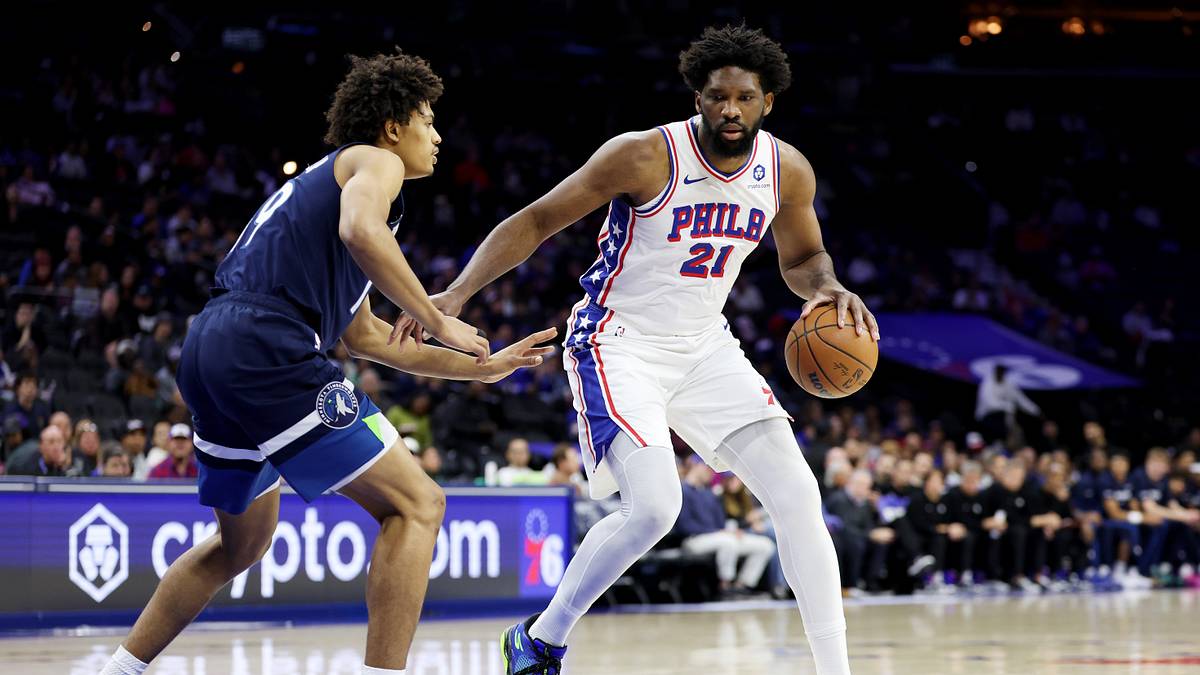
Embiid is the centerpiece, not a realistic answer to every reserve-center minute. Even if his own conditioning and health are encouraging, a contender cannot build a season-long plan around the assumption that its franchise big man will cover every physical matchup and every emergency. Fall's contract is best read as an acknowledgment of that risk. It is a modest roster move that tells a larger story about how thin a seemingly loaded team can become at one position.

What Tacko Fall Can Actually Give the Sixers—and What He Cannot
At 7-foot-6, Fall offers the most obvious form of defensive deterrence: the possibility of meeting a shot at a height most opponents rarely encounter. His reach can change the angle of a layup, make a post player work harder for position and give a ball-handler a huge target near the basket. He does not need to score 20 points to affect a possession. A well-timed screen, a contested rebound or an altered attempt can matter just as much during a short stint.
That is the appealing version of the signing. The less glamorous version is why Fall has not established himself as a regular NBA rotation player. He logged 37 games with the Celtics and Cavaliers and has not appeared in a regular-season NBA game since the 2021-22 campaign. Modern offenses repeatedly drag big men into space, use five-out alignments and force defenders to make quick decisions far from the rim. Extraordinary height is not the same as defensive versatility. A center who protects the basket but struggles to recover to shooters can surrender the value he created on the previous play.
His return from overseas basketball also requires realistic expectations. Fall has remained a professional player, but the NBA's pace, spacing and scouting are different tests. Philadelphia should be measuring whether he can move comfortably after the hip strain, execute simple defensive coverages, establish legal screens and finish plays without demanding touches. The goal is not to redesign the offense around him. It is to find a small, reliable package of minutes for specific opponents.
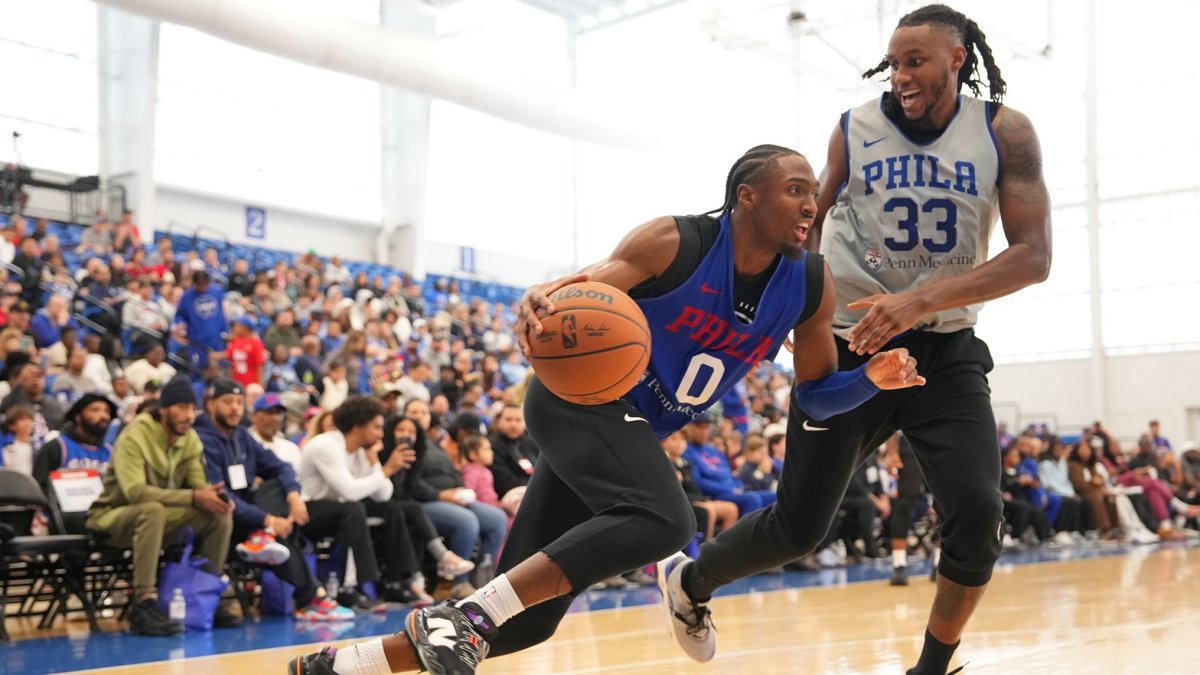
The team's perimeter talent could make those minutes easier to survive. Tyrese Maxey can pressure defenses with speed, and the Sixers have multiple high-level creators who can feed a rolling big man without relying on him to manufacture shots. But the fit is not automatic. If a defender can ignore Fall outside the paint, the driving lanes for the stars may shrink. That is why matchup choice, timing and health will matter far more than his listed height. His best NBA role is likely narrow, situational and useful precisely because it is narrow.
The Two-Way Contract Is Insurance, Not a Promise of Rotation Minutes
Philadelphia used its third and final two-way slot on Fall, joining guard Caleb Love and wing Rayan Rupert. That detail is central to understanding the move. Two-way agreements are designed to give teams developmental and depth options who can move between the NBA club and its G League affiliate. They are not the same as committing a standard roster spot to a veteran expected to play 25 minutes every night. The Delaware Blue Coats provide a natural place for Fall to build game conditioning once his hip permits it.
For the front office, the appeal is flexibility. The Sixers can evaluate whether Fall's mobility and timing still translate while keeping a player with an unusual physical profile in the organization. If the injury picture improves quickly, he may spend considerable time outside the main rotation. If Philadelphia faces a particularly big opponent or suffers another absence, the staff has a center familiar with its terminology and personnel rather than needing to begin from zero with a late emergency addition.
It is also worth separating the word 'insurance' from the idea of certainty. Insurance only helps if the player is healthy enough and effective enough to enter the game. Fall missed the preseason with a hip strain, so his readiness is still a genuine variable. The contract does not erase that concern. Nor does it replace the need for the regular roster to develop dependable defensive rebounding and backup-center combinations. Philadelphia still has to solve those problems in practice, not on a transaction sheet.
The decision says something about priorities. The team could have favored another ball-handler or wing prospect, but it chose a traditional center while the frontcourt was battered. That is a response to current roster composition rather than a broad verdict that Fall is a better all-around player than every available alternative. The real evaluation begins when he can participate fully: can he handle a short burst without fouling, survive switches when necessary and make the simple plays that let the stars do their jobs?
LeBron, Embiid and Maxey Make the Stakes Higher for a Small Roster Decision
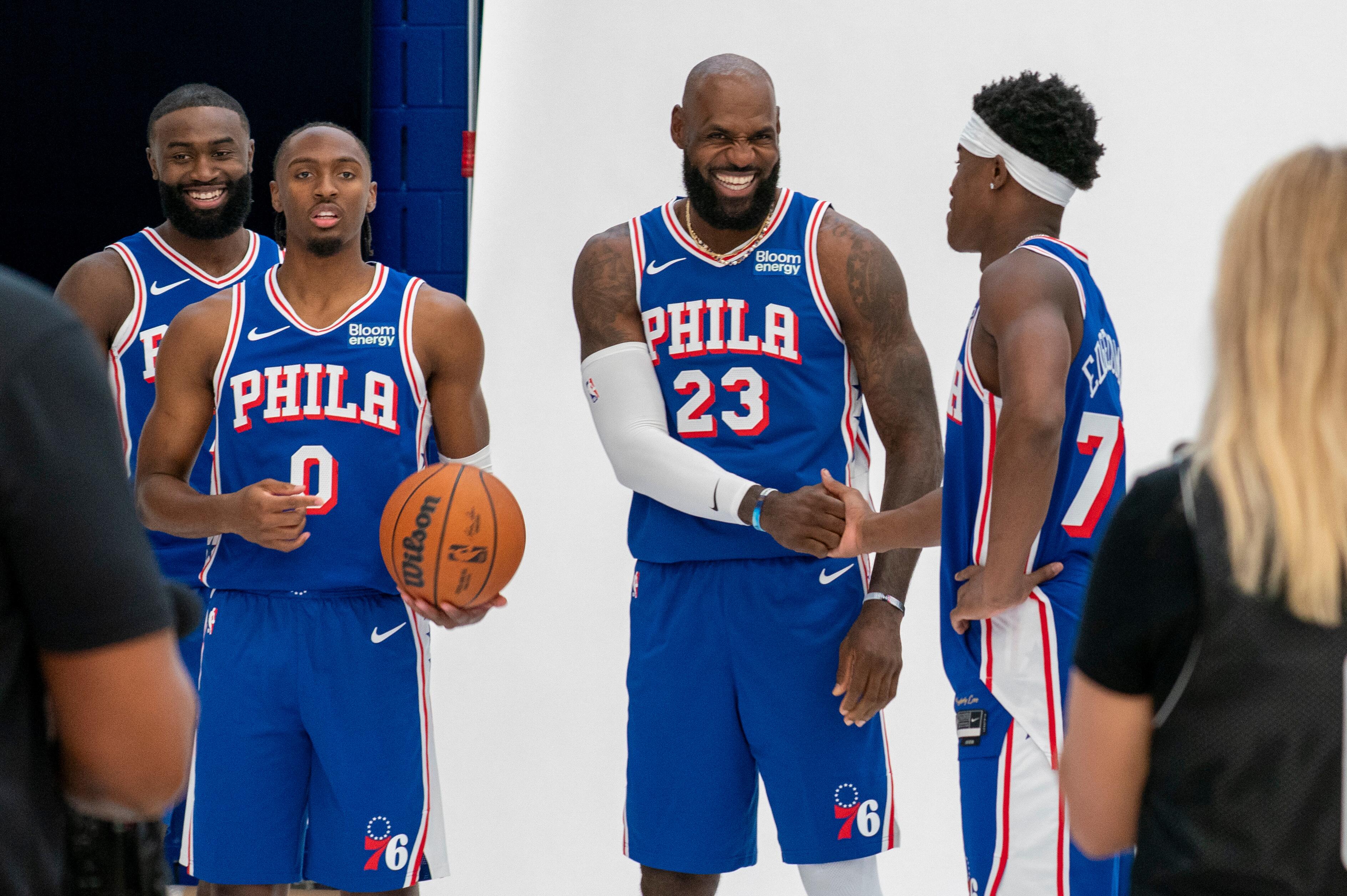
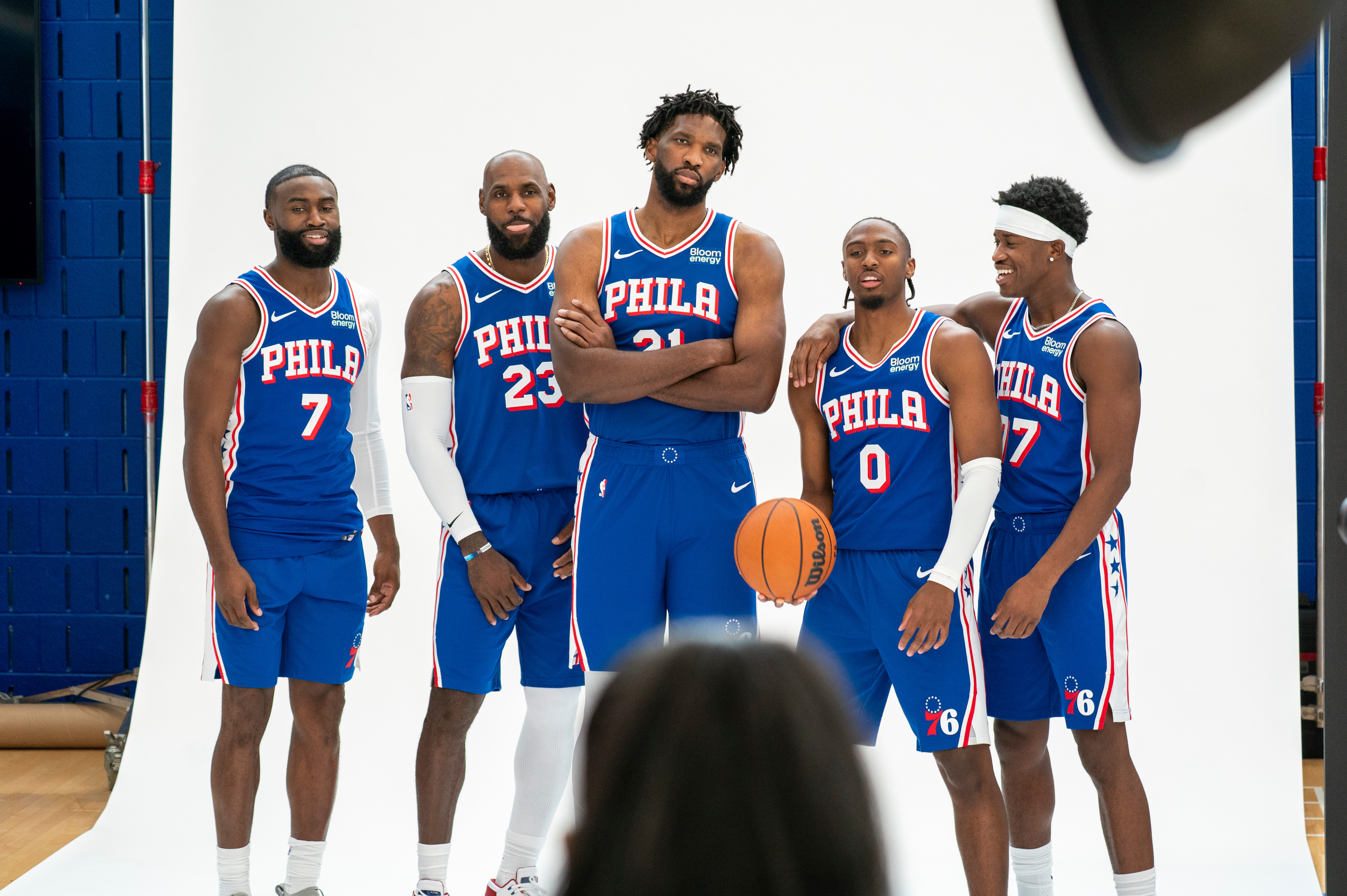
Philadelphia's ambitions make even the end of the roster worth watching. The team has assembled a high-profile group around Embiid, Maxey, LeBron James and Jaylen Brown, and its season will be judged by meaningful spring basketball rather than the excitement of media day. That creates a tension familiar to contenders: the stars attract attention, but the supporting combinations determine how often the stars can rest without a game slipping away.
The preseason offered a reminder of both sides of that equation. Embiid scored 27 points in the October 16 overtime loss to Boston, while Maxey added 22. LeBron contributed across the box score, with eight points, eight rebounds and seven assists. Those numbers do not predict a championship, but they illustrate how much creation Philadelphia can put on the floor. They also show why a reserve center's job should be uncomplicated. Set a firm screen, rebound, protect the restricted area and let the primary players control the possession.
Philadelphia begins the regular season against the New York Knicks on October 20. The opening matchup is a useful early examination of frontcourt depth, not a referendum on Fall. A team can win one game by leaning heavily on its best players; an 82-game season asks whether it can maintain defensive structure through foul trouble, rest nights and injuries. The Sixers will have to balance Embiid's workload with the reality that he is their most irreplaceable interior player.
Fall's connections around the organization may ease his adjustment. He spent time with Jaylen Brown in Boston and crossed paths with the Cleveland organization when current Sixers executive Mike Gansey was there. Familiarity is not a substitute for performance, but it can help a veteran understand his role quickly. The smartest version of this move does not require a highlight reel. It requires the team to know exactly when to use him, exactly what he can cover and when a smaller lineup is the better answer.

Signing Tacko Fall to a two-way deal is neither a miracle cure nor a meaningless publicity move. It is a low-commitment attempt to preserve a type of center the Sixers currently lack healthy options for. Hukporti's injury, Bona's foot recovery and Barlow's back issue explain the urgency; Fall's own hip strain explains why there is no instant solution.
For Philadelphia, the sensible benchmark is not whether Fall becomes a regular starter. It is whether he gets healthy, proves he can handle a defined defensive assignment and gives Nick Nurse another trustworthy answer when size matters. A contender with Embiid, Maxey, LeBron and Brown does not need its final two-way player to become a star. It needs the roster to hold together when the stars cannot do everything.