

Yankees Cut Luis Gil. Their 2027 Pitching Plan Just Got Ruthless.
GOATIFYA pitcher can go from the best rookie in the American League to being outside the Yankees' plans faster than a fan can finish celebrating the award. On November 20, New York declined to tender Luis Gil a contract, making its 2024 Rookie of the Year a free agent. The club also cut ties with reliever Fernando Cruz. These were not anonymous back-end roster edits: one player had recently looked like a foundation piece, while the other had supplied real strikeout power before an elbow injury changed the conversation.
The timing makes the decisions even sharper. New York is also pursuing a reported reunion with Jonathan Loáisiga, whose improved 2026 season in Arizona makes him a candidate for a significant bullpen role. That agreement was reported as pending a physical, not officially completed. Taken together, the moves reveal an organization choosing reliability, role clarity and near-term leverage over the sentimental value of a recent award or yesterday's best stuff.
Gil and Cruz could still recover and reward another club. New York is betting that the risk of waiting for that recovery is greater than the risk of watching it happen elsewhere. That is a meaningful decision about how the Yankees intend to construct their pitching staff for 2027.
From Rookie of the Year to non-tendered in two seasons

In 2024, Gil was more than a good story filling in for an injured rotation. Across 29 starts he produced 15 wins against seven losses, a 3.50 earned run average and 171 strikeouts. He was difficult to square up, challenged hitters with high-end velocity and gave the Yankees genuine value at a position where ordinary innings are expensive. The American League Rookie of the Year vote put him ahead of Baltimore's Colton Cowser, making Gil the first Yankees pitcher since Dave Righetti in 1981 to take that award. It was an achievement that naturally invited big expectations.
Those expectations are exactly what make Friday's roster decision feel so severe. A Rookie of the Year award documents what happened in a specific season; it does not guarantee a healthy arm, automatic command or a rotation seat two years later. New York has to make a fresh decision each offseason about the next version of the player rather than the most memorable previous version. Gil's peak showed what he could do. His interrupted 2025 and 2026 seasons made it harder to project how much of that pitcher remained available.
There is an important difference between admitting that Gil's projection has fallen and declaring that his career is over. A pitcher who has once shown the combination of fastball quality and swing-and-miss potential he displayed in 2024 will attract interest when available without a trade cost. Another team can reasonably look at his age and upside and decide that the chance of a rebound deserves a development slot. The Yankees simply reached a different conclusion about the value of that slot in their own environment.
The decision also reflects how quickly roster context changes. A rotation that desperately needs a young starter can afford a longer period of mechanical experiments and minor-league recovery work. A club that believes it already has significant pitching depth may have less room to carry a player whose ideal role is uncertain. New York general manager Brian Cashman's assessment of the situation emphasized the tension between developing Gil as a starter and determining whether he might help more in relief.
GOATIFY
GOATIFY Baseball
From rookie breakthrough to tough roster decisions, celebrate baseball's big moments with the GOATIFY MLB collection.

Gold Baseball GOAT Dad Hat
A gold baseball GOAT design for ballpark days and everyday fan style.
Shop Now ↗


White Baseball GOAT Sticker
A white baseball GOAT decal for your bottle, laptop or game-day gear.
Shop Now ↗That distinction matters because switching roles is not a magic repair. A pitcher accustomed to a starter's routine does not automatically regain his best fastball merely because he is scheduled for one or two innings. Relief could simplify his pitch mix and reduce exposure to opposing lineups, but it could also leave the team with a volatile pitcher who cannot enter games consistently when his location disappears. The change only works if health, delivery and strike-throwing improve together.
At the transaction deadline, management had to decide what it wanted to pay for and what opportunity it wanted to preserve. A tender would have kept Gil within the system but also meant occupying a roster place and paying for continued uncertainty. A non-tender turns him into a free agent and hands the organization more flexibility. That is ruthless in the narrow baseball sense, but the underlying calculation is not irrational just because the name once appeared on an awards ballot.
The emotional side is still legitimate. Fans remember the electric 2024 starts, and the rookie hardware offers a clean marker of how promising the career looked. The harder part is accepting that baseball teams are not primarily paid to reward past promise. They are paid to forecast the next set of outs. New York's action says its near-term forecast on Gil was too uncertain to justify preserving the existing arrangement.
Gil does not need to recover his entire 2024 form to make this look uncomfortable for the Yankees. Even a useful middle-of-the-rotation stretch or a credible relief conversion elsewhere would invite questions. But that future performance cannot be assumed in November 2026. The honest story is neither a certain failure by management nor a certain collapse by the player. It is a stark divergence between what Gil once proved and what the Yankees now believe they can rely on.
The injuries were damaging, but Gil's lost command was decisive
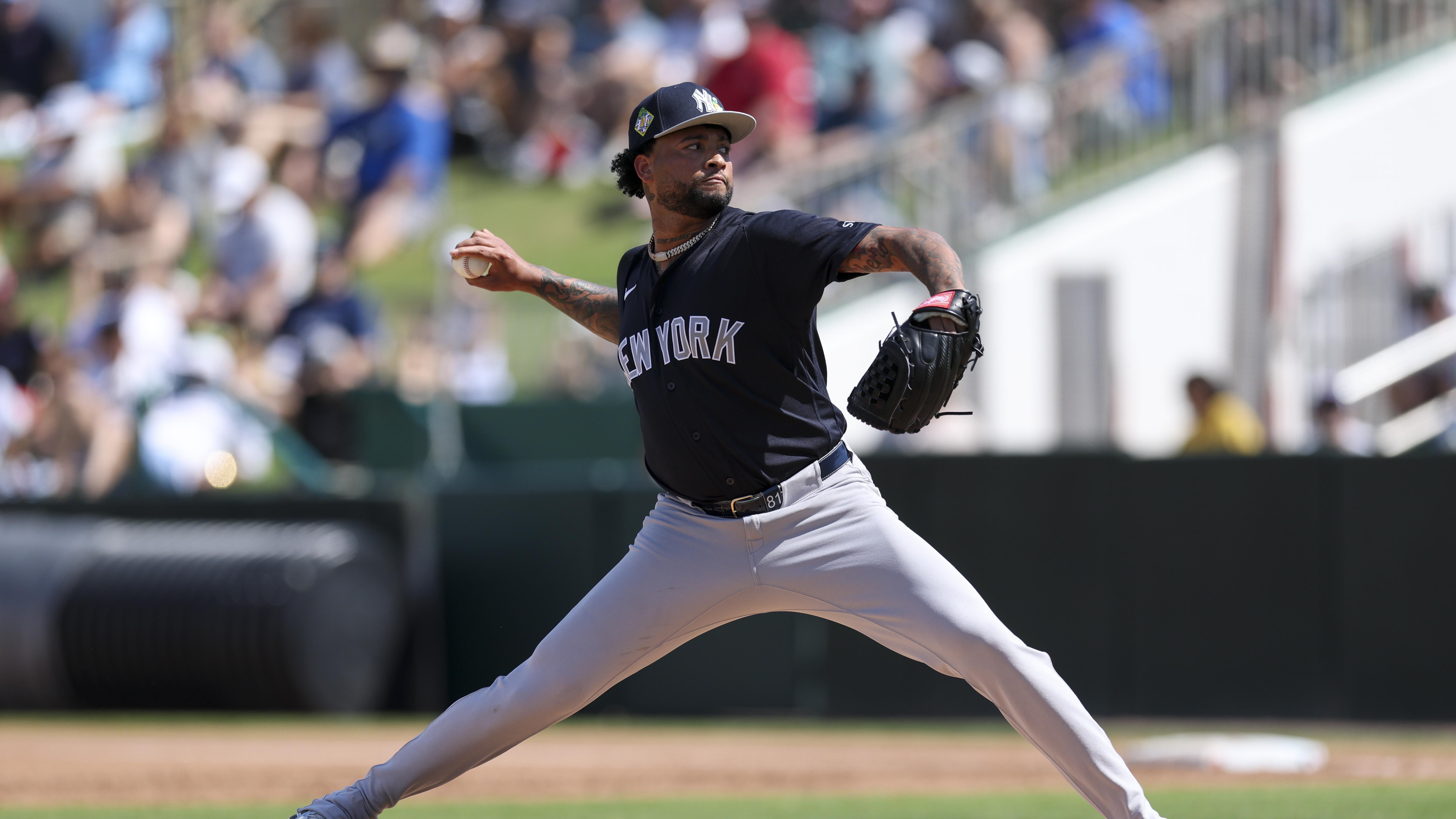
The roster announcement was the endpoint of two seasons in which Gil could barely establish an uninterrupted routine. A high-grade lat injury wiped out the first four months of his 2025 campaign. Right shoulder inflammation then took more than three months from his 2026 season. For a pitcher whose best version depends on an explosive delivery and the confidence to attack the zone, that absence is not just time missing from a schedule. It is time not spent repeating the same mechanics against major-league hitters.
The 2026 major-league line illustrates the problem without requiring dramatic adjectives. Gil appeared in nine games, starting four, and finished with a 4.61 ERA over 27 and one-third innings. More revealing than the ERA was the ratio of 18 walks to 17 strikeouts. He allowed 21 hits, but the alarming part for a pitcher once able to overpower his own traffic was the disappearance of the strikeout cushion. Walks become far more costly when the pitcher no longer ends at-bats at the same rate.
That line is drawn from a small sample, and small samples should never be converted into predictions with false certainty. Twenty-seven innings cannot establish that a formerly successful starter will never be useful again. Yet clubs are not judging box scores in isolation. They can compare the pitch movement, velocity, release consistency, recovery patterns and availability that the public sees only in fragments. When a pitcher has both recurring health interruptions and weaker present-day command, skepticism compounds.
Gil was demoted to Triple-A Scranton/Wilkes-Barre in April, then spent much of the season recovering. That sequence says as much about the absence of steady major-league performance as it does about any single disastrous outing. One encouraging start is difficult to build upon when the next month is dominated by treatment, rehab and questions about workload. Likewise, one relief appearance does not settle whether a pitcher can reset for multiple appearances in a week.
GOATIFY
GOATIFY Baseball
Pitching is a game of adjustments. Explore GOATIFY baseball shirts, stickers and fan gear while following Gil's next chapter.

White Baseball GOAT Dad Hat
A white baseball GOAT design for ballpark days and everyday fan style.
Shop Now ↗


White Baseball GOAT Sweatshirt
Rep baseball’s greatest with a white GOAT graphic sweatshirt.
Shop Now ↗
There is a tempting argument that moving Gil to the bullpen could have rescued his Yankees career. In theory, shorter outings allow a pitcher to lean more heavily on his best pitches and avoid facing a lineup three times. But reducing the number of innings does not fix misses outside the strike zone. If hitters can wait for a walk rather than fear a pitch over the plate, a relief role can become especially unforgiving because one late free pass may decide a game.
His Dominican Winter League assignment with Tigres del Licey is a relevant part of the story, but its outcome was not yet known when New York made the non-tender decision. Winter work can provide competitive repetitions, a chance to rebuild feel and evidence for interested clubs. It cannot retroactively erase the health and command issues the Yankees weighed at the deadline. If Gil looks sharper in that setting, he may increase his market; that is different from having already solved the problem.
New York's staff-depth argument also has limits. Teams frequently discover in May or July that the rotation depth they believed was secure in November has evaporated. Keeping a talented but uncertain pitcher can function as insurance. The Yankees evidently valued the alternative ways to use a roster place more highly, whether that means a different healthy arm, a defined bullpen fit or room for a player whose role is clearer from the outset.
The real evaluation of this decision will arrive over months rather than hours. Watch whether Gil is throwing consistent strikes, whether the fastball has regained the characteristics that made it special, and whether he can sustain health through a normal workload. A healthier Gil with better command would be attractive almost anywhere. A Gil who remains limited to occasional ineffective appearances would make New York's choice look prudent. The current evidence permits both possibilities, not a guaranteed ending.
Fernando Cruz shows the Yankees are cutting more than one kind of risk
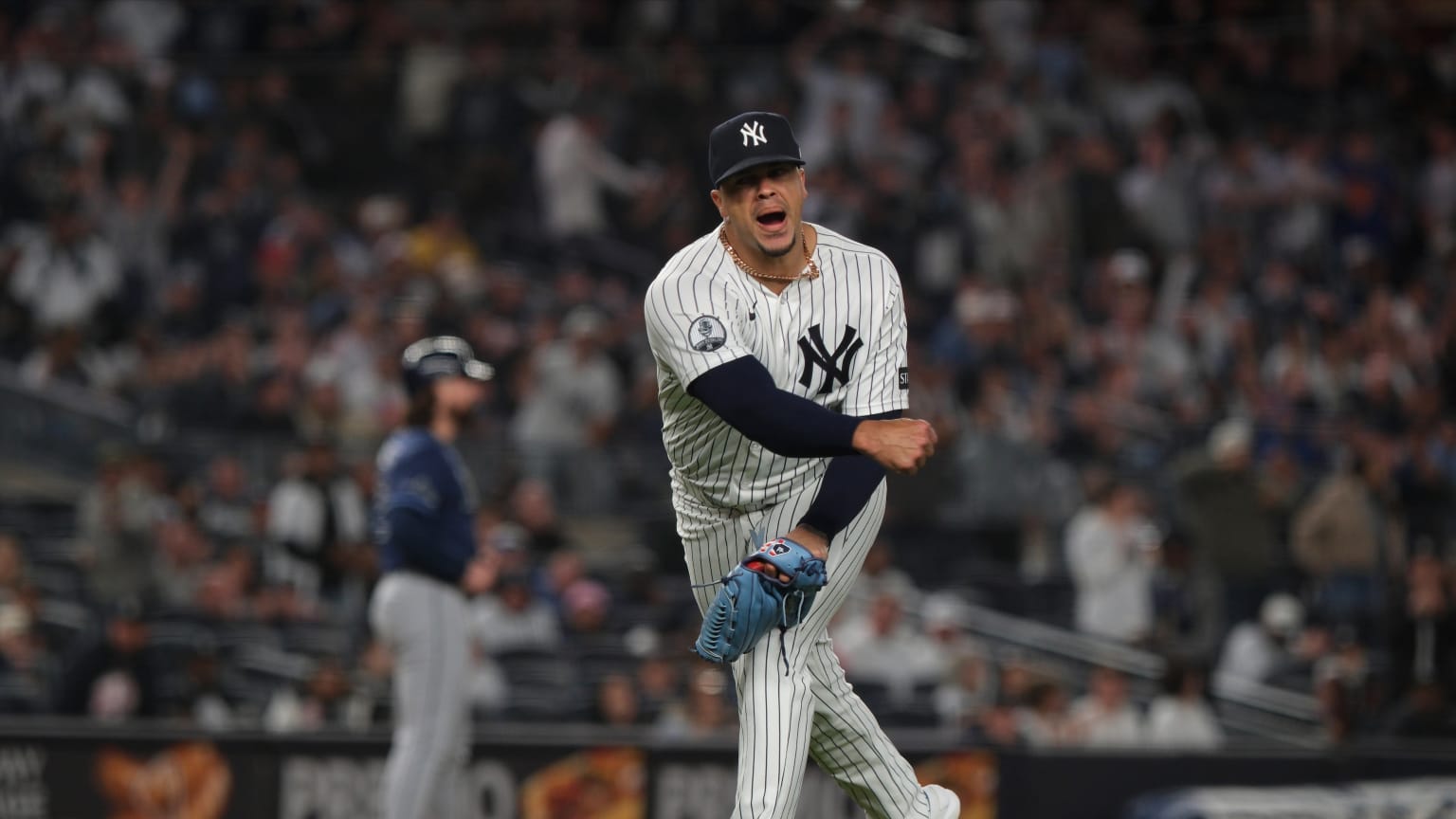
Cruz's departure could be easier to overlook because it lacks the Rookie of the Year headline. It should not be. The Yankees acquired him from Cincinnati after the 2024 season in a trade involving catcher José Trevino, looking for swing-and-miss power in the bullpen. Over 49 appearances in 2025, Cruz delivered a 3.56 ERA and struck out 72 hitters in 48 innings. That is the kind of strikeout volume every contender wants available in a close late-season game.
The problem, once again, is the relationship between impressive peak stuff and dependable future innings. Cruz suffered a partial tear of his right ulnar collateral ligament in late August 2026. He chose a nonsurgical rehabilitation route after consulting a specialist, and the expectation reported at the non-tender deadline was that he could pitch in 2027. An expectation is not a medical clearance, though, and a reliever's performance depends on more than being able to throw from a mound.
His overall 2026 ERA was 3.13 across 61 appearances, a respectable headline statistic that can obscure the deterioration visible later in the year. Cruz allowed five home runs across his final 13 and two-thirds innings, while command and velocity became concerns. Those details do not prove the elbow injury caused every poor pitch. They do suggest why a team making a forward-looking decision would look past the season total and ask what version of Cruz it could actually expect next spring.
GOATIFY
GOATIFY Baseball
The late innings can turn on one pitch. Browse GOATIFY baseball fan gear for every bullpen drama.


Gold Baseball GOAT Sticker
A gold baseball GOAT decal for your bottle, laptop or game-day gear.
Shop Now ↗

Gold Baseball GOAT Sweatshirt
Rep baseball’s greatest with a gold GOAT graphic sweatshirt.
Shop Now ↗There is a tradeoff in moving on. Healthy strikeout relievers are expensive to acquire, and the Yankees know Cruz could return to form and become a useful late-inning weapon for somebody else. The upside does not simply vanish when a player reaches free agency. But the downside is also tangible: carrying a pitcher with an uncertain elbow and an uneven recent finish can deprive a club of a roster place it might need for someone available from Opening Day.
A non-tender is not the same as a judgment that a pitcher has no talent. In Cruz's case, the Yankees have essentially separated the value of his past strikeouts from the probability of receiving the same production in the immediate future. A club with a less crowded relief picture might buy that risk cheaply. New York is positioning itself to use its resources on arms it believes can perform a specifically defined job, although that plan remains an assumption until the bullpen is fully assembled.
The contrast with Gil is instructive. Gil represented an uncertain starter-to-reliever conversion after prolonged absences; Cruz represented an established bullpen strikeout profile with a recovering ligament. Those are different development problems. Releasing both at the same deadline signals that the Yankees are not running a blanket policy against injured pitchers. They are deciding which type of uncertainty they will accept in each individual roster spot.
For fans, the obvious question is why a team with New York's resources cannot simply hold everyone who might recover. The answer is that the roster does not have unlimited places, and one potential rebound occupies the same practical space as another player who may be a better fit. Keeping every intriguing veteran and every once-dominant arm would crowd out the flexibility needed when spring surprises arrive. The front office is trading some upside lottery tickets for what it hopes will be cleaner options.
Cruz's next team will inherit both the attractive strikeout history and the medical questions, with no guarantee which element dominates. If he returns to the mound with his previous fastball life and splitter effectiveness, his non-tender will be widely revisited. If the rehab proves longer or his command remains unstable, the same transaction will seem mundane. For now, it is another example of the Yankees deciding that a potentially excellent pitch is not enough without a credible plan for the next season.
Loáisiga's Arizona reset explains the bet New York prefers
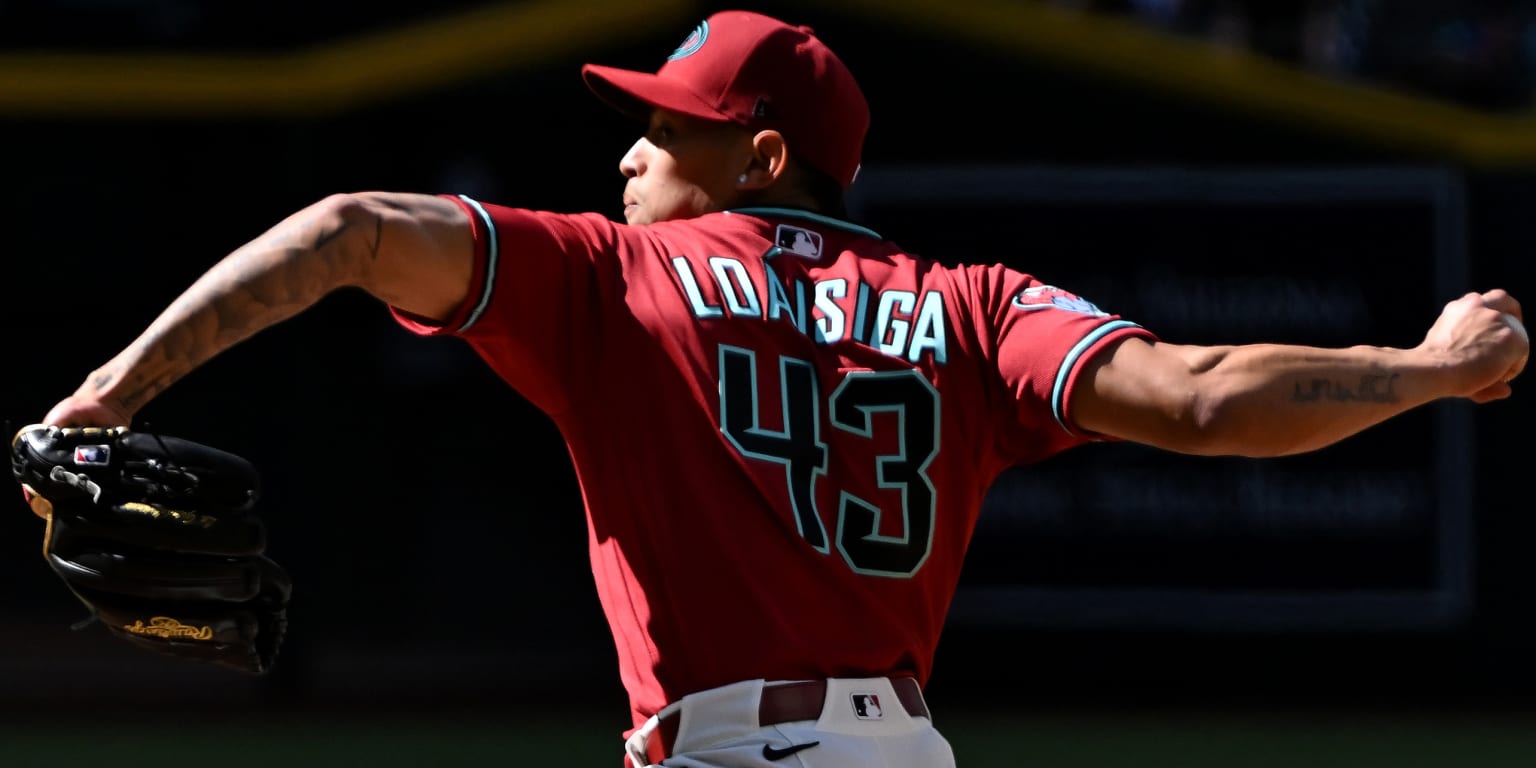
The most revealing companion story to the Gil and Cruz cuts is the Yankees' reported agreement to bring back Jonathan Loáisiga. A source described a roughly $18 million, two-year deal with a club option for 2029, but the club had not officially confirmed it as of November 20 and the arrangement was pending a physical. That distinction matters: it is reasonable to analyze why New York wants him, but premature to write as if every contractual and medical step is completed.
Loáisiga's 2026 work with Arizona gives the Yankees something more concrete to evaluate than nostalgia for his previous Bronx years. After moving to the Diamondbacks, the right-hander logged 67 appearances and 67 innings with a 2.42 ERA. The value was not built primarily on a wall of strikeouts. His strikeout rate was 18.4 percent, while his walk rate was only five percent and his ground-ball rate reached 55.8 percent. That profile is practically a mirror image of the specific command problem that undermined Gil.
A reliever who throws strikes and keeps the ball on the ground can stabilize the middle and late innings even when he is not striking out every batter. Ground balls reduce the frequency of damaging airborne contact, although defense, placement and ordinary batted-ball luck still matter. Loáisiga's average exit velocity allowed was 85.2 miles per hour, and his 3.5 percent barrel rate were additional indicators that hitters struggled to make the sort of contact that becomes a quick multi-run inning.
GOATIFY
GOATIFY Baseball
From the Bronx to Arizona and possibly back, baseball moves fast. Shop GOATIFY MLB fan styles for the 2027 season.

White Baseball GOAT Dad Hat
A white baseball GOAT design for ballpark days and everyday fan style.
Shop Now ↗White Baseball GOAT Sticker
A white baseball GOAT decal for your bottle, laptop or game-day gear.
Shop Now ↗White Baseball GOAT Sweatshirt
Rep baseball’s greatest with a white GOAT graphic sweatshirt.
Shop Now ↗His pitch mix also gives New York a particular tactical weapon. The combination of a hard sinker around 98 miles per hour and a changeup near 91 allows him to change the shape and speed of the ball without having to rely on four-seam fastball strikeouts. It is an approach built on contact management and location as much as pure power. That is not inherently superior to a wipeout strikeout reliever, but it is a different, more clearly demonstrated 2026 skill set.
The apparent reunion has its own risk. Loáisiga missed much of 2024 after surgery to repair his elbow ligament, and New York knows from its first experience with him that maintaining health has not always been simple. Acquiring him therefore cannot be described as a rejection of all medical uncertainty. The difference is that he just completed a substantial 2026 workload and returned a season's worth of recent evidence. Cashman and his staff may consider that more actionable than projecting Gil's strike-throwing recovery or Cruz's elbow rehab.
The club's other bullpen moves reinforce the priority. Closer David Bednar accepted a $23.15 million qualifying offer, while left-hander Tim Hill was reported to have agreed to a one-year, $2.25 million deal that likewise awaited formal announcement. Those figures should not be added up as if every contract has already cleared all conditions, but the direction is clear: New York is spending attention and resources on relief roles rather than simply preserving every arm that finished 2026 in the organization.
There is also a baseball strategy behind the contrast. A strong relief unit is not composed of six identical pitchers. One option might miss bats at a premium rate, another might neutralize left-handed hitters, and another might induce a ground ball with runners aboard. Loáisiga could help supply the latter profile if the agreement goes through and the Arizona version of his stuff carries over. That is a more defined purpose than hoping an injured starter recovers enough to become an unspecified bullpen option.
None of this guarantees that New York will be better in 2027. A healthy Gil somewhere else could outpitch several Yankees starters, and Cruz might revive the swing-and-miss ability that once made him attractive. Even Loáisiga's 2026 numbers cannot guarantee a repeat. But the combination of transactions reveals the front office's priorities with unusual clarity: recent availability, demonstrated strike throwing and a role the coaching staff can identify today have won the argument over the upside of yesterday.
The Gil non-tender will sting because the 2024 version was genuinely exciting. Cruz's departure matters because his strikeout ability was real, too. But a serious roster decision is not a referendum on whether those good seasons occurred. It is a wager on how much healthy, predictable work the Yankees can obtain in 2027.
The final outcome will be decided by what follows: Gil's ability to regain command, Cruz's elbow recovery, Loáisiga's physical and the performance of the arms New York ultimately keeps. There is still an offseason to navigate, and none of those unknowns should be reported as settled. The front office has nevertheless exposed its philosophy. The Yankees are willing to surrender recognizable names to reduce uncertainty, even knowing that the next team to benefit from a rebound might make this look painful.
That is what makes these two cuts such a consequential early test of the 2027 plan. New York has swapped the comfort of familiar potential for the pressure to prove its new choices are more reliable.
GOATIFY
GOATIFY Baseball
Shop GOATIFY baseball shirts, hoodies and stickers.
Gold Baseball GOAT Sticker
A gold baseball GOAT decal for your bottle, laptop or game-day gear.
Shop Now ↗White Baseball GOAT Dad Hat
A white baseball GOAT design for ballpark days and everyday fan style.
Shop Now ↗


















