

Alcaraz Escapes Khachanov in Vienna — His 37-Match Season Could Be the Advantage
GOATIFYCarlos Alcaraz returned to Vienna after five years and found that an opponent he had never lost to could still put him in real trouble. Karen Khachanov broke first, threatened to force a third set and survived three match points. Alcaraz nevertheless escaped 6-4, 7-6(5) in two hours and four minutes, making his first indoor assignment of the week much more revealing than a routine straight-sets win.
The result also arrives at a strange moment in his season. After a long injury absence, Alcaraz has played far fewer matches than at this stage last year. He needs competition to restore his timing, especially under a roof, yet the reduced workload might leave him with energy to spare for Paris and Turin. Vienna is where those two competing possibilities meet.
Khachanov broke first, but Alcaraz gradually changed the rallies
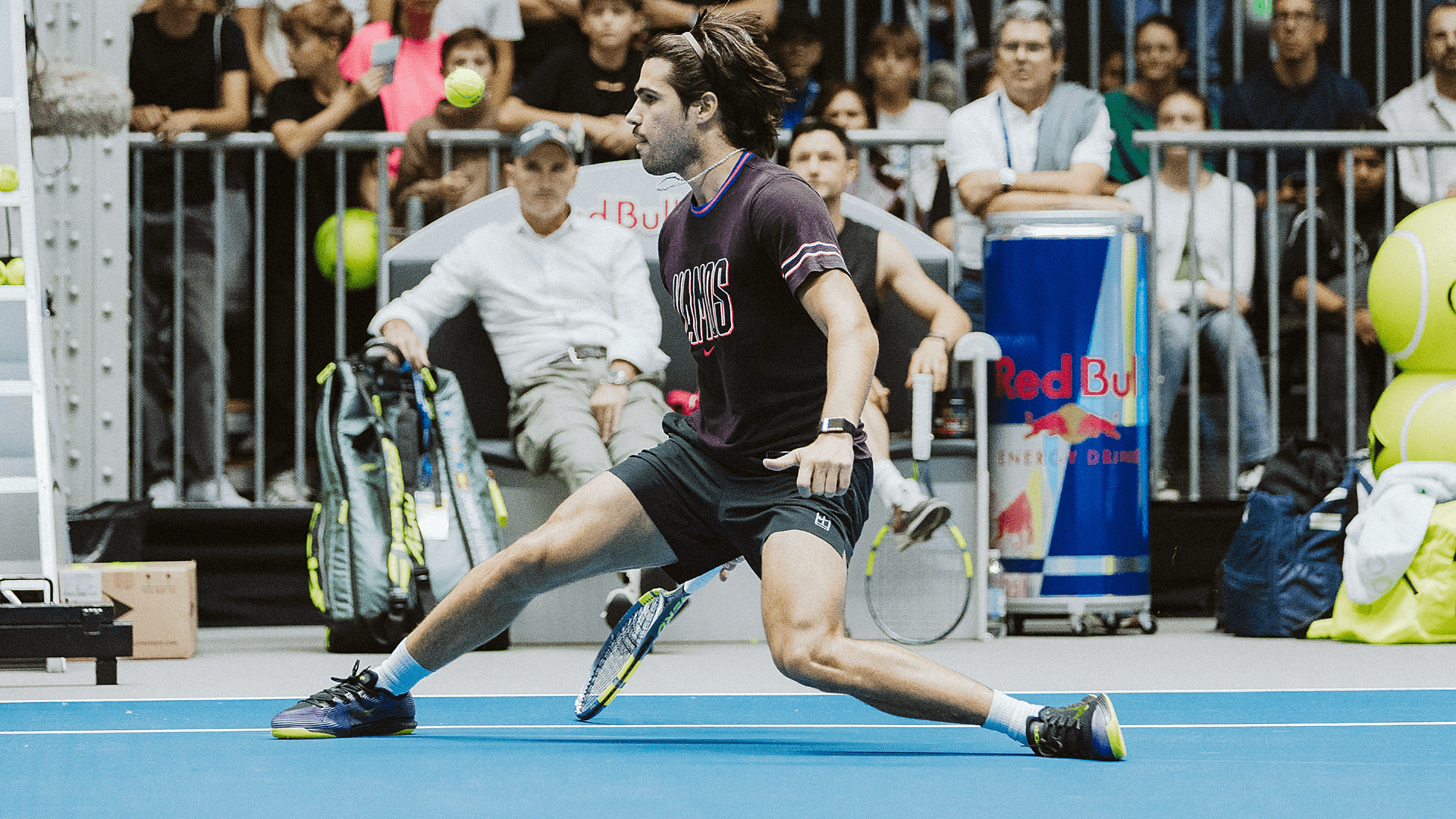
Khachanov's opening spell exposed the danger of facing a big, flat hitter on a quick indoor court. The Russian broke early and threatened to stretch his advantage, attacking before Alcaraz had fully adjusted to the pace. When the first strike arrives hard and deep, even an exceptional mover can spend too much time defending to dictate the rally.
Alcaraz's response was less about overwhelming power than about making Khachanov hit one extra difficult ball. He improved the depth of his returns, varied the direction of the exchanges and recovered the break to level at 3-3. That shift removed the Russian's freedom to serve from ahead without pressure. The first set stopped being a series of quick Khachanov attacks and became a contest of who could sustain quality through longer points.
At 5-4, Alcaraz found the decisive opening and broke to take the set. The important feature was the sequence, not merely the final game. He had started on the back foot, learned what was hurting him and gradually made the opponent's preferred pattern less reliable. That is a useful skill for a player returning to indoor tennis after months without regular competitive repetitions.
Alcaraz now owns a 7-0 head-to-head record against Khachanov. Seven wins do not mean seven comfortable afternoons. Khachanov's serve, reach and direct groundstrokes remain serious threats, particularly when the roof removes wind and other variables. What the record demonstrates is Alcaraz's ability to discover alternative routes when a straightforward baseline contest is not working. Vienna demanded that flexibility almost immediately.

Three match points vanished — then the tiebreak revealed his escape route

The second set was an even more valuable examination. Alcaraz missed earlier chances to break, then earned three match points on the Khachanov serve at 5-4. None became the finishing point. That sequence changed the emotional balance: a player who had been seconds from leaving the court was suddenly required to defend his own service game against an opponent with fresh belief.
Khachanov capitalized by breaking and moved ahead 6-5, with a chance to serve the set out. A less composed response from Alcaraz might have turned the disappointment of three missed match points into an extended collapse. Instead he broke straight back, refusing to let the previous game decide the next one. The immediate recovery mattered more than any single spectacular winner.
The tiebreak was a concentrated version of the whole match. Khachanov could still dictate when he landed his first strike, but Alcaraz was increasingly able to extend rallies and turn desperate retrievals into attacking opportunities. At 5-5 he produced a remarkable passing shot after a draining exchange, then completed the breaker 7-5. He avoided a third set, conserved energy and left with a victory that required genuine problem-solving.
There is a difference between flawless tennis and resilient tennis. Alcaraz acknowledged that he rushed some of the missed match points, taking on more risk than necessary. The encouraging sign was not that those errors never happened; it was that he could reset quickly enough to manufacture another opportunity. For someone rebuilding rhythm after an interrupted season, that ability can be as important as the cleanest possible serving percentage.
Vienna is a rehearsal for the indoor problem waiting in Paris and Turin
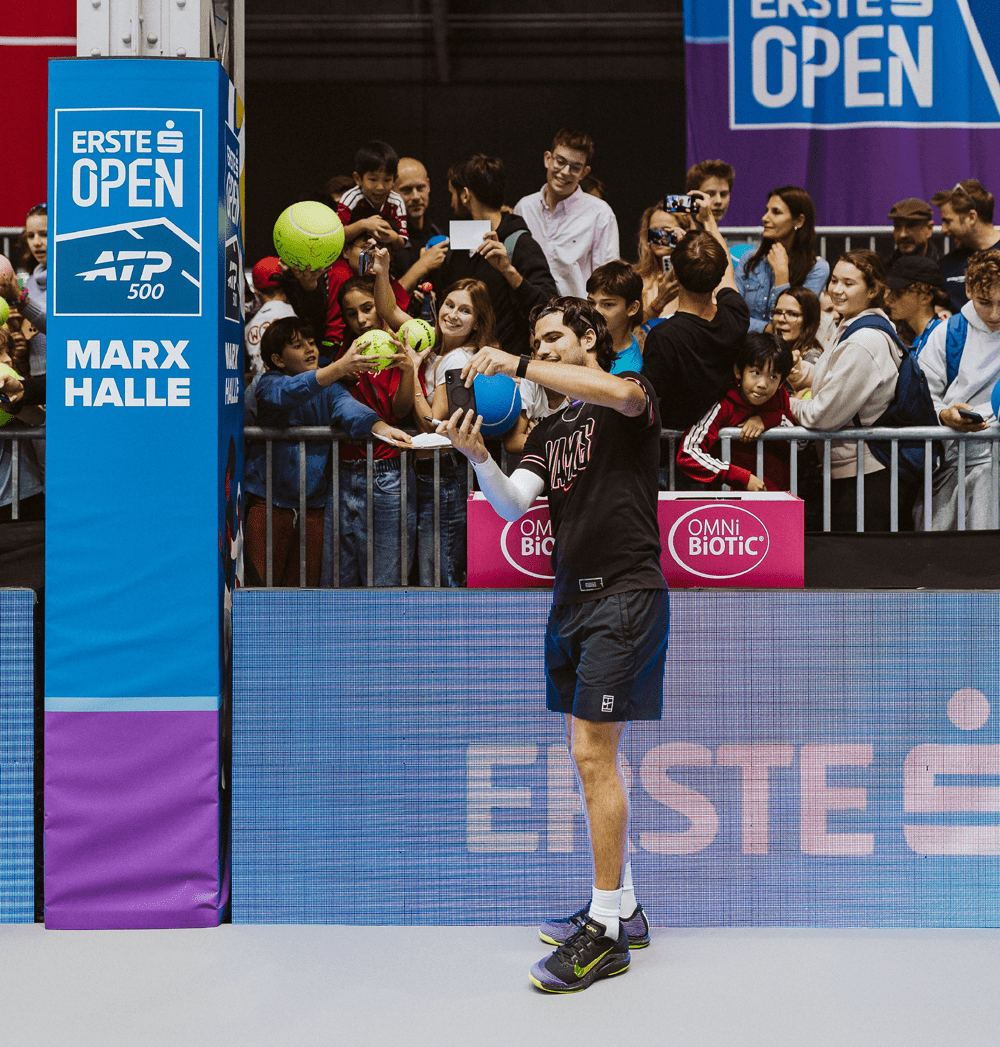
Alcaraz has conquered the biggest stages on clay, grass and outdoor hard courts. The indoor calendar has been less consistently rewarding. His Rotterdam title in 2025 proved he can win with a roof overhead, but Paris and the season-ending ATP Finals have not yet produced the same sustained dominance. Vienna gives him a valuable opportunity to practice those conditions against opponents trying to beat him, rather than training partners trying to help him.
Indoor tennis changes the calculations. There is no wind or sunlight to disturb the toss, and the bounce can feel lower and quicker. A powerful first strike becomes more difficult to neutralize, while a moment of hesitation can leave a player permanently behind in the rally. Alcaraz's variety is still a major advantage, but he has to find space for it before an opponent's flat ball has already taken the initiative away.
The postponement of the Six Kings Slam opened room in Alcaraz's schedule, and Vienna offered an unexpected route into the European indoor swing. He wants the competitive continuity before the Paris Masters, Turin and Spain's Davis Cup commitments. That makes the Khachanov victory useful without making it definitive. One strong tiebreak does not solve an entire surface problem, but it gives the team real match footage and decisions to review.
Alexander Zverev is another reason the week matters. The German is fighting for the year-end No. 1 ranking and has already won in Vienna, while Jannik Sinner's injury absence reshapes the field. Alcaraz does not have to win every indoor event to prove the season was a success. He does need to show that his returning game can hold up when specialists take time away. Tuesday was a promising beginning, not the final examination.

Thirty-seven matches instead of seventy-four: the injury-season paradox

The most unusual number attached to Alcaraz's return is not the scoreline. Before Vienna, he had played only 37 matches this season, compared with 74 at the same stage of 2025. The difference comes from a lengthy injury absence, not a deliberate plan to preserve energy. Nevertheless, it gives him a very different starting point for the final stretch of the calendar.
Fewer matches can mean less cumulative physical fatigue, but they can also mean less match sharpness. Tennis fitness is not simply the ability to sprint for two hours. It includes recognizing a pattern under pressure, trusting the body during an awkward recovery step and selecting the right shot without an extra moment of hesitation. Those instincts are developed through live competition. Tuesday's missed match points and late recovery were exactly the sort of experiences that cannot be reproduced perfectly in practice.
There is a balancing act ahead. Additional matches can restore his timing for Paris and Turin, yet a deep run also increases the workload on a body that has already lost months to injury. Skipping competition might protect him physically while leaving him short of the decision-making speed demanded by the best indoor opponents. The ideal outcome is enough high-quality tennis to make his reactions automatic, not simply the largest possible number of matches.
The ranking race adds a separate dimension. Zverev is pursuing points that could change the year-end No. 1 picture, whereas Alcaraz is trying to make his highest level repeatable again. Those objectives could meet later in the draw, but they are not identical. For Alcaraz, a successful Vienna would mean fewer uncertain service games, cleaner choices at match point and a game that no longer needs an emergency comeback to find its best form.
His next opponent will emerge from the meeting between Jurij Rodionov and Nikoloz Basilashvili. Neither should be treated as a ceremonial step toward the later rounds. The opening victory showed that even a 6-0 previous head-to-head advantage can lead to a tense match when timing and conditions are difficult. If Alcaraz can carry the patience of his first-set recovery into the next contest, the benefits may last well beyond Austria.
Alcaraz survived Khachanov because he kept finding another way into the contest: recovering an early break, answering a late setback and raising his level in the tiebreak. That is encouraging, even if the three missed match points showed how much work remains.
His lighter workload could become a genuine advantage, but only if he can convert physical freshness into repeatable indoor timing. Vienna has given him a win and a detailed list of things to sharpen. The next round will show whether this was merely a successful escape or the beginning of a stronger finish to 2026.
Shop GOATIFY tennis products from the Tennis-filtered collection scope.

















