

Bohm Met Both New York Teams. The Mets' First-Base Hole Is the Real Story.
GOATIFYAlec Bohm is getting the kind of free-agent attention that naturally turns a quiet November meeting into a New York rivalry. Both the Yankees and Mets reportedly met with the former Phillies infielder during last week's general managers' meetings. The news is real, but it is not a signing announcement, and there is no confirmed offer or agreement to compare yet.
The more useful question is what either club would actually do with him. The Mets got a miserable .667 OPS from first base in 2026, third worst in the majors. The Yankees got a .629 OPS from third base, ranking 26th. Both have a corner-infield weakness, but Bohm's defensive record and his promising late-season move across the diamond make those vacancies dramatically different opportunities.
Bohm finished the year with a .698 OPS and 15 homers, yet his OPS after moving to first base on August 4 reached .821. That contrast is the central complication of his market. Here is why the Mets may have the larger need, the Yankees may have the narrower fit, and neither should sign him as though the best few weeks of his season were the entire season.
Two New York meetings create a market, not a done deal
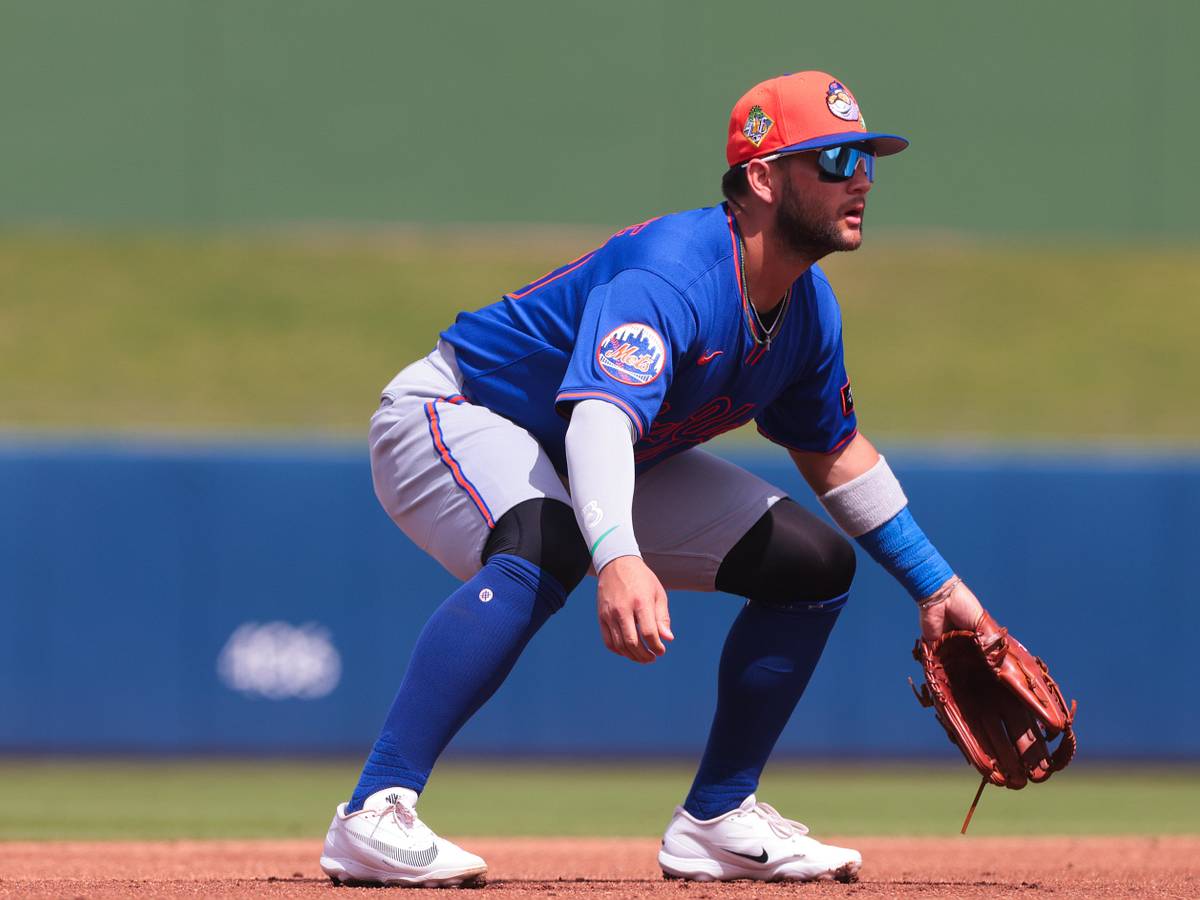
Two conversations in Las Vegas have turned Alec Bohm into the newest character in New York's winter baseball argument. The reported meetings with both the Yankees and Mets give the 30-year-old corner infielder a useful negotiating position, but they do not mean an agreement exists with either club. There is no announced contract, confirmed offer or public timetable. The actual news is simpler: two rivals have examined the same free agent, and their reasons for doing so are not the same.
The Yankees' interest had surfaced earlier in November, so the important development in the November 16 report is the fuller picture of both New York clubs meeting with Bohm during the general managers' gathering. A meeting is an evaluation step. Clubs explore playing time, defensive fit, willingness to move positions and financial expectations long before they are prepared to commit. Agents benefit when multiple teams see a legitimate use for a player. That is an ordinary part of free agency, not evidence that anyone has started a spectacular bidding contest.
Bohm's appeal begins with something straightforward: he puts the bat on the ball, hits from the right side and has started games at both infield corners. He was an All-Star in 2024, and his long history of making contact offers something different from a lineup built around the three-true-outcome style of home runs, walks and strikeouts. That does not make him a perfect fit. His 2026 season was uneven, and his defensive work at third base creates genuine constraints for teams that cannot afford to donate extra outs.
The first question for either club should therefore be where Bohm actually stands on a defensive lineup card. A front office that imagines him as an everyday third baseman is buying a different risk profile from one that imagines him spending most of his time at first, with occasional shifts across the diamond. Those roles have different offensive standards, too. A first baseman generally has to deliver more damage with his bat to justify a regular spot; a third baseman can create extra value with superior defense. Bohm's 2026 evidence makes both calculations complicated.
There is also the matter of the teams' current commitments. New York is not selecting from a blank roster. The Mets have players and money already invested in their corner-infield and designated-hitter options. The Yankees have a veteran left-handed third baseman and other potential first-base bats. A useful Bohm contract must make those pieces fit rather than pretend they do not exist. If his price rises to the point where he must start every day regardless of performance, the supposed flexibility disappears.
GOATIFY
GOATIFY Baseball
Alec Bohm has two New York suitors, and fans have plenty to debate. Explore GOATIFY baseball shirts, caps and stickers for the Hot Stove season.

White Baseball GOAT Sticker
A white baseball GOAT decal for your bottle, laptop or game-day gear.
Shop Now ↗

White Baseball GOAT Dad Hat
A white baseball GOAT design for ballpark days and everyday fan style.
Shop Now ↗
White Baseball GOAT Sweatshirt
Rep baseball’s greatest with a white GOAT graphic sweatshirt.
Shop Now ↗

That is why the smartest interpretation of the meetings is neither an imminent signing nor a meaningless rumor. They are an opportunity to compare three separate possibilities: an everyday first baseman for the Mets, a complementary third-base bat for the Yankees, or a shorter prove-it opportunity elsewhere. The winner will not necessarily be the club that sounds most excited in November. It will be the one that defines his job before putting a number on the contract.
The Mets' first-base hole is real; Bohm would not fix it automatically
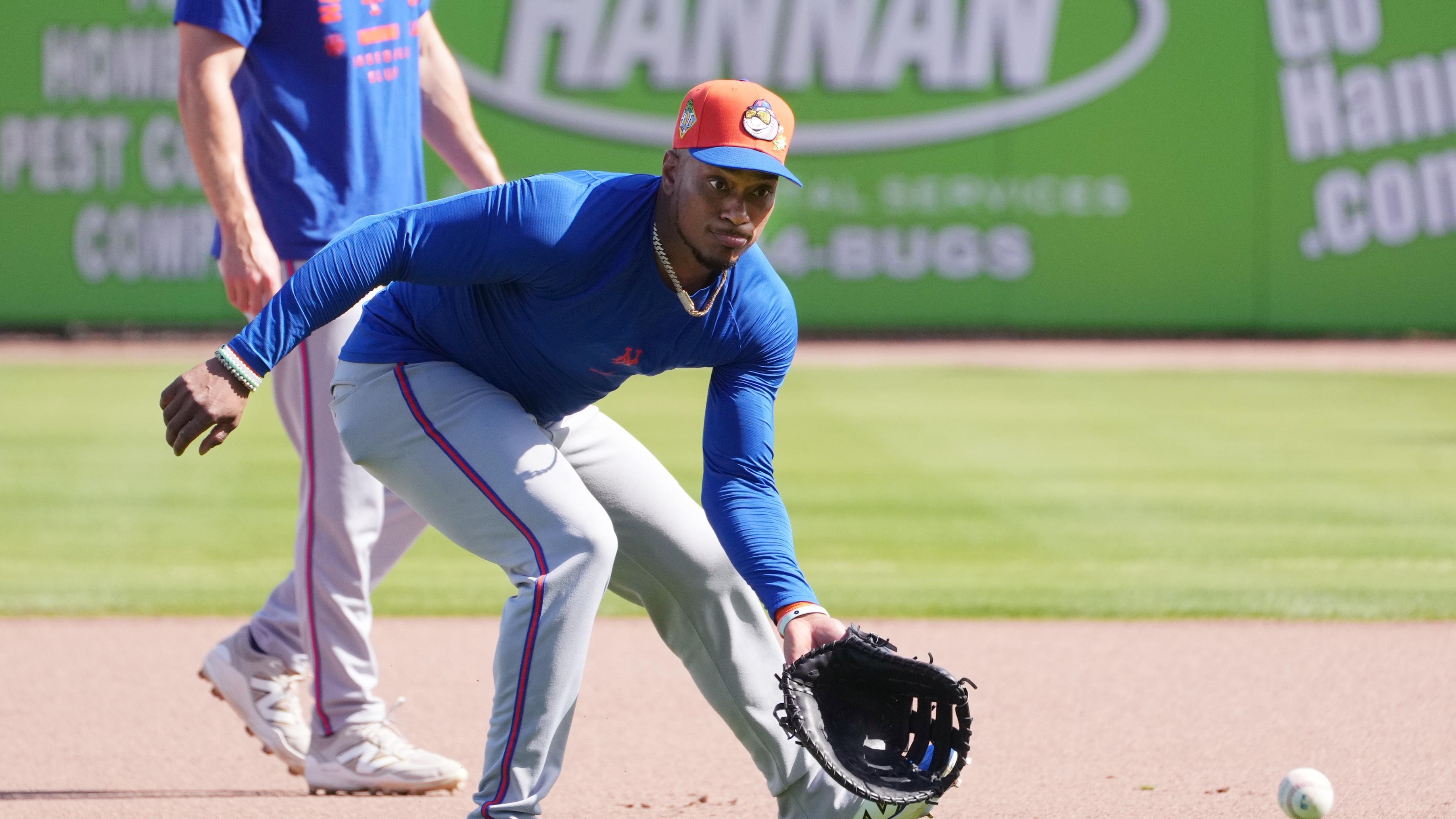
For the Mets, Bohm's usefulness is easy to identify because the position itself was such a problem. New York received a .667 OPS from first base in 2026, the third-worst figure in Major League Baseball according to the November 16 league report. That is not a small disadvantage at a position traditionally counted on for offense. When a club gets little production from a corner that should supply power and run creation, its entire batting order has to work harder.
The club already knows the danger of treating a positional conversion as a guaranteed solution. Jorge Polanco arrived with a two-year, $40 million contract and the expectation that he could help replace Pete Alonso at first base. Instead, the transition never had a sustained chance to succeed. Wrist problems and a troublesome Achilles disrupted his season; after a brief return, ankle issues ended his year. Polanco finished with a .431 OPS in 37 games in 2026, and he was not a stable first-base solution. The lesson is not that moving an infielder across the diamond never works. It is that a plan dependent on a new position and normal health can unravel quickly.
Bohm gives the Mets a more convincing starting point in one particular respect: he has already made a first-base switch at the major-league level, and the results in the late portion of 2026 were encouraging. His OPS after an August 4 move was .821, compared with .698 over the full season. Even with those improvements, it would be a mistake to project an .821 OPS over 162 games by treating a relatively short split as a guaranteed new baseline. A smaller run of games can be influenced by pitching matchups, health, confidence and simple variation.
A club trying to understand Bohm's true talent has to combine his late-season improvement with the entire history. His full 2026 line was .249/.315/.383 with 15 home runs and 88 runs batted in across 155 games. That is useful contact production with some run-producing volume, not automatic middle-of-the-order power. The Mets would need to ask how much of the late surge represented a durable change in approach, and how much was a hot spell that happened to coincide with the move to first.
The Mets also have Bo Bichette's 2027 contract decision to account for. Bichette opted into his player option, leaving another established bat and defensive position to integrate. That makes Bohm's ability to move between the corners potentially attractive, but having options is only useful if a team can protect its defense without taking offense out of the lineup elsewhere. Sliding Bohm from first to third on some days could introduce the exact fielding risk New York is trying to reduce.
The strongest Mets argument is therefore conditional. Sign Bohm as a first baseman whose contact ability can stabilize a depleted position, but do it at a price that recognizes his limited power relative to the best first-base bats. Build in alternatives for days when his swing is not producing. Most importantly, avoid treating him as the single transaction that repairs an offense that struggled for an entire season. The Mets need improvement at first. They still have to prove Bohm is a meaningful upgrade rather than merely the next name asked to solve the same problem.
The Yankees have an obvious platoon idea—and an equally obvious defensive problem
The Yankees have a cleaner theoretical use for Bohm but perhaps a tougher practical roster calculation. Third base produced a .629 OPS for New York in 2026, ranking 26th in the majors. That is an obvious place to pursue more offense. Ryan McMahon, a left-handed hitter, could share the job with the right-handed Bohm, allowing the Yankees to choose matchups instead of demanding that either man solve every kind of pitcher.
GOATIFY
GOATIFY Baseball
New York's first-base puzzle is at the center of this story. Browse GOATIFY baseball-inspired gear for fans who follow roster moves all winter.


Gold Baseball GOAT Dad Hat
A gold baseball GOAT design for ballpark days and everyday fan style.
Shop Now ↗


Gold Baseball GOAT Sweatshirt
Rep baseball’s greatest with a gold GOAT graphic sweatshirt.
Shop Now ↗Bohm's career .853 OPS against left-handed pitching gives that idea some substance. A player with a history of handling southpaws can change the balance of a roster whose incumbent third baseman swings from the left side. He would not need to be treated as an everyday superstar to make a meaningful contribution. The Yankees could use him against tough lefties, spot him at first base when appropriate and give their manager a contact-oriented alternative in specific innings.
But a platoon is not a magic word that erases defensive limitations. Bohm recorded a career-worst minus-nine Fielding Run Value at third base in 2026, and his career defensive grades at the hot corner have generally fallen below average. New York can tolerate a defensive trade-off when a bat is clearly upgrading the offense. It becomes harder to rationalize if the offensive advantage is marginal, or if a late-inning replacement means carrying another player specifically to finish games at third.
McMahon is not a free player to move aside, either. The veteran is due $16 million for 2027 under the final year of his existing contract. Since joining the Yankees in 2025, his offense has disappointed, with a .638 OPS in the period cited by the team's November free-agent coverage. A team already paying him has to ask whether another significant salary for the same position represents an efficient use of its offseason budget. Two imperfect players can form a useful platoon, but they can also become an expensive arrangement that lacks one definitive everyday answer.
The first-base option offers some additional flexibility. The Yankees have Ben Rice and Luis García Jr. in that part of the roster picture, so they cannot simply promise Bohm an open job across the diamond. That crowded path is important when evaluating the reported meetings. A shorter deal with a clear expectation of matchup-based playing time could be sensible. A contract priced as if Bohm were guaranteed to play 150 games at one corner would be much harder to justify.
There is a useful upside case for the Yankees. Put Bohm into lineups when his contact profile and right-handed bat offer a meaningful advantage, avoid his most difficult defensive matchups when possible, and get a more balanced offense from a position that gave New York little in 2026. There is also a recognizable downside: another corner infielder without enough extra-base damage to compensate for his glove, competing for at-bats with players already on the payroll.
In that sense, the Yankees' interest may be the most persuasive argument for Bohm's versatility and the least persuasive argument for giving him a long, everyday contract. If he signs to be a platoon and depth solution, the club might buy a real improvement. If the signing requires treating him as a permanent full-time third baseman, the Yankees may be paying twice to avoid confronting the same positional weakness.
His second-half recovery deserves credit. It cannot set the whole contract.

A free-agent market can be distorted by the moment a player enters it. Bohm's most recent stretch looked better than his season as a whole, and his move to first base offered a tidy explanation. He had a .821 OPS after the August 4 switch, while finishing 2026 with a .698 overall mark. Both numbers are real. Neither should be used alone to answer what kind of player the Mets or Yankees are buying for 2027.
The full campaign tells the buyer to be selective. Bohm hit .249, recorded 15 home runs and drove in 88 runs in 155 games. Those 88 RBIs matter because they show he repeatedly finished opportunities, but the figure also depends on teammates reaching base in front of him. For evaluating a new contract, a front office should care more about the repeatable components of his own hitting: contact, swing decisions, hard contact, extra-base power and how the approach plays against different pitch types.
GOATIFY
GOATIFY Baseball
A Yankees platoon could make every matchup matter. Discover GOATIFY Baseball fan apparel, caps and stickers for the next game day.


White Baseball GOAT Dad Hat
A white baseball GOAT design for ballpark days and everyday fan style.
Shop Now ↗White Baseball GOAT Sticker
A white baseball GOAT decal for your bottle, laptop or game-day gear.
Shop Now ↗There are positive indicators inside that profile. Over his career Bohm has struck out far less frequently than the typical big leaguer. That can protect an offense in an era when putting a ball in play is a genuine skill. He can be particularly interesting against left-handed pitching, and his history as a former high draft choice who became an All-Star gives clubs reason to believe he can handle a substantial role. The concern is that contact without enough walks or extra-base damage may not provide the offensive ceiling required from a first baseman.
The late surge therefore should trigger a question, not end the discussion. Did a different defensive assignment help Bohm arrive at the plate with a cleaner routine? Did he change his swing decisions or improve his contact quality after the difficult beginning of the season? Was the stretch supported by better underlying performance, or by balls finding grass and a friendly sequence of opponents? Those are questions for the data and scouting departments. The public OPS split is a useful clue, not a complete answer.
Philadelphia's decision not to attach a qualifying offer matters to the economics. The Phillies declined to offer Bohm the one-year $23.15 million qualifying offer when he reached free agency. That means a signing club would not incur draft-pick compensation tied to that particular qualifying-offer process, which lowers one barrier to adding him. But the absence of a draft penalty does not turn a marginal baseball fit into a good one. It simply removes one piece of the transaction cost.
A short, clearly defined deal might create a favorable arrangement for both sides. Bohm could demonstrate that his late-2026 improvement survives an entire season, while a club limits its exposure if the defensive problems or middling power continue. A longer commitment would require firmer conviction that the improved first-base version is sustainable. Reports of a possible one-year arrangement have circulated, but no signed terms are known, and the Yankees' and Mets' conversations should not be represented as negotiations that have reached that point.
For Bohm, the crucial choice is not merely which New York cap would produce the larger headline. It is where he can secure a coherent role without being set up to fail at a position that magnifies his weaknesses. The Mets offer a more pressing offensive hole at first. The Yankees offer a more specific platoon path at third. Both ideas have conditions, and neither guarantees a regular job. The smarter club will write those conditions into its evaluation before fans start imagining a finished lineup.
The next meaningful news will be a confirmed offer, a clearer indication of whether Bohm is being recruited mainly for first or third, or an actual deal. Until then, the balance of fit slightly favors the Mets' need at first base, while the Yankees' interest makes sense as a narrower matchup play. That difference is what the November meetings tell us. They do not tell us that a decision has been made.
The Yankees and Mets are interested in the same player for different reasons. For New York's National League club, Bohm is a possible answer to a first-base position that struggled all season. For the American League club, he is a potential right-handed complement to Ryan McMahon, with a third-base glove that makes unlimited playing time difficult to promise. Neither idea is unreasonable. Neither is a guarantee.
Bohm's most encouraging offensive stretch deserves a closer look, but so do his .698 full-season OPS and defensive concerns. The next decisive development will be an actual offer, a defined role or a signed agreement, not another round of speculation. Until then, the Mets' need appears broader while the Yankees' path is more conditional. That is a useful distinction—and a more important one than which team met him first.
GOATIFY
GOATIFY Baseball
Shop GOATIFY baseball shirts, hoodies and stickers.


Gold Baseball GOAT Sticker
A gold baseball GOAT decal for your bottle, laptop or game-day gear.
Shop Now ↗
White Baseball GOAT Sweatshirt
Rep baseball’s greatest with a white GOAT graphic sweatshirt.
Shop Now ↗


















