

Cadillac Has Two Drivers and One 2027 Decision. Herta Just Made It Harder.
GOATIFYFormula 1's 2027 driver market looks nearly finished, but the last unconfirmed signatures are hiding two very different decisions. Haas is expected to keep Oliver Bearman while sorting the details of his future. Cadillac, meanwhile, has a proven Grand Prix winner in Valtteri Bottas and a potential American replacement in Colton Herta, who has just cleared the final licensing hurdle for an F1 race seat.
That distinction matters. A driver being eligible to compete is not the same as a team choosing him. Herta's newly secured Super Licence expands Cadillac's options; it does not announce a promotion. With Sergio Perez already tied to the project through at least 2029, the identity of his 2027 team-mate has become one of the few genuine uncertainties left on the grid. And as the available seats narrow, Esteban Ocon is discovering how little room there is for an experienced winner without a contract.
Bearman's Haas seat looks secure. The fine print is the story.
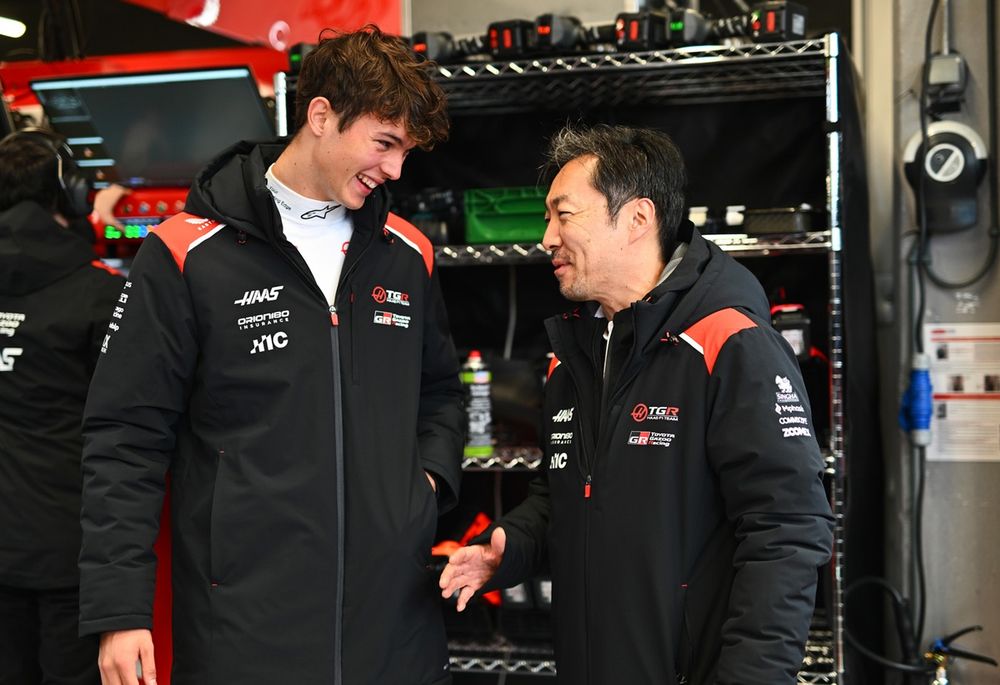
The straightforward version of the Haas situation is that Oliver Bearman should remain in the car in 2027. Both sides have reasons to continue. Haas gets a young driver whose racecraft and qualifying performances have progressed during his second full campaign, and Bearman gets a familiar environment in which to develop rather than restarting his adaptation somewhere else. The 21-year-old sits 13th in the current drivers' standings on 23 points, a result that offers a snapshot of a season in which individual pace and the team's machinery have not always translated into the same finishing position.
But the absence of an announcement does not necessarily signal a contest for the seat. The harder negotiations concern what sort of commitment Bearman makes. Ferrari has invested in him as a junior and remains central to his career planning; Haas team principal Ayao Komatsu has a team to build; and Ferrari boss Fred Vasseur must balance the development of a promising prospect with the reality of an occupied senior line-up. A 2027 arrangement that provides continuity while protecting future opportunities is more complicated than a simple one-year signature.
Lewis Hamilton's place in that equation is unavoidable. A Ferrari seat is not vacant just because an academy graduate is advancing. If Hamilton continues delivering and Ferrari has no appetite for a line-up change, a quick promotion for Bearman becomes less likely. Equally, waiting indefinitely for an opening would be a poor strategy for a driver trying to demonstrate he belongs near the front of the sport. The interests of driver, development partner and current employer overlap, but they are not identical.
Haas has a strong argument for keeping that relationship stable. Changing both the shape of a technical project and a promising young driver's environment at once would impose needless risk. Bearman has already learned how to communicate the car's limitations, manage a midfield race and exploit the opportunities that appear when faster machinery runs into trouble. Those habits become especially valuable over consecutive seasons, when feedback can be compared against an evolving car instead of starting from zero each winter.
For Bearman, staying is not a concession or an admission that Ferrari is out of reach. It can be a practical investment in more track time and greater responsibility. The contract question is whether that investment still leaves him room to act if an unexpected opening emerges. If Haas and Ferrari reconcile those interests, this remaining slot should close without much drama. The drama is happening elsewhere.
GOATIFY
GOATIFY Formula 1
Bearman's growing confidence comes down to finding the limits of a car and its tyres. Explore GOATIFY Formula 1 race-day apparel and tyre-inspired fan designs.


Cadillac's real dilemma: Bottas now, or Herta for the future?
Cadillac cannot settle its second seat with a straightforward paperwork exercise. When Valtteri Bottas and Sergio Perez joined the new entrant for 2026, both signed multi-year agreements that included options governing a second season. Perez's status has since been resolved: his extension keeps him with the American operation until at least the end of 2029. Bottas has not received a corresponding public confirmation for 2027, leaving the team to decide whether to exercise its option or change direction.
Bottas has a compelling case beyond the ten Grand Prix victories on his record. Cadillac is still learning the demands of a full Formula 1 season: the engineering processes, the operational routines, the reaction to a difficult Friday and the problem of making meaningful progress when the car is not yet fighting near the front. A driver who has raced for title-winning Mercedes teams can recognise which weaknesses are structural and which belong to a particular setup. That knowledge is especially useful alongside Perez, another veteran returning to the grid after a spell away.
There are limitations to the argument for continuity. Experience only helps if the team can translate it into performance, and management still has to evaluate Bottas on his current contribution rather than on a résumé from another era. Mechanical difficulties and retirements can distort an individual driver's results, so a simple points comparison does not tell the whole story. The better assessment includes qualifying execution, consistency, development feedback and how efficiently the driver works with the people building the car. Cadillac team CEO Dan Towriss has publicly left open the possibility of Bottas staying, rather than depicting his exit as inevitable.
Colton Herta changes the equation because he is no longer blocked by the licence requirement that previously complicated the conversation. At the São Paulo Grand Prix, the 26-year-old's sixth Friday practice outing of the season provided the remaining mileage and the final point needed to reach the 40-point FIA Super Licence threshold. That is a meaningful administrative and sporting breakthrough: Cadillac can now seriously consider putting an American driver in its race car without wondering whether the permission will arrive in time.
It does not, however, erase every performance question. Herta's 2026 Formula 2 campaign has been difficult, with the driver 19th in the standings at the time of this decision. His past IndyCar achievements and F1 practice experience matter, but they are evidence from different settings. F2 requires a distinct driving and tyre-management approach, and an occasional FP1 run offers only a narrow window to judge a driver against full-time competitors with established race-weekend rhythm. Cadillac must decide whether the potential upside justifies learning on the job during an already demanding phase for the organisation.
There is also a powerful strategic attraction to Herta. An American team entering Formula 1 with an American race driver would be a visible statement to fans, sponsors and the wider domestic motorsport audience. Yet a commercial narrative cannot replace the sporting case. Rushing him into the cockpit before he has the preparation and support he needs could damage his development and slow the team's progress. A cautious plan could keep him involved through testing, simulator work and further preparation while Bottas supplies continuity for another season.
That is the distinction Cadillac has to make: is the 2027 seat primarily a development tool for the team, a development opportunity for Herta, or a compromise capable of serving both purposes? Keeping Bottas carries the smaller immediate operational risk. Promoting Herta may raise the long-term ceiling and create an identity uniquely suited to Cadillac's ambitions. Neither outcome is confirmed by a Super Licence alone, and neither should be dismissed as simply the safe or exciting choice.
GOATIFY
GOATIFY Formula 1
The pressure of a rookie's first full F1 season makes every session count. Browse GOATIFY Formula 1 gear while following the Cadillac driver decision.


Ocon's problem shows the cost of a nearly closed grid

For Esteban Ocon, the uncertainty is of a different kind. Haas has announced that the Frenchman will not finish the 2026 campaign with the team, which he was already expected to leave at season's end. Bearman is widely expected to remain, and the Cadillac question is being framed around incumbent Bottas and challenger Herta. That leaves Ocon without a realistic confirmed route to a full-time 2027 drive as the remaining vacancies disappear.
Ocon's achievements should not be reduced to his latest employment situation. He has a Grand Prix victory, four podium finishes and 490 points from 198 starts. He has also spent a decade learning the technical, political and psychological demands of the championship. In a sport where inexperienced drivers can lose months finding a comfortable operating window, that history is valuable. But experience is not an automatic entitlement to a seat, particularly when teams have their own academy commitments and long-term commercial objectives.
The logic of the market is ruthless because every seat is linked to several others. Haas retaining Bearman makes sense for Haas and Ferrari, yet it removes the most obvious route for another veteran. Cadillac committing to Perez eliminates one of the two seats that a driver such as Ocon might otherwise have pursued. Herta becoming eligible increases Cadillac's options and intensifies the competition for the remaining position. An improvement in one driver's prospects can change the entire map for another without a wheel turning on track.
A reserve role therefore becomes more than an afterthought for Ocon. Working with a team in testing, simulation and race preparation can keep his experience visible when unexpected injuries, contract changes or performance decisions create an opening. It is not the same as racing every weekend, and the longer a driver is out of a full-time seat the harder a return can become. But a reserve position with meaningful technical work gives a credible way to remain part of the conversation instead of disappearing from the paddock.
There is a broader lesson for the sport in the contrast between the three situations. Bearman can negotiate from the relative security of being wanted by Haas. Bottas can argue from established race-winning experience but faces a younger candidate with a different strategic appeal. Herta has finally satisfied the licence requirement without yet proving the team should choose him. Ocon, despite a winning record, is dependent on the decisions others make. Driver markets are often described as rankings of raw talent; in practice they are also about timing, fit and whose future a team believes it can afford to develop.
The 2027 grid is close to being complete, but the last choices may say more about Formula 1's priorities than the early announcements did. Bearman and Haas appear headed toward continuity while negotiating what that continuity means for a possible Ferrari future. Cadillac has the harder judgement: back Bottas's experience beside Perez, or give Herta his first race start now that the licensing obstacle is gone.
Until Cadillac announces a decision, neither scenario is settled. Herta's Super Licence is a real milestone, not a signed contract. And for Ocon, even an unexpected opening may demand a detour through a reserve role. One seat can still reshape four careers; the smart prediction is to distinguish who is ready, who is wanted and who has actually been confirmed.
GOATIFY
GOATIFY Formula 1
Shop GOATIFY Formula 1 shirts, hoodies and racing stickers.


















