Sorokin’s Record Shutout Was Only Half the Story in the Islanders’ 6-0 Statement
GOATIFYThe easiest way to describe the Islanders’ 6-0 home-opening win over New Jersey is to start with Ilya Sorokin. He stopped every shot he faced and pushed his career shutout total to a franchise-record 30. That alone would have made Saturday night memorable. But reducing the game to a goaltending milestone misses why this result felt more useful than a normal early-October blowout.
New York did not win because one star dragged an otherwise ordinary performance across the line. The Islanders survived a scoreless first period, broke the game open with three goals in the second, got production from veterans and young players, finally converted on the power play, added another short-handed goal and watched two of their most important young skaters create offense in different ways. For a team trying to prove it can be more than Sorokin plus structure, that distribution matters.
Sorokin’s record matters because the Islanders needed him before the rout began
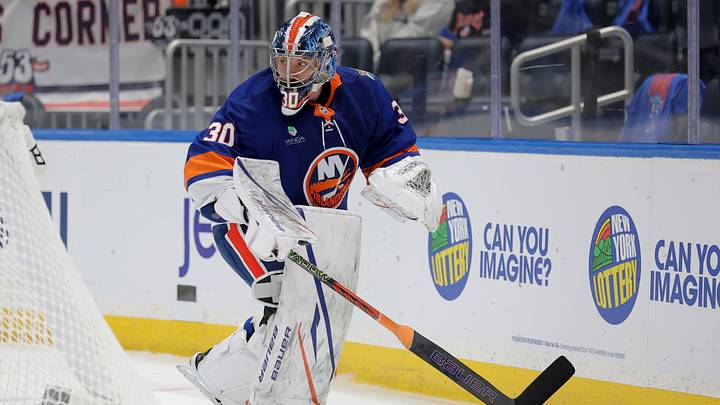
The final score suggests the Islanders spent the entire night in control. The first period says otherwise. New Jersey held a 9-7 shot edge through 20 minutes, generated power-play opportunities and had enough possession to make the home opener uncomfortable. Sorokin erased that phase of the game. By the time New York’s offense found its rhythm, the scoreboard was still clean.
That is the practical value of elite goaltending. Sorokin’s franchise-record 30th career shutout is a historical marker, but the more important detail for this season is how his performance changed the game’s shape. The Islanders did not have to chase after a shaky opening period. They could keep playing patiently until Simon Holmstrom broke through early in the second.
The shutout also continued Sorokin’s unusual hold over this matchup. New Jersey has enough speed and skill to punish passive teams, yet the Islanders have repeatedly made the Devils look frustrated around the crease. On Saturday, Sorokin turned every surge into another empty possession. The Devils finished with 37 shots and no reward.
New York cannot build an 84-game plan around asking its goalie to be perfect, but having Sorokin as the floor changes how aggressively the rest of the roster can develop. Young players can make plays, defensemen can activate and new line combinations can be tested without every mistake immediately becoming a scoreboard crisis. The record is impressive. The freedom his goaltending creates may be more valuable.

The line changes worked because they created different kinds of pressure

Pete DeBoer changed the forward combinations after the opening loss in Toronto, and the response was more convincing than simply seeing six different Islanders score. The new groups attacked New Jersey in different ways. Holmstrom’s opener came from a transition sequence with Jean-Gabriel Pageau. Brayden Schenn’s goal came after pressure and a turnover. Bo Horvat finished a power-play sequence. Later, the fourth-line veterans joined the scoring.
That variety is important for a team that has too often looked predictable when its top options are contained. New York does not need every line to become a high-end scoring unit. It needs enough functional combinations that opponents cannot load every defensive answer onto Horvat’s group and wait for the rest of the offense to stall.
Horvat’s goal was especially useful because it came on the power play, an area that has repeatedly limited the Islanders’ ceiling. Matthew Schaefer kept the puck alive and moved it into the right side for Horvat to finish. It was New York’s first power-play goal of the season and, symbolically, a clean example of how the veteran core and younger skill can complement each other rather than occupy separate lanes.
The temptation after a 6-0 win is to declare the line blender solved. That is too much after one game. What Saturday did establish is a workable template: Pageau and Holmstrom can generate transition offense, Schenn can support young skill, Horvat can remain the finishing anchor, and the bottom of the lineup can still contribute on special teams. DeBoer now has combinations worth keeping long enough to learn whether the chemistry is real.
Schaefer and Eklund made the future look like part of the present
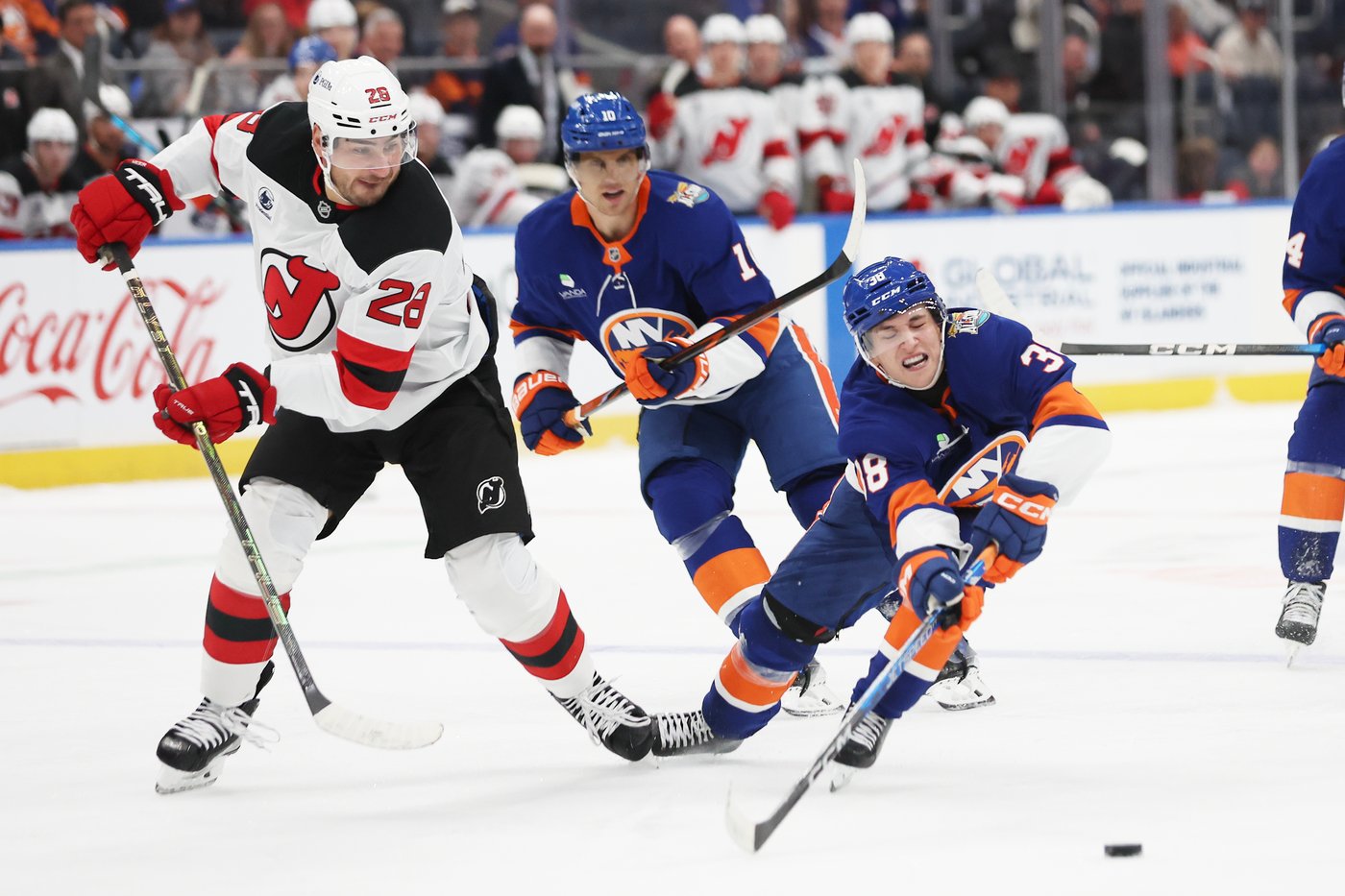
The most encouraging part of the night for New York may have been that two of its youngest players were not decorative pieces in a veteran win. Matthew Schaefer and Victor Eklund directly shaped the game. Schaefer finished with two assists, and Eklund produced a goal and an assist while celebrating his 20th birthday.
Schaefer’s influence was visible before the points arrived. He was aggressive from the blue line, willing to keep possessions alive and comfortable turning a static setup into a new angle. On Horvat’s power-play goal, that instinct mattered: Schaefer kept the puck in, moved into a better lane and found the captain for the finish. That is exactly the kind of creation the Islanders need from the back end.
Eklund’s night offered a different signal. His assist on Schenn’s goal came from quick work around the net, and his first NHL goal arrived off the rush when he got to a dangerous area and finished Calum Ritchie’s feed. Neither play required the Islanders to manufacture offense through a long, slow cycle. Eklund brought pace and opportunism.
For years, the Islanders’ roster conversation has revolved around how much the established core can still provide. Schaefer and Eklund can change that framing. If they become real drivers rather than protected prospects, New York does not have to squeeze every extra goal out of the same veterans. Saturday was only one game, but it showed the development path the organization needs: young talent making the team faster and more creative without sacrificing the structure that protects Sorokin.

The 6-0 score is less important than the matchup problems New York created
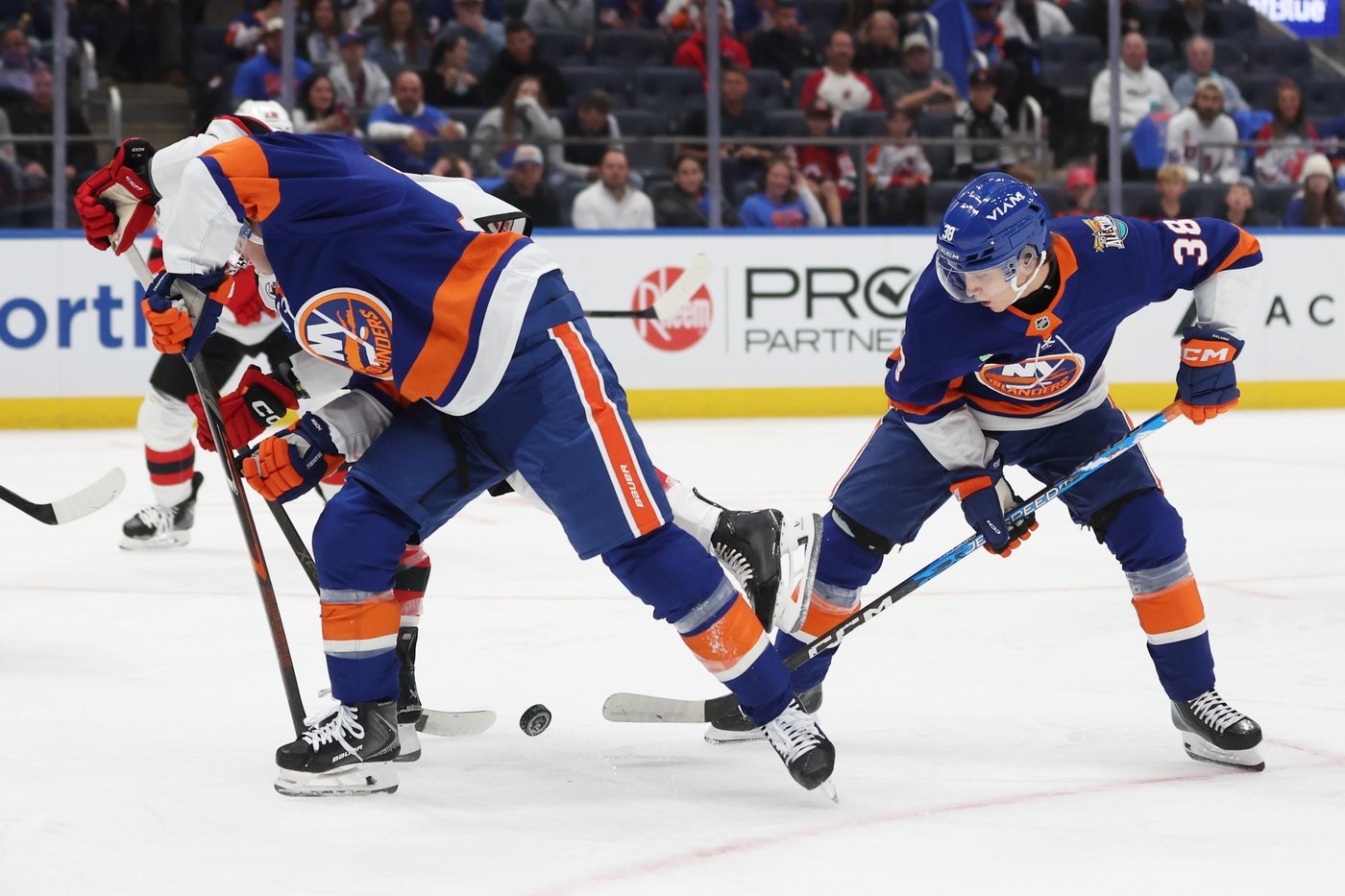
New Jersey will rightly treat this as one ugly night rather than a verdict on its season. The Devils generated shots, had power-play chances and were not buried territorially from the opening faceoff. What should concern them is how quickly the game escaped once New York began converting mistakes into different types of offense.
The Islanders scored at even strength, on the power play and short-handed. They got goals from six players. They received creation from a defenseman, finishing from the captain, a milestone from a rookie winger and a late breakaway from Casey Cizikas. That makes the 6-0 score less about one unsustainable shooting burst and more about New Jersey repeatedly losing different battles.
There is also a matchup history here. The Islanders swept the Devils last season and entered Saturday with a strong recent record against them. Sorokin’s calm around the crease and New York’s ability to protect the middle can turn New Jersey’s speed into volume without enough finish. When the Islanders then add transition chances and special-teams scoring, the matchup becomes uncomfortable fast.
The repeatable lesson is not that New York should expect six goals every time these teams meet. It is that the Islanders can be dangerous when they do not have to choose between structure and creativity. Sorokin can cover the difficult saves, but the skaters still have to turn stops into pressure. Schaefer and Eklund helped do that. The veteran lines converted it. If that connection survives against the Rangers and other Metropolitan contenders, this home opener will matter as more than a spectacular scoreline.
One 6-0 win cannot settle what the Islanders are in 2026-27, especially two games into the season. It can, however, reveal what their best version is supposed to look like. Sorokin provides the floor. Schaefer can tilt possessions from the back end. Eklund gives the forward group a different kind of pace and creativity. Horvat anchors the veteran core, while the supporting lines can make opponents defend more than one threat.
The next test comes at Madison Square Garden against the Rangers. That game will tell us more about whether this was a one-night eruption or the first glimpse of a more layered Islanders team. The important part is that New York now has a blueprint worth trying to repeat.