

Lopez Has Ten Days to Reach a Deal. Garcia's Superfight Faces a WBA Roadblock.
GOATIFYThe World Boxing Association has placed Teofimo Lopez at an uncomfortable crossroads. Its November 11 decision rejected his team's bid to reconsider a mandatory welterweight title defense against Jack Catterall and restarted negotiations on a much shorter clock. Lopez and Catterall's representatives now have ten calendar days to submit a proposed fight date or an alternative arrangement. It is a deadline for an agreement, not an order to step into the ring within ten days.
The distinction matters because Lopez is being linked with a lucrative fight against WBC champion Ryan Garcia. That proposed meeting could still be one of boxing's defining welterweight attractions in 2027, but the WBA does not treat its existing obligation to Catterall as something that disappears when a bigger commercial opportunity arrives. The governing body's ruling gives the British contender leverage without announcing a signed contest, an automatic purse bid or an immediate loss of Lopez's championship.
To understand why the decision is more than a routine sanctioning-body warning, it helps to trace the particular promise made to Catterall in May, the title change in August and the unanswered question of whether a separate permission request could still open a route toward Garcia.
The new ten-day clock is about a deal, not a fight date

Wednesday's ruling did not create the Lopez-Catterall obligation from nothing. The WBA had already ordered the bout on September 22 and set October 22 as the end of a 30-day negotiating period. That window elapsed with no agreement. Lopez's side objected to the mandatory requirement and had sought reconsideration on October 2; Catterall's promoter, Matchroom Boxing, responded by defending his entitlement to the opportunity. The November decision is therefore a review of an active dispute, not the announcement of a newly discovered challenger.
The WBA sided with the mandatory claim after examining both positions. Its decision refers to Rule C.17, under which its leadership and championship committee can set conditions governing the retention and defense of a Super title. In this case, those conditions include a compulsory contest against the recognized WBA World champion. The organization's approach is procedural: the original negotiation timetable has expired, so the next instruction is a fresh, shorter period for both camps to find an acceptable way forward.
That fresh period is ten calendar days from November 11. The camps may settle on a mutually acceptable date for Lopez and Catterall to fight, but the document also explicitly leaves room for an alternative resolution. That wording is significant. It means the two sides have been asked for a workable arrangement, not told that the entire affair must end only in one exact outcome. An alternative could be proposed, yet it would still need to satisfy the governing body's process rather than simply be assumed acceptable.
The other important detail is what follows if no arrangement arrives. The ruling permits either side to request a purse bid under the association's regulations if negotiations fail or a party refuses to negotiate. A purse bid is a procedure that allows promoters to compete for the right to stage the contest under prescribed terms. It is not evidence that an auction has already been scheduled. Nor did the November 11 decision itself strip Lopez of his belt, name a venue or claim the boxers had signed a contract.
GOATIFY
GOATIFY Boxing
A ten-day championship negotiation puts welterweight boxing back in focus. Explore GOATIFY Boxing designs for fight fans.


For Catterall, that formal distinction is still powerful. He need not win a public argument about which opponent offers the biggest pay-per-view draw; he has a written mandatory position and a new deadline with a defined next procedural step. It provides leverage in any discussion of timing, compensation or whether he would consider stepping aside. The exact terms of such an arrangement would be private until announced, and the WBA would have to accept whichever solution was put forward.
For Lopez, the ruling narrows the space for indefinite postponement. His team can keep arguing for a different sequence of fights, but the October deadline has already passed and the review did not overturn the underlying obligation. A champion's camp may have strategic reasons to pursue a more lucrative opponent; the regulator is judging a different question, namely whether commitments attached to its championship have been honored.
That difference between a commercial fight plan and a title obligation explains why this apparently administrative development could affect the entire 147-pound division. The WBA has not chosen Lopez's next opponent on his behalf in the way a signed contract would. It has, however, made clear that the mandatory claim remains live and now has to be dealt with on a defined schedule.
Catterall's claim began before Lopez ever won the belt

The road to this deadline began on May 20, when the WBA elevated Rolando Romero to Super champion at welterweight. In the same decision, it approved a meeting between Shakhram Giyasov, then its number-one contender, and sixth-ranked Jack Catterall for the vacant WBA World championship. The names of the belts can be confusing: the association had a Super champion and a separate World champion in the same weight class. What matters here is that the two titles were never meant to remain disconnected forever.
As a condition of Romero's elevation, the WBA said the Super champion would have to meet the winner of Giyasov against Catterall within 180 days of their contest. Romero was allowed an optional defense in the meantime. That provision gave the impending World-title winner a concrete route toward the higher designation, rather than merely a chance to sit among the rankings and hope for a call.
Catterall then did his part on May 23 in Egypt, beating Giyasov by unanimous decision in a contest staged at the Pyramids of Giza. The victory delivered the WBA World welterweight title and, just as importantly for the current dispute, turned the previously conditional promise into a real mandatory claim. Catterall arrived at that stage with years of frustration over major title opportunities. His present demand is not an abstract request for a well-known name; it rests on a result and on the terms that existed before that result.
Romero's optional defense ultimately changed the champion but not the legal-like chain of obligations. On August 22 at T-Mobile Arena in Las Vegas, Lopez outpointed Romero over twelve rounds to win the WBA Super title. Two judges favored Lopez 115-113 and 116-112 while a third scored the contest 114-114, giving him a majority decision. It was an important rebound and made him a world champion in a third weight class. It also transferred the unresolved Catterall commitment from the previous champion to Lopez.
GOATIFY
GOATIFY Boxing
Lopez and Catterall earned their titles in different 2026 fights. Browse GOATIFY Boxing fan gear while their mandatory showdown takes shape.
The contrast in the way the boxers won their belts adds a sporting dimension that cannot be reduced to boardroom paperwork. Lopez relied on activity, movement and his jab to outwork Romero for long stretches, although Romero did catch him with sharp counters. Catterall, a tactically patient southpaw, earned his own title by managing Giyasov over the full distance. A Lopez-Catterall contest would ask questions about tempo, lead-hand control and who can dictate distance, not merely decide which version of a sanctioning belt belongs on a poster.
Neither boxer has been named a loser by the November ruling. Lopez earned his title in the ring against Romero. Catterall earned his secondary title and the mandatory place on a separate night. The dispute is over sequencing: does the new Super champion have to honor the condition attached to Romero's earlier elevation before chasing a different championship? The WBA's answer, at least in its latest written decision, is yes unless another permitted arrangement is approved.
That history helps explain why Catterall's representatives have fought the reconsideration request. If a title-changing optional defense automatically erased promises made to mandatory challengers, the route approved in May would have little practical force. Equally, Lopez's wider ambitions are easy to understand. A meeting with Garcia could offer a bigger stage than a title-consolidation contest. Both incentives can be real; the present ruling gives priority to the original championship obligation.
The next negotiations will test how those competing interests can coexist. A fight date for Lopez-Catterall would resolve the formal challenge directly. A mutually acceptable different arrangement might preserve other possibilities. Failure to reach either could move the conflict into purse-bid procedures. None of those outcomes can be declared in advance merely because the WBA has reaffirmed its position.
Garcia remains in the picture, but a WBA unification is not guaranteed
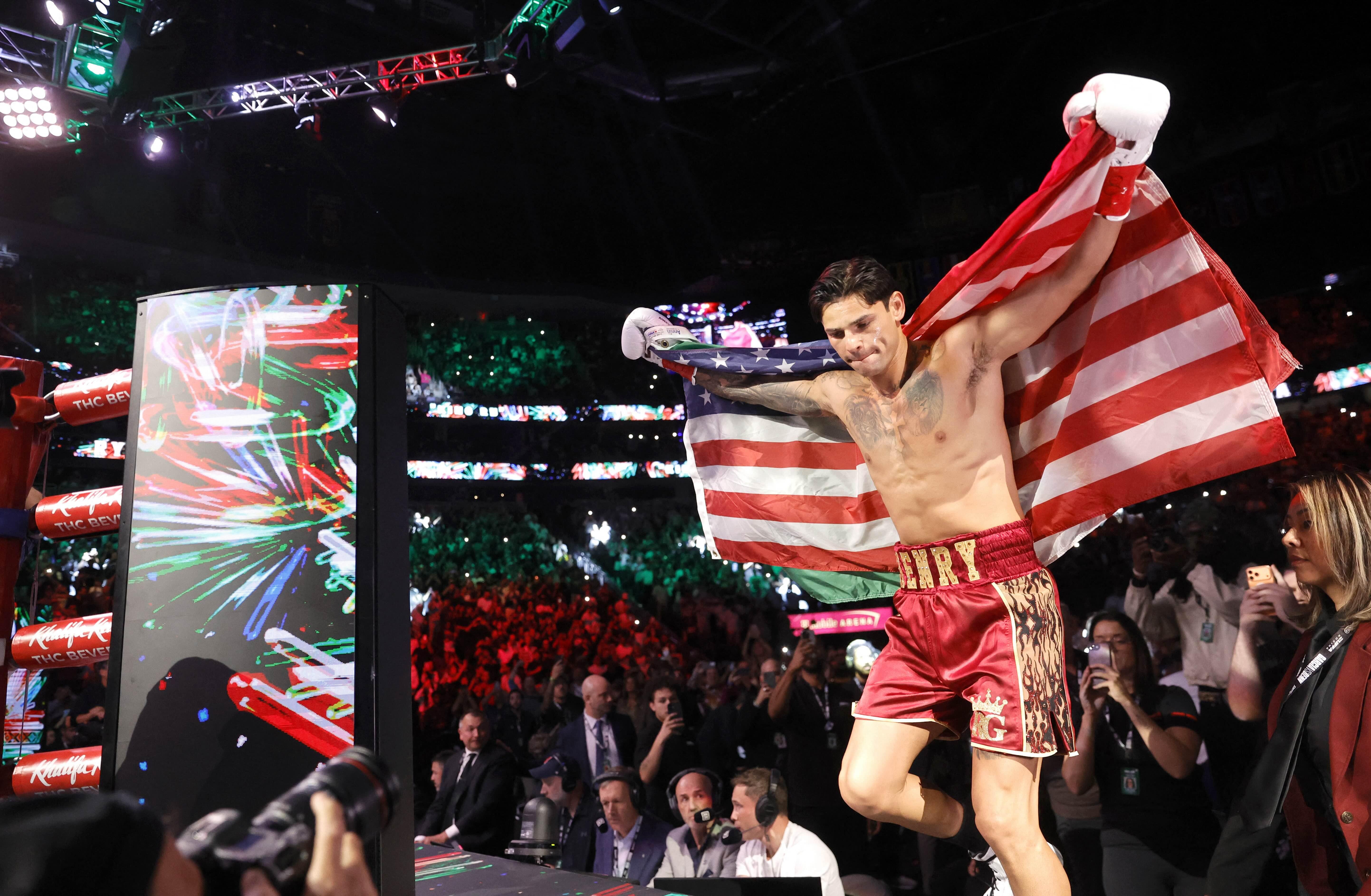
Ryan Garcia is why this mandatory order is receiving attention beyond followers of the WBA rankings. Garcia holds the WBC welterweight championship, and a proposed meeting with Lopez has been discussed as a high-profile unification for early 2027. Some reporting has mentioned February 6 as a possible date. A discussion and a proposed date, however, are not the same as an announced, fully agreed fight. As of the November 12 reports, there was no basis to write the matchup into a confirmed schedule.
Garcia has supplied his own momentum. He stopped Conor Benn in the second round of their September 12 meeting in Las Vegas, then spoke about further major opponents. The result strengthened the idea that a Garcia-Lopez showdown could feature two active welterweight titleholders rather than a celebrity exhibition trading on old rivalries. That possibility helps explain why Lopez's representatives would want a path around the mandatory first. It also gives the negotiation a time-sensitive commercial backdrop.
The critical part of the WBA's November ruling is its treatment of unification fights. Rule C.39 offers a mechanism for a special permit when one champion seeks a bout with a titleholder from another organization. The WBA did not claim that unifications are forbidden. Instead, it said that, as of its November 11 decision, Lopez's team had not filed a formal request for that specific permission. Reporting attributed to Lopez's camp says a request was submitted on November 5. Those positions should not be conflated: the filing status and whether paperwork met the body's formal requirements remain disputed in public accounts.
GOATIFY
GOATIFY Boxing
A possible Garcia–Lopez meeting raises the stakes across 147 pounds. Discover GOATIFY Boxing shirts, hoodies and gifts.
If a proper special-permit application is considered and granted, a WBA-sanctioned unification could conceivably return to the table, perhaps with conditions protecting Catterall's place. Approval cannot be presumed just because the Garcia fight might sell well. If the champion and challenger agree to an alternative timeline, that would likewise require a workable arrangement. And if Lopez instead chooses to proceed without the WBA title, the fighters might still meet, but it would not be the two-belt WBA-WBC unification originally envisioned.
Vacating a title is often discussed as though it were a simple shortcut, but it carries meaningful consequences. Lopez would lose the chance to defend the championship he captured from Romero in August. Catterall's position in the organization's title structure could improve, but the precise designation, opponent and procedure would depend on a later WBA decision. The November 11 announcement did not itself make Catterall the sole Super champion or authorize a separate belt transfer.
There is a boxing case for the mandatory that goes beyond a regulator's desire to enforce its timetable. Catterall's measured southpaw approach, counterpunching discipline and preference for controlled exchanges would pose a very different test from Romero's power-and-counter threat. A convincing win over Catterall could reinforce Lopez's credentials at 147 pounds before a subsequent clash with Garcia. The downside is obvious too: any difficult mandatory fight introduces injury, result and scheduling risks that can wreck plans for a lucrative unification.
Garcia, meanwhile, has options and his own promotional calculations. A potential blockbuster does not belong exclusively to Lopez, nor can another champion be expected to wait indefinitely while a separate sanctioning dispute plays out. The longer the WBA issue remains unresolved, the more difficult it becomes to treat any suggested early-2027 date as dependable. Discussions among camps, promoters and governing bodies are separate processes, and progress in one does not guarantee progress in another.
The cleanest reading of the present situation is therefore neither that Garcia-Lopez has been definitively cancelled nor that the WBA will inevitably grant an exemption. The fight is possible; the WBA title's participation is uncertain. Until a new agreement, a formal permit, or a later definitive ruling emerges, the only firm order on the table is that Lopez and Catterall must address the mandatory within the renewed ten-day window.
The next meaningful update should be a document or agreement, not simply another statement of preference. Lopez and Catterall have until the new negotiation window closes to present a fight date or an alternative the WBA can consider. If that fails, either camp can ask for a purse bid. Whether a Garcia proposal eventually earns special permission will have to be determined through the governing body's rules, not by the appeal of the matchup alone.
For fans, the frustrating part is that every available route contains an attractive fight and a complication. Catterall deserves the title chance he earned; Lopez wants the freedom to pursue another belt; Garcia represents a potentially enormous event. The November 11 decision has not settled which fight happens next. It has made postponing that choice harder.
GOATIFY
GOATIFY Boxing
Shop GOATIFY boxing shirts, hoodies and stickers.


















