Detroit Has Two Trade Problems — Larkin and Edvinsson Could Become One Red Wings Reset
GOATIFYDetroit's first win of the season should have felt like relief. Dylan Larkin returned from injury, scored, added an assist and turned early boos into cheers during a 5-3 win over Ottawa. Yet the performance did not erase the question hanging over the Red Wings since summer: Larkin still asked to be traded, and Detroit still has not found a deal it likes.
At the same time, Simon Edvinsson remains unsigned and away from the club after contract talks deteriorated. What looked like two separate problems now creates a much larger choice for interim general manager Shawn Horcoff.
Edvinsson’s contract dispute is no longer a normal RFA wait

Edvinsson's situation is the newer problem, but it may be the more consequential one. The 23-year-old defenseman finished last season with nine goals and 25 points in 72 games while averaging more than 22 minutes a night, second among Detroit defensemen behind Moritz Seider. He is not a fringe restricted free agent waiting for a depth contract; he is already one of the pieces Detroit should expect to build around.
The relationship became strained because the sides did not agree on the shape of the next contract. Detroit has been linked to a shorter bridge structure while Edvinsson's camp has preferred greater long-term commitment. He reported to camp without a contract and even arranged insurance so he could practice, but eventually returned to Sweden. Recent reporting still leaves room for reconciliation, yet the fact that a core young player reached this point matters.
That is why a trade cannot be evaluated only as an escape from a difficult negotiation. If Detroit moves Edvinsson, the return has to replace something scarce: a large, mobile defenseman already trusted with major minutes and still years from his prime.
Larkin’s return showed exactly why Detroit cannot sell cheaply
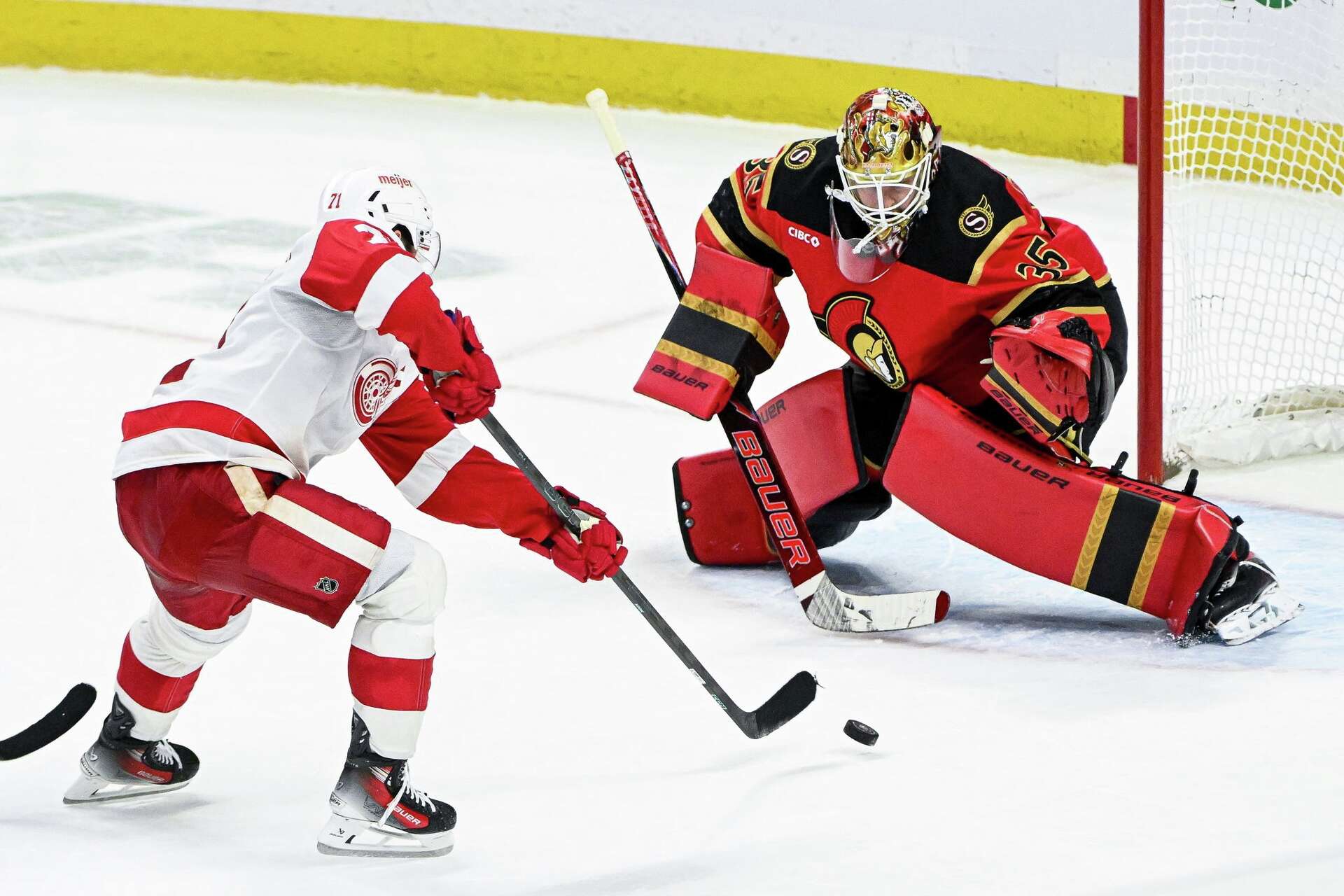
Larkin's first game of the season demonstrated Detroit's dilemma in real time. He was booed when he first touched the puck against Ottawa, then scored the goal that gave the Red Wings their first lead of the season and helped create another. Detroit won 5-3, with Larkin producing a goal and an assist after missing the opening two games.
That performance does not cancel his offseason trade request, but it reinforces why Detroit has resisted a futures-heavy return. Larkin scored a career-high 34 goals last season and remains the kind of center who can drive a competitive lineup now. A package built mostly around picks and prospects might be defensible for a rebuilding club; it is much harder to sell to a dressing room that includes Seider, Lucas Raymond and Alex DeBrincat and is still trying to end a decade-long playoff drought.
Larkin also has leverage because his contract includes trade protection. That narrows the market and makes it harder for Detroit to manufacture a bidding war.
Two trades could remake the Red Wings — but only if the pieces fit together

The most interesting idea created by the overlap is not simply trading Larkin and Edvinsson separately. It is treating the two transactions as one roster-building exercise. If an Edvinsson market can deliver a type of player Detroit could not obtain for Larkin, Horcoff could then loosen the conditions on the Larkin deal and judge the combined return rather than demanding that each trade solve every problem on its own.
That approach gives Detroit more ways to balance the roster. One deal could prioritize a young NHL defenseman or center; the other could add scoring, picks or prospects. In theory, the Red Wings could emerge younger without abandoning the present. It also gives management a chance to show Seider, Raymond and the rest of the core that major changes are designed to accelerate competitiveness rather than restart the clock.
But combining the decisions also multiplies the risk. Larkin is a proven top-six center under contract, while Edvinsson is a 23-year-old defenseman whose best seasons should still be ahead. Losing both would remove premium talent at two of the hardest positions to replace. Detroit's problem is therefore not whether two trades are possible. It is whether the total return can make the team more coherent immediately and more dangerous later.
There is also a timing advantage to acting from strength rather than panic. Larkin's productive return gives Detroit no reason to slash its asking price, while Edvinsson's restricted status means the organization still controls his NHL rights. Horcoff can listen without pretending either player has to move tomorrow. That patience matters because the best version of a two-trade reset depends on the deals complementing each other, not simply clearing two uncomfortable headlines.

Detroit does not have to trade both players. Edvinsson can still sign, and Larkin can still play productive hockey while the market develops. But the existence of two major unresolved situations changes the range of possibilities available to Horcoff.
The opportunity is obvious: two meaningful trades could bring back the NHL-ready talent Detroit has struggled to obtain. The danger is just as obvious. Move a proven center and a 23-year-old top-pair-caliber defenseman without improving the present, and a reset quickly becomes another rebuild.