
Bryson Backs LIV 2.0 After Deadline — But Can His $29M Team Save It?
GOATIFYBryson DeChambeau has given LIV Golf something it badly needs: a superstar prepared to argue that the experiment is worth rebuilding. As the latest player-commitment deadline passed, the two-time U.S. Open champion defended the proposed LIV 2.0 model, described how his Crushers GC team generated roughly $29 million in annual revenue, and suggested that genuine player control could make a leaner league work where its original ownership structure failed.
That is a striking pitch from the captain of one of LIV's flagship teams. The Saudi-backed circuit entered Chapter 11 after its original financial backer withdrew support, lost major names including Jon Rahm and Sergio Garcia, and is trying to complete a rescue investment with BC Partners Credit. DeChambeau's optimism matters, but a strong team business and a solvent professional league are not the same thing. The question is whether a player-owned relaunch can turn scattered commercial successes into an operation capable of paying its bills, attracting stars and staging credible tournaments in 2027.
DeChambeau Still Believes in Team Golf — Just Not the Old Deal

Bryson DeChambeau has not approached LIV's financial crisis as a signal to abandon team golf. In a newly published conversation with Raj Shamani, the Crushers GC captain argued that a rebuilt league could survive for the long term if it corrects the governance failures he now associates with its first version. He still sees value in teams developing their own commercial identities, rather than merely existing as labels attached to individual golfers at a tournament.
His language was unusually revealing because it combined enthusiasm with criticism. DeChambeau acknowledged that the central business had not been managed effectively, even as he maintained that individual teams had produced positive results. He suggested the original contracts reflected a lack of player control: enormous upfront payments were the protection players wanted when they could not meaningfully influence how the competition was operated. The proposed arrangement reverses that trade-off. Players could receive less guaranteed cash in exchange for ownership and governance rights.
That is not a minor contractual adjustment. The first LIV proposition was built around certainty for players and financial risk for its backers. A meaningful equity stake would expose golfers to the commercial consequences of decisions about schedules, broadcast arrangements, sponsorship, expenses and talent recruitment. In return, it could give them influence over those decisions. DeChambeau's argument is that a player-controlled business could avoid repeating the mistakes that created today's restructuring crisis.
There is also an important distinction between endorsing the concept and proving that a final agreement has been signed. His interview appeared shortly after the latest reported October 30 player-commitment deadline. Public expressions of confidence do not, by themselves, disclose the exact terms he accepted, the capital he might invest, or whether every legal condition for a 2027 relaunch has been satisfied. Until those details are established, the strongest supported conclusion is that DeChambeau is actively backing the direction of LIV 2.0.
For a circuit struggling to keep its recognizable stars, that support still matters enormously. DeChambeau is a two-time U.S. Open champion, one of the few LIV personalities who attracts a substantial audience outside traditional golf coverage, and the face of Crushers GC. His appeal can help sell events and partnerships. But charisma cannot replace a sustainable operating model. The next stage must show that his belief in team golf can be converted into commitments, revenues and a schedule that investors can actually underwrite.

The $29 Million Crushers Claim Is Impressive — and Not a League Rescue
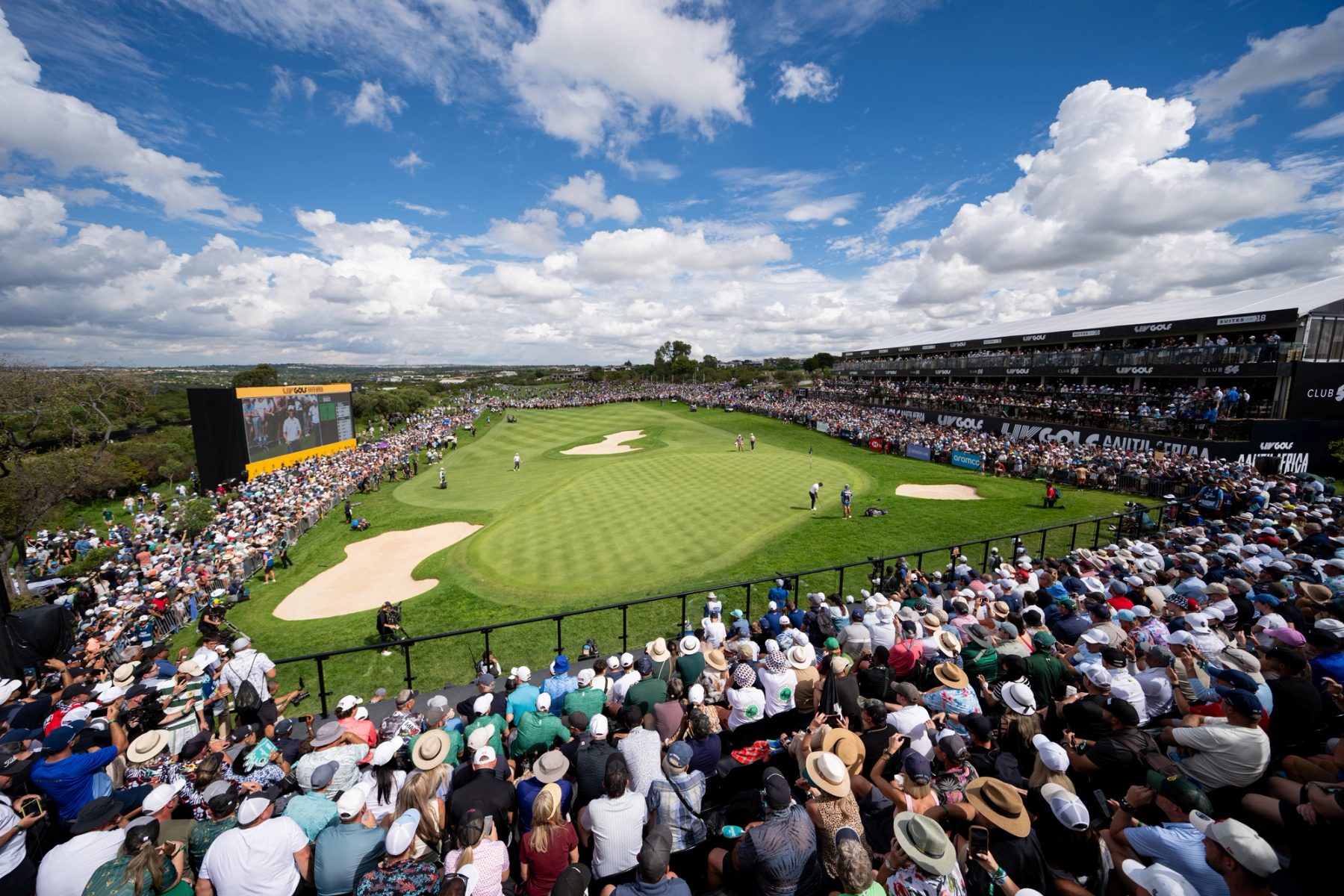
The most striking detail in DeChambeau's defense of LIV was not a prediction about its future. It was a glimpse at Crushers GC's business. He said his team generated almost $29 million in revenue last year against approximately $21 million in costs, leaving around $8 million in earnings before interest, taxes, depreciation and amortization. On those self-reported figures, the implied EBITDA margin is roughly 28 percent. That is a meaningful number for a sports property still establishing its place in the market.
It also needs careful interpretation. EBITDA is an operating measure, not a bank balance or net profit. It does not show the full effect of financing costs, tax, depreciation, capital expenditure or changes in working capital. Nor does a team-level figure reveal how much the central league spent on tournament operations, broadcasts, travel, prize commitments and its own staff. DeChambeau was speaking about the economics of Crushers GC, not publishing an audited consolidated statement proving that LIV Golf as a whole was profitable.
The distinction became crucial when LIV's financial structure unraveled. DeChambeau said obligations that had previously sat higher in the organization were pushed down to teams during the bankruptcy process. If a team must suddenly shoulder additional player compensation or costs formerly covered by the league, its historical margin cannot simply be carried forward. The same revenue line can support a very different business once the expense allocation changes. That is why an impressive past EBITDA claim is a starting point for evaluating the relaunch, not a guarantee that its new financial model works.
There is nonetheless a serious commercial idea underneath the numbers. Team identity can create inventory that a conventional individual-tour structure does not naturally possess: long-term sponsorship relationships, distinctive apparel, local fan bases, content partnerships and a recognizable group of athletes. Crushers GC has four established players in DeChambeau, Paul Casey, Anirban Lahiri and Charles Howell III, and its captain's online audience gives the brand a promotional channel that does not depend entirely on television ratings.
The challenge is repeatability. Can other teams produce anything close to those results without the same star power? Would sponsors continue paying if the field loses several major champions? How much central infrastructure must be funded before any team can operate? The answers determine whether LIV has discovered a scalable sports-franchise model or simply has a few standout teams whose economics cannot be replicated across the league. DeChambeau has supplied a reason to investigate the business seriously. He has not supplied the final proof.

Bankruptcy, BC Partners and the Deadline That Didn't End the Uncertainty

LIV Golf's current predicament began when its original financial backer, Saudi Arabia's Public Investment Fund, decided to end its financial support. The circuit then lost scheduled events, finished its 2026 season early and entered Chapter 11 protection in New Jersey. Chapter 11 is a restructuring process rather than automatic liquidation: it can give a business time to reorganize liabilities, negotiate with creditors and seek new capital. But survival depends on completing a workable plan, not simply filing the paperwork.
The proposed lifeline is BC Partners Credit. The investor has been working on a transaction that could provide up to $300 million in financing for a reconstituted LIV, subject to conditions and court approvals. The league has described a model in which players would hold a majority ownership interest. A court-supervised restructuring can help clear the way for that transition, but investors will naturally want evidence that enough attractive players are committed, the economics are credible and the new league can generate revenue without another open-ended subsidy.
The deadline story illustrates why fans should distinguish milestones from finality. LIV initially sought player decisions in late October, with the latest reported cutoff moved to October 30. DeChambeau's comments arrived just after that date, while public information about the complete 2027 roster remained incomplete. Reports of roughly 15 to 20 tentative commitments suggest there is a foundation to work with, but a tentative expression of interest is not the same as a signed, enforceable contract. A future schedule and a final financing package cannot be treated as settled merely because management is optimistic.
There are practical questions beyond headcount. A viable 2027 tour needs venues, production arrangements, distribution partners, sponsors, insurance, staffing and a credible way to compensate participants. The proposed move toward player equity may align incentives, yet it also raises difficult governance questions: who gets voting rights, how are teams valued, what happens when a star leaves, and who covers losses if the first year misses forecasts? A league can have enthusiastic owners and still run short of cash if those details are unresolved.
The next bankruptcy hearing, scheduled for November 5, is one concrete date to watch. It is not necessarily a single winner-take-all moment, but it offers a more reliable checkpoint than rumor about deadlines. Court approvals, financing conditions and actual player agreements will reveal more about LIV's prospects than any one upbeat interview. DeChambeau's message is that the rebuild can work. The legal and financial process still has to establish whether it will.
Player Ownership Could Fix the Incentives — If Enough Stars Stay

The player-ownership idea addresses a real weakness in LIV's first incarnation. When athletes receive enormous guaranteed sums without comparable influence over strategy, the incentives of the individual and the central business can diverge. A golfer can be financially protected even when the league struggles to make its tournaments profitable. Ownership changes that relationship. Players could gain from successful sponsorships, media distribution and growing franchise values, while also bearing more of the downside if the business fails to perform.
But equity only has value if the organization behind it is viable. It is not a substitute for prize money, a sustainable schedule or the chance to compete against the strongest possible field. That is the uncomfortable reality of LIV's recent departures. Jon Rahm has decided not to participate in the proposed relaunch, and Sergio Garcia and Tyrrell Hatton are among other recognizable names choosing different paths. Losing established major winners and Ryder Cup figures weakens both the sporting product and the commercial pitch to partners who want stars in front of audiences.
DeChambeau may be the most valuable remaining personality precisely because he combines championship credentials with a large independent content platform. Yet a circuit built around team competition cannot rely on one captain alone. It needs rivalries that feel significant, a deep enough field for weekly results to matter, and teams whose supporters have reasons to follow them beyond a single famous player. Otherwise the ownership model risks creating a collection of businesses with little shared sporting gravity.
LIV has brought in former TaylorMade chief executive Mark King as a senior adviser, with an expected role building and chairing an advisory board. His experience scaling a golf equipment brand and other consumer businesses could help the league think more rigorously about sponsorship, brand development and costs. That appointment is a positive operational signal, but it does not itself resolve player recruitment or financing. An adviser can help design the structure; he cannot manufacture the audience and competitive credibility the league must earn.
There is a broader golf question too. DeChambeau says the new LIV should add value to the sport rather than exist solely to fight the PGA Tour. A smaller, differentiated international schedule might make that aspiration easier to explain. Yet existing tours have their own membership rules, calendars and commercial interests, and the freedom to play across circuits is not guaranteed. LIV 2.0 will need to show where it fits without promising cooperation that other organizations have not agreed to provide. If it succeeds, player-owned teams could become a durable new format. If it fails, the lesson may be that the ownership structure was only one part of a much larger problem.

DeChambeau's case for LIV 2.0 is more substantial than simple loyalty. His account of Crushers GC's revenue, costs and operating profit offers a glimpse of why teams might have a future as real sports businesses. His willingness to exchange guaranteed money for a say in governance also addresses one of the original model's biggest weaknesses.
Yet the optimism should not be confused with a completed rescue. The financing, court process, roster commitments and actual cost structure still have to line up. Losing Rahm and other recognizable names makes the sporting proposition harder to sell, even if DeChambeau remains a compelling centerpiece. LIV's next test is not whether its most vocal captain believes in team golf. It is whether the numbers work after the financial safety net is gone.