

Hughes Returns to Vancouver. His New Wild Are 11-0-2.
GOATIFYQuinn Hughes is going back to Vancouver again. This time the central question is not whether the crowd cheers or boos the former Canucks captain. It is whether Vancouver can slow down the machine he helped create in Minnesota. The Wild arrive for Saturday's game at Rogers Arena with a 17-3-4 record, five straight wins and points in 13 consecutive games. The Canucks are 5-18-1 and still trying to turn good individual shifts into complete nights. Hughes has swapped sides in a rivalry that has become a brutally simple comparison of two organizations heading in opposite directions.
There is more to the matchup than the transaction that brought him south in December 2025. Kirill Kaprizov is producing at an elite pace, Brock Boeser is almost single-handedly providing a counterargument for Vancouver's offense, and Minnesota has been much more difficult to score against than most explosive teams. Hughes also left Thursday's victory in Calgary after a hit, so any discussion of his role on Saturday must remain conditional until the lineup is confirmed.
The first return in October produced 500th-career-point celebrations, boos, a tribute and a Minnesota win. The second should test whether the Canucks can do anything about the structural gap. Penalties, transition defense and the first goal matter more than the emotional pregame. A home crowd can make an old captain uncomfortable for a few seconds; it cannot recover a two-goal deficit or defend Minnesota's power play. This preview looks at the pressure points that could decide the night, without treating a scheduled game as a result already in the books.
Kaprizov Is Turning Every Minnesota Shift Into a Matchup Problem
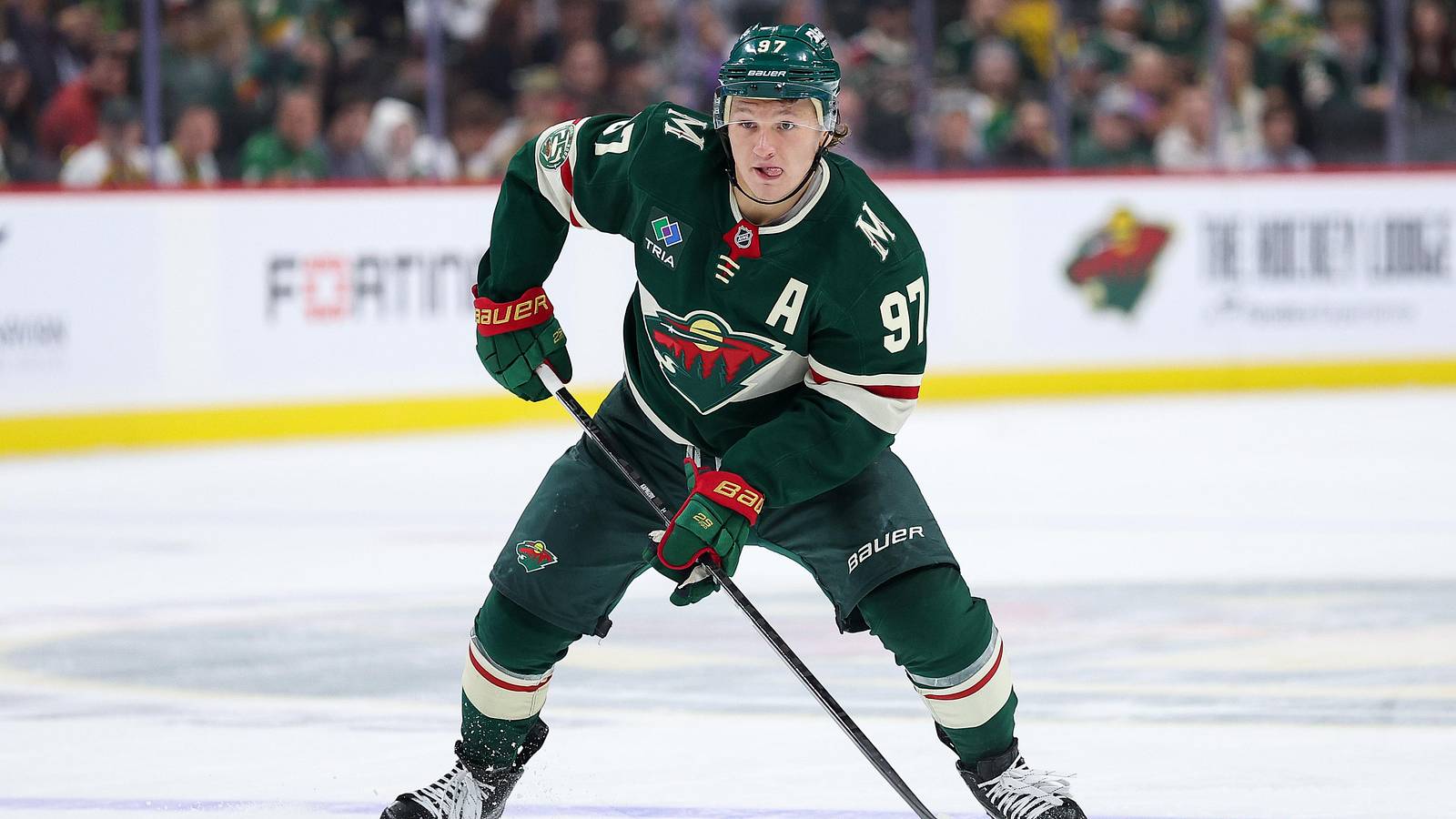
Kirill Kaprizov has made the Wild's opening two months look almost unfair. His 18 goals and 25 assists give him 43 points in 24 games, the kind of production that changes an opponent's entire defensive plan before the puck is dropped. Minnesota does not need Kaprizov to score every night, either. It needs him to attract attention, hold defenders for an extra beat and create the passing lane that would not exist against a less dangerous winger. Vancouver's challenge is to recognize the threat without assigning so much help that somebody else arrives unmarked.
The numbers reveal how difficult that balance has become. Minnesota is scoring 3.63 goals per game, seventh in the NHL, while keeping enough offensive pressure that the club can win games with different contributors. Matt Boldy's 97 shots on goal are another warning: overcommitting to Kaprizov does not remove the other shooters. A defense that drifts toward the puck carrier in the neutral zone risks creating room for Boldy to receive a pass at speed. At five-on-five, that means Vancouver's weak-side winger cannot treat tracking back as optional.
Kaprizov's pace also explains why a seemingly ordinary offensive-zone possession can become a problem. If the Canucks fail to close the first passing seam, Minnesota can exchange positions, force a defender to turn and keep the puck below the goal line until a cleaner opportunity appears. The best response is not merely to throw more bodies toward Kaprizov. It is to protect the slot, support retrievals early and finish a breakout with enough control that the Wild do not immediately recover the puck and restart the sequence.
That final point matters because Minnesota's defense can become another attacking weapon. Brock Faber has returned from injury and has already stepped back into heavy minutes. When a mobile defenseman keeps a puck alive at the blue line, the shift that Vancouver thought was over can turn into another 25 seconds of coverage. The Canucks need their forwards to give defenders a real first outlet instead of waiting at the far blue line for a low-percentage stretch pass. One clean exit can spare a tired group the worst part of a Kaprizov cycle.
GOATIFY
GOATIFY Hockey
GOATIFY hockey shirts, hats and fan gifts for a Minnesota attack led by Kaprizov.


Special teams widen the threat. Minnesota's power play ranks sixth, and Vancouver has been taking too many penalties. A holding call that looks survivable against a weaker opponent can turn into prolonged puck movement and a goal against a club with this many finishers. Even when the Wild do not score, a long penalty kill exhausts the skaters Vancouver needs for its next offensive shift. The Canucks therefore have to make the contest difficult at even strength rather than try to rescue themselves from repeated man-down situations.
There is a way to make Minnesota work. The Wild rank near the bottom of the league in faceoff percentage, at 46.8 percent. Vancouver should view offensive-zone draws and recoveries as opportunities to force Kaprizov's group to defend instead of attack. A win on the dot will not automatically create a chance, but possession established high in the offensive zone can slow the Wild's rhythm. It is one of the few measurable areas where a struggling home team can try to impose terms on a superior opponent.
Hughes' Second Return Is About Breakouts, Not a Pregame Tribute

Hughes did not need another visit to Rogers Arena to establish what he meant to the Canucks. The former captain defined their puck-moving identity for years before the December 2025 trade changed the direction of both franchises. The emotional part of the reunion has already played out once. Minnesota won 4-2 in Vancouver on October 25, and Hughes recorded his 500th career NHL point in the building that had watched most of his rise. Another round of crowd reaction will be inevitable, but the more revealing story is what each team looks like when he moves the puck.
Hughes brings an unusual ability to turn defensive pressure into an immediate counterattack. Rather than simply dumping the puck away when a forechecker closes, he can change his angle, draw a second attacker and pass into the space they have abandoned. That first pass is often invisible in a box score. It is also the kind of sequence Vancouver has struggled to reproduce with consistency. Against an aggressive forecheck, Minnesota can escape with possession and turn a threatening defensive-zone moment into an entry against a backpedaling opponent.
The production supports the eye test. Hughes has 34 points in 24 games and has been a central figure in Minnesota's long run of results. His 13-game point streak has featured 21 points, according to the league's November 21 notes. But those statistics must be paired with an important availability question. Hughes left the November 19 game in Calgary after a hit by Adam Klapka. His participation and workload on Saturday cannot be assumed until the team confirms its lineup. A preview written before faceoff should not turn an injury question into an invented clearance.
If he plays, the matchup invites Vancouver to pursue two competing objectives: pressure Hughes early enough to prevent a clean first pass, but avoid chasing him so hard that Minnesota's forwards get an easy lane behind the forecheck. One forechecker approaching from the wrong side can be as damaging as no forecheck at all. The better approach is synchronized pressure, with the second forward protecting the middle and the third prepared for the outlet rather than gambling that Hughes will panic under contact.
If Hughes sits or has his minutes managed, the Wild still have a defense corps that can move the puck. Faber's return gives Minnesota another high-minute option, though there is no reason to pretend replacing Hughes' individual reads would be routine. Vancouver would gain a potentially meaningful tactical opening, but it would still need to create shots through sustained possession. An opponent missing one dynamic defenseman does not suddenly become an easy opponent, particularly one entering the night near the top of the standings.
That is the detail worth watching long after the introductions. Is Vancouver able to make Minnesota defend two or three complete shifts in succession? Can the Canucks force rushed passes through the middle? Do their own defenders have time to make a controlled exit? The answers tell more about the Hughes-shaped gap between these teams than the loudest cheer or boo. Reunions make good theater; transition play wins actual hockey games.
GOATIFY
GOATIFY Hockey
Hockey fan apparel and accessories for a rematch built around Quinn Hughes' return.
Boeser's Nine-Game Point Streak Is Vancouver's Narrow Opening

It would be too easy to frame Vancouver as a team with no answers. Brock Boeser has been producing enough to complicate that story. He enters Saturday with points in nine consecutive games, tying his career-best run, and 16 points across his last 12. Six of those points are goals, and he has been playing more than 21 minutes per game across the stretch. For a club that has struggled to generate consistent offense, Boeser offers something tangible: a player who can finish chances and give a possession a credible purpose.
Boeser is not enough on his own. Minnesota is allowing just 2.17 goals per game, the league's best rate entering the matchup. To break down that structure, Vancouver needs to do more than feed Boeser a puck from a stationary position and hope he beats an organized goalie. It needs controlled entries, traffic near the crease and rebounds that another Canuck is positioned to recover. If the Wild see a shot coming from the outside with no screen, their defensive system has already done much of its job.
The Canucks have other routes to pressure at home. Jonathan Lekkerimäki has scored four goals on home ice this season, while Jake DeBrusk leads the team in home scoring chances with 27. Those are not reasons to declare Vancouver the more dangerous team; they are reasons to avoid a one-player offense. When a defense can identify Boeser as the only credible shot threat, it can take away his release lane. When a second line generates an honest cycle and forces an icing, the next shift becomes more complicated to match.
For coach Manny Malhotra, however, the biggest problem may be discipline rather than creativity. Following Thursday's loss to Seattle, both Malhotra and Boeser acknowledged the team's mounting penalty trouble. Three first-period penalties helped the Kraken seize momentum, and the coach criticized the execution and details around them. A similar start against Minnesota would make the home team chase the game before its best forwards had time to establish a rhythm at even strength.
That is why the most useful adjustment sounds almost boring: finish checks without reaching, avoid retaliation after the whistle and make the safe play at the offensive blue line when support is late. One careless pinch can produce a rush the other way; one unnecessary slash can hand Kaprizov's group a power play. Vancouver cannot control whether a hot Minnesota shooter finds the top corner. It can control how often it gives him an easy shooting environment.
A plausible Canucks upset would therefore be built on repeated modest wins. Keep the first period close. Take fewer penalties than the opponent. Make Minnesota turn and retrieve dump-ins rather than skating freely through the neutral zone. Give Boeser multiple looks from different locations, not three versions of the same screened-out shot. The nine-game streak shows that Vancouver still has a player capable of influencing a close contest. Whether the team can supply enough structure around him is a much larger, unresolved question.
One Penalty or One Bad Change Could Decide the Goaltending Battle
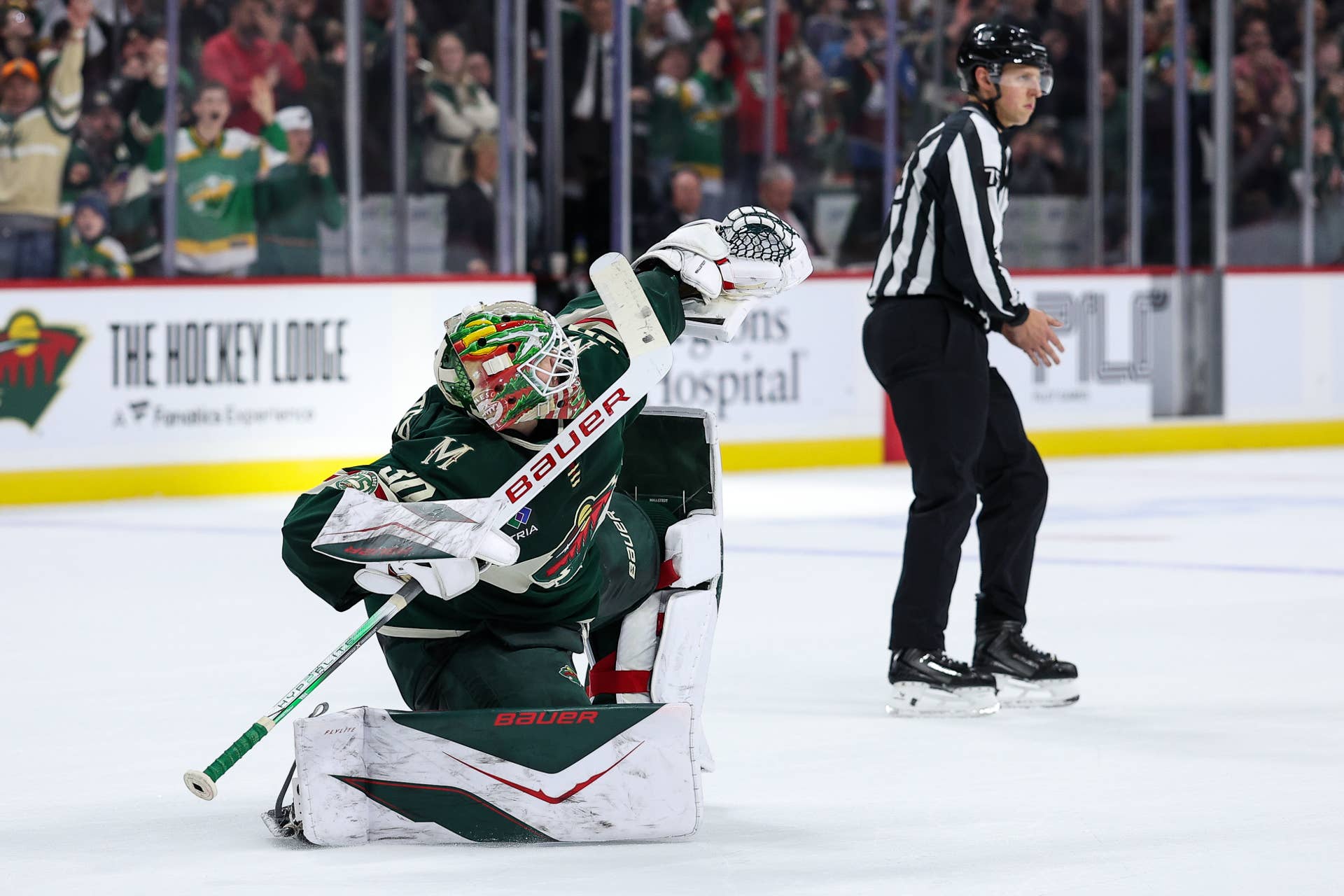
The standings are dramatic, but the scoring rates explain how Minnesota has built that gap. Through 24 games the Wild are conceding a league-low 2.17 goals per game while scoring 3.63. A team that can create chances without exposing its goalie does not need a perfect night from either side of the puck. Vancouver, by contrast, enters the contest knowing that a single loose change or unprotected rush can wipe out several minutes of careful work. The Canucks need to resist the temptation to force offense simply because the records look mismatched.
GOATIFY
GOATIFY Hockey
GOATIFY hockey apparel for supporters following Boeser and the Canucks.
Minnesota has also made early leads count. The Wild are 15-0-4 when scoring first and 15-0-2 when leading after two periods. Those records do not guarantee anything against Vancouver, but they illustrate why the first 20 minutes should matter so much. A goal against is not fatal. A goal against followed by undisciplined attempts to get it back can be. Once Minnesota has the advantage, its forwards can choose better moments to attack while the defense closes the lanes that a desperate opponent needs.
Goaltending is another reason not to overinterpret the headline matchup. Jesper Wallstedt has been part of the Wild's goaltending picture, but pregame analysis should not assert that he, or any particular Vancouver netminder, will start without an official confirmation. The system in front of the goalie is the safer basis for an argument: Minnesota limits repeat entries, protects the middle and has shown it can score enough that its keeper does not need to steal every game. Even excellent goaltending from Vancouver would have to survive sustained pressure and dangerous special-teams opportunities.
The power-play contrast adds another layer. Minnesota's advantage ranks sixth, while its penalty kill sits 12th, giving the team a useful combination rather than an absolute edge in every situation. Vancouver has a chance to create something on its own man advantage, but it needs a plan more sophisticated than repeatedly searching for a low-angle one-timer. Move the puck through the middle, shift the penalty killers laterally and crash the crease with purpose. At the other end, discipline is nonnegotiable: every needless minor gives the Wild an attacking zone setup that bypasses the Canucks' attempt to establish a five-on-five rhythm.
There is one potential wrinkle. Minnesota ranks 29th in faceoffs at 46.8 percent. On a team with so many strong indicators, that weakness stands out because it can translate into immediate offensive-zone possession for Vancouver. The Canucks should treat late draws, particularly after an icing or a Minnesota penalty, as chances to engineer a sequence rather than isolated statistics. A faceoff win followed by a bad puck decision wastes the advantage. A clean draw, low-to-high pass and a second-chance recovery can force Minnesota to defend longer than it prefers.
Finally, the schedule imposes a practical test. Vancouver hosts Chicago the following night. It cannot solve the weekend by draining every key forward in a futile first-period chase, and it cannot afford to treat Saturday as an exhibition because the Wild are favored. Reasonable shifts, smart changes and manageable puck decisions are part of staying competitive across both games. The strategic target for Vancouver is straightforward: reach the third period with a game, not merely a collection of good intentions. Minnesota has earned its favorite status; making it prove that superiority in contested shifts is the home team's job.
For Vancouver, a useful night would not have to mean outskating Minnesota for 60 minutes. It would mean keeping the game at five-on-five, defending the middle after turnovers, surviving the first wave without taking a needless penalty and giving Boeser's line enough possession to generate repeat chances. Those details sound modest, but they are precisely where the Wild have punished opponents while extending their point streak.
For Minnesota, the challenge is to keep the story smaller than its own reputation. Hughes' return may dominate the coverage, but a hot team still needs clean exits, sensible changes and honest injury management. Whether Hughes dresses and how much he plays must be assessed from confirmed lineup information, not from the hope of an emotional rematch. Kaprizov, Boldy and the goaltending framework give the Wild multiple routes to control the game even without a Hollywood ending.
The pregame verdict favors Minnesota because its results and underlying goals-against numbers offer substantially more evidence than Vancouver's occasional flashes. But Boeser's form and home ice give the Canucks a real path if the discipline and execution improve. The question is not whether Hughes' old fans have something to say. It is whether his old team has an answer on the ice.
GOATIFY
GOATIFY Hockey
Shop GOATIFY NHL and hockey shirts, hoodies and stickers.


















