

Wallstedt Has 14 Wins. Minnesota's Big Goalie Decision Is Coming.
GOATIFYOne award can look like a reward for three good games. Jesper Wallstedt's latest one should make the Minnesota Wild think about something bigger: what happens when a young goaltender makes himself indispensable before the club has even reached the quarter mark of its season? On November 16, Wallstedt was named the NHL's second star of the week after a sweep of a demanding three-game road trip. That is an individual honor attached to an unmistakably collective surge.
The 24-year-old now leads the league with 14 wins, while Minnesota sits at 15-3-4 and has points in 11 straight games. Filip Gustavsson, the experienced starter from last season, is nearing a return from offseason hip surgery. That creates a welcome complication, not a controversy: the Wild need to protect the goalie who has carried their opening schedule without forgetting the value of having two healthy options when the games become more difficult.
Montreal, Toronto, Boston: Three Different Ways to Win

Start in Montreal, where a 2-1 overtime win on November 10 could hardly have offered Wallstedt a more useful rehearsal for tight-game hockey. He stopped 27 of 28 shots. When a team scores only twice, every rebound control decision and every failed clearing attempt threatens to become the difference. It is a different challenge from surviving a shooting gallery. The goalie cannot expect the offense to erase mistakes. He has to keep the next save ordinary even when the score makes it enormous.
Two nights later, Minnesota won 5-2 in Toronto. Wallstedt made 26 saves, and the larger margin changed the rhythm of the contest without removing the responsibility to stay engaged. A goaltender protecting a three-goal cushion faces a particular mental test: the crowd wants a comeback, the opponent pushes its defensemen forward and one careless goal can suddenly make the lead feel smaller. Minnesota did not surrender that kind of momentum. The result offered evidence of a team comfortable turning stops into control rather than treating every lead as a temporary escape.
Boston supplied the loudest scoreboard, a 6-2 Wild victory on November 14. Ryan Hartman and Danila Yurov scored twice each, while Quinn Hughes contributed a goal and an assist. Wallstedt kept the Bruins from finding a route back into a game the Wild managed aggressively. The official weekly announcement credits him with 31 saves in Boston; the NHL game recap and other game logs list 30, a small discrepancy that does not change the substance of the performance. Across the trip, he allowed only five goals in three starts.
The reward was second-star recognition for a 3-0-0 week, a 1.66 goals-against average and a .944 save percentage. Winnipeg's Mark Scheifele took the top weekly honor after an extraordinary scoring burst, while Carolina's Nikolaj Ehlers was third. For Wallstedt, the ranking matters less than the variety. Minnesota asked for patience in Montreal, control of a lead in Toronto and composure behind a dangerous offense in Boston. Those are the kinds of experiences that prepare a goalie for a playoff series better than one spectacular highlight ever could.
There is still a temptation to make three wins sound inevitable because the Wild are winning almost everything. They were not inevitable in advance. Road trips offer less routine, different buildings and opponents that can change the pressure from shift to shift. Wallstedt answered each challenge without turning the games into a referendum on himself. That quiet reliability is precisely what Minnesota needs to preserve.
GOATIFY
GOATIFY Hockey
Follow Minnesota's difficult road trip, then find GOATIFY hockey fan gear inspired by the Wild's momentum.


Fourteen Wins Show Value. The Save Percentage Shows More.

Fourteen wins in 19 appearances is the number that jumps off the page. Wallstedt leads the NHL in victories and is 14-2-3 through Minnesota's first 22 games. But wins are a team statistic attached to one position. A goalie can make the same number of difficult saves in a 2-1 loss and a 5-1 win, yet only the latter adds to his victory column. If Minnesota wants to understand what has actually improved, it needs to look past the biggest number on the graphic.
The more revealing figures in the NHL's November 16 snapshot are Wallstedt's .926 season save percentage, ranked third in the league, and his 1.94 goals-against average, ranked fourth. They measure different things. Save percentage asks how often the shots that reach him stay out. Goals-against average reflects the goals allowed over time played, which also depends on how many dangerous chances his teammates permit. Neither metric alone captures shot quality, rebound traffic or whether the goalie is making an easy night look effortless.
That's why Minnesota's defensive organization belongs in the same conversation as Wallstedt's reflexes. The Wild have Quinn Hughes moving pucks out of trouble and Kirill Kaprizov helping drive play in the other direction. Against Boston, Hughes and Kaprizov each extended point streaks to 11 games. Brock Faber returned to the lineup and immediately logged heavy minutes. The team's ability to move the puck before opponents generate a second chance reduces the number of frantic sequences Wallstedt must survive. A sound first pass matters to goaltending even when it never appears on a goalie stat sheet.
That support should not be mistaken for an argument that any competent goalie could do the same job. A strong team still needs saves when its system breaks, when a clearing attempt hits a skate or when a skilled opponent turns a single possession into two chances. Wallstedt's save rate suggests he is doing more than riding generous goal support. His own contributions and the club's improved defensive habits can be true at the same time. Great stretches are often built from precisely that combination.
What changes the evaluation is consistency. The Wild have an 11-game point streak dating to October 24, going 9-0-2 across that stretch. Wallstedt has gone 8-0-1 in his last nine starts. That is a meaningful sample of reliable work, although not a guarantee about January, February or the spring. Opponents will study tendencies, and every goalie eventually faces a difficult run. The best conclusion today is not that Minnesota has discovered a permanent answer to every problem. It is that Wallstedt has earned the right to keep receiving difficult assignments.
Gustavsson's Return Should Change the Workload, Not Start a Fight
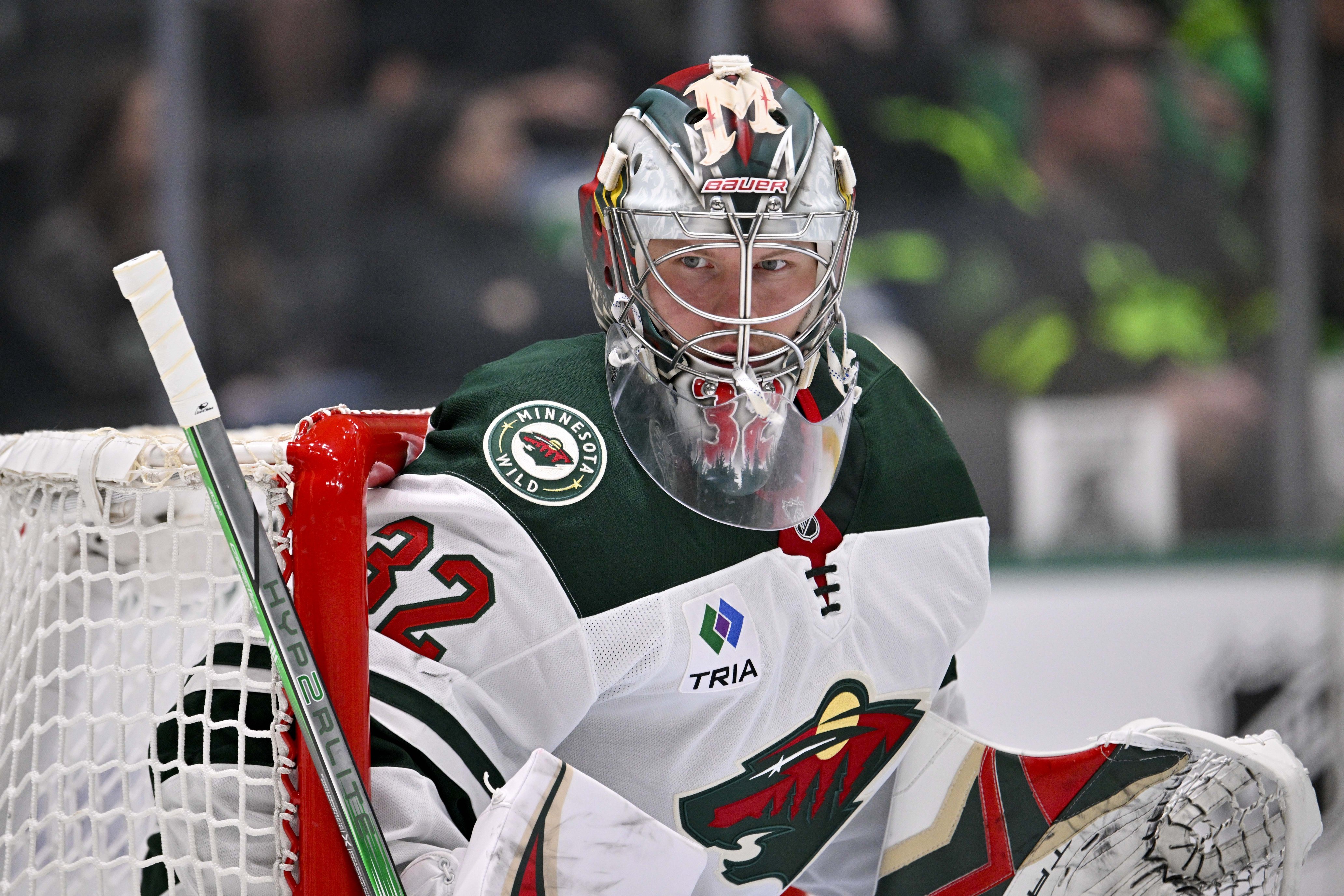
The biggest question facing Minnesota is not whether Wallstedt deserves the next start. His results have already answered that. The more interesting question is how the organization should manage his schedule once Filip Gustavsson is healthy enough to play. Gustavsson was Minnesota's primary starter last season but has not played in 2026-27 while recovering from offseason hip surgery. Reports in mid-November described his return as approaching, not completed. An estimated return is not a medical clearance, and no lineup decision should be treated as official until the club confirms it.
It would be easy to frame the situation as an old starter versus a rising successor, then pretend every game is an audition. That is compelling television and poor roster management. Minnesota is first in the Central Division in the November 16 snapshot. It has genuine reasons to think about the long calendar rather than chasing a story line about who has won the room. Healthy goalies provide a coach with different choices against different opponents, and they protect the team from an injury turning an excellent season into a scramble.
GOATIFY
GOATIFY Hockey
Wallstedt's numbers stand out, but every NHL win belongs to a team; explore GOATIFY hockey apparel and fan gifts.
Wallstedt has appeared in 19 of Minnesota's first 22 games. That is a large share of the opening workload. Goaltending is physical work concealed by bulky pads: repeatedly dropping, pushing laterally, stopping on a hard edge and looking through screens. The mental routine matters just as much. If an athlete starts almost every night, the effects do not always arrive as an obvious bad outing. They can show up as one missed tracking read, a little extra rebound exposure or slower recovery between practices. Preserving his level matters more than extracting every possible November start.
Gustavsson's eventual return could therefore be a competitive advantage. If he is cleared and performing well, a planned split would let Wallstedt remain the principal option without forcing him to carry every difficult back-to-back. Minnesota would gain insurance, tactical flexibility and an experienced goalie who knows the club's defensive tendencies. A gradual return also avoids making the veteran's first appearance after surgery sound like a winner-take-all trial. The sensible test is how both goaltenders are playing and recovering, not which narrative produces more engagement.
There is no need to rush a decision or declare a permanent hierarchy now. Wallstedt has earned trust because he wins difficult games. Gustavsson has earned respect through the work he did before this season. Coach John Hynes can recognize both while setting a workload that serves the club in April. If Gustavsson needs more time, Wallstedt continues carrying the responsibility; if the veteran is ready, the Wild should welcome the additional option. Goaltending depth is a resource, not a problem that must be manufactured into a feud.
Faber's Return Is the Other Half of the Goalie Equation

Faber's season debut against Boston deserves attention for a reason beyond its emotional impact. He had missed the start of the campaign following a skull fracture sustained in a September 25 preseason game. On November 14 he returned, played 24 minutes and 29 seconds, registered an assist and finished plus-four in Minnesota's 6-2 victory. The numbers don't promise that the defenseman is already back to peak form; they reveal how much responsibility the staff felt comfortable giving him immediately.
That matters to Wallstedt because goaltenders do not face shots in isolation. A defenseman who handles a forecheck, wins position in front of the crease or retrieves a puck before a second attacker arrives can prevent a dangerous situation before it is measured as a save. Hughes supplies another dimension with his mobility and puck movement. With both available, Minnesota can distribute difficult matchups more sensibly instead of asking a small group to shoulder the same tasks every night.
Against Boston, Faber spoke about needing to get stronger and faster again despite feeling better than he expected. That is a useful warning against reading too much into one impressive return. The bigger workload test is not whether he could survive one game but whether the staff can keep his minutes productive over the following weeks. Pushing an important defender too hard could erase some of the value Minnesota hopes to gain. The same principle applies in the crease: performance and recovery have to be measured together.
There is also a strategic benefit when a defensive group recovers its depth. The Wild can separate pairings by task. One unit can move play quickly after a clean retrieval; another can take difficult defensive-zone assignments, especially against opponents that attack the net front. That changes the pattern of shots Wallstedt sees. The puck may still arrive frequently, but fewer second and third opportunities are a significant competitive advantage. A goalie who trusts the coverage is free to challenge the first shooter instead of anticipating chaos behind every save.
GOATIFY
GOATIFY Hockey
The Wild have a goalie workload puzzle ahead; browse hockey-inspired hats, shirts and gifts for the next matchup.
With all the attention on 14 goalie wins, it is worth remembering that the club's next step depends on the whole system. Minnesota has built a strong start while key players were unavailable. Recovering Faber and, eventually, Gustavsson gives it a chance to improve its structure without requiring Wallstedt to become even more spectacular. The best version of a contender does not need its goalie to rescue it repeatedly. It makes the rescue saves rare and lets his excellence matter when they do arrive.
What Would Prove This Is a Contender's Foundation?

The Wild entered the week with 34 points, a 15-3-4 record and an 11-game point streak. Those are impressive standings facts, but the most useful questions about the next month are not whether Wallstedt can win another weekly award or whether every forward maintains a scoring streak. Minnesota needs evidence that the habits behind this run survive when the schedule stops being kind and opponents begin adjusting to its patterns.
First, watch shot quality rather than only the final score. A club can win 5-2 while allowing too many unguarded chances, especially when its goaltender is stopping almost everything. If the Wild keep limiting rebounds, cross-ice passes through the slot and uncontested looks from the middle, that is a sturdier foundation than relying on a .926 save percentage indefinitely. A goalie can remain excellent and still regress from an exceptional early-season number. Good roster decisions should assume normal fluctuations and keep the team competitive through them.
Second, track how Minnesota protects leads. The Montreal win showed the value of staying composed in a one-goal game; Toronto and Boston showed the value of finishing an opponent once the Wild got ahead. Those are separate skills. Teams preparing for a playoff series will test Minnesota's breakouts, force its defensemen into repeated retrievals and look for moments when its forwards leave the zone too early. Minnesota needs answers that do not depend on the goalie making a highlight-reel save every shift.
Third, watch the distribution of minutes in both the crease and on the blue line. Wallstedt's remarkable start provides the chance to manage him with an eye toward the rest of the season. If Gustavsson is cleared, his performance can help set a sensible rotation. If Faber continues to recover physically, the coaching staff can work toward a deeper defensive deployment. The guiding question is not whether Minnesota can squeeze one more win from its current group; it is whether the players responsible for those wins are fresh enough to keep producing them.
Finally, the offense has to remain more than a showcase for a single star. Kaprizov and Hughes are central to the way this team moves the puck, but the Boston win also featured two goals each from Hartman and Yurov. Contributions further down the lineup allow Minnesota to absorb quieter nights from its leaders. They also reduce the frequency with which the goaltender must protect a one-goal margin for an entire period. As the Wild prepare for their next matchup with Nashville, those underlying signs matter more than another pretty headline.
Wallstedt's second-star award is earned recognition for a remarkable opening stretch: 14 wins, a .926 save percentage and three very different road victories in one week. But the most important outcome is the choice his performance has given Minnesota. The Wild are not desperate for a goaltending answer. They have a young goalie demonstrating top-level consistency, a veteran recovering toward a return and a defense that could become deeper as key players regain their footing.
The challenge is to turn that wealth into sustainable performance rather than asking one player to preserve a streak forever. If Minnesota balances workload, structure and depth, Wallstedt's weekly honor could become something much more consequential: an early sign that the Wild are building a team capable of winning when the games get tighter.
GOATIFY
GOATIFY Hockey
Shop GOATIFY NHL and hockey shirts, hoodies and stickers.



















