

Senga Saved Eight Games. Now the Mets Face a Starter-or-Trade Decision
GOATIFYAt the beginning of 2026, Kodai Senga was supposed to help steady the New York Mets' rotation. By August, he was recording saves. Now, with the November 10-12 general managers meetings under way, his next role may depend on whether another club sees more value in the pitcher than New York does.
Multiple teams have reportedly expressed interest in trading for the 33-year-old right-hander. That report is not a transaction and it does not mean the Mets have decided to move him. It does, however, turn one of the strangest pitching seasons in New York into a genuine offseason decision. Senga was ineffective as a starter, unexpectedly useful late in games, and remains a pitcher who wants a place in the rotation.
New York's position is complicated by a parallel development: president of baseball operations David Stearns has said Senga will prepare to start in 2027. The practical question is whether the Mets are preparing a rotation comeback, preserving a possible trade asset, or trying to keep both options open until their pitching market takes shape.
How a former All-Star starter lost his place
The case for Senga as a starter begins with a memory of what made his arrival in New York so exciting. In 2023, his first major-league season, he earned an All-Star selection, struck out 202 hitters and finished runner-up in National League Rookie of the Year voting. His signature ghost fork played as a genuine weapon, particularly when hitters had to protect against a hard fastball before the ball disappeared below the zone.
That version of Senga has been difficult to sustain. Injuries limited him to 118 2/3 innings across 23 starts in 2024 and 2025 combined, a thin workload for someone intended to anchor a major-league rotation. In 2026, back inflammation sent him to the injured list again, and his attempt to recover a dependable five- or six-inning role went badly.
Across eight starts in 2026, the right-hander went 0-7 with a 9.66 ERA and a 1.80 WHIP. The loss total was not a complete evaluation of his performance, but the run prevention and traffic on the bases made a convincing case that the existing plan was not working. When a starter regularly puts runners aboard, one brilliant forkball cannot erase the accumulated damage of long innings and short outings.
The Mets initially experimented with longer relief appearances rather than committing immediately to a conventional ninth-inning role. His early relief results were not uniformly encouraging either. But separating a pitcher from the requirement to navigate the same lineup repeatedly created a more interesting experiment: could Senga be effective with his best stuff in smaller, more aggressive bursts?
The distinction matters when trying to predict 2027. A pitcher can recover some velocity and command when he no longer needs to budget pitches for six innings, and the most difficult decision is often what happens when the assignment expands again. For Senga, a successful bullpen stretch offers evidence that the raw pitches still matter, not proof that the shoulder, back, workload and command questions of a rotation return have disappeared.
A club shopping for upside might emphasize the former All-Star starter and see his late-season improvement as evidence of a fixable pitcher. A more cautious evaluator could see the same record and conclude his highest-confidence role is now an inning at a time. That disagreement is exactly why trade interest can emerge without producing an obvious deal.
There is a useful distinction between losing a rotation job and losing the tools that created it. Pitchers with a signature swing-and-miss offering sometimes look entirely different when asked to throw strikes early rather than chase strikeouts late, and an injury-disrupted schedule can make that transition harder. Senga's forkball still gives hitters an unusual problem. His challenge is not simply making it move; it is showing that he can land enough other pitches in the zone to force opponents to respect it over multiple trips through the batting order. That is the issue a serious spring audition would have to answer.
GOATIFY
GOATIFY Baseball
Baseball's wildest turnarounds deserve fan gear with personality. Explore the GOATIFY Baseball collection.


Gold Baseball GOAT Sticker
A gold baseball GOAT decal for your bottle, laptop or game-day gear.
Shop Now ↗


White Baseball GOAT Dad Hat
A white baseball GOAT design for ballpark days and everyday fan style.
Shop Now ↗Eight saves rebuilt the market for Senga, but exposed another risk
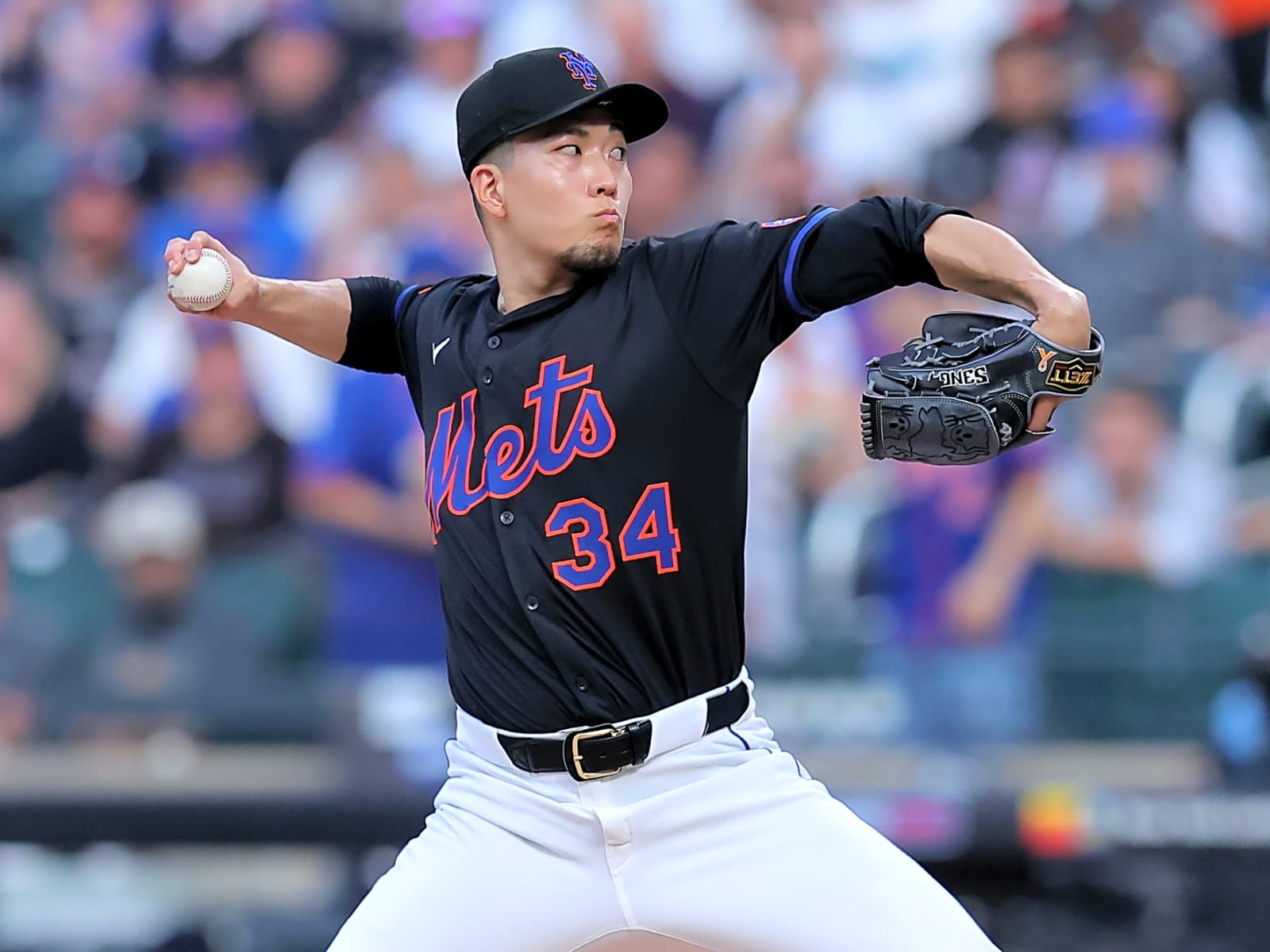
New York's circumstances gave the bullpen experiment more meaning than a routine role change. After reshaping its pitching staff around the trade deadline, the Mets had leverage innings to cover. Devin Williams then went on the injured list in August with a right shoulder strain. The opening gave Senga a chance to handle important outs instead of merely absorbing innings in a lost season.
He secured his first career save against Atlanta on August 10 and eventually grew into a late-inning option. Over the final two months of the season, he made 18 appearances with a 3.78 ERA. In 16 2/3 innings during that span, he struck out 22 batters and walked nine. He converted eight of nine save opportunities, a surprisingly useful line for someone who had recently been removed from the rotation.
Those figures are encouraging, but they also need context. Strikeouts over a short stretch show that his pitches can still miss bats; nine walks in 16 2/3 innings show that command remains a significant risk. A save is also a situation-specific result rather than a complete measure of dominance, and the sample does not tell us whether he could maintain his effectiveness over a full 60-appearance relief season.
His first experience pitching on consecutive days offered a clear reminder. In Chicago in August, after being available for a second straight outing, Senga lost velocity and struggled with location before surrendering a walk-off home run to Tristan Peters. It was one outing, not a definitive disqualification, but it exposed an issue a late-inning reliever has to solve: a closer cannot demand the same recovery timetable as a traditional starter.
Even within his relief work, performance varied according to the assignment. His numbers in save situations were better than in other relief appearances. That does not establish a psychological difference or make him an automatic closer. It does show why teams considering a deal will want his pitch-level trends, health information and usage history rather than a simple comparison of his starter and bullpen ERAs.
The positive takeaway is not that Senga must be the next permanent closer. It is that 2026 left him with more than one plausible professional pathway. If the Mets lose a dependable late-inning arm, he could fill some of those innings. If another organization wants a one-year rotation gamble, New York can point to a recovered ability to miss bats and a stretch of successful leverage work. Neither path is risk-free.
Stearns has a $15 million decision, not just a trade rumor
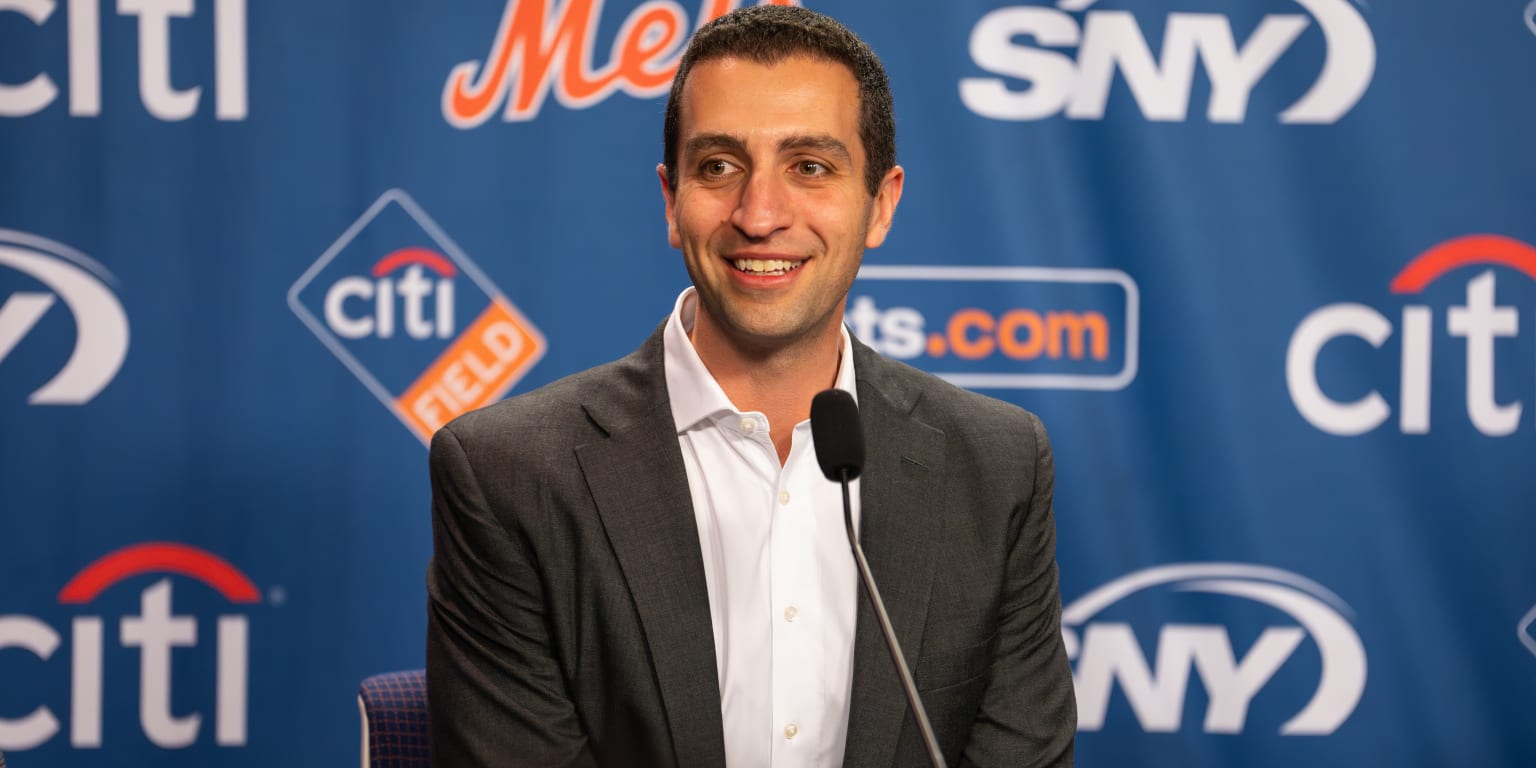
Stearns' message from the general managers meetings gives this story its central tension. The Mets are planning for Senga to prepare as a starting pitcher next spring even as reports indicate several clubs have asked about acquiring him. Preparation is not a guarantee of an Opening Day job. It is the most flexible way to keep a rotation opportunity available while the rest of the pitching staff is assembled.
The contract makes that flexibility valuable. Senga is under contract for $15 million in 2027, and the Mets hold a conditional $15 million club option for 2028 linked to a significant right-elbow injury scenario. He also has limited no-trade rights covering ten teams, although the protected clubs have not been publicly identified. Those terms matter because any transaction would involve both baseball valuation and the practical question of whether a deal is permitted under his contract.
From a prospective buyer's perspective, the pitch is straightforward but uncertain. At his best, Senga has starter-quality swing-and-miss stuff and a track record of handling meaningful major-league innings. At his worst, the last three seasons show repeated interruptions and a 2026 rotation stint that was simply untenable. The conditional option is not the same as an ordinary guaranteed extra year of control, so clubs should not price it as such.
The Mets have their own roster math to solve. Sean Manaea remains among the experienced starting options, while Nolan McLean, Christian Scott, Zac Thornton and Jonah Tong are part of the younger competition. Tylor Megill's recovery from Tommy John surgery creates another variable. A club considering outside starting-pitching upgrades has to determine which of those names can supply consistent innings and which roles are still too uncertain to pencil in.
Trading Senga could clear salary or return pitching depth, but those benefits depend on an actual offer. Keeping him offers insurance if the market becomes expensive or injuries strike again, and it leaves a possible high-leverage bullpen alternative. New York would risk selling at a low point if the former All-Star rebounds in another uniform. It would also risk holding an expensive uncertainty if an offseason rotation reset fails.
Nothing reported so far identifies a confirmed destination, a proposed return, or an agreement on his future role. The sensible sequence is for the Mets to listen, assess the quality of interest, and keep a starter's offseason program in place while building their 2027 staff. The same pitcher can be a useful trade candidate and a legitimate internal contingency. The decision will turn on the offers and the alternatives, not on the mere existence of trade rumors.
One more factor is timing. The trade market is usually shaped by which free-agent starters sign first and which clubs miss out, not just by the first inquiry in November. New York can benefit from waiting for specific offers, but it also risks having less time to redirect any salary or roster opening toward its own needs. A buyer faces the opposite calculation: move early for upside before prices rise, or wait for more medical and throwing information before committing. Neither choice is automatically right. The pitcher's health, desired workload, available alternatives and the terms of a real proposal will matter more than a speculative list of suitors.
GOATIFY
GOATIFY Baseball
Whatever Senga's next chapter brings, represent your love of the game with GOATIFY Baseball apparel and accessories.

White Baseball GOAT Sticker
A white baseball GOAT decal for your bottle, laptop or game-day gear.
Shop Now ↗


White Baseball GOAT Sweatshirt
Rep baseball’s greatest with a white GOAT graphic sweatshirt.
Shop Now ↗

Gold Baseball GOAT Dad Hat
A gold baseball GOAT design for ballpark days and everyday fan style.
Shop Now ↗Senga's 2026 season is difficult to summarize with one stat line. His early starts looked like the end of a rotation plan; his late saves suggested a useful reinvention; and his stated preference for starting has never completely disappeared. The Mets therefore have evidence supporting several options but certainty supporting none of them.
The next meaningful development will be more concrete than a report of general interest: a real offer, a clearer rotation acquisition, a health update or a decision about how many innings the club expects him to handle in spring training. Until then, preparing Senga to start while evaluating trade calls is not indecision. It is what a team does when a once-established starter has become one of its most complicated assets.

















