Logan Henderson’s First October Start Is Milwaukee’s Chance to Take Control
GOATIFYMilwaukee survived a 3-2 Game 1 and now hands Game 2 to a 24-year-old making his first postseason start. Logan Henderson does not arrive as a typical rookie being protected from the moment. He finished 11-3 with a 2.47 ERA, a 0.84 WHIP and 110 strikeouts in 98 1/3 innings. Milwaukee won 14 of his 18 starts.
Against a Padres lineup built around Fernando Tatis Jr. and Manny Machado, the question is whether the command that made Henderson so reliable can hold up when every baserunner matters.
Henderson’s command is the reason Milwaukee can trust a rookie here
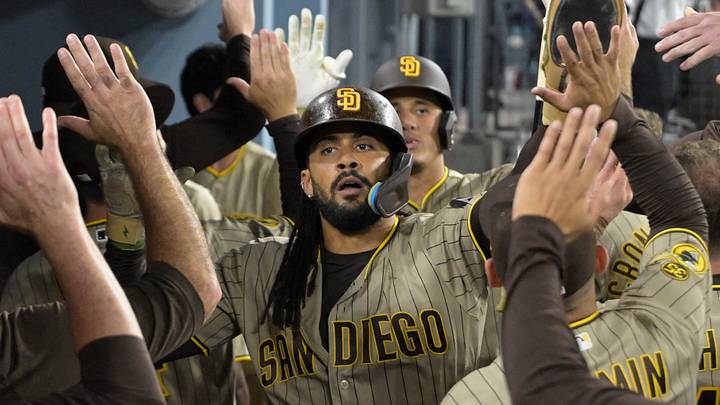
Henderson’s rookie season was impressive because he rarely made innings harder than they needed to be. His 0.84 WHIP is the clearest shorthand for that skill. He limited free traffic, worked ahead often enough to use his full mix and avoided the extended rallies that turn a manageable start into a bullpen emergency.
That matters against San Diego. Fernando Tatis Jr. and Manny Machado can punish pitches in the zone, but the Padres become even more dangerous when pitchers donate baserunners and are forced to attack from behind in counts. Henderson’s job is not to pitch around the middle of the order. It is to make them earn every base while refusing to give the bottom half of the lineup easy access to scoring position.
The postseason test is whether that same calm survives the first moment of trouble. A leadoff double, a questionable call or a loud crowd can tempt a young starter to chase strikeouts instead of executing. Milwaukee trusted Henderson all season because his outings usually stayed organized. If he keeps Game 2 organized, the Brewers can dictate when the bullpen enters rather than reacting to a crisis.
There is also a tactical reason Milwaukee can be aggressive with this assignment. Henderson’s season was not built on escaping constant jams; it was built on preventing them. That lets the defense stay in normal positions and gives the catcher freedom to sequence for weak contact instead of treating every hitter like a crisis.
San Diego will try to disrupt that rhythm by making him work from the stretch and forcing him to show secondary pitches in hitter-friendly counts. Henderson’s answer has to be boring in the best possible way: first-pitch strikes, competitive misses and no unnecessary walks ahead of Tatis or Machado. October often rewards the pitcher who refuses to create extra problems for himself.
If he can get through the first two innings without allowing the moment to speed him up, Milwaukee can manage the middle innings from strength. That is the real value of Henderson’s profile. The Brewers are not betting on a rookie suddenly becoming someone else. They are betting that the habits that produced an 11-3 season and a 0.84 WHIP remain useful when the stakes rise.

Michael King makes every Henderson mistake feel more expensive
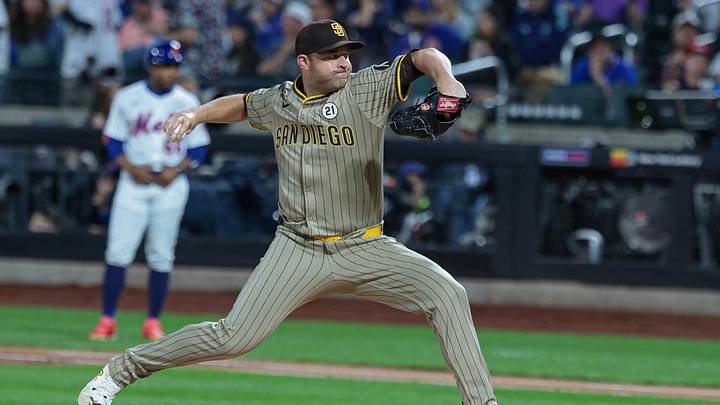
The pressure on Henderson is amplified by the pitcher on the other side. Michael King enters Game 2 after throwing seven scoreless innings with eight strikeouts against the Cubs in the Wild Card round. San Diego did not ask him to survive that game; it asked him to control it, and he did.
King finished the regular season with a 3.21 ERA and has already shown that his pitch mix can work deep into a postseason start. Milwaukee therefore cannot assume that one early mistake will be erased by a five-run inning. The more efficiently King moves through the Brewers’ lineup, the more valuable every clean Henderson inning becomes.
Milwaukee’s best route may be forcing long plate appearances rather than chasing instant damage. If the top of the order can raise King’s pitch count, the Brewers can move the game toward the bullpen battle they are comfortable playing.
King’s own postseason form also changes the decision tree for Milwaukee’s hitters. When an opposing starter is filling the zone and missing bats, giving away early-count outs can let him cruise into the seventh before the Brewers ever see a favorable matchup. Chourio and Contreras do not have to abandon aggression, but the lineup has to distinguish between a hittable early strike and the pitch King wants them to chase. A couple of eight- or nine-pitch plate appearances can matter even without producing a hit because they shorten the distance to San Diego’s relief corps.
That makes Game 2 less about which starter posts the flashier strikeout total and more about which offense can force the first uncomfortable pitching decision. If Henderson keeps Milwaukee within a run while King works harder than he did in the Wild Card round, the Brewers can still tilt the game toward their depth late.

Game 1 changed the psychology of Game 2
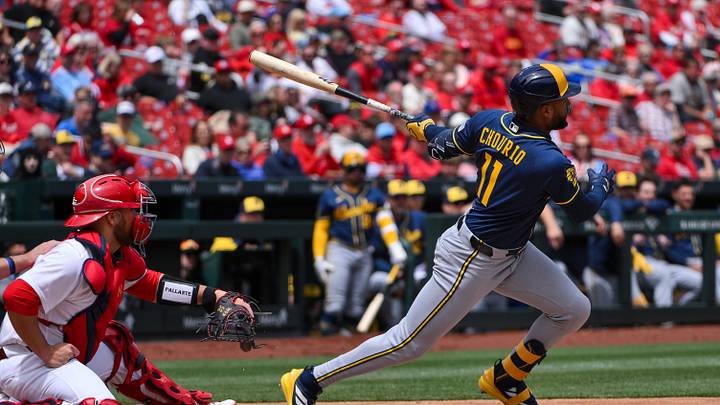
Milwaukee’s 3-2 Game 1 win was not comfortable. The Brewers fell behind, rallied on home runs from Jackson Chourio and William Contreras, and then survived a ninth-inning drive by Ty France that struck a roof cable before Chourio caught it for an out. It was exactly the kind of postseason game that leaves both teams believing the margin could have gone either way.
The scoreboard still matters more than the feeling. Milwaukee starts Game 2 ahead 1-0, which changes how Pat Murphy can manage Henderson. He does not need to squeeze an extra inning out of the rookie if the command starts to disappear. A deep bullpen can become part of the plan earlier because the Brewers already banked the opener.
San Diego has the opposite problem. Going home tied 1-1 would restore the series. Going home down 0-2 would turn every mistake in Game 3 into an elimination-level event. That urgency can make a lineup more aggressive, and Henderson can use it with early strikes.
Game 1 also supplied a useful warning against treating the series lead as security. Milwaukee’s margin disappeared quickly enough that one defensive mistake, one walk or one badly located fastball could have flipped the opener. The Brewers should carry the confidence of the win without managing Game 2 as though they have room to waste. A 2-0 lead in a five-game series is a genuine structural advantage; a 1-1 split hands San Diego home-field momentum and resets the matchup.
For Henderson, that means the scoreboard should not change his basic plan. Whether Milwaukee scores first or San Diego does, his value comes from preventing crooked innings. The Brewers can live with a solo homer far more easily than a walk, a single and then a mistake to the middle of the Padres order.
This is the kind of start that explains why Milwaukee won 103 games
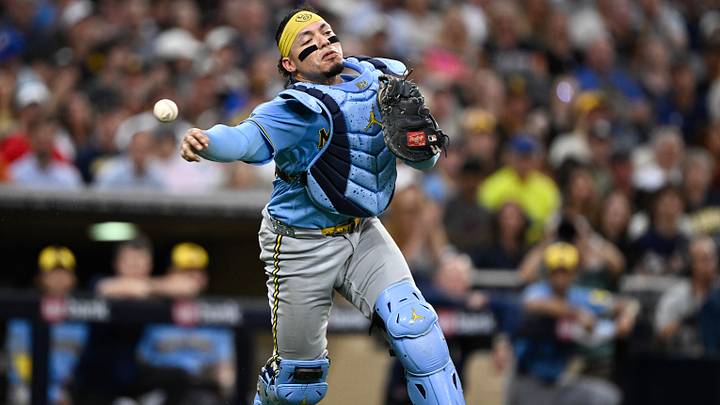
The larger point is not that Milwaukee found one good rookie pitcher. It is that the Brewers reached 103 wins with enough pitching depth to hand a Division Series start to Henderson without treating it as an emergency. Jacob Misiorowski opened the series, Henderson follows, and Dustin May is lined up for Game 3. That is a postseason rotation built from development, depth and the willingness to trust arms before they have years of October experience.
Henderson’s regular season justified that trust. He never allowed more than three earned runs in a start and finished with a 0.84 WHIP. Those numbers describe a pitcher who repeatedly kept Milwaukee in games even when he was not dominating. In a best-of-five series, that floor is enormously valuable.
The Brewers do not need every young pitcher to be an ace at once. They need enough quality innings to let the lineup, defense and bullpen decide close games. If Henderson reproduces that formula, Milwaukee’s depth becomes the reason San Diego is under real series pressure.
That depth is especially important because postseason schedules compress every weakness. A club that depends on two established starters can look formidable until weather, workload or one short outing forces the bullpen to cover unexpected innings. Milwaukee’s regular season gave Murphy more combinations. Henderson can start, Misiorowski can miss bats in a different way, and May offers another veteran option behind them. The Brewers are not locked into one path if Game 2 becomes unusual.
There is also organizational value in giving Henderson this assignment rather than hiding him. October experience is scarce until a team actually trusts a young pitcher enough to earn it. If Milwaukee’s development pipeline is going to remain part of its competitive advantage, starts like this are where that philosophy becomes tangible rather than theoretical.
The matchup with San Diego is therefore a test of more than one rookie’s nerve. It is a test of whether Milwaukee’s season-long model survives when the calendar removes the margin for experimentation. The Padres have enough star power to punish any soft inning, but the Brewers have spent six months building answers behind the starter. Henderson’s task is to hand those answers a game that is still controllable. Five competitive innings can be more valuable than chasing seven and allowing the lineup to see him a third time in favorable counts.
That is why the start can reveal so much about Milwaukee. A club that trusts its depth can make the disciplined move before trouble becomes damage. If Murphy can pull Henderson at the right moment rather than the desperate moment, the Brewers will be managing Game 2 on their terms.
Milwaukee does not need Henderson to become a postseason legend in one afternoon. It needs the version of him that made the regular season feel unusually calm for a rookie: strikes, weak traffic, no self-created innings and enough swing-and-miss to escape when the Padres threaten.
If that version shows up, the Brewers can turn a narrow Game 1 escape into control of the series.