Paolo Banchero's Ankle Sprain Hits Magic at 0–2 — Now Wagner Must Lead
GOATIFYThe Orlando Magic were two games into a season meant to show that their talented young core could finally become something more dependable. Then Saturday's MRI changed the conversation. Paolo Banchero has a low-grade right high ankle sprain, suffered during Friday's 115–93 loss to Minnesota, and the team has not announced a return date. The typical four-to-six-week recovery window reported around this diagnosis is a guide, not a confirmed timetable for Orlando's franchise forward.
That distinction matters, but it does not make the basketball problem smaller. Banchero opened the season with 35 points and 10 assists against Atlanta, then played through ankle discomfort before leaving the Timberwolves game with 14 points, six rebounds and five assists. Orlando is 0–2 under new coach Sean Sweeney and now faces an early road stretch without the player who usually dictates the geometry of its half-court offense. The immediate challenge is not to replace one star's box score. It is to find a functional identity while the team waits for clearer medical answers.
The MRI turned a sore ankle into a serious early-season test
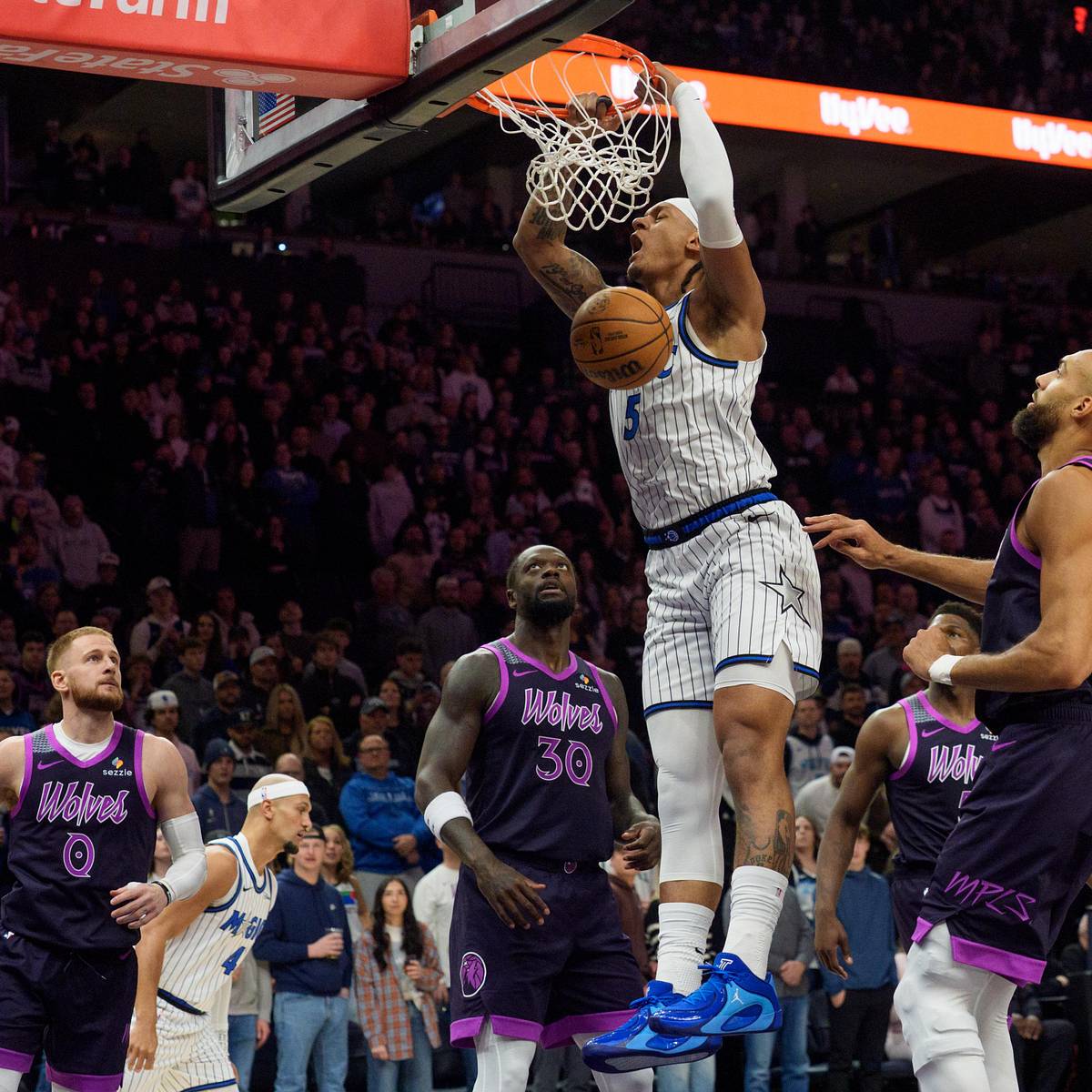
There were two versions of Banchero's injury story within roughly a day. Friday night, it looked possible that Orlando had avoided a prolonged absence: he had played 26 minutes, briefly returned after experiencing discomfort and was able to walk after the game. By Saturday, imaging had confirmed a high ankle sprain. That is a different problem from the familiar outward roll that many players associate with a routine ankle tweak, because the structures involved are higher up the joint and can be stressed by twisting and contact.
Banchero traced the first incident to the opening quarter, when teammate Desmond Bane fell into him and his ankle turned inward. He tried to continue, then felt it again after jumping in the third quarter and decided not to force the issue. The Magic's official update says the injury occurred in the first half, that further testing and evaluation will follow and that another status update will come when appropriate. It does not set a specific number of games he will miss. The four-to-six-week figure circulating in reports describes a typical recovery pattern for the diagnosis, not an individualized clearance from Orlando's medical staff.
Even a relatively short absence would land at an awkward time. Orlando has already lost at home to Atlanta and Minnesota. The Hawks game showed the upside of the Banchero-led attack: he scored 35 and supplied 10 assists while making 10 of 12 shots. The Timberwolves game showed how quickly the picture can deteriorate when the team's creation and shooting fail together. Orlando made only eight of 39 attempts from three-point range in that defeat, and Minnesota controlled the rebounding battle as well. Those problems cannot simply be assigned to an injured forward, but they make his absence more difficult to absorb.
The relevant question is therefore less about predicting a return date and more about the decisions made before one exists. Sweeney needs a stable starting group, dependable spacing and a way to avoid treating every empty possession as a request for another isolation. A careful rehabilitation timeline protects the player; a credible short-term offense protects the season. Both jobs have to begin immediately.

Franz Wagner inherits the hardest part of Banchero's job

Franz Wagner is the obvious first answer when a team loses a high-usage forward, but 'give Franz the ball' is not a complete offensive system. Banchero's value is not only the shots he makes. He forces help defenders to make early choices, draws attention near the elbows and can find teammates before a defense finishes rotating. Remove that pressure and every teammate's normal shot may become a little harder. Wagner can recreate parts of it through driving, cutting and secondary playmaking, yet he will face a different level of defensive attention if opponents no longer have to worry about Banchero on the opposite side.
Wagner scored 18 against Minnesota before fouling out, but the team struggled from long range. That contrast illustrates the risk of making him the sole engine: he can reach his own scoring spots and still see the overall offense stall if defenders are comfortable crowding the lane. The coaching staff needs to create actions that let him attack a moving defense rather than a fully loaded one. Early drag screens, handoffs from Wendell Carter Jr. and weak-side movement from guards can all manufacture a fraction of the advantage Banchero normally generates through individual creation.
There is also a stamina and decision-making element. Asking Wagner to score, organize, rebound and cover for missing size on every trip can make him less effective late in games. Orlando would be wiser to divide creation into deliberate stretches: Wagner initiating some possessions, Bane running others and the guards pushing off stops whenever possible. That structure is more resilient than waiting for one player to produce an imitation of Banchero's 35-point opener.
The Magic have recent evidence that the group can survive stretches without their star. They went 7–3 in 10 games without Banchero last season. That is encouraging, not a guarantee: opponents, health, rotations and the coach are different now. The useful lesson is that a team can still win through connected defense and shared creation. Wagner does not need to become Banchero overnight. He needs enough help that his best possessions remain dangerous rather than predictable.
Desmond Bane and Orlando's guards cannot let the floor shrink
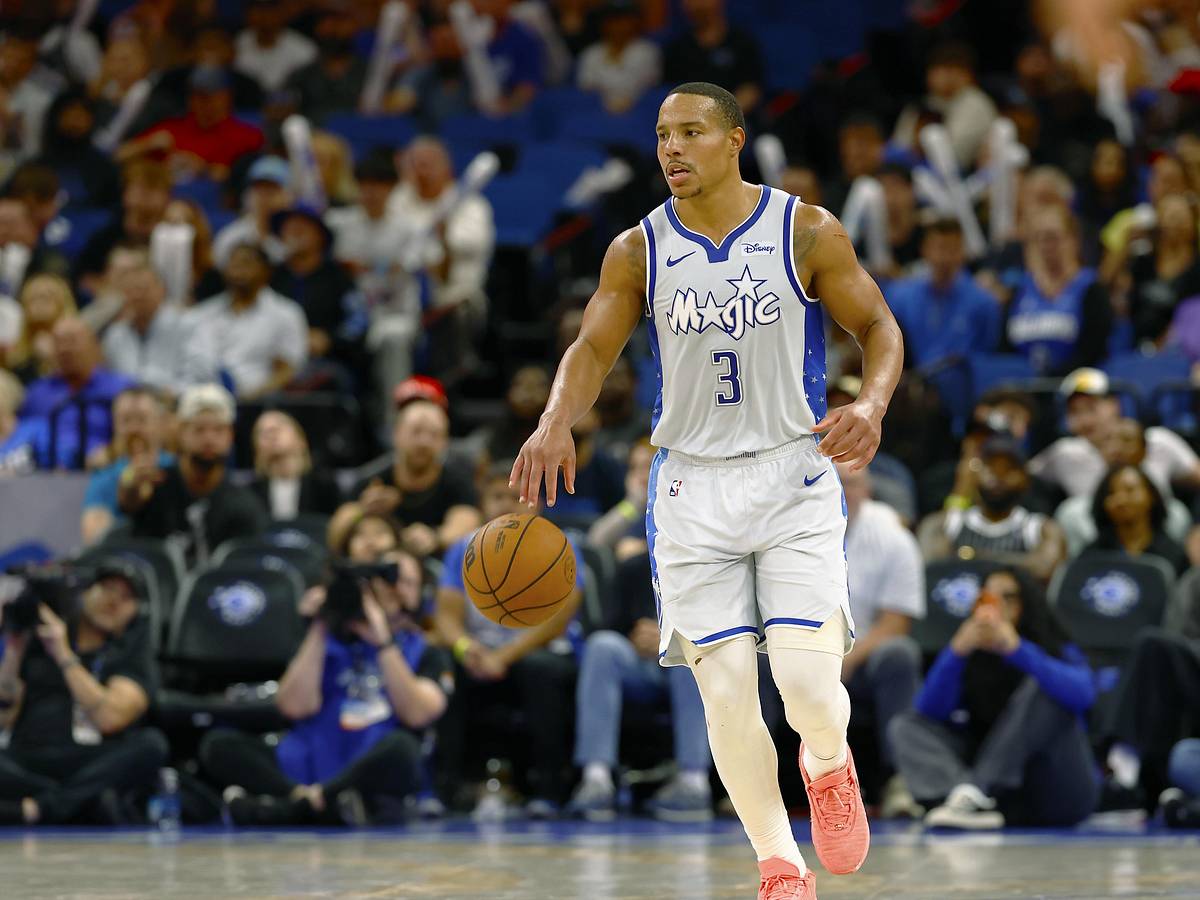
Desmond Bane was acquired to make Orlando's offense less cramped and more reliable. The need for his shooting and handling becomes even sharper without Banchero. Against Minnesota, Bane and Wagner combined to hit only two of 15 three-point attempts, with Bane going one of nine. One poor night is not a forecast of the next month, but it shows the cost when the Magic cannot force defenders to respect the perimeter. A defense that can sag into the paint turns every drive into a crowded negotiation and every kick-out into a rushed attempt.
Bane's job is now twofold. He has to take open shots confidently, and he has to create them for other players by handling the ball enough to force switches, help and recovery. His movement without the ball is just as important. A simple handoff into a pull-up, a quick relocation after a Wagner drive or a screen that frees a cutter can change the defense's spacing without requiring a highlight play. Orlando needs those repeatable advantages more than an occasional heroic isolation.
Jalen Suggs can contribute by turning defense into pace. His point-of-attack pressure, willingness to move the ball and ability to attack before the opponent gets set give Orlando an alternative to long half-court possessions. But pace only helps if the guards avoid careless turnovers and choose the right moments to accelerate. Anthony Black's ankle issue adds another complication, although reports indicate he is nearing a return. The staff should resist building an entire short-term plan around any player whose availability has not been confirmed.
There may be an opening for Tristan da Silva to absorb more forward minutes, particularly if the coaching staff wants a larger lineup without overloading Wagner. That does not automatically make him a direct replacement for Banchero's scoring or playmaking. The sensible measure is whether his minutes improve defensive assignments, movement and shot quality. Orlando can patch an absence by committee, but only if each contributor has a clear job. Bane must stretch the defense, Suggs must organize its energy, and the supporting forwards must keep the ball moving instead of allowing the attack to freeze.

A brutal road swing will show whether Sweeney has a Plan B
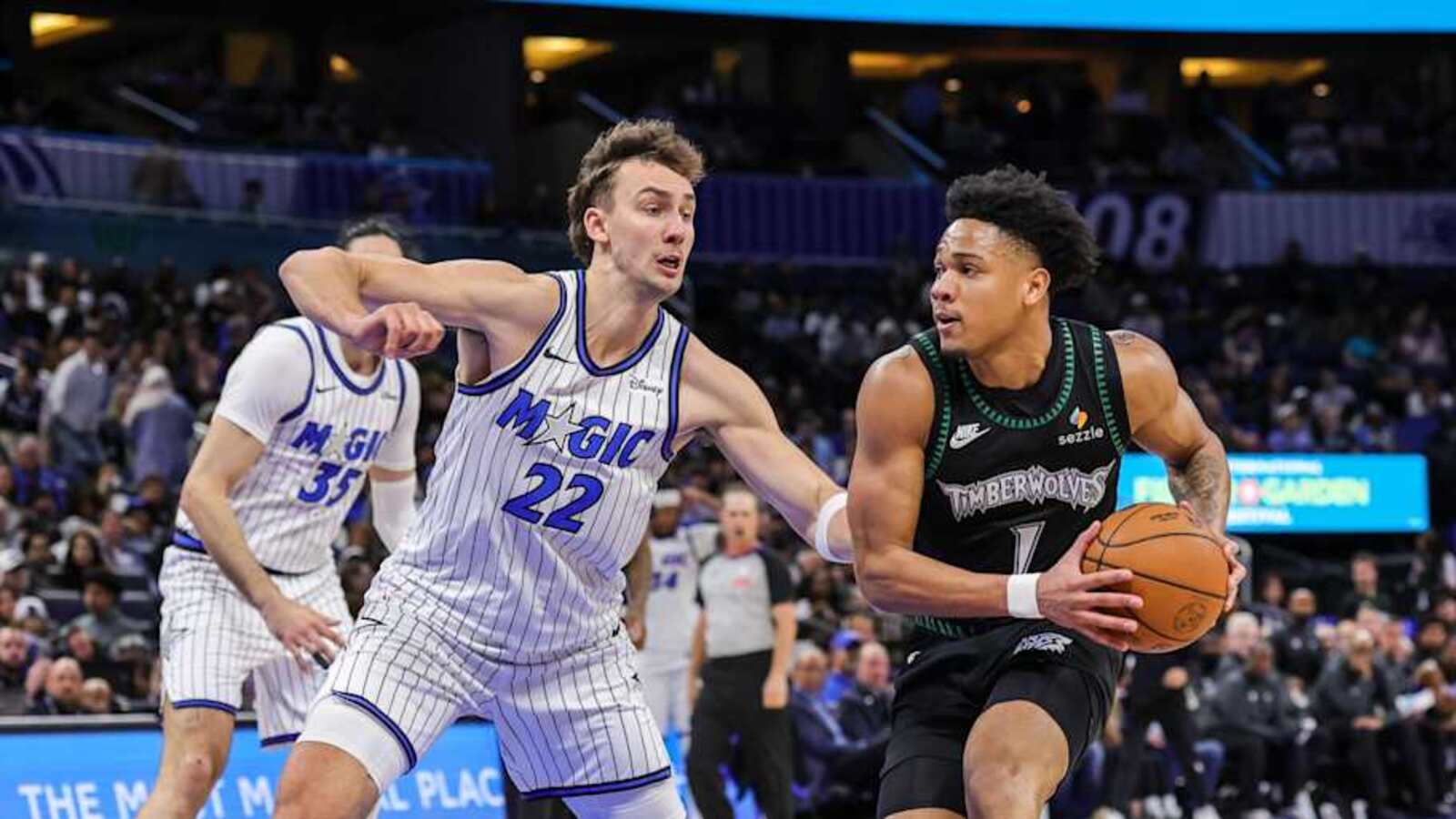
Orlando's schedule offers little time for an extended experiment. The Magic travel to New York on Sunday and then play twice in Toronto. Those games arrive after two home losses and before anyone can know precisely how long Banchero's rehabilitation will take. The road trip will not determine the entire season, but it will reveal whether the new coaching staff can solve problems quickly without abandoning the principles it wants to establish.
The first priority should be the possession battle. Minnesota's 115–93 win was not built on one unstoppable superstar performance. Anthony Edwards scored 15 on five-of-23 shooting, yet the Timberwolves won comfortably because Orlando could not sustain its own offense and struggled to finish defensive possessions. The Magic were outworked on the glass and shot 20.5 percent from three. With Banchero unavailable, those margins become even less forgiving. Defensive rebounds must become transition opportunities, and the offense must get into actions early enough to generate a second option when the first is covered.
Sean Sweeney is in his first season as Orlando's head coach, so this is an unusually public early test of his adaptability. A sensible response may involve more movement through Carter, staggered minutes for Wagner and Bane, and a willingness to change who starts without treating that change as a verdict on a young player's future. The right lineup is not necessarily the five most recognizable names. It is the group that can defend without fouling, rebound, maintain spacing and generate a useful shot against a set defense.
The most important measurements over the next few games are therefore not just wins and losses. Watch how often Orlando gets two quality options in the same possession, whether Bane receives catch-and-shoot opportunities, whether Wagner can attack without three defenders waiting in the paint and whether the Magic prevent second-chance points. Those are the habits that will still matter when Banchero returns. The danger is allowing a temporary absence to expose a permanent dependence on one creator; the opportunity is to build an offense that will eventually be stronger with him back in it.
For now, Orlando has a confirmed diagnosis and an unanswered timetable. A four-to-six-week absence is plausible for this type of injury, but the Magic have not promised that schedule, and the only responsible expectation is that Banchero's next update will depend on evaluation and recovery rather than the standings. The team cannot hurry that process to rescue an 0–2 start.
What it can control is the basketball in front of it. Wagner has the skill to lead possessions, Bane has the shooting to restore space, and Sweeney has an early chance to demonstrate that Orlando's identity is more than one forward carrying an impossible load. The next few games will not replace Banchero. They will show whether the Magic are learning how to survive without him.