

The Yankees Had MLB's No. 2 Bullpen. Cashman Says Rebuild It Anyway.
GOATIFYThe New York Yankees have one of baseball's more uncomfortable offseason problems: they need to rebuild a unit that just ranked among the best in the game. Their 2026 relievers delivered a 3.13 ERA, second in the majors, and allowed fewer hits than any other American League bullpen. Now David Bednar, Paul Blackburn and Tim Hill sit among the names with uncertain futures. Brian Cashman has elevated relief pitching to the top of his winter agenda, and it is not hard to understand why.
The paradox is that success makes the decisions harder. The Yankees cannot wave away 93 regular-season wins, a Cy Young-winning starter and a relief corps that repeatedly protected narrow leads. They also cannot ignore the AL Division Series sweep that ended their year. Paying to preserve a familiar bullpen may be expensive; rebuilding with cheaper arms may be even riskier. The challenge is to preserve the 2026 staff's reliability without paying as though every good reliever will always be this good.
A 3.13 ERA Looks Like a Strength Until You Count Who Might Leave
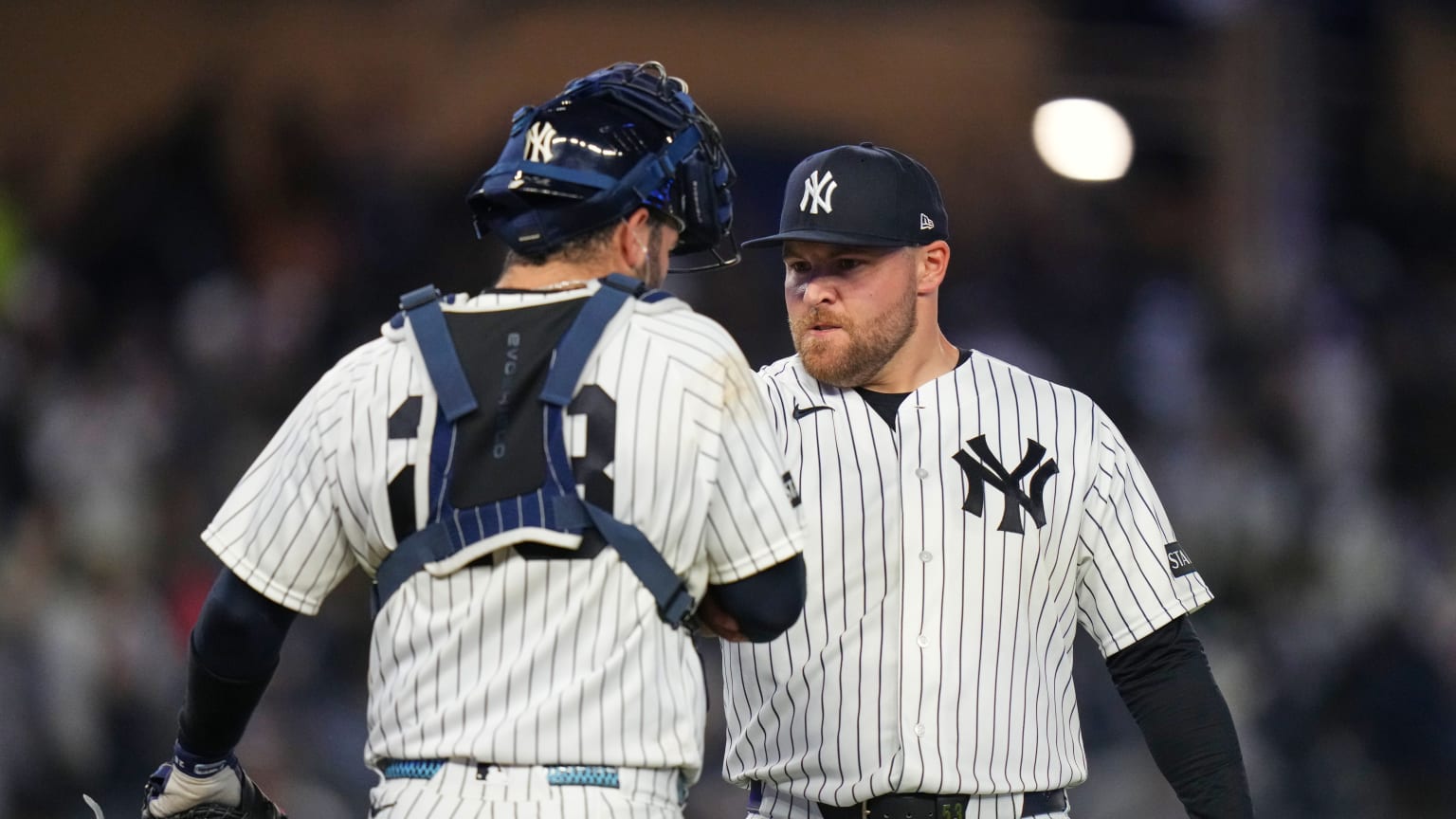
Numbers can be accurate and misleading at the same time. New York's bullpen finished 2026 with a 3.13 ERA, the second-best figure in Major League Baseball, and its 484 hits allowed were the fewest by an American League relief corps. Those are impressive results across a long season, not the product of one lucky October week. They also describe a group assembled for a season that has already ended. Brian Cashman is not trying to repair a unit that performed badly. He is trying to replace the people whose performances made that unit good.
That distinction matters because relief pitching is not a single position. A closer can protect a ninth-inning lead, but somebody must face the opponent's three best hitters in the eighth, somebody has to bridge the sixth when the starter exits early, and somebody must get a left-handed threat out without forcing the manager to burn another arm. The 2026 Yankees distributed those assignments among pitchers with different profiles. The risk now is not merely losing a combined number of innings. It is losing the precise combinations that let Aaron Boone match arms to situations.
David Bednar, the established ninth-inning option, is on the free-agent market while considering the qualifying offer. Paul Blackburn and left-hander Tim Hill are free agents as well. Other relievers also reached the market, and Fernando Cruz's partially torn ulnar collateral ligament adds an injury uncertainty to the depth picture. The losses would be serious individually; taken together, they threaten to remove the sequence that made close games manageable. A reliever who can pitch the sixth is not automatically a replacement for a reliever trusted with two men on in the eighth.
New York won 93 games and reached the Division Series, only to be swept by Tampa Bay. Aaron Judge's rib injury complicated the postseason lineup, and offensive problems plainly contributed to the ending. But a disappointing October also changes how a front office values regular-season strengths. A great bullpen helps get a club into the playoffs; it does not guarantee the final four wins of a championship. The right reaction is not to pretend the 3.13 ERA meant nothing. It is to understand what produced it and decide which elements are repeatable next year.
GOATIFY
GOATIFY Baseball
Explore GOATIFY Baseball fan styles while the Yankees work to replace the relievers behind their 3.13 ERA.


White Baseball GOAT Sticker
A white baseball GOAT decal for your bottle, laptop or game-day gear.
Shop Now ↗
White Baseball GOAT Dad Hat
A white baseball GOAT design for ballpark days and everyday fan style.
Shop Now ↗Cashman's public emphasis on the bullpen should therefore be read as a statement about roster exposure rather than a confession that the 2026 numbers were fraudulent. Before New York can decide how aggressively to chase another bat, it needs to know who takes the ball in the highest-leverage situations. That is the difficult part of a strong team's offseason: replacing proven work without assuming that the next batch of arms will automatically deliver identical results. The Yankees need enough certainty to enter April with a plan, and enough adaptability to survive the first injury or slump.
Bednar's $23.15 Million Offer Is Only the First Price Tag
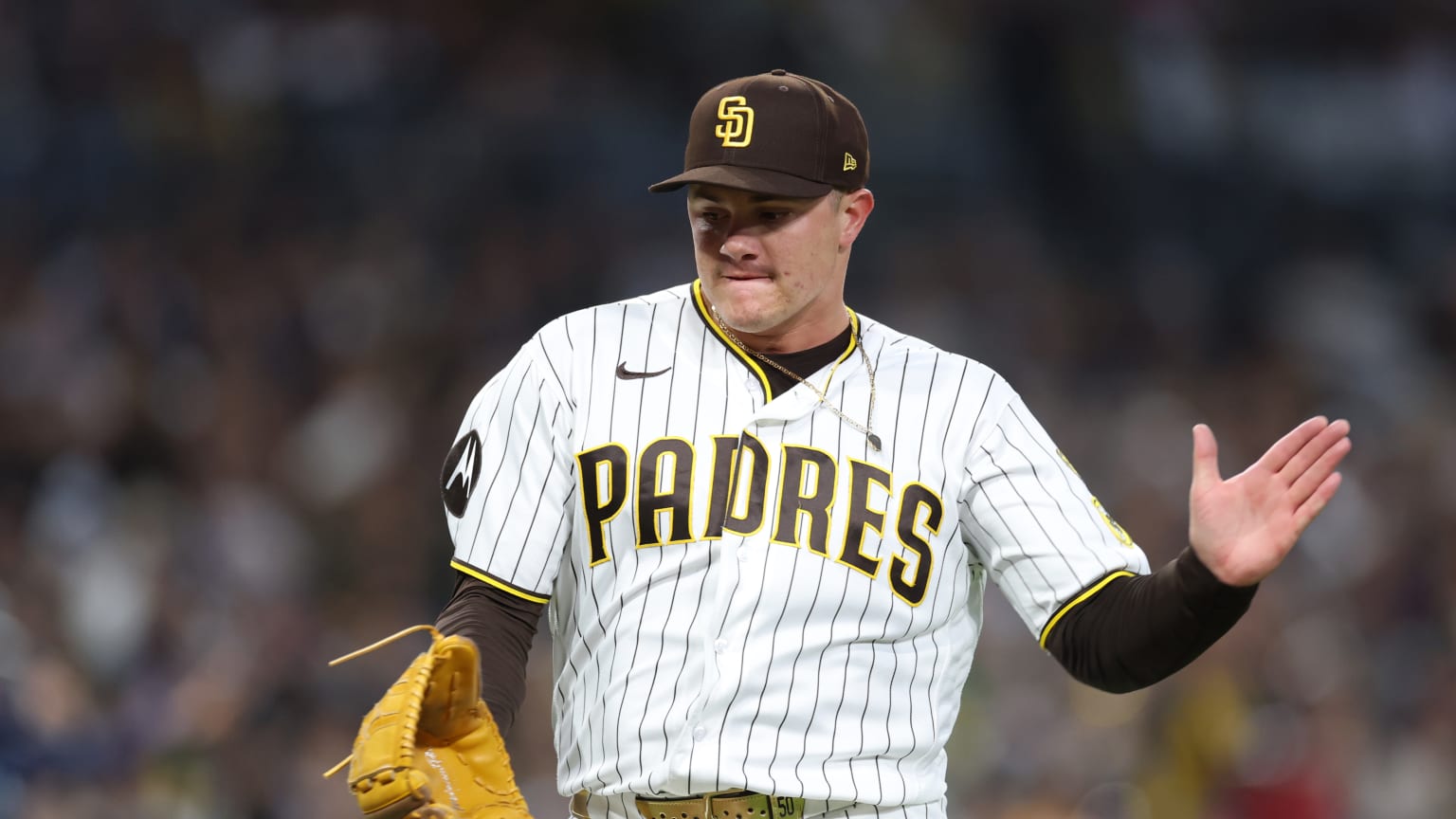
The first decision comes with a clear number attached. New York extended Bednar a one-year, $23.15 million qualifying offer, giving the 32-year-old an immediate option while preserving the club's negotiating leverage if he seeks a longer contract elsewhere. That offer is not an agreement, and it should not be treated as proof he will be back. He can accept the guaranteed short-term money or decline it and pursue a multiyear arrangement. Until that choice is settled, the Yankees cannot write his name into the ninth inning with confidence.
A closer with Bednar's established track record provides something the free-agent market rarely makes cheap: a manager can outline the end of a game before it begins. The emotional temptation is to protect that certainty at almost any price, particularly for a team that expects to contend immediately. The economic problem is that relievers work fewer innings than starters, can fluctuate sharply from year to year, and are especially exposed to injuries and changes in command. A large commitment can be perfectly rational for the right pitcher while still consuming the flexibility needed to fix three other places on the roster.
Cashman has signaled that he is willing to consider spending heavily on relief pitching if the value makes sense. It is not a blank check. If Bednar wants the security of several years, New York must compare his total cost with the combined cost of multiple capable late-inning arms. An extra bullpen signing is valuable only if it expands the manager's trustworthy options rather than collecting another name with impressive past statistics. The club also must account for the negotiating clock: a qualifying-offer decision and the approaching expiration of baseball's labor agreement can compress how much time is available for orderly deals.
Adrian Morejon offers a useful example of the alternatives. The left-hander was on the Yankees' trade radar in July and is now a potential free-agent target. He has the sort of handedness and high-leverage profile that could make a bullpen less dependent on one closer, although interest is not a signing and the market may be expensive. A package of useful relievers with complementary traits could be more resilient than pouring nearly every available dollar into the ninth inning. Equally, a healthy, dominant closer can be worth the premium when a team knows precisely how it will cover the innings ahead of him.
The Yankees should be wary of selling fans a simple choice between paying Bednar and conceding 2027. They can pursue him, evaluate Morejon, explore a reunion with Jonathan Loáisiga, and search for cost-controlled trade candidates simultaneously. Each of those routes brings a different risk: annual volatility, contract length, medical history, or prospect cost. What matters is the complete set of pitchers after the deals are done. Paying for three separate, dependable roles would be more useful than winning a headline on one signing and leaving two holes untouched.
Headrick's 81 Games Prove the Foundation Is Real. They Do Not Fill the Bullpen.
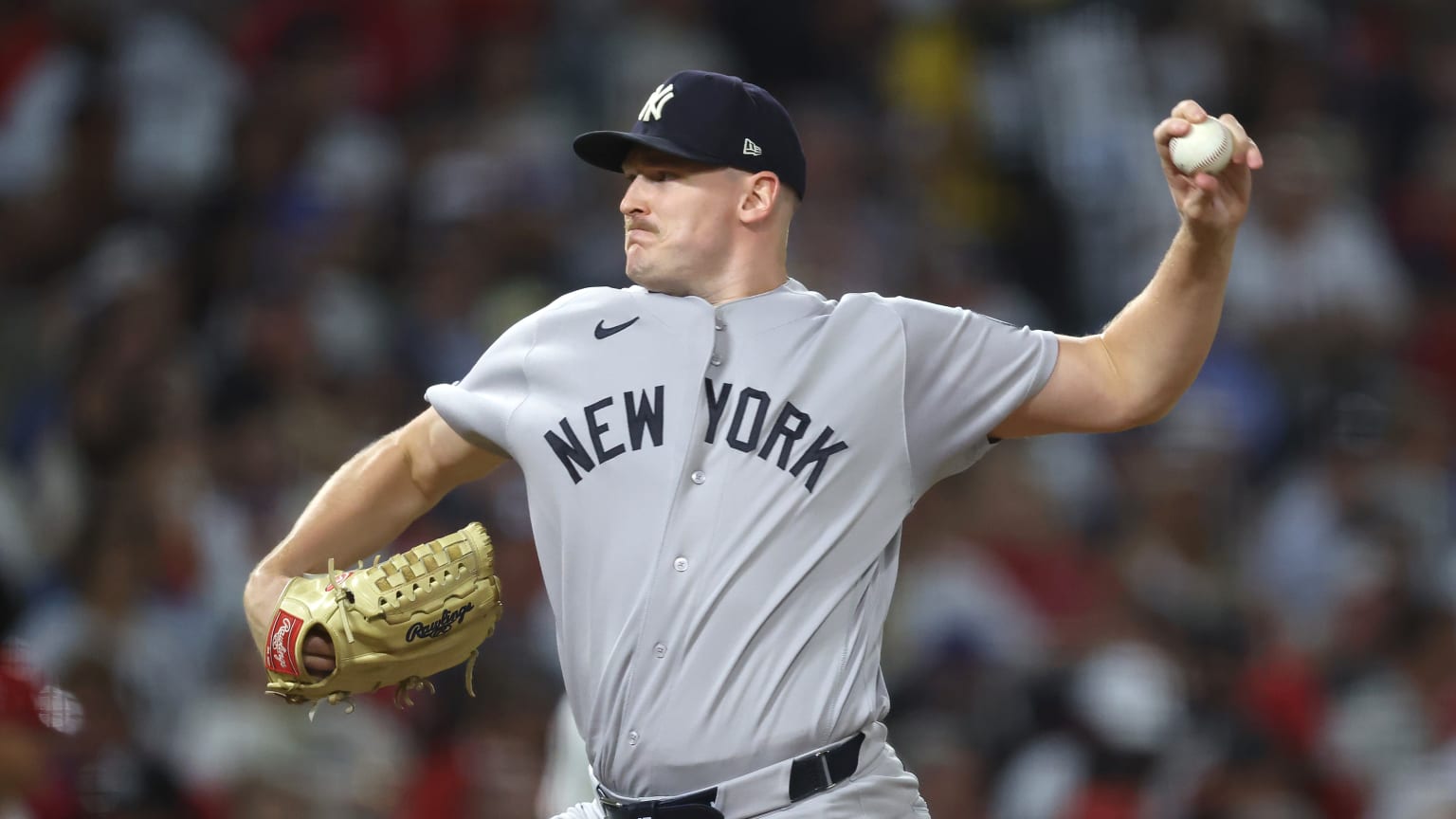
Brent Headrick is the most reassuring answer already on the roster. The left-hander appeared in an MLB-leading 81 games in 2026, finishing with a 2.18 ERA while becoming one of Boone's trusted options. In a sport where elite pitching talent is often discussed in terms of pitch speed and strikeout highlights, his value was also logistical. He answered the phone from the bullpen again and again. That availability gave the coaching staff a stable piece of a complicated weekly puzzle.
GOATIFY
GOATIFY Baseball
Browse GOATIFY Baseball gear as Bednar's $23.15 million decision reshapes New York's ninth-inning plans.


Gold Baseball GOAT Sweatshirt
Rep baseball’s greatest with a gold GOAT graphic sweatshirt.
Shop Now ↗

White Baseball GOAT Sweatshirt
Rep baseball’s greatest with a white GOAT graphic sweatshirt.
Shop Now ↗
Gold Baseball GOAT Dad Hat
A gold baseball GOAT design for ballpark days and everyday fan style.
Shop Now ↗His breakout carried a distinctive backstory. Headrick arrived in New York looking for a meaningful major-league role after a limited opportunity with Minnesota. He did more than survive: he developed into a pitcher his coaches could hand difficult assignments, and the workload shows how completely their trust grew. But it also creates the first question of his next season. Asking any one reliever to repeat 81 appearances while producing essentially the same run prevention assumes health, form and game situations will line up just as favorably. Even durable arms need partners.
New York's task is to turn Headrick from the sole dependable holdover into one member of a dependable group. A left-hander with his versatility can face difficult right-handed hitters and cover multiple situations, but if he becomes the default solution every time trouble appears, the Yankees have merely relocated their late-inning vulnerability. Boone needs a right-handed option capable of the eighth, another left-handed look when matchups demand it, and enough middle relief that neither is wasted rescuing the fourth inning of an ordinary Tuesday game.
That is why a reunion with Loáisiga, if explored, must be judged through availability and role fit rather than nostalgia. The same principle applies to internal pitchers who may compete in spring training. A team can develop a useful reliever from a starter's repertoire or a previously overlooked arm; doing it consistently requires selection, coaching, and patience. Pitching coach Matt Blake's continuity offers stability in how new pitchers are evaluated and prepared. It does not remove the volatility of projecting relief performance from small samples.
The proper benchmark is broader than a spreadsheet's ERA column. Can the bullpen enter a tie game in the seventh without burning the best available arm? Is there a second trusted pitcher when the nominal closer has thrown on consecutive nights? Can somebody work two innings if a starter leaves early? Can the manager use matchups without leaving the next game exposed? These are the questions a reconstructed bullpen must answer. Headrick already covers a valuable part of the problem, but any serious postseason plan requires multiple pitchers who can be trusted in pressure.
One more subtle distinction matters. The Yankees do not need to sign eight stars. They need enough credible candidates that the coaching staff can sort and develop a real hierarchy during the season. Spending on a few high-leverage arms while finding upside in smaller moves would follow the logic of the 2026 group's success. Depending entirely on bargain discoveries, though, would put a contender's short-term ambitions at the mercy of too many simultaneous bets.
The Rotation Has a Cy Young Winner. The Roster Still Has Too Many Questions.
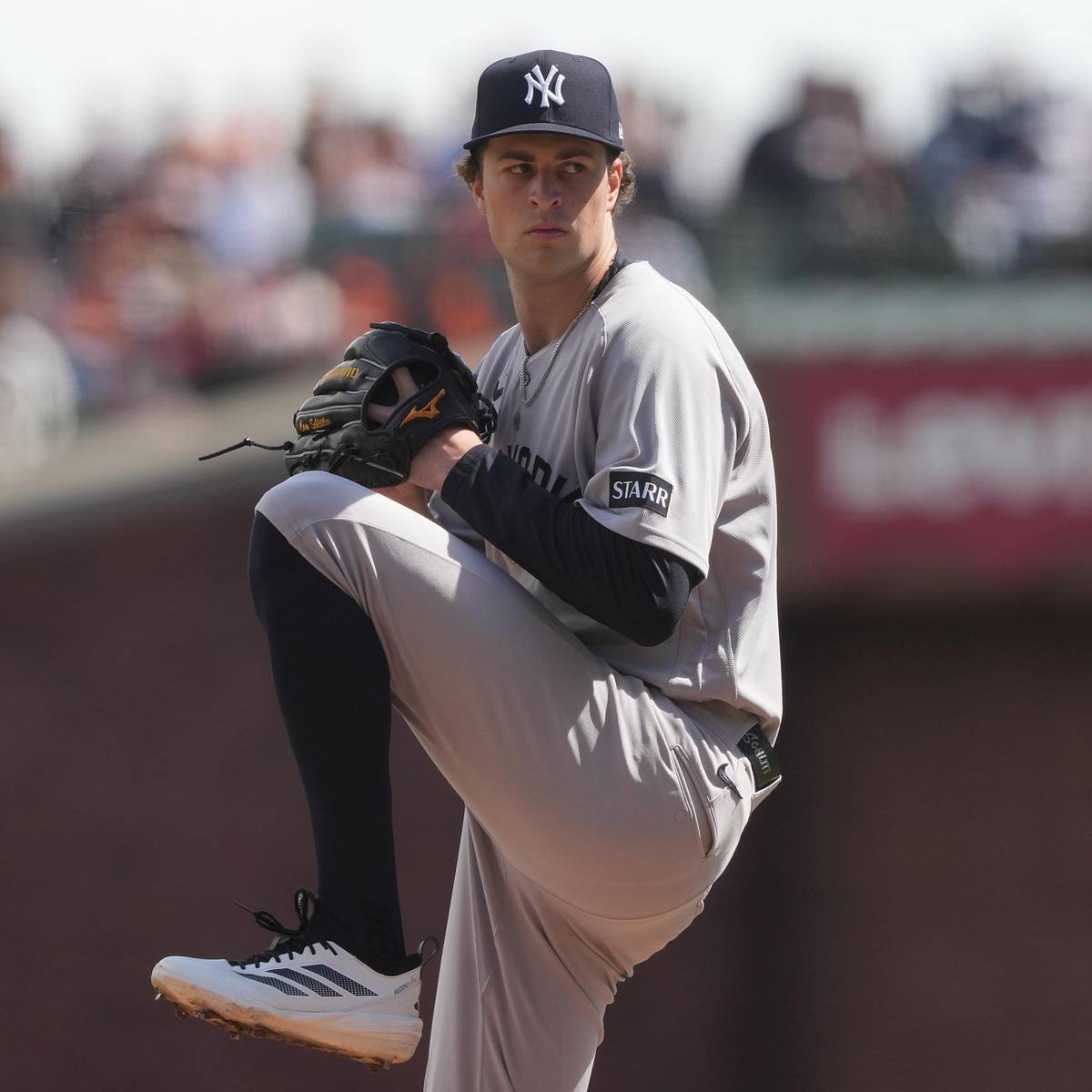
The Yankees' starting rotation creates the strongest argument for treating the bullpen as an immediate priority. Cam Schlittler is coming off the American League Cy Young Award, earned unanimously after a season that confirmed him as one of the sport's most difficult pitchers to face. A club with that kind of ace does not want winnable games undone because the final seven outs have become a nightly experiment. Every strong start has a value beyond the innings on the pitcher's own ledger, and reliable relief turns that value into standings wins.
GOATIFY
GOATIFY Baseball
Shop GOATIFY Baseball designs while Brent Headrick's 81-game breakout highlights the importance of pitching depth.


Gold Baseball GOAT Sticker
A gold baseball GOAT decal for your bottle, laptop or game-day gear.
Shop Now ↗White Baseball GOAT Dad Hat
A white baseball GOAT design for ballpark days and everyday fan style.
Shop Now ↗White Baseball GOAT Sweatshirt
Rep baseball’s greatest with a white GOAT graphic sweatshirt.
Shop Now ↗Yet even an excellent rotation does not make bullpen planning optional. Max Fried underwent left elbow surgery and is expected back for spring training; the positive projection still requires medical progress, not blind certainty. Gerrit Cole and Carlos Rodón are established rotation figures, while Will Warren supplied 32 appearances, including 29 starts, with a 3.92 ERA. Cashman has indicated that Ryan Weathers is being viewed as a starter. This is meaningful depth, but pitchers do not work every sixth and seventh inning in a vacuum. A club preparing for 162 games must expect early exits, fatigue and inconvenient doubleheaders.
New York also has prospects Elmer Rodríguez and Carlos Lagrange in the conversation for future pitching opportunities. That depth is useful precisely because the front office does not have to force every young arm into a bullpen vacancy. Lagrange's right capsule strain interrupted a possible 2026 debut. Forcing a prospect to serve as a quick fix for a struggling relief corps could compromise development and still fail to solve a ninth-inning problem. The organization should preserve options rather than treating any rookie with a live arm as a guaranteed solution.
Then there is the offense. The Yankees' 93 wins did not hide the way their 2026 campaign ended, and their own front office has discussed the limitations of the lineup. Third base remains open to an upgrade beyond Ryan McMahon, with Alec Bohm among the names discussed. Japanese star Teruaki Sato, coming off an NPB Triple Crown season, represents a more ambitious kind of offensive possibility. At second base, Jazz Chisholm Jr.'s market creates uncertainty, while the organization has checked on available players including Brandon Lowe and Luis Arraez. Those are not side quests; a better offense also reduces how often the bullpen must defend a one-run margin.
A right-handed-hitting catcher to complement Austin Wells would address another specific imbalance. Spencer Jones has the tools to give the Yankees a meaningful center-field option, but evaluating potential is not the same as counting on a finished major-league player. Even the coaching staff is being reshaped, with Brad Ausmus leaving for Houston, James Rowson moving on and Tanner Swanson taking a role in Seattle. A front office cannot allocate its entire offseason budget to the bullpen while leaving the batting order and staff transitions to chance.
The real test is sequencing. The Yankees should establish which late-inning roles they can fill, set a price they are willing to pay Bednar, and keep parallel conversations alive for more than one reliever. Then they can match the remaining money and trade capital to offensive weaknesses without letting rumors force premature decisions. Winning 93 games suggests there is a strong team here. Losing the Division Series shows the gap between strong and complete. Building the 2027 roster means acknowledging both truths at once.
This is not a roster that needs demolition. It is a contender confronting the cost of continuity. Cashman can point to a second-ranked bullpen, a Cy Young winner and 93 victories, and all three accomplishments deserve credit. What he cannot do is assume the same combination of players will be available when the next season begins. Bednar's decision and the broader relief market will determine how many urgent questions remain after the winter's first contracts.
The Yankees' smartest route is a layered one: keep pursuing proven late-inning talent, protect Headrick from becoming the emergency answer to everything, use the farm system selectively, and leave enough financial and trade flexibility to improve the offense. If that creates a balanced eight- or nine-man bullpen rather than a single glamorous transaction, it will have been a better offseason. The goal is not to reproduce 2026's ERA on paper. It is to build a group capable of delivering the innings that matter most in 2027.
GOATIFY
GOATIFY Baseball
Shop GOATIFY baseball shirts, hoodies and stickers.


White Baseball GOAT Sticker
A white baseball GOAT decal for your bottle, laptop or game-day gear.
Shop Now ↗


















