Zheng Finally Won in Two Sets — Beijing's Home-Title Dream Is Alive
GOATIFYFor four rounds, Zheng Qinwen kept surviving the China Open the hard way. Every victory required a deciding set, and every escape demanded another physical and emotional reset. Against Elina Svitolina on Friday, October 9, the Chinese wild card finally found a shorter route: a 6-3, 7-6(6) quarterfinal win that sent her into the Beijing semifinals and gave the home crowd a reason to believe the run could become something bigger.
There was nothing routine about the second set. Zheng surrendered a break, trailed early in the tiebreak and still had to close out an opponent who made remarkably few errors. But the decisive difference was visible whenever Zheng took a full swing and redirected the ball down the line. The former world No. 4, now ranked No. 54 after an injury-disrupted stretch, is not merely collecting wins. She is rediscovering the attacking identity that made her one of the tour's most dangerous players.
Zheng's down-the-line attack broke open the first set
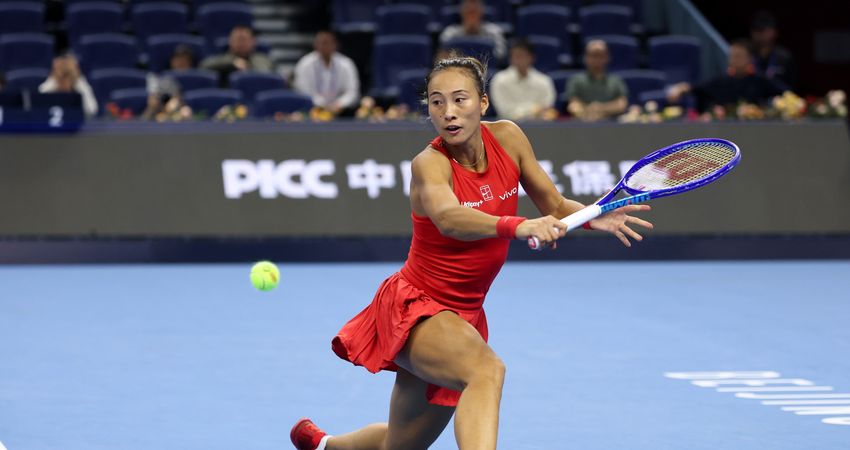
The opening set was a demonstration of why Zheng's game is so difficult to defend when her timing is right. She took the initiative early, drove through the court and repeatedly changed direction instead of allowing Svitolina to settle into predictable cross-court exchanges. Her forehand down the line was especially useful: it turned neutral rallies into sudden chases and forced the Ukrainian to hit from less comfortable positions.
The seventh game captured the contest in miniature. Zheng had to work through a 14-point struggle and five break opportunities before gaining the advantage that moved her to 5-2. That sequence was not about one spectacular winner. It was about remaining willing to attack after several chances had disappeared, without giving Svitolina enough routine balls to reset the point. Even a defensive lob became useful when it bought time to reclaim the baseline.
There was a wobble before the set ended. Zheng could not immediately serve it out, and Svitolina's patience exposed the risk attached to aggressive shot selection. But the home player recovered at the return, kept looking for the first strike and completed the 6-3 set. The important distinction was that Zheng did not abandon the plan because one service game went badly. She made adjustments within it.
That matters in the broader context of her Beijing week. Earlier victories over Shi Han, Anna Kalinskaya, Marie Bouzkova and Alina Charaeva had all required three sets. Against a top-10 opponent who usually makes rivals play one more ball, Zheng's ability to win the opener while dictating exchanges suggested her attacking level was rising at precisely the right stage of the tournament.

Svitolina made her earn the tiebreak — and Zheng answered
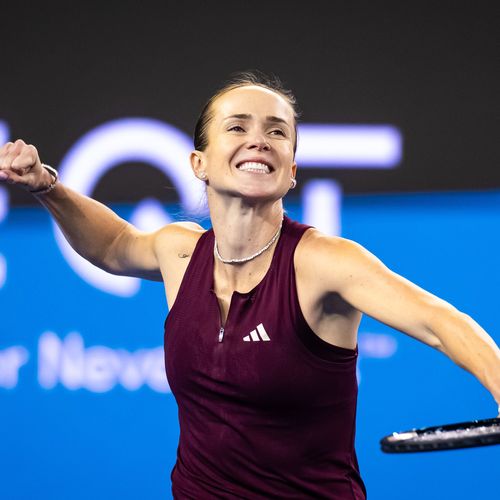
Svitolina's response made the straight-sets result more impressive than the score alone suggests. She absorbed Zheng's pace, extended exchanges and took advantage when the Chinese player's timing slipped. The Ukrainian gave away only 13 unforced errors according to the match statistics, a strikingly low total in a contest against such an aggressive ball-striker. That discipline kept the pressure on Zheng to produce rather than wait for mistakes.
In the second set, Svitolina broke at love to move ahead 4-3. It was exactly the kind of passage that had previously pushed Zheng into a decider. Instead of allowing frustration to build, Zheng struck back immediately. A forehand down the line and a decisive backhand attack helped restore parity, turning what might have been the start of another long recovery into a brief interruption.
The tiebreak brought a final examination. Zheng opened with a double fault, fell behind 0-2, then recovered to lead 5-3. She could not close the first opening and saw the score reach 6-6, where the margin for another mistake was effectively gone. Two assertive points finished the match 8-6 in the breaker, and Zheng dropped to the court after converting her second match point.
That closing sequence revealed the balance she is still trying to perfect. An attacking game can create a stream of winners and still leave room for double faults, rushed decisions and loose points. Zheng did not suddenly become error-free; the official match figures list 36 winners alongside 38 unforced errors. What changed was her ability to keep the biggest points on her terms. Against an experienced opponent, that was the difference between another exhausting third set and a timely finish.
From a ranking slide to another Beijing semifinal
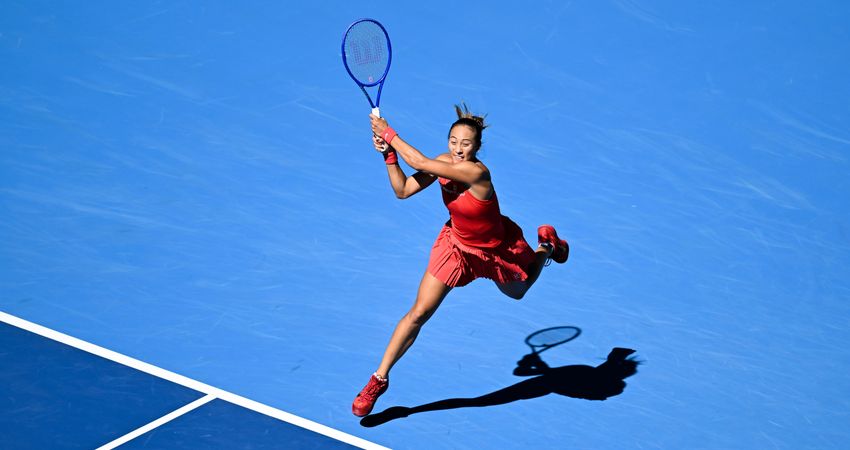
The wider story is the distance Zheng has traveled to make this week possible. She was a top-five player before injuries disrupted her progress, and her ranking fell as low as No. 160 in June. A US Open quarterfinal run from qualifying showed that her ceiling had not disappeared. Beijing has now supplied something different: a sustained run under home pressure, with several long matches followed by a top-10 victory when fatigue might reasonably have been expected to accumulate.
Her physical workload explains why Friday's result carried extra value. The first four rounds had taken more than ten hours on court, including a demanding comeback against Charaeva. Zheng acknowledged earlier in the week that her endurance was holding up even when her consistency and concentration needed work. She was learning to vary her speed, choose when to attack and resist the urge to force the first available shot. Those are practical adjustments, not just positive words after a win.
The match with Svitolina showed both the progress and the unfinished work. Zheng's first serve did not land at an overwhelming rate, but she won three quarters of the points played behind it. She was able to protect enough service games while putting real pressure on the return. Against a defender of Svitolina's quality, the ability to combine first-strike tennis with selective patience is more meaningful than an isolated highlight reel.
Zheng celebrated her 24th birthday on Thursday, a small personal marker during a difficult season of rebuilding. She is now projected to return to the top 40, and this is her second China Open semifinal after reaching the last four in 2024. Rankings do not win matches, but the climb is evidence that the victories are accumulating. The question is whether the technical improvements can survive the next test when the opposition has had another day to prepare for her pace.

The home-title dream now depends on one more tactical adjustment
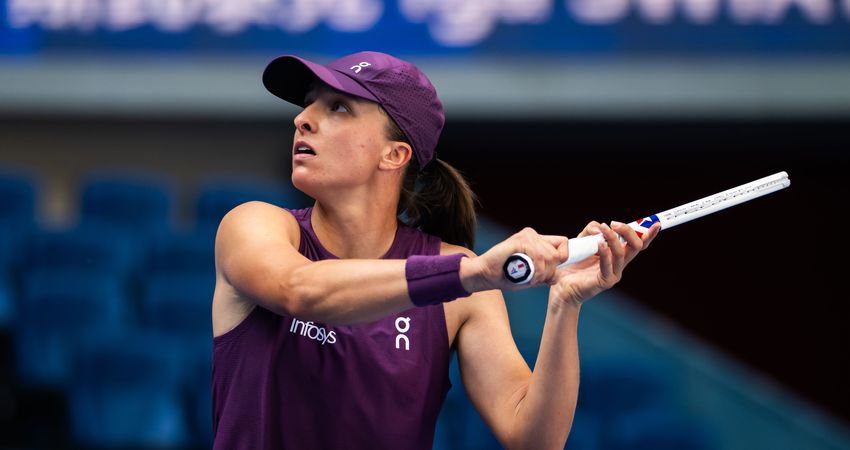
Zheng's semifinal opponent will emerge from the quarterfinal between Iga Swiatek and Elise Mertens. Both offer a different challenge from Svitolina. Swiatek can take time away with heavy, early-struck groundstrokes and has already won this tournament, while Mertens is capable of changing pace and asking awkward questions with her court positioning. At the time of this report, that last quarterfinal pairing had not been resolved, so neither matchup should be treated as confirmed.
Against Swiatek, Zheng would need to protect her second serve and avoid giving the Pole repeated chances to attack the same corner. The power-to-power exchanges would be compelling, but simply swinging harder is unlikely to be enough. Zheng's best route would involve mixing height, depth and sudden changes of direction, then choosing carefully when to move inside the baseline. Her down-the-line success against Svitolina is an encouraging sign, not a guarantee that the same patterns will work against another elite returner.
Against Mertens, the challenge could be less about raw pace and more about solving variation. Zheng would need to stay patient through changes of spin and direction, avoid overplaying short balls and make her first serve count. The risk in either semifinal is the same: a player who has already spent so many hours battling through Beijing can start pressing when a few games become tight. Friday proved she can respond without surrendering a set, but the margin narrows as the tournament advances.
There is a larger incentive beyond ranking points. Beijing has never had a Chinese women's singles champion, and Zheng is now within two wins of changing that history. The crowd can amplify her energy, yet it also raises the stakes of every missed opportunity. Her best chance is to use the support without trying to produce a spectacular winner on every rally. The quarterfinal offered a template: stay aggressive, accept that momentum will fluctuate and make the last few points cleaner than the opponent's.
Friday's 6-3, 7-6(6) win will be remembered for Zheng's attacking winners and the roar when the final ball landed out. Its lasting value may be simpler: after four three-set marathons, she finally found a way to finish a difficult match in two. She did it against a top-10 opponent who offered very few cheap points, and she did it while continuing to rebuild the rhythm lost during an injury-hit period.
That does not make Zheng the automatic favorite for the title. The semifinal will ask fresh questions of her serve, shot selection and recovery. But a wild card who began the week outside the top 50 has already turned Beijing into a statement about what her game can still become. Two matches remain between that statement and a historic home championship.
Shop GOATIFY tennis products from the Tennis-filtered collection scope.