Coello and Tapia Own Rotterdam — Three Visits, Three Titles
GOATIFYRotterdam gave Arturo Coello and Agustín Tapia a problem almost immediately. Franco Stupaczuk and Jon Sanz broke first, carried the confidence of a brilliant week into the final and briefly made the world No. 1 pair look vulnerable.
Then the match snapped back toward the hierarchy. Coello and Tapia recovered the break, tightened every exchange and turned an awkward opening into a 6-3, 6-2 win. Three editions in Rotterdam have now produced three titles for the same pair — and this one mattered beyond the trophy because their closest ranking rivals were already out of the draw.
Stupaczuk and Sanz landed the first punch — and forced the champions to answer
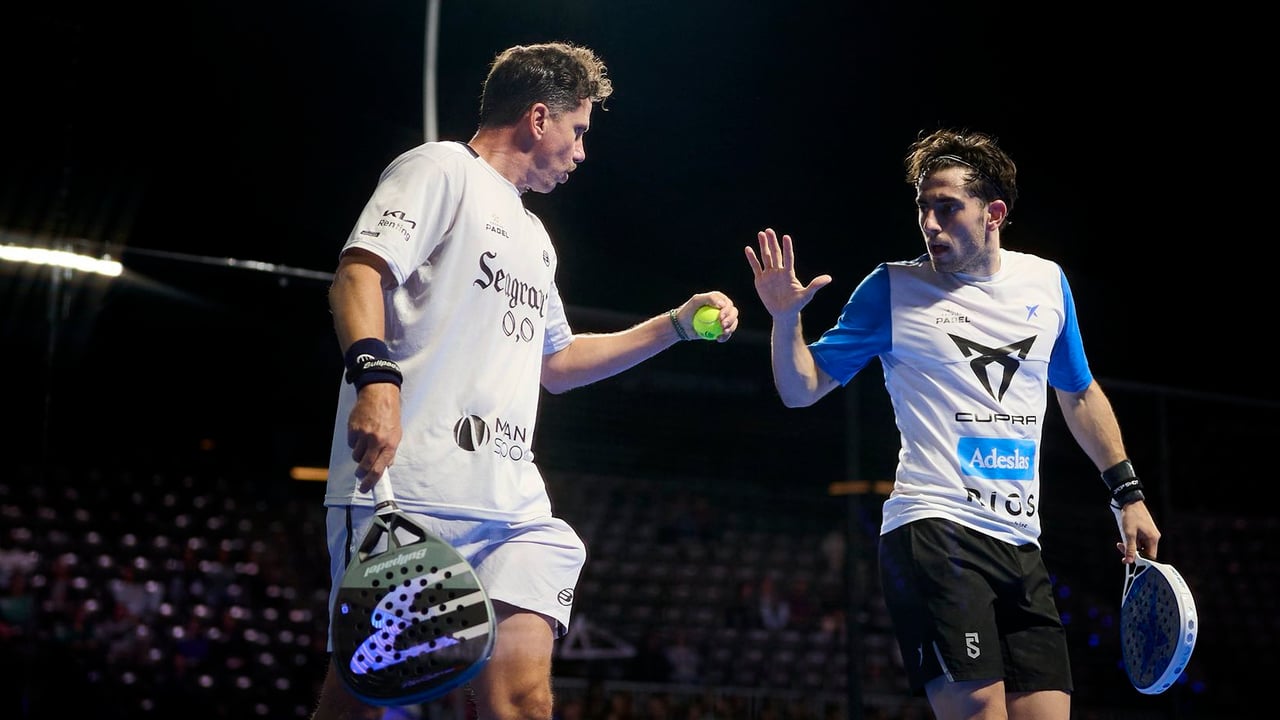
For a few games, the final looked like the continuation of Stupaczuk and Sanz’s breakout week. They had already beaten Alejandro Galán and Federico Chingotto, then overwhelmed Mike Yanguas and Coki Nieto in the semifinal. That confidence showed immediately against the top seeds. The challengers attacked the opening exchanges, took the first break and briefly put Coello and Tapia in the unfamiliar position of chasing the scoreboard.
The important detail is that the break was not a fluke. Stupa and Sanz had spent the tournament proving they could pressure elite pairs with a combination of volume, aggression and clean decision-making. They did not enter the final hoping the No. 1s would play badly. They entered believing their own level could move the match.
That made the response more revealing. Coello and Tapia did not panic, overhit or try to erase the deficit in one spectacular point. They simply raised the pressure on every service game, reclaimed the break and removed the challengers’ early sense of control. The final had begun with an upset script. Within a handful of games, the favorites had rewritten it.
The break changed everything because Tapia and Coello changed the speed of the match
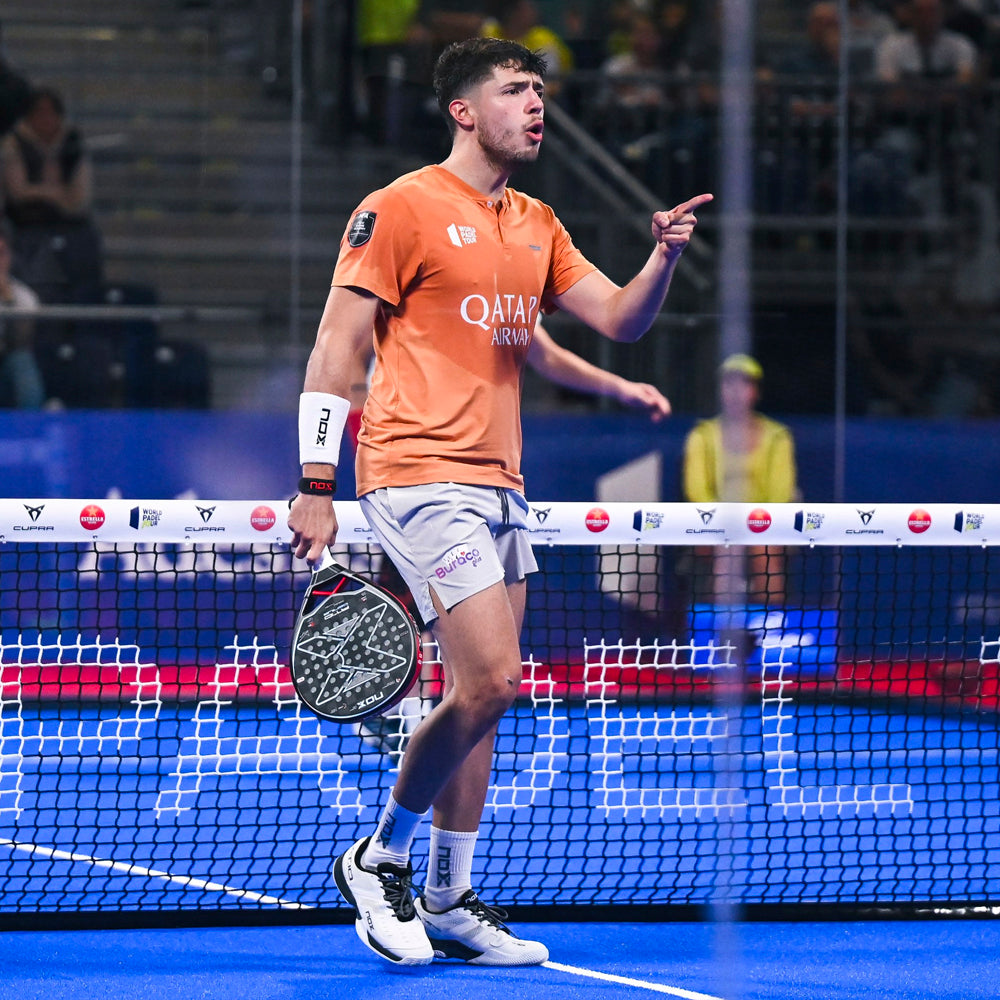
Once the break was recovered, the match stopped being played on Stupa and Sanz’s terms. Tapia became more involved in the middle, Coello closed the net with greater authority and the world No. 1s began taking time away from their opponents. That shift matters because their dominance is not only about power. It is about how quickly they can identify which exchanges are giving an opponent oxygen and then remove them.
Tapia’s influence was especially important. When he is active rather than waiting for the perfect ball, the pair can accelerate without becoming reckless. Coello then benefits from shorter defensive sequences and more chances to impose himself near the net. The result is a feedback loop: better pressure creates weaker replies, weaker replies create easier attacking positions, and those positions make the next service game feel even heavier.
Stupaczuk and Sanz were still competing well, but the openings from the first games disappeared. Instead of attacking a pair still searching for rhythm, they were now trying to pass two players who had settled into their preferred court positions. The 6-3 first set was less a collapse by the challengers than a demonstration of how fast the champions can turn one tactical correction into control of an entire set.

The second set showed the difference between finding a lead and sustaining pressure

The second set was where the final became a statement. Coello and Tapia did not give the challengers the dip they needed to reopen the contest. There was no loose service game, no prolonged spell of rushed decisions and no stretch in which the pair surrendered the net cheaply. The plan that had rescued the first set simply continued.
That consistency is the part of their game that can be obscured by highlight clips. Coello’s reach and finishing power are obvious. Tapia’s improvisation is obvious. Less dramatic is the discipline required to keep choosing the same high-percentage patterns after the scoreboard turns favorable. Against a pair as dangerous as Stupa and Sanz, one sloppy passage could have transformed 3-1 into 3-3 and brought the crowd and the underdogs back into the match.
Instead, the No. 1s kept squeezing. They protected their own service games, forced the challengers to hit extra balls from uncomfortable positions and made every attempt to change direction carry risk. A 6-2 second set can look routine in the final score. It was produced by refusing to offer the kind of two-game opening that elite opponents need. That is why the early break ultimately feels so distant from the way the final ended.
Three Rotterdam editions now tell the same story — but the ranking impact makes this one different
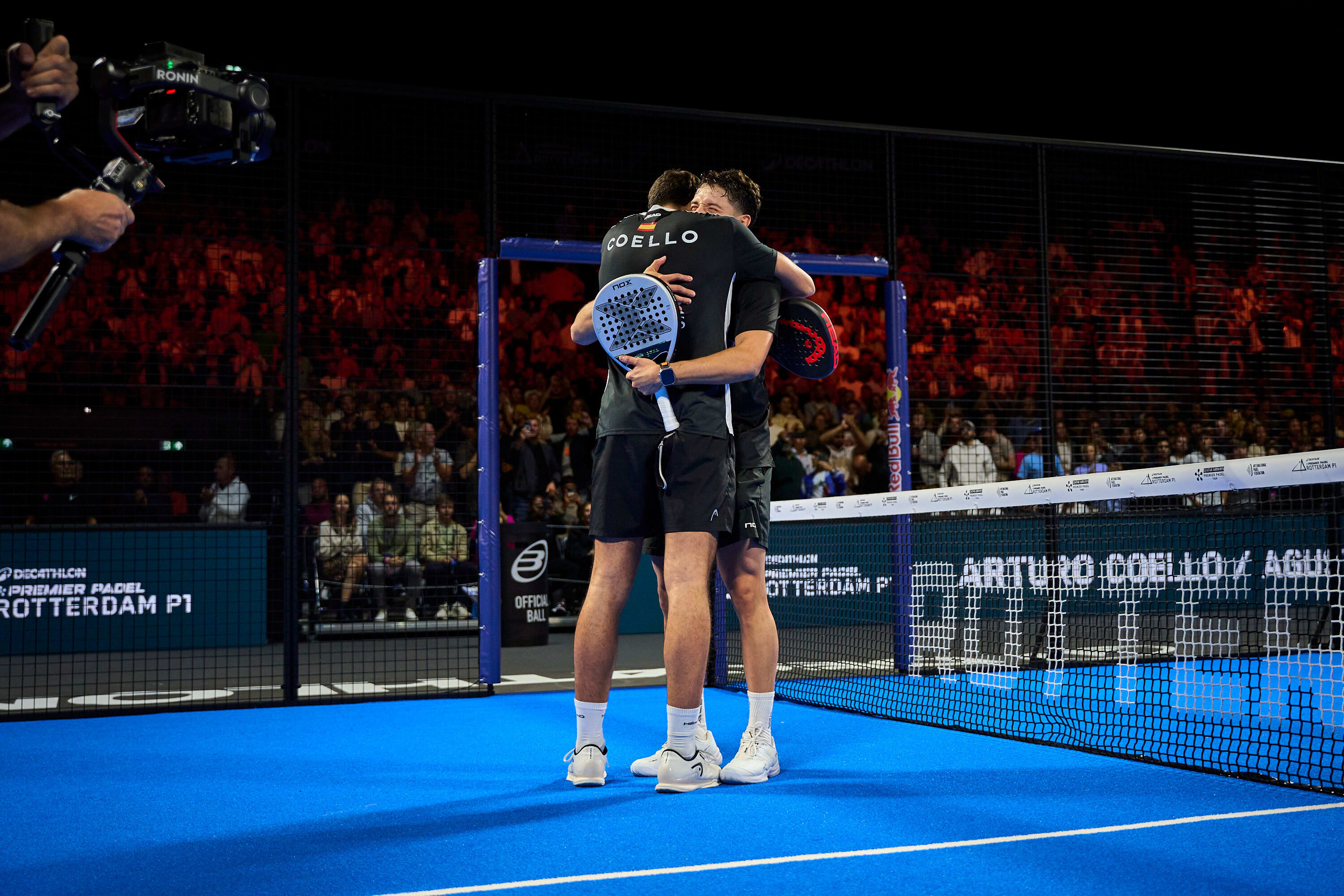
Rotterdam has become one of the clearest pieces of territory on the Premier Padel calendar for Coello and Tapia. They won here in 2024, won again in 2025 and have now completed the hat-trick in 2026. Three appearances, three titles is more than a nice venue statistic. It shows how well their game travels across editions, changing draws and different versions of the chasing pack.
This title also arrives with extra value in the Race. Galán and Chingotto, the pair most capable of applying sustained ranking pressure, were eliminated in the quarterfinals by Stupaczuk and Sanz. Coello and Tapia did not merely defend points and another trophy; they used a rival’s early exit to create more separation at the top. In a season where the No. 1 battle is built over dozens of matches, those weekends can matter as much as one head-to-head final.
There is a second ranking story underneath the champions. Stupaczuk and Sanz leave Rotterdam having reached their first Premier Padel final together in only their third tournament as a pair. Their run restores them to the fourth-seed position for upcoming major events, a practical reward that can reshape future draws. They did not finish the week with the trophy, but they proved the partnership can beat elite teams and reach Sunday.
The hierarchy therefore leaves Rotterdam both reinforced and more interesting. Coello and Tapia are still the standard. Stupa and Sanz are now closer to the group with a realistic chance of challenging it. The final separated those levels clearly — but the week suggested the gap below No. 1 is becoming more competitive.

Stupaczuk and Sanz leave Rotterdam with a loss, but not with a failed week. In only their third tournament together they reached a Premier Padel final, beat elite opposition and climbed back into the fourth-seed position.
Coello and Tapia leave with something even more valuable: another reminder that an opponent can start better and still spend most of the match trying to escape their pressure. Rotterdam remains theirs, three visits and three titles later.
Shop GOATIFY padel products from the Padel-filtered collection scope.