The 10 Greatest Australian NBA Players Ever, Ranked (2026)
GOATIFYAustralia has produced NBA champions, defensive specialists, pass-first geniuses and a few players who made the league rewrite its scouting assumptions. But who actually has the strongest NBA career? The answer changes depending on whether you prefer a spectacular two-year peak, 15 years of staying power or the little things that help a championship team function. The ten names below are ranked on what they accomplished in the NBA, not who generated the loudest headlines or looked best in a Boomers jersey.
Our weighting favors NBA peak and individual honors first, then sustained contribution, playoff impact and longevity. Championships help, but a ring is not an automatic golden ticket. Olympic achievements add context; they do not turn an international legend into an NBA superstar. The comparison is current through November 16, 2026, so emerging players are judged on what they have already done, not the trophies they might someday win.
Eligibility needs one clarification. We include Australian-born or Australian-developed players with a genuine Australian basketball identity, including Boomers representatives born abroad such as Matisse Thybulle. Kyrie Irving was born in Melbourne and has Australian citizenship, but his representative identity has been with the United States, including Olympic gold. For this particular Australian NBA tradition ranking we exclude him, rather than pretending his All-NBA career never happened or presenting birthplace as the only test. Ben Simmons, raised in Australia, remains eligible despite not being a Boomers regular. With those rules stated, here is the countdown.
10–9: The Australian defenders who earned their place

10. Matisse Thybulle — defense that jumps off the tape
Thybulle is the first reminder that this is an NBA-career list, not simply a list of famous Australian scorers. Born in the United States, he lived in Australia as a child and later represented the Boomers. His connection is substantial, not a passport loophole. On the floor, his value is immediate: long arms, anticipation and a rare ability to disrupt passes from angles most defenders would never attempt.
He has earned multiple NBA All-Defensive selections despite a limited offensive profile. That is a genuine elite skill in the hardest basketball league in the world, and it deserves a top-ten spot. The reason he starts the countdown rather than climbs higher is equally clear. His shooting and half-court creation have made him a specialist, and an opponent can sometimes reduce his offensive influence by leaving him space.
Ranking Thybulle is a choice between the best few minutes of defensive chaos and what a player offers for an entire playoff series. His peak disruption beats plenty of bigger statistical resumes, but the next name has the cleaner championship contribution.
9. Matthew Dellavedova — the unglamorous championship guard
Dellavedova never played like a franchise cornerstone. He played like somebody who could make a star's night miserable while keeping his own team organized. His best NBA years in Cleveland were built on sharp screens, physical defense, intelligent ball movement and the willingness to chase a loose ball before checking whether it would hurt.
He became a defining supporting character in the Cavaliers' 2015 Finals run and was part of the 2016 championship team. He was not the biggest reason LeBron James and Kyrie Irving won that title, and describing him that way would distort history. The credit is narrower and still meaningful: he fulfilled difficult jobs on a team that ultimately won everything.
Dellavedova's career scoring never approached the heights of Australia's star guards, but NBA value is not just points per game. He secured years of trust in competitive rotations and showed that a relatively undersized Australian guard could survive by winning details. Thybulle had the higher defensive ceiling; Dellavedova earns the nod through useful years, playoff relevance and a championship résumé.
GOATIFY
GOATIFY Basketball
From scrappy championship guards to specialist defenders, explore GOATIFY Basketball designs for fans who appreciate the details behind the highlights.

Kobe Bryant – GOAT Championship Celebration Tee
A basketball fan design for everyday wear.
Shop Now ↗


Michael Jordan – Bulls GOAT Championship Sweatshirt
A basketball fan design for everyday wear.
Shop Now ↗
Crying LeBron – NBA Basketball Reaction Decal Sticker
Add basketball personality to your favourite gear.
Shop Now ↗
Victor Wembanyama Alien Wemby NBA Basketball Mug
Add basketball personality to your coffee break.
Shop Now ↗8–7: A title-winning big and a modern defensive breakout

8. Aron Baynes — rugged usefulness on a champion
Baynes never needed a playbook full of post touches to matter. His game was a platform for better scorers: screen hard, absorb contact, protect the paint, rebound and occupy enough space that teammates could attack elsewhere. He supplied exactly that type of center depth for Gregg Popovich's Spurs, including their 2014 NBA championship season.
His best stretches were not limited to San Antonio. He gave Detroit and Boston different versions of the same reliable interior work, then showed in Phoenix that he could stretch his offensive game with perimeter shooting when the system asked for it. He was an adaptable supporting big rather than a player teams reorganized themselves around.
Why only eighth for a champion? Context matters. A ring is evidence that a player helped a successful team; it is not proof that he was the eighth- or first-best individual on that team. Baynes belongs because his NBA contribution lasted and traveled across different rotations, not because the Spurs happened to win a trophy while he was there.
7. Dyson Daniels — the league's most disruptive emerging Australian
Daniels has the strongest argument that this ranking will look outdated within a few seasons. After shifting from New Orleans to Atlanta, his 2024-25 leap turned anticipation into production: he won the NBA's Most Improved Player award, led the league in steals, and earned first-team All-Defensive recognition. These are league-wide honors, not local hype.
His game is modern in the best sense. He can pressure the ball, switch across perimeter assignments and read a passing lane while remaining a useful playmaker on the other end. That versatility makes him more than the traditional defensive stopper. An opponent planning for Atlanta has to account for the havoc Daniels can cause before a possession even begins.
He still sits below several veterans because the NBA career sample is shorter and offensive creation is not yet at their level. His outside shooting and reliable half-court scoring remain questions compared with the polished creators further up. But an Australian with a Most Improved Player trophy and elite defensive hardware has already achieved too much to be hidden near the bottom.
6–5: The playmaking future meets the original championship center
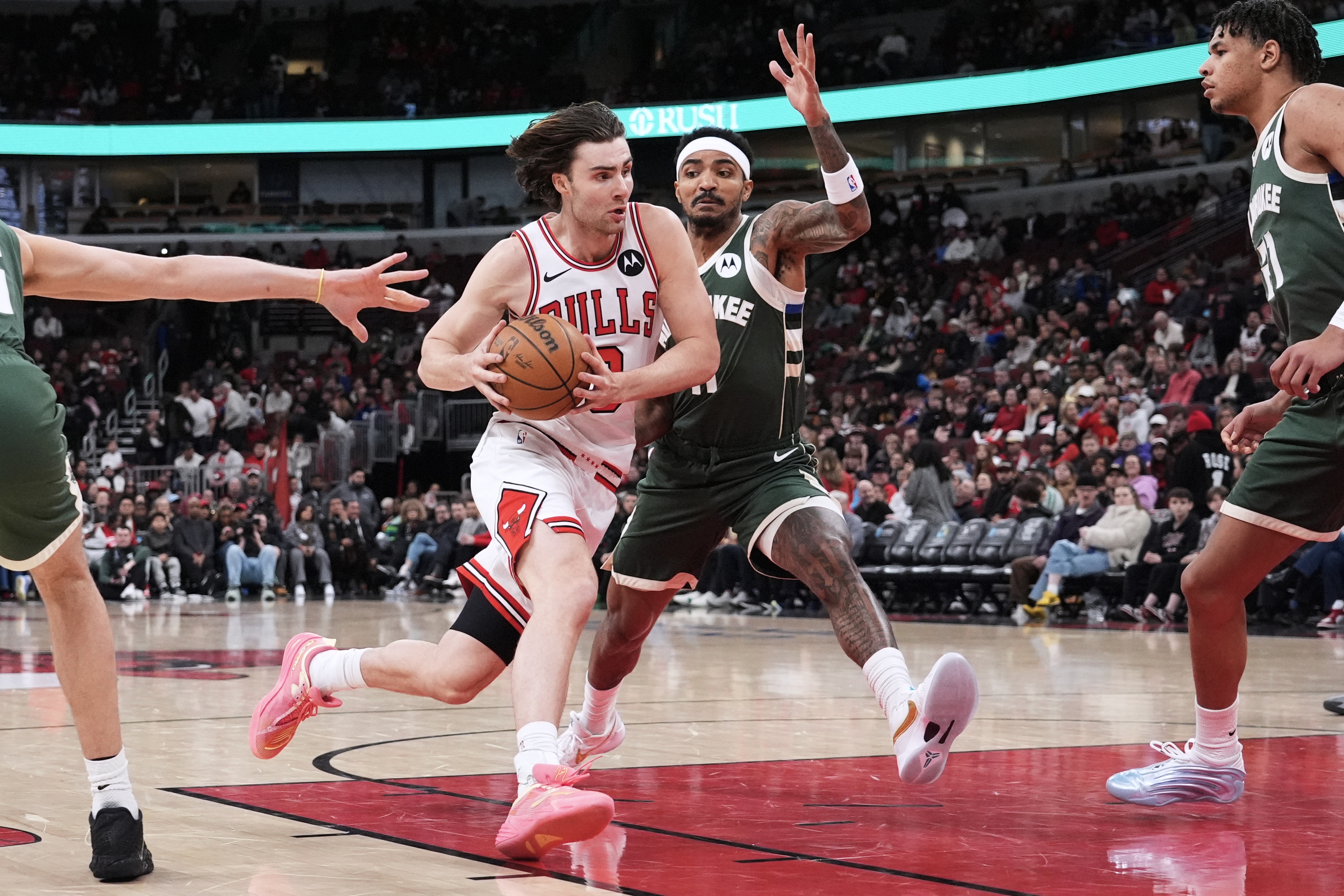
6. Josh Giddey — the upside of a 6-foot-8 point guard
Giddey's basketball imagination has always been the selling point. At his size, he sees cutters over a defense, rebounds like a forward and can push the ball into a fast break without needing an outlet pass. His first years in Oklahoma City showed flashes; Chicago gave him a larger platform to run an offense.
During the completed 2025-26 NBA season he averaged 17 points, 8.3 rebounds and 9.1 assists for the Bulls. That is a serious three-category production line, especially for a player still working through the defensive attention and shooting scrutiny that come with being a primary creator. The raw assists are not magic: they reflect the timing of his passes, rebounding and ability to find teammates before a defense is fully organized.
There are reasons to pump the brakes. Elite playoff defenses can test his off-ball shooting and force him to score from uncomfortable spots. He has not yet put together the long, postseason-tested resume of Mills, Ingles or Bogut. A ranking built purely on potential might put him in the top three; a ranking of work already completed cannot do that responsibly.
GOATIFY
GOATIFY Basketball
Giddey's modern playmaking and Longley's old-school title role show two very different basketball styles. Browse the GOATIFY Basketball collection for the NBA fan in your crew.

Kobe Bryant – The GOAT Champion Basketball Hoodie
A basketball fan design for everyday wear.
Shop Now ↗
Michael Jordan G.O.A.T. - Basketball Decal Sticker
Add basketball personality to your favourite gear.
Shop Now ↗
Shai Gilgeous-Alexander G.O.A.T. - Basketball Sweatshirt
A basketball fan design for everyday wear.
Shop Now ↗
Trae Young G.O.A.T. - Atlanta Hawks Basketball Tee
A basketball fan design for everyday wear.
Shop Now ↗

Wemby G.O.A.T. - Victor Wembanyama Basketball Mug
Add basketball personality to your coffee break.
Shop Now ↗5. Luc Longley — three titles and a job that modern box scores understate
Longley was Australia's first NBA player and the starting center alongside Michael Jordan and Scottie Pippen in Chicago's second three-peat, from 1996 to 1998. Three championships speak loudly, but the more useful question is what his job demanded. He had to defend the middle, give the triangle offense reliable passing angles, set meaningful screens and avoid becoming a liability around basketball's most scrutinized dynasty.
That assignment was harder than it looks from his modest scoring averages. Longley did not dominate possessions or hunt highlights. The Bulls needed a center who could keep the offense moving, battle imposing opponents and accept that the biggest shots were going elsewhere. His passing touch and understanding of where to stand were central to that job.
He is fifth rather than first because individual peak matters in this ranking. Being the starting center for a legendary champion is different from being that champion's best player. Yet keeping Longley outside the ten, or below every modern high-volume scorer, would miss the kind of dependable NBA role that wins across several seasons. His longevity and a three-ring contribution remain exceptional Australian achievements.
4–3: The two veterans who defined Australia's NBA staying power
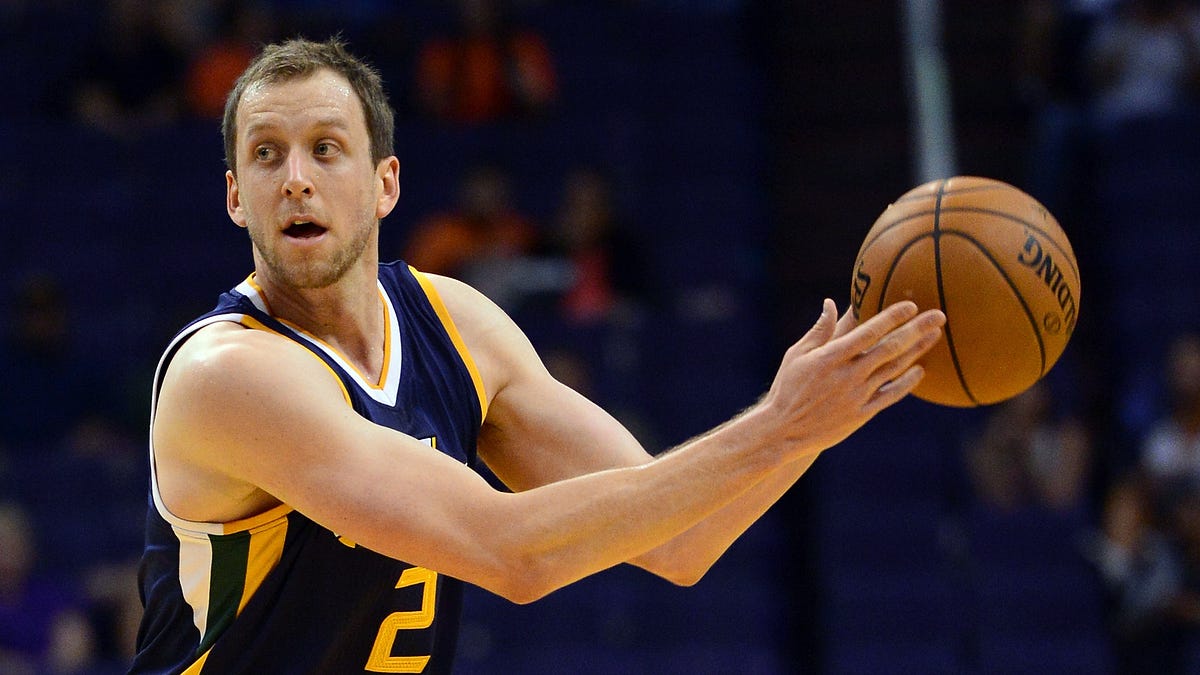
4. Joe Ingles — the player who made ordinary possessions smarter
Ingles has never needed to look quick to control the pace. In Utah, his spacing, passing and ability to recognize a mismatch made him one of the league's most useful secondary decision-makers. He could launch a three after a closeout, put the ball on the floor when a defender overcommitted, or find a cutter without turning every possession into a personal scoring contest.
His NBA career covered 810 regular-season games across 12 years, with the Jazz supplying his best and most recognizable period. A long career in NBA rotations is difficult for anybody, let alone a player whose advantages came from technique and reading rather than explosive speed. Ingles kept providing value because the same fundamentals translated next to different teammates.
As of May 2026, he had signed to return to Australia's NBL with Melbourne United; this is a ranking of his completed NBA work, not a claim that he remains a current Minnesota player. His international longevity is a bonus, including the Boomers' historic Tokyo Olympic bronze. His biggest weakness in an all-time NBA comparison is the absence of All-Star-level individual peak or a championship run where he was a central figure.
3. Patty Mills — the benchmark for professional longevity
Mills is the Australian guard who proved a smaller player could earn a long NBA life without being treated as an offensive centerpiece. His threat to sprint through screens and fire immediately changed how defenses guarded San Antonio's bench. He was more than an energy substitute: his movement and decision-making fit the Spurs' beautiful 2014 championship offense.
He was part of that title team, subsequently built a decade of service in San Antonio and continued working through several NBA franchises. By late 2024 he had reached 1,000 combined NBA regular-season and playoff appearances, an important Australian milestone. That combined figure should not be confused with 1,000 regular-season games. The total, and the fact that coaches kept finding practical ways to use him, convey the durability better than a single scoring average.
His Boomers leadership, especially the Tokyo bronze medal run, is iconic in Australian sport. We count that as supporting context, not as the basis of his NBA placement. Mills comes third because he helped win a title and remained trusted for an unusually long time. Compared with Ingles, his championship contribution and sheer career endurance provide the edge; compared with the top two, he never produced the same league-wide individual awards.
GOATIFY
GOATIFY Basketball
Ingles and Mills turned smart basketball into years of NBA staying power. Explore GOATIFY Basketball apparel for fans of the sport's best long-career stories.

Basketball Victor Wembanyama Matrix Decal
Add basketball personality to your favourite gear.
Shop Now ↗
Anthony Edwards G.O.A.T. - Basketball Casual Tee
A basketball fan design for everyday wear.
Shop Now ↗
Basketball Alien Wemby Celebration Graphic Sweatshirt
A basketball fan design for everyday wear.
Shop Now ↗


Ja Morant Gun Suspension Memphis Grizzlies NBA Mug
Add basketball personality to your coffee break.
Shop Now ↗2–1: The highest peak versus the strongest total NBA résumé

2. Ben Simmons — the best short peak, and the most complicated legacy
For a few seasons, Simmons looked like a genuine new archetype: a tall, explosive lead ball-handler who could rebound, create open shots and shut down elite perimeter players. He was the 2017-18 Rookie of the Year, a three-time NBA All-Star, an All-NBA Third Team selection in 2020 and a multiple-time All-Defensive pick. Those awards mark a standard very few Australians have approached.
At his best in Philadelphia, he could drag the ball upcourt after a rebound, collapse a defense with a powerful drive and throw a pass to the weak-side corner before the help arrived. Defensively, he could handle assignments that would be absurd for most primary point guards. There is a strong argument that no Australian perimeter player has reached a more complete regular-season peak.
The argument against placing him first is not a joke about shooting or a replay of one infamous passing decision. It is a basketball question about longevity, availability and playoff evolution. The limitations of his outside shot became increasingly exploitable in high-leverage series, while injuries and other interruptions sharply reduced the years in which he could sustain that earlier standard. An NBA-career ranking cannot pretend 2019 lasted forever.
Still, ranking Simmons outside the top five would overcorrect for disappointment. Few Australian players have collected those honors while functioning as a primary offensive organizer and elite defender. If this list were based only on the best two-year spell, he might win. Over the full career, he is narrowly second.
1. Andrew Bogut — the most complete Australian NBA career
Bogut earns the top spot because his case works from several directions. Drafted first overall in 2005, he developed into a skilled interior scorer and passer with Milwaukee, received All-NBA Third Team honors in 2010 and became one of the league's most influential defensive centers. He later supplied the physical structure and smart passing that helped Golden State win the 2015 NBA championship.
His defensive influence often appears in what an opponent chooses not to do. With Bogut patrolling the paint and communicating behind the play, perimeter defenders could pressure more aggressively. On offense he set punishing screens and passed out of the high post while stars did the spectacular things. That is precisely the combination of quiet usefulness and proven peak that holds up when the team's system changes.
He also had setbacks. Injuries restricted his minutes and he was not a conventional Finals scoring hero. Acknowledging those limits improves the ranking rather than weakens it. Bogut has an All-NBA season, a high-level defensive résumé, significant time as a starting center and a championship role. Simmons beats him in athletic versatility at his best; Mills beats him in longevity. Bogut is the most balanced answer when individual achievement, winning contribution and overall NBA impact all count.
There is no mathematical formula that can settle every NBA-era argument. Simmons has the most explosive all-around peak of the Australian perimeter stars, Mills and Ingles have extraordinary continuity, Longley owns a unique three-title foundation, and Daniels or Giddey could climb considerably with another half-decade of elite production. Bogut sits first for now because his peak honors, defense, long starting career and meaningful championship contribution fit together more completely than anybody else's.
If you value peak talent above durability, swap Simmons and Bogut. If you think winning championships as a starter is the most important thing, Longley jumps up. That disagreement is the point of a good ranking: the standards should be visible enough that you can argue with the order, not just the names. Australia's NBA talent pool is deep enough that ten places genuinely require choices, and the next generation is already making those choices harder.
GOATIFY
GOATIFY Basketball
Shop GOATIFY basketball shirts, hoodies and stickers.

LeBron Photobomb – NBA Basketball Graphic Gift Tee
A basketball fan design for everyday wear.
Shop Now ↗
Anthony Davis GOAT - Unibrow Basketball Sweatshirt
A basketball fan design for everyday wear.
Shop Now ↗
Domantas Sabonis GOAT - Basketball - Greatest Hoodie
A basketball fan design for everyday wear.
Shop Now ↗
Victor Wembanyama Alien Wemby NBA Basketball Sticker
Add basketball personality to your favourite gear.
Shop Now ↗
Basketball Victor Wembanyama Sci-Fi Alien Tank
A basketball fan design for everyday wear.
Shop Now ↗
Nikola Jokic G.O.A.T. - Basketball Coffee Cup Mug
Add basketball personality to your coffee break.
Shop Now ↗