

Harden Won the Rematch at the Garden. The Knicks Had No Answer Late.
GOATIFYThe New York Knicks spent most of Wednesday night reaching for a comeback that kept slipping away. They erased one Cleveland Cavaliers lead after another at Madison Square Garden, turned a ten-point fourth-quarter gap into a tie, and made the final five minutes feel like the kind of contest they had repeatedly won against this opponent. Then James Harden supplied the answer the Cavaliers had lacked in their playoff meetings with New York.
Harden scored a season-high 32 points, and Cleveland won 115-107 on November 11. The number tells only part of the story. With the game tied at 101, Harden buried a three-pointer with 4:21 left; after the Knicks trimmed the margin again, Cleveland's frontcourt finished the job. Jarrett Allen converted opportunities near the basket, Evan Mobley added a timely score, and the Cavaliers protected a narrow advantage until it became decisive.
This was not a championship statement in November. It was a useful response from a team that had been swept by the Knicks in the 2026 Eastern Conference finals, then lost their first regular-season rematch four nights earlier. Cleveland needed evidence that its execution could survive New York's inevitable rally. For one night, Harden's composure and the production around him provided it.
Harden won the last four minutes instead of merely the box score
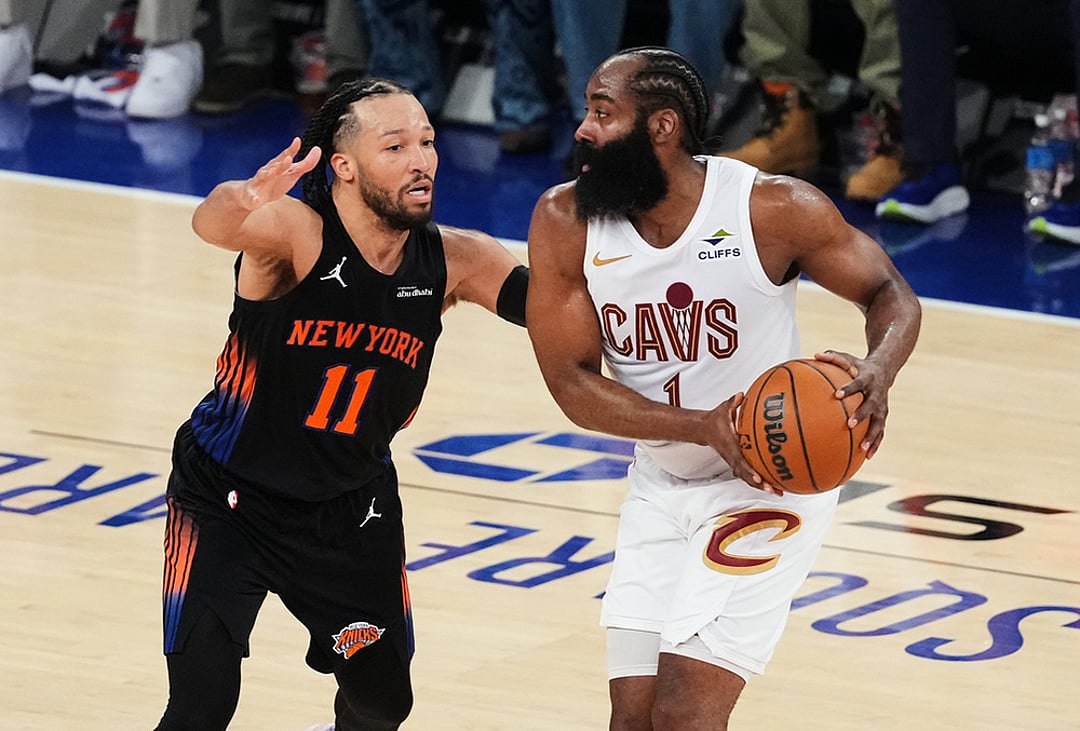
The final result looked comfortable only after Cleveland had survived another New York comeback. The Cavaliers led 95-85 with 8:25 remaining. Rather than unravel, the Knicks used a 14-4 burst to reach 99-99 with 5:36 on the clock, fueled by OG Anunoby's activity, Josh Hart's transition finish and the kind of quick decision-making that keeps a home crowd involved. For a few possessions, this looked like a repeat of the pattern Cleveland has found so frustrating.
Harden made sure the answer changed. He first created a short pull-up, then answered Anunoby's free throws by stepping into a long three from well beyond the arc. That shot broke a 101-101 tie and placed Cleveland ahead 104-101 with 4:21 left. Jalen Brunson immediately attacked to get the Knicks within one. It was the moment when Cleveland could have rushed a shot, settled for an isolated fadeaway or allowed the crowd to dictate the pace. Instead, the Cavaliers chose reliable finishing touches.
Mobley answered from the lane. Allen then made two free throws and completed a powerful finish off Donovan Mitchell's feed, pushing the margin to 110-103. New York had spent more than three quarters gathering enough stops to get back into the game. Now a handful of clean Cleveland possessions required it to start that work all over again. Peyton Watson's late recovery block against Miles McBride and Harden's subsequent foul shots removed almost every remaining chance of a second comeback.
There is a tactical difference between scoring a heroic basket and organizing the possessions after it. Harden did both. A veteran creator can control the ball long enough to find the right matchup without asking the other four players to stand completely still. The Cavaliers were not flawless, but their late offense moved from Harden's individual shotmaking to Mobley and Allen finishing within the flow of the game. That sequence made the closing stretch sturdier than a collection of contested jumpers would have been.
GOATIFY
GOATIFY Basketball
Harden's late-game shotmaking was a reminder of why elite NBA scorers captivate fans. Explore basketball-inspired GOATIFY shirts, hoodies and stickers.

James Harden G.O.A.T. - Basketball Casual Top Tee
A basketball fan design for everyday wear.
Shop Now ↗

James Harden G.O.A.T. - Basketball - Greatest Sweatshirt
A basketball fan design for everyday wear.
Shop Now ↗

James Harden G.O.A.T. - Basketball Decal Sticker
Add basketball personality to your favourite gear.
Shop Now ↗
The 32 points also carried meaning beyond the box score's season-high label. Harden entered the game averaging 15.3 points and shooting 36.4% from the field. He finished 9-for-14, including five made three-pointers, a sharp departure from the inefficient start that had made his scoring output a concern. It would be reckless to declare a season turned around on one night of shooting. But the performance showed how much easier Cleveland's half-court decisions can look when the guard commanding the ball is also a constant threat to score.
That matters specifically against New York. The Knicks are comfortable living with uncomfortable possessions and asking opposing stars to make the next play under pressure. In May, they exploited Cleveland's hesitations. On Wednesday, they still produced the run and still pressured the ball, but Harden delivered the two most important offensive answers before the big men settled the result. The breakthrough was not that New York stopped fighting. It was that Cleveland finally stopped giving the fight away.
Mitchell, Allen and the possession margins made the win possible
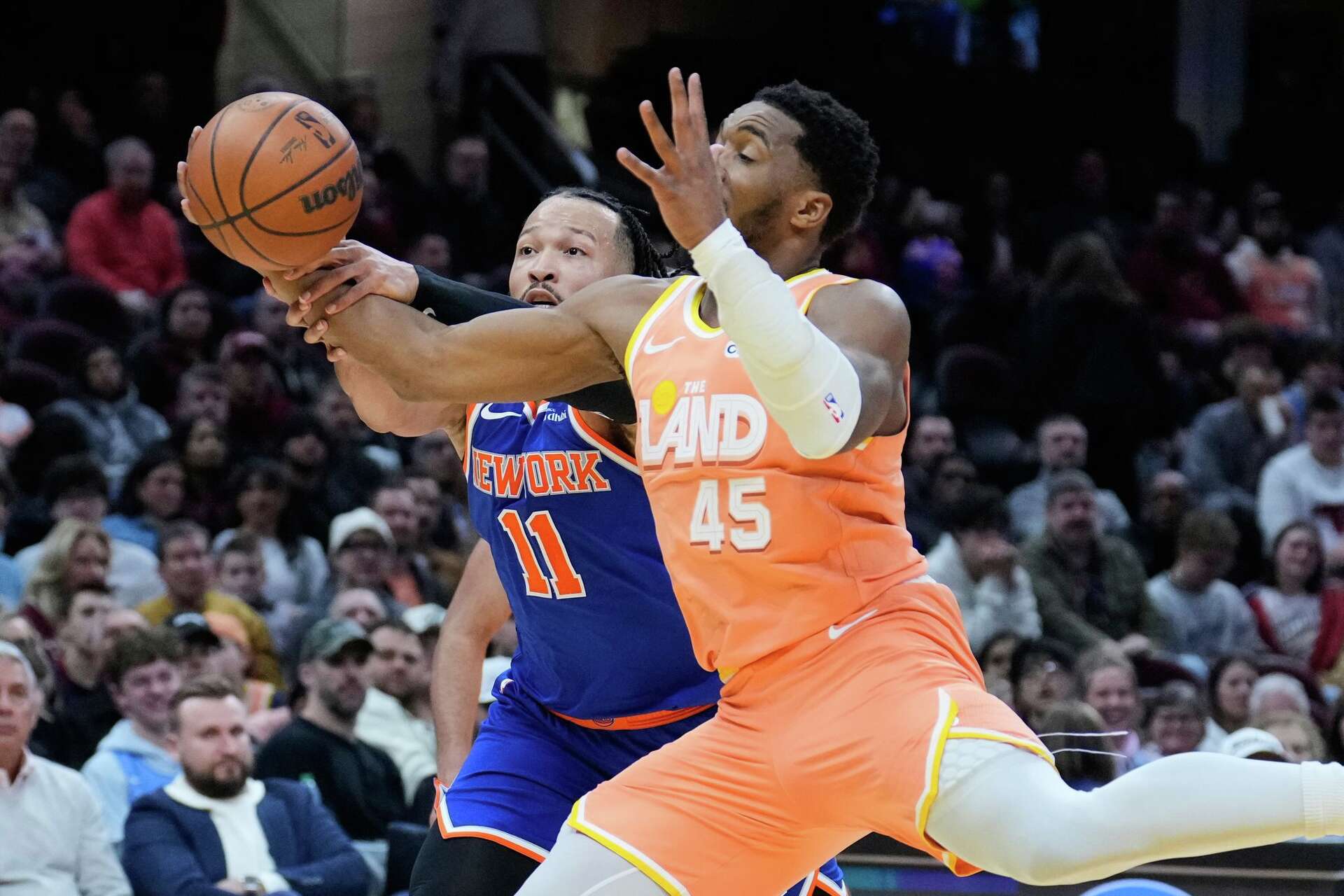
The late-game relief was possible because Cleveland had enough contributors to keep the game from becoming Harden against five defenders. Donovan Mitchell scored 23 points, Tyrese Proctor added a season-high 15 off the bench, and Allen returned a sturdy 11 points and 14 rebounds. Mobley had 10 points, and Watson offered rim protection at moments when New York threatened to drive through the middle. The supporting cast mattered even more because the Knicks kept dragging the margin back into one-possession territory.
Cleveland set an aggressive tone immediately, winning the first quarter 33-23. Its offense spread the work rather than waiting for one guard to rescue every possession. Proctor's early scoring gave the bench meaningful momentum, while Mitchell repeatedly punished switches and gaps in New York's coverage. The Cavaliers built leads as large as twelve before the Knicks began countering with their usual bursts of shotmaking. That first-quarter advantage was not a trivial opening streak; it created a cushion Cleveland repeatedly needed.
Harden's second period gave the visitors another platform. He scored 13 points in the quarter, making four shots without a miss and connecting from deep three times. Cleveland reached halftime ahead 59-53, having avoided the kind of dry spell that would have erased its first-quarter work. New York shot well enough to remain in contact, but Cleveland got to the line more often and found the extra points that separated similar totals of made field goals.
That disparity lasted. Cleveland attempted 25 free throws and made 20; New York made all eleven it attempted, but getting to the stripe fourteen fewer times constrained its options when outside shooting cooled. Free-throw volume alone cannot prove that officials treated teams differently. It also reflects who reaches the paint with an advantage, who forces contact before help arrives and who finishes possessions without settling. In this game, that extra source of offense gave Cleveland more ways to survive a stretch without a made jumper.
GOATIFY
GOATIFY Basketball
Brunson, Towns and the Cavaliers show how many styles shape the NBA. Browse GOATIFY Basketball designs to celebrate stars and the game.


Crying LeBron – NBA Basketball Muscle Shirt Tank
A basketball fan design for everyday wear.
Shop Now ↗

Basketball Alien Wemby UFO Abduction Decal
Add basketball personality to your favourite gear.
Shop Now ↗
Donovan Mitchell G.O.A.T. - Cleveland Sweatshirt
A basketball fan design for everyday wear.
Shop Now ↗
Possession management was another quiet separator. The Cavaliers scored 19 points from Knicks turnovers, turning mistakes into points before New York's half-court defense could settle. The defensive work was not always spectacular. It included disrupted passing angles, pressure that slowed the first action and recoveries that kept the ball away from easy finishes. Watson's late block made the highlights, but the accumulated missed opportunities were what made New York's rallies feel so expensive.
The visitors were hardly immune to momentum swings. Cleveland opened the third with another burst and took a 69-58 lead, only for Brunson and the Knicks to produce an 11-0 run that wiped it away. The Cavaliers still carried an 82-76 advantage into the fourth. Every renewed New York surge tested whether Cleveland had a second answer. Mitchell kept creating pressure, Allen gave the team a dependable target at the rim, and the reserve minutes supplied enough scoring to avoid leaving the result entirely to Harden.
For coach Kenny Atkinson, the encouraging part is that the offense did not have to be built around one extraordinary shot all night. Cleveland's pathways included transition, free throws, spot-up shooting and interior finishing. A 32-point Harden performance gets the headline; the broader lesson is that teammates have to turn his advantages into repeatable scoring chances. Wednesday offered a better example of that balance than the Cavaliers had produced in their previous loss to New York.
Brunson and Towns had the numbers; New York still lacked the final answer
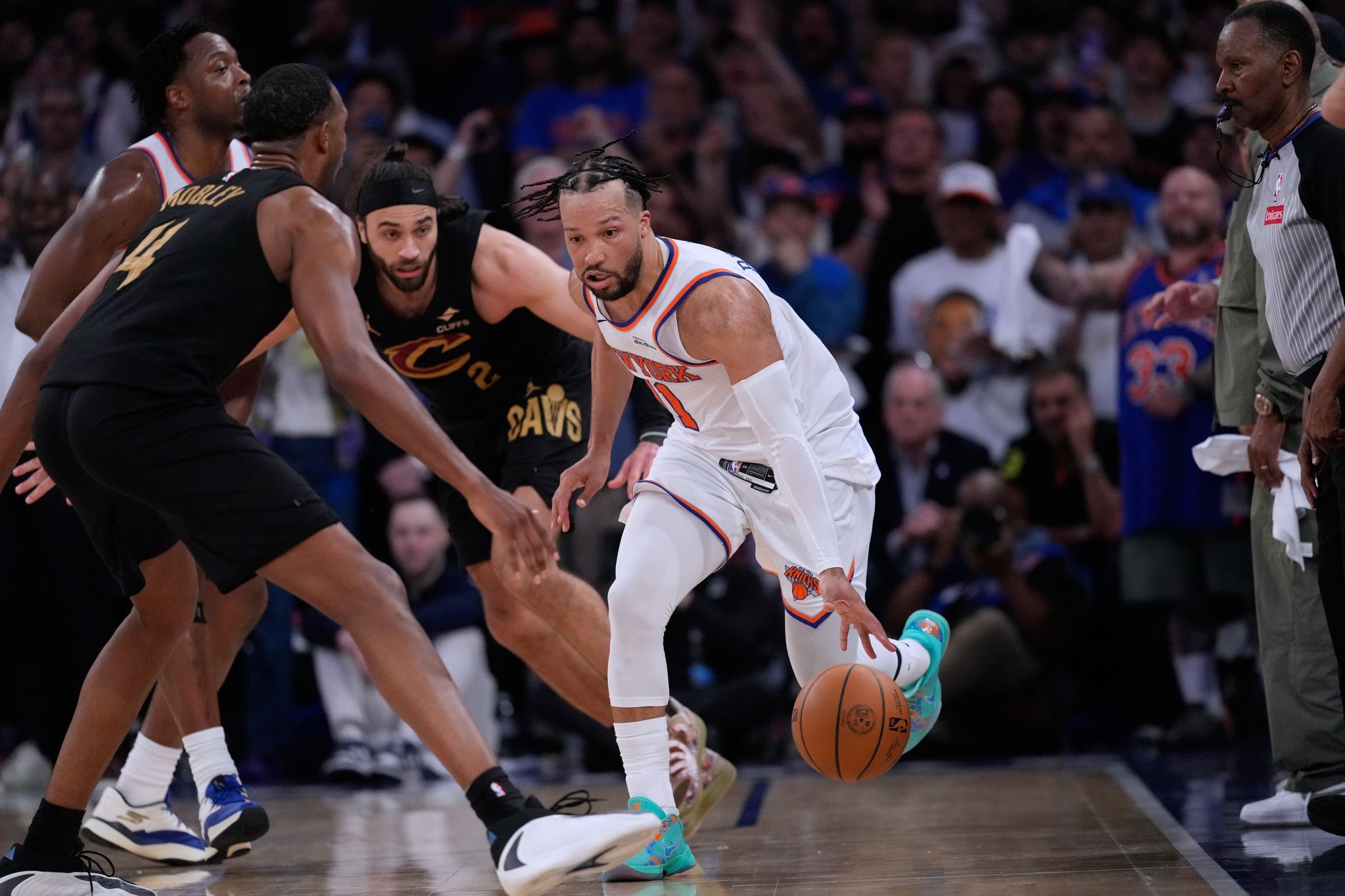
New York did not lack star performances. Brunson scored 27, and Karl-Anthony Towns posted 21 points, 11 rebounds and eight assists. Towns' eleventh straight double-double to open the season tied Willis Reed's franchise mark, a remarkable piece of consistency amid the team's early ups and downs. Brunson also reached career milestones of 11,000 points, 3,000 assists and 1,000 made threes. Those were genuine individual achievements in a losing game.
The trouble was the support around them and the timing of the contributions. McBride delivered 19 bench points and five three-pointers, providing the shooting that repeatedly pulled the Knicks back into contention. Anunoby scored 14 and helped trigger the fourth-quarter rally. But New York's other starting wings were far less productive; Mikal Bridges, Josh Hart and Anunoby combined for 22 points. Bridges played only 17 minutes and did not see the floor in the final period, a striking rotation decision in a close nationally watched matchup.
Hart was returning after missing three games with ankle and illness issues. His energy can change a possession even when his jump shot does not: he runs, rebounds, fills passing lanes and creates a second chance for a teammate. Yet returning players still need to restore rhythm and conditioning, and Cleveland's early aggression exposed moments when New York looked half a step late. The Knicks were also on the second night of a back-to-back, having hammered Milwaukee 117-85 the evening before. That context helps explain the uneven stretches without excusing the decisive errors.
GOATIFY
GOATIFY Basketball
Shop GOATIFY basketball shirts, hoodies and stickers.

Jalen Brunson – Finals MVP GOAT Crewneck Sweatshirt
A basketball fan design for everyday wear.
Shop Now ↗
New York Knicks – 2026 NBA Champions Sticker
Add basketball personality to your favourite gear.
Shop Now ↗

Carmelo Anthony G.O.A.T. - Basketball Muscle Tank
A basketball fan design for everyday wear.
Shop Now ↗

The loss does not erase New York's ability to come back. The Knicks recovered from twelve points down in the second quarter, tied the score again in the third and then launched their late 14-4 surge. Brunson remained capable of finding a shot against pressure, Towns supplied a passing outlet, and McBride gave the second unit a genuine scoring punch. What changed was the final response. Cleveland consistently found either a score or a stop just when New York seemed ready to seize control. In a close game, those answers count more than the number of times a deficit is erased.
History sharpened the comparison. During the 2026 Eastern Conference finals, New York swept Cleveland in four games. The Cavaliers had surrendered a 22-point fourth-quarter lead in Game 1, and the Knicks made a habit of punishing late-game indecision. On November 7, the Knicks beat Cleveland 109-97 again, with Brunson and Towns carrying the scoring. Wednesday was the Cavaliers' first trip back to Madison Square Garden since that playoff sweep. The result could not undo a postseason defeat, but it changed the most recent ending between two teams that know each other's flaws.
There is also a warning for the Knicks: strong individual box scores are not a substitute for five players working toward the same quality shot. New York's defenders were sometimes close enough to bother Harden without preventing his clean release. Its offense was sometimes crisp enough to manufacture a tie without being sustainable over the next three possessions. A team chasing another deep spring run will have to reconcile those two versions of itself. The late rotation choices and the balance of shot creation merit more attention than any single missed attempt.
Both clubs get a quick opportunity to respond. Cleveland visits Miami on Friday, while New York travels to Indiana for an NBA Cup game. Neither trip will settle how the Eastern Conference hierarchy looks in April. But the next week can reveal whether Harden's efficiency was a one-game spike and whether New York can maintain its late-game poise after playing through short rest. The lesson from the Garden is both specific and portable: a comeback is not complete until the team making it can control the possession that follows the tie.
James Harden's 32 points made the Cavaliers' 115-107 win a convincing headline, but the result was decided by a short, disciplined chain of plays: Harden turned a tie into a lead, Mobley and Allen converted inside, and Cleveland's defense refused to permit one more New York run. The Cavaliers had lost too many of these momentum battles against the Knicks to ignore the difference.
For New York, Brunson's milestones and Towns' record-tying consistency were bright spots in a night that exposed the cost of uneven wing production, turnovers and fewer trips to the line. For Cleveland, one win is not redemption for a playoff sweep. It is evidence that this rivalry's next closing stretch need not follow the script of the last one.
GOATIFY
GOATIFY Basketball
Shop GOATIFY basketball shirts, hoodies and stickers.


Carmelo Anthony G.O.A.T. - Basketball Decal Sticker
Add basketball personality to your favourite gear.
Shop Now ↗
New York Knicks – Reigning NBA Champions Hoodie
A basketball fan design for everyday wear.
Shop Now ↗
Jalen Brunson – ’n Clutch Basketball Decal Sticker
Add basketball personality to your favourite gear.
Shop Now ↗



















